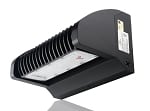
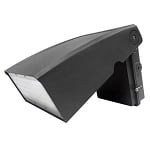
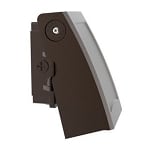
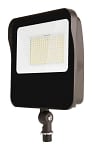
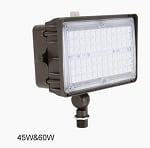
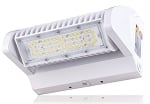
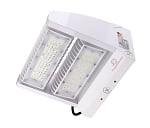
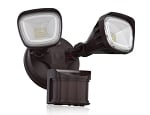
Adjustable LED Wall Lights

USA Based Experts in less than 60 seconds Call Now: 800-674-9420
On orders over $49.00
Up to 7 Years Free Warranty On LED Lights


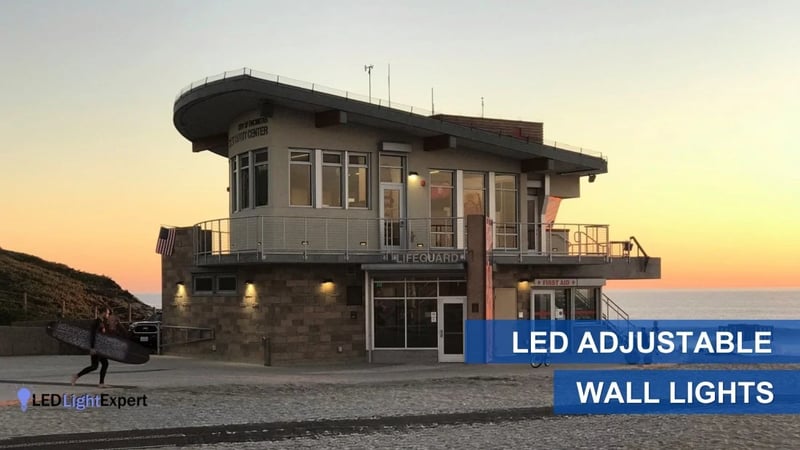
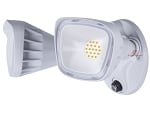
Adjustable LED wall lights aim light where it is needed for security, walkways, entrances, signage, and building exteriors.
Standard wall packs project light in a fixed pattern determined at the factory. Adjustable LED wall lights let you aim the beam after installation. This solves a common problem: the mounting location that works best structurally is rarely the one that puts light exactly where you need it. A tilting or rotating head bridges that gap, directing illumination toward walkways, signage, loading areas, or building facades without moving the fixture itself.
This directional control also matters for light trespass and code compliance. Many municipalities now enforce dark-sky ordinances that limit how much light crosses property lines or shines upward. An adjustable fixture lets you angle the beam downward to support dark-sky goals where the fixture, color temperature, shielding, and local code requirements align while still delivering full coverage at ground level. For commercial properties, this can help projects meet local glare and light-trespass requirements.
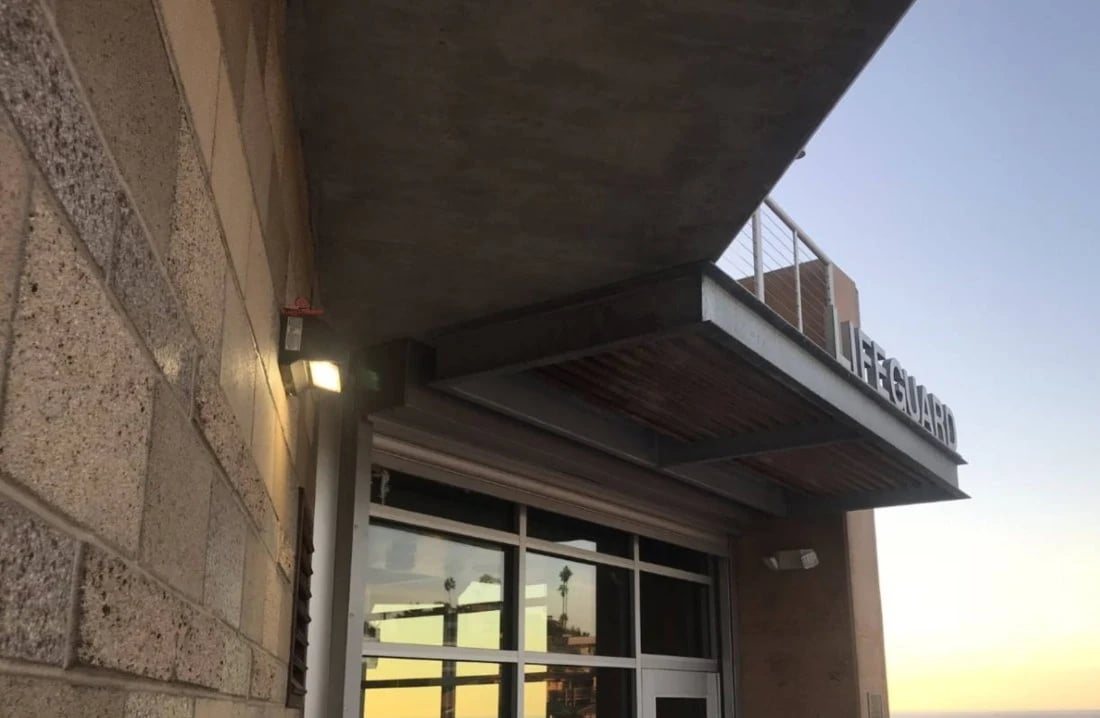
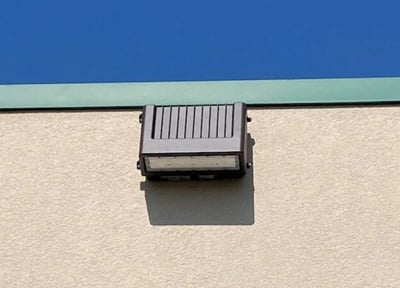
In practical terms, adjustable LED wall lights are deployed above loading docks, along building perimeters, at entry canopies, over signage, and in architectural accent applications. Their ability to redirect light after mounting makes them a more forgiving choice than fixed-output wall packs, especially on retrofit projects where existing junction box locations may not align with the ideal photometric layout.


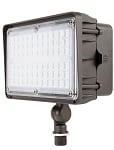
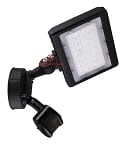
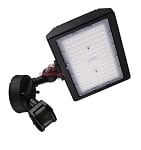
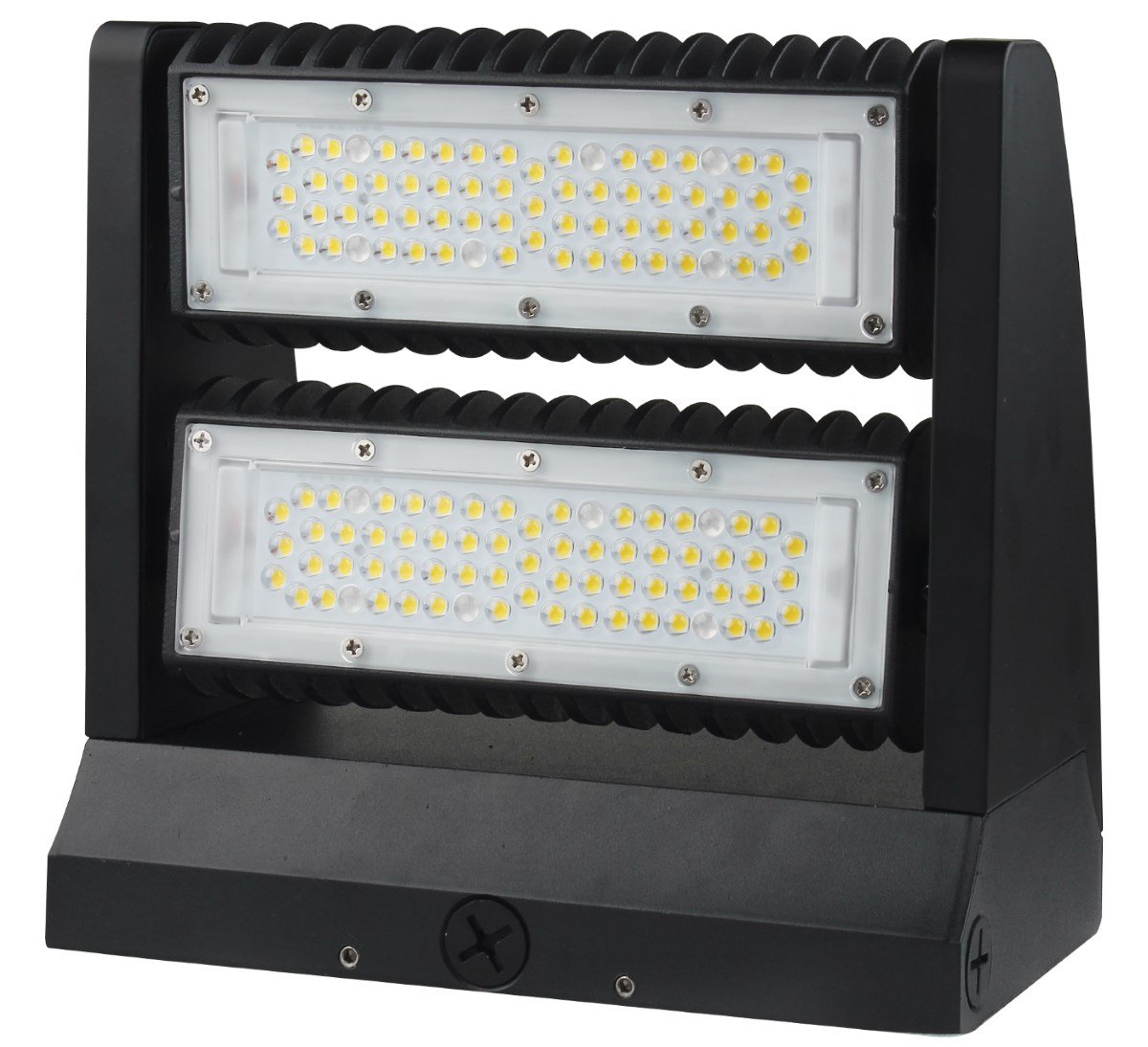
The adjustment mechanism is what separates these fixtures from standard wall packs. Most adjustable LED wall lights use either a knuckle mount or a yoke (trunnion) mount. A knuckle mount attaches the fixture to a single pivot point. This allows vertical tilt, typically 0 to 90 degrees, so you can aim light straight down for walkways or outward toward a parking area. Yoke mounts add a U-shaped bracket that enables both tilt and horizontal rotation. This gives full directional control from a single mounting point.
For commercial applications, the Rotate IV Series LED Wall Pack is a useful example: it delivers high efficacy, depending on the model with a rotating head that locks into position after aiming. Once installed, adjustable wall lights require no more maintenance than any standard LED fixture; rated lifespans of 50,000 hours or more mean years of operation before replacement. Look for fixtures with IP65 or higher ratings if mounting in exposed outdoor locations where rain, dust, and temperature swings are a factor.
Adjustable LED wall lights are lighting solutions that can adapt on demand. Their main benefit is customized directional lighting: the fixture can angle, pivot, tilt, or rotate so users can channel light precisely where it is needed. In residential settings, that can mean art pieces, reading nooks, workstations, patios, or architectural features. In commercial spaces, it can mean signs, corridors, laboratories, medical offices, cubicles, loading docks, walkways, entrances, and building facades.
Modern adjustable wall lights balance form and function. Slim fixture designs can fit contemporary and traditional spaces, while the rotating or tilting mechanism gives installers a way to correct beam direction after mounting. That is especially useful on retrofit projects where the existing junction box is not in the exact photometric location.
Before ordering, confirm the fixture's tilt range, locking mechanism, beam spread, IP rating, voltage, dimming, motion activation, and UL certification. Use the adjustment feature to place light on the intended target, not into windows, streets, or neighboring properties. For outdoor commercial projects, pair the fixture with a photocell, timer, or motion control when the area does not need full output all night.
When choosing adjustable wall lights, evaluate output, lighting spread, controls, certifications, warranty, and support. Output and efficiency matter because commercial wall fixtures may need 10,000 lumens or more while still using energy efficiently. Lighting spread matters because the fixture must cover the intended area without sending light into windows, streets, or neighboring properties.
Pivot range is also important. Wall lights with wide adjustment ranges can work for reading corners, workstations, architectural accents, signs, corridors, laboratories, medical offices, cubicles, loading docks, and odd-shaped walls where fixed fixtures are difficult to aim. For outdoor spaces, look for weather-proof IP65 or higher ratings, UL safety certification, 0-10V dimming where needed, and smart motion activation or remote control only when it fits the project.
Adjustable LED wall lights can brighten spaces functionally and improve the way a building looks, but the best result comes from matching the fixture to the exact mounting location, surface, beam angle, and target area. Warranty terms and support are also important for long-term commercial projects.
Adjustable LED wall lights feature a tilting or rotating fixture head that lets you aim the light beam in different directions after mounting. This gives installers precise control over where the light falls, which is useful for highlighting architectural features, illuminating signage, or directing light away from neighboring properties or windows. Most adjustable wall lights offer 180 degrees of vertical tilt and some include horizontal rotation.
Adjustable LED wall lights are well suited for locations where you need directional control: building facades where you want to wash light upward or downward, above loading docks where light needs to reach outward to the truck apron, along building perimeters where light must be aimed toward walkways while minimizing trespass to adjacent properties, and above signage where the fixture needs to angle toward the sign face.
For general commercial perimeter lighting, mount adjustable wall lights at 10 to 15 feet above grade. This height provides a good balance between coverage area and light intensity at ground level. For loading dock applications, 12 to 16 feet is standard to illuminate the truck apron without blinding drivers. Higher mounting heights (18 to 25 feet) work for large area coverage but require higher-wattage fixtures to maintain adequate foot-candle levels at grade.
Most adjustable LED wall lights offer tilt angles from 0 to 90 degrees. This allows you to direct light precisely where needed. Some models also feature rotatable heads and selectable optics to customize beam spread, making them versatile for accent lighting, security illumination, and architectural highlighting applications.
Use the products above as a starting point, or contact LED Light Expert to confirm wattage, mounting, controls, and layout before ordering.
Shop NowCall Now: (800) 674-9420


Dara Greaney is the CEO and President of LEDLightExpert.com, a leading company in commercial lighting solutions. Since 2015, he has led the company to achieve remarkable growth and recognition, including being an Inc5000 winner three times: No. 3783 in 2022, No. 2428 in 2021, and No. 531 in 2020.
Editing by David Peguero.
On orders over $49.00
Up to 7 Years Free Warranty On LED Lights