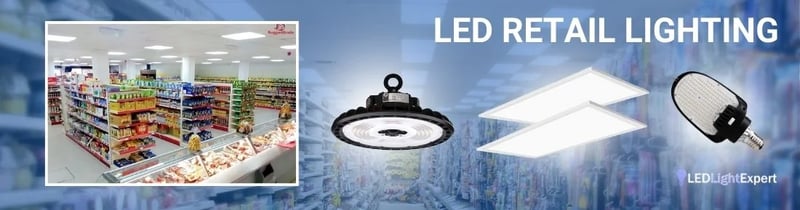
LED Retail Lighting

USA Based Experts in less than 60 seconds Call Now: 800-674-9420
On orders over $49.00
Up to 7 Years Free Warranty On LED Lights


Retail lighting should help customers evaluate merchandise clearly and comfortably. A good layout separates the store into zones: sales floor, display areas, checkout, fitting rooms, stockrooms, exterior entries, and window displays. Each zone may need a different light level, beam spread, CRI, color temperature, and control strategy.
LED retail fixtures give store owners more control than older fluorescent, halogen, or HID systems. The benefit is not just lower wattage. It is the ability to place light where merchandise needs attention, reduce glare in aisles, and maintain consistent color across the store.
Color temperature changes the feel of a store. Warm 3000K to 3500K light can make apparel, hospitality, and boutique spaces feel more comfortable. Neutral 3500K to 4000K is common for grocery, pharmacy, general merchandise, and clean commercial interiors. 5000K can work in big-box or task-heavy spaces, but it should be used carefully because it can feel stark in fashion or premium retail.
CRI matters when color accuracy affects the sale. Apparel, cosmetics, paint, furniture, jewelry, and food displays often benefit from 90+ CRI fixtures. Beam angle matters too: broad ambient light supports navigation, while accent lights help featured products stand out without making the whole store overly bright.
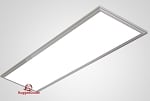
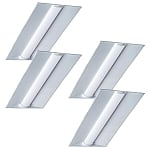
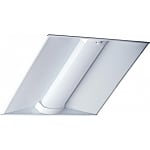
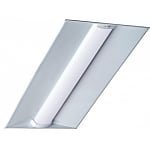
Panels, troffers, downlights, and linear fixtures provide the general light customers use to move through the store.
Track lights, adjustable downlights, display lights, and strip lights draw attention to featured merchandise, end caps, counters, and window displays.
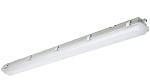
Stockrooms, offices, restrooms, and receiving areas need practical, efficient light with controls that match occupancy and operating hours.

Before ordering, confirm ceiling height, fixture spacing, target foot-candles, CRI, color temperature, dimming compatibility, voltage, and local energy-code requirements. A layered lighting plan usually performs better than one high-output fixture type used everywhere.
Retail lighting is partly technical and partly experiential. The sales floor needs enough brightness for customers to compare products, but the space also needs an inviting atmosphere. Warm light can support boutiques, restaurants, and hospitality-style retail. Neutral white light can keep grocery, pharmacy, and general merchandise aisles clear and easy to shop. Bright 5000K light is sometimes used in large modern stores, but it should be balanced against comfort and color accuracy.
Different products deserve different lighting. Apparel, cosmetics, jewelry, furniture, and food displays need color rendering that helps merchandise look natural. Strip lighting and rope lighting can support shelves, counters, signs, and architectural details when they are used as accents rather than the only light source.
Retail projects may also include parking lot lights, post top lights, wall packs, and storefront lighting outside the store. The full environment should feel connected from the parking area to the entry and through the sales floor.
Retail lighting should create a space where customers can see products clearly and still feel comfortable. Ambiance is not decoration alone; it is the combination of brightness, color, shadows, contrast, and fixture placement. A clothing store, pharmacy, showroom, grocery store, and electronics environment may each choose different colors, beam spreads, and settings.
5000K is known for a crisp white appearance and is used by some technology-focused stores, including Apple-style retail concepts, but it is not the standard for every customer experience. Warmer color temperatures can create a softer mood, while neutral white can support visibility without feeling harsh.
Rope lights, strip lights, spot lights, display lights, and accent fixtures can highlight shelves, signs, cases, and architectural features. Exterior retail lighting may include parking lot fixtures, post-top lights, wall packs, and entry lights so the shopping experience feels consistent from the lot to the checkout area.
Energy efficiency, lower operating costs, cooler operation than incandescent sources, long life, and reduced maintenance are practical benefits, but the final choice should still depend on the products, colors, atmosphere, and store design.
Retail spaces such as apparel shops, grocery aisles, showrooms, jewelry counters, and service desks use lighting in different ways. A display can use a spot fixture to enhance a product, while a larger space may use panels or downlights to create steady background light. The specific choice depends on ceiling height, merchandise colors, customer behavior, and the desired setting.
Kelvin color temperature is part of that choice. A 3000K warm tone can create a cozy, intimate atmosphere. A 4000K neutral white can support product visibility. A 5000K spectrum can create a vibrant, high-visibility environment when that is the preference. The point is not to copy a standard look; it is to choose the color and brightness that fit the store.
Retail creativity also comes from shapes and styles. Strip lights, rope lights, wall-mounted fixtures, post-top exterior lights, and parking-area lights can work together according to the building design. These options can improve customer visibility, energy efficiency, security, and appeal without turning the store into an overlit space.
Retail color temperature depends on the merchandise and brand experience. Fashion and hospitality spaces often use 3000K to 3500K. Grocery, pharmacy, and general merchandise stores often use 3500K to 4000K. Higher 5000K light can work in task-heavy or big-box spaces, but it may feel too stark for apparel or premium displays.
Most retail spaces should use at least 80 CRI, and color-sensitive merchandise often benefits from 90+ CRI. Apparel, paint, furniture, cosmetics, jewelry, and food displays all depend on accurate color rendering, so CRI and R9 performance should be checked before ordering.
General sales floors commonly use about 30 to 50 foot-candles, while featured displays, checkout counters, and product evaluation areas may need higher levels. A layered design with ambient, task, and accent lighting usually works better than making the whole store equally bright.
Yes. Color temperature, CRI, beam angle, glare, and fixture placement all affect how merchandise appears. Good lighting helps customers evaluate color, texture, labels, and details without harsh reflections or dark shelves.
Retail projects often combine track lights, downlights, panels, troffers, strip lights, display lighting, and exterior storefront lighting. The right mix depends on ceiling height, aisle layout, merchandise type, display strategy, and control needs.
Dimming is useful in many retail spaces because daylight, display changes, events, and store hours can require different light levels. Confirm that the fixture, driver, dimmer, and control system are compatible before installation.
Use the products above as a starting point, then confirm color temperature, CRI, fixture type, dimming, and display needs.
Contact LED Light Expert for help confirming the right fixture, layout, and controls before ordering.
Contact UsCall Now: (800) 674-9420


Dara Greaney is the CEO and President of LEDLightExpert.com, a leading company in commercial lighting solutions. Since 2015, he has led the company to achieve remarkable growth and recognition, including being an Inc5000 winner three times: No. 3783 in 2022, No. 2428 in 2021, and No. 531 in 2020.
Editing by David Peguero.
On orders over $49.00
Up to 7 Years Free Warranty On LED Lights