DLC Listed Lights
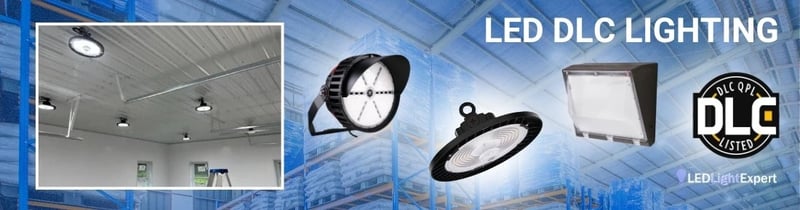
DLC listed lights give commercial buyers verified performance data for lumen output, efficacy, color quality, and rebate documentation. Compare the exact model on the DLC Qualified Products List before finalizing a project.


USA Based Experts in less than 60 seconds Call Now: 800-674-9420

On orders over $49.00

Up to 7 Years Free Warranty On LED Lights

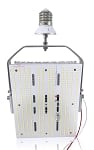
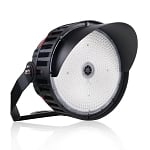
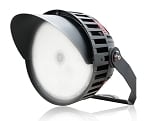

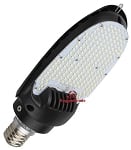


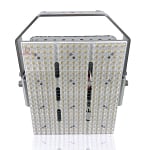
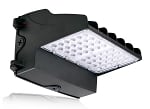
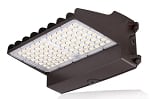

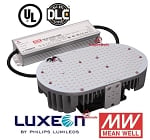
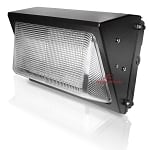


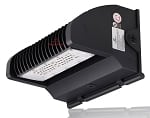







The DesignLights Consortium (DLC) is an independent nonprofit that tests and certifies commercial LED lighting products against rigorous performance standards. A DLC listing means the fixture has been independently verified for lumen output, efficacy (lumens per watt), color rendering (CRI), color temperature accuracy, power factor, and long-term lumen maintenance. This third-party validation gives buyers confidence that the specifications on the box match the performance in the real world — something buyers cannot verify from uncertified products alone. DLC listing also gives buyers the documentation many utility rebate programs ask for, though eligibility and rebate value depend on the exact model and local utility rules.
The DLC qualification process evaluates LED fixtures across multiple performance categories. Lumen output must match manufacturer claims within a tight tolerance. Efficacy (lumens per watt) must meet minimum thresholds that increase with each DLC revision. Color rendering index (CRI) must be verified at the claimed value. Color temperature (CCT) must fall within the ANSI standard for the stated Kelvin rating. Power factor, total harmonic distortion, driver reliability, and long-term lumen depreciation (L70 ratings) are all part of the testing protocol. Fixtures that pass earn a DLC listing that buyers, specifiers, and utility rebate programs can verify online.
For commercial and industrial lighting projects, DLC certification serves three critical functions. First, it ensures the fixtures you're installing will actually perform as specified — protecting your investment and your reputation. Second, DLC listed products may qualify for utility rebate programs, which can improve project economics when the fixture, model number, and local program requirements line up. Third, DLC listings give architects, engineers, and facility managers a trusted shortcut for specifying quality products without conducting their own independent testing. Browse our full selection of LED high bay lights and LED parking lot lights — all DLC listed.


Selecting DLC listed fixtures over uncertified alternatives delivers measurable advantages for any commercial lighting project:
The DesignLights Consortium (DLC) maintains a Qualified Products List (QPL) of LED DLC listed lights that meet rigorous performance and efficiency standards. DLC listed LED lights are often the starting point for commercial utility rebate review. DLC Premium can improve eligibility in some programs, but the utility, exact model number, controls package, and installation details determine the final incentive. Choosing DLC listed lights gives buyers verified performance data and the documentation often needed for utility incentive review.
Use the DLC Qualified Products List as the source of truth. Search by manufacturer, model number, wattage, CCT, distribution, and control package. A similar fixture from the same family may not qualify if the exact configuration is different, so keep the QPL record with the quote, submittal, invoice, and rebate documents.
For large projects, verify listing status before substitutions are approved. A change in driver, sensor, color temperature, lens, or wattage can change the qualified product record and may affect rebate eligibility.
Most commercial lighting rebate programs ask for product model numbers, DLC listing status, fixture counts, wattage, installation location, proof of purchase, and sometimes pre-approval. Some programs also require networked lighting controls, occupancy sensors, or DLC Premium listing for higher incentives.
The safest workflow is to confirm the utility requirements before ordering, then keep the spec sheet, QPL screenshot, invoice, and installation notes together. That gives the rebate reviewer a clear match between the installed fixture and the approved product.
DLC is used differently from UL or ETL. UL and ETL primarily address electrical safety listing, while DLC focuses on lighting performance, efficiency, quality, and product qualification data. That distinction is useful when a project needs both code-compliant fixtures and verified performance records for commercial lighting review.
DLC listed and DLC qualified are commonly used to describe products on the Qualified Products List. The listing tier may be Standard or Premium, and the technical requirements have changed over time as DLC added categories, controls, horticulture lighting, light-quality requirements, dimming expectations, and outdoor-lighting considerations. Always use the current QPL record instead of relying on an old version number alone.
Rebates may be prescriptive or custom. Prescriptive rebates use fixed rules such as fixture type, wattage reduction, controls, or listing tier. Custom rebates usually require an energy-savings calculation and more documentation. In both cases, the utility decides eligibility, so the fixture model, quantity, install location, controls, and invoice need to match the application.
The DesignLights Consortium grew out of regional energy-efficiency work and is often associated with NEEP, the Northeast Energy Efficiency Partnerships. In practical buying terms, DLC listed and DLC qualified usually point to the same idea: the product appears on the DLC Qualified Products List with tested performance data.
The listing version and tier still matter. Check the current QPL record because program requirements and product records change over time. Requirements have expanded over time to include efficiency, light quality, controls, horticulture categories, dimming, and outdoor-lighting considerations. Standard and Premium listings are different tiers, and Premium is generally the higher-efficiency qualification.
If the project is chasing rebates, ask whether the utility uses a prescriptive rebate, a custom rebate, or a control-based incentive. Prescriptive programs may use fixture type and watts saved. Custom programs may require an energy analysis. Either way, independent testing and current DLC documentation are valuable even when a rebate is not available.
DLC Standard listing confirms that a product met the baseline requirements for its category at the time of listing. DLC Premium is a higher-performance tier, but buyers should still compare the exact QPL record, not just the badge. A Premium fixture in one product family does not make every wattage, CCT, lens, or driver option automatically eligible.
DLC records can cover many commercial lighting types, including LED flood lights, high bays, parking lot lights, wall packs, retrofit kits, and some E39 LED bulbs. E26 lamps and residential-style products may follow different qualification paths, so the product category on the QPL matters.
The practical reason to check DLC is independent testing. Even when a buyer does not need a rebate, the QPL gives specifiers and facility managers a way to compare tested lumen output, efficacy, color data, power quality, controls, and long-term performance information before the order is placed.
The DLC program began as an energy-efficiency effort tied to organizations such as NEEP, the Northeast Energy Efficiency Partnerships, and later became a major commercial-lighting reference for qualified LED products. Manufacturers choose to submit products for testing so buyers, utilities, and specifiers can review independent performance data instead of relying only on a sales sheet.
DLC requirements are not static. Earlier versions such as 4.2, 4.3, and 4.4 were followed by newer requirements including 5.0 and 5.1, with more attention on light quality, controls, dimming, glare, horticulture categories, outdoor lighting, and long-term lumen maintenance. A project should check the current QPL record because a fixture that qualified under one version may need updated documentation for a current rebate or specification.
DLC Premium is not just a label; it is a higher tier built around higher efficacy and performance documentation for eligible product categories. Buyers should still confirm the exact listing because the model number, wattage, CCT, optic, driver, and control package can affect whether a product is listed and how it is treated by a utility program.
DLC certification is an important quality indicator for commercial LED lighting. Here are answers to the most common questions:
DLC (DesignLights Consortium) certification is an independent, third-party validation that a commercial LED lighting product meets rigorous performance standards for lumen output, energy efficiency (lumens per watt), color rendering (CRI), color temperature accuracy, power factor, and long-term reliability. Products are tested in accredited laboratories, and results are published on the DLC's searchable online database. DLC certification gives buyers independent product data and documentation that many utility rebate programs ask for.
DLC Standard certification confirms a fixture meets baseline performance requirements for efficacy, CRI, and reliability. DLC Premium is a higher tier that requires significantly greater energy efficiency — typically 20–30% higher lumens per watt than the Standard threshold. Premium-listed fixtures may qualify for higher utility incentives in some programs, but the exact model and local rules decide eligibility. If rebate value and long-term energy use are priorities, compare DLC Standard and DLC Premium products before ordering.
Many commercial lighting rebate programs use DLC listing as part of their review. Some require Standard or Premium listing, while others add controls, application, or pre-approval requirements. Rebate amounts vary by utility, fixture type, controls, and application. Confirm the program rules before ordering so the invoice, model number, and installed product match the rebate paperwork.
No. DLC certification is voluntary, and many LED products on the market are not DLC listed. Manufacturers must submit their products for independent testing and pay certification fees. Products that fail to meet DLC performance thresholds — or that have inflated specifications that don't match tested performance — will not receive certification. This is one reason DLC listing is useful: it gives buyers a public product record with tested performance data. Always look for the DLC listing number when specifying commercial LED fixtures.
Utility rebates for DLC listed LED lights vary by location, utility, fixture type, controls, and current program rules. High-wattage fixtures such as high bays and parking lot lights often receive closer rebate review because the energy impact is larger. Check your local utility's commercial lighting rebate program before ordering, or contact our team for help matching fixture documentation to the program requirements.
Do not rely on unverified specifications. DLC listed LED lights from LED Light Expert deliver independently tested, utility-rebate-eligible performance across parking lot lights, high bays, wall packs, retrofit kits, and more. With verified lumen output, documented efficacy, and product records that support rebate review, DLC listed fixtures are a practical starting point for commercial lighting projects that need verified performance and cleaner documentation. Browse our full DLC-certified selection and contact our team for help with rebate paperwork and project planning.
Contact LED Light ExpertCall Now: (800) 674-9420


Dara Greaney is the CEO and President of LEDLightExpert.com, a leading company in commercial lighting solutions. Since 2015, he has led the company to achieve remarkable growth and recognition, including being an Inc5000 winner three times: No. 3783 in 2022, No. 2428 in 2021, and No. 531 in 2020.


Editing by David Peguero.

On orders over $49.00
Up to 7 Years Free Warranty On LED Lights