Dusk to Dawn Photocells, Bypass Caps, and Sensors
USA Based Experts in less than 60 seconds Call Now: 800-674-9420
On orders over $49.00
Up to 7 Years Free Warranty On LED Lights


Dusk-to-dawn lighting controls are devices designed to keep your lights working automatically based on the time of day. Rather than relying on manual switching or preset timers, these systems sense the natural transition between day and night.

The result is convenient, energy-efficient lighting that stays on when it's dark and turns off once the sun rises. This hands-free operation helps lower electricity bills, reduce the hassle of manual control, and improve safety by keeping outdoor areas well-lit during the evening and nighttime hours.
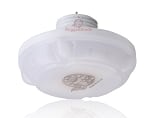
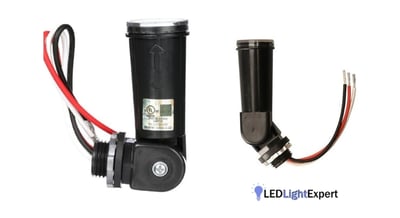
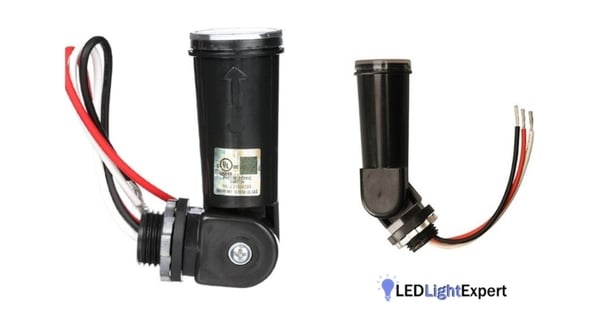
A dusk-to-dawn photocell light sensor is a component that monitors ambient light levels. When natural light drops below a certain threshold, it sends a signal to switch on the connected fixture. Once daylight returns, the sensor deactivates the light. This automatic on/off functionality provides a hands-off approach to outdoor and indoor lighting.
Photocells usually rely on photoresistors or photodiodes that respond to changes in illumination. As the environment darkens, the sensor's electrical resistance shifts, prompting the fixture to activate. When daylight reappears, the resistance rises, triggering an "off" command for the light.
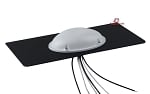
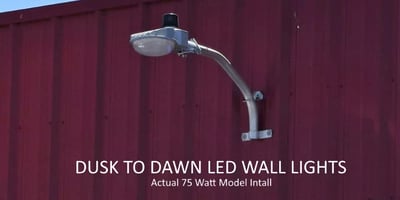
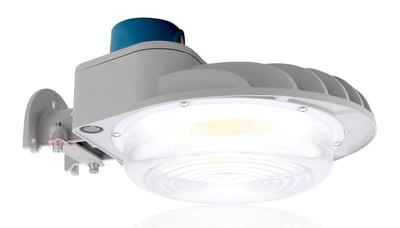
A dusk-to-dawn photocell can be integrated into street lights, floodlights, wall packs, or decorative fixtures. The sensor's straightforward design and flexible installation make it a popular solution for various LED lighting applications.
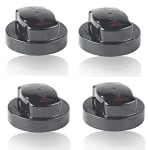
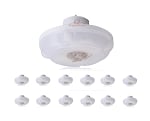
Bypass caps are small covers or plugs that replace the photocell on a lighting fixture. When installed, they prevent the photocell from controlling the light, effectively disabling the automatic on/off feature.
There are instances where automatic light sensing isn't helpful. If you have a timer-based system or smart home integration, you may prefer to manage lighting through those methods instead of a photocell.
First, remove the existing photocell from the lighting fixture. The bypass cap is then placed in the photocell's position (usually a twist-lock socket), sealing off the port. This ensures the fixture no longer reads ambient light levels.
When selecting a dusk to dawn photocell light sensor, it's important to consider voltage compatibility, weatherproof ratings, and installation style.
LED systems can be 120V, 277V, or 480V. Ensure your components match the fixture's voltage. Additionally, outdoor sensors need rugged construction (IP65 or IP67 ratings) to withstand moisture, debris, and temperature extremes.
Accessories often use a twist-lock design for quick attachment or are hardwired directly. Twist-lock setups allow for fast swaps or upgrades, while hardwired units provide a permanent, secure connection.
Modern dusk-to-dawn photocell sensors work cleanly with motion-activated controls and dimming ballasts to create adaptive lighting ecosystems. When paired with occupancy sensors, facilities eliminate wasted energy in intermittently used areas: stairwells, parking structures, and pedestrian walkways activate only when movement is detected, then return to standby. Daylight harvesting sensors further optimize by dimming indoor ambient lighting when natural daylight is sufficient, maintaining visual comfort while reducing demand when controls, daylight availability, and schedules are set correctly. Advanced models offer customizable sensitivity, dawn/dusk hysteresis adjustment, and optional 0–10V dimming integration—allowing facilities managers to fine-tune behavior for unique site conditions without expensive rewiring.
IP65–IP67 rated sensors resist moisture, UV degradation, and temperature extremes, supporting outdoor reliability in coastal, dusty, or high-temperature regions when matched to the site.


Bypass caps are used in twist-lock photocell receptacles when the fixture should stay electrically available for a timer, switch, smart control, or building-management system. The cap replaces the photocell and closes the control circuit, so the fixture no longer turns itself off in daylight. That is different from bypassing a ballast; ballast removal is a separate retrofit step for lamps that require line voltage.
Match the bypass cap to the receptacle style and voltage rating before installation. For commercial fixtures, confirm 3-pin, 5-pin, or 7-pin NEMA compatibility, gasket condition, UL or ETL listing, and whether dimming or auxiliary control pins need to remain active.
A photocell (or dusk-to-dawn sensor) reacts to ambient light levels, turning lights on when it gets dark and off when it gets bright. A motion sensor reacts to physical movement within its range, regardless of light levels unless it is a combined unit.
Bypass caps are used when you want to control the light via a central switch, a timer, or a smart system. If a photocell is left in, it will override those controls by forcing the light off during the day, even if your timer or switch is set to on.
No, photocells are voltage-specific. You must match the photocell to your system's voltage, such as 120-277V for standard commercial use or 480V for heavy industrial applications. Using the wrong voltage can damage the sensor.
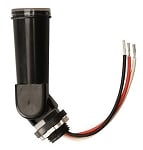
A twist-lock photocell uses a NEMA standard 3-prong, 5-prong, or 7-prong base that allows you to simply push the sensor into a socket on top of the fixture and twist it to lock it in place. This makes replacement fast and tool-free.
Yes. Pairing a photocell with a motion detector ensures lights operate after dark and raise output when someone is nearby. This can reduce wasted runtime while keeping a base lighting strategy in place.
For projects seeking straightforward dusk-to-dawn control or an advanced setup, there's a broad range of options to suit your needs. Pairing the right components can reduce wasted runtime, avoid control conflicts, and keep fixtures operating on the intended schedule. Match your voltage and weatherproof requirements today for a reliable, simple lighting system.
Contact us for expert guidance on selecting the right photocell sensors and bypass caps for your lighting system.
Contact UsCall Now: (800) 674-9420


Dara Greaney is the CEO and President of LEDLightExpert.com, a leading company in commercial lighting solutions. Since 2015, he has led the company to achieve remarkable growth and recognition, including being an Inc5000 winner three times: No. 3783 in 2022, No. 2428 in 2021, and No. 531 in 2020.
Editing by David Peguero.
On orders over $49.00
Up to 7 Years Free Warranty On LED Lights