LED Baseball Field Lights

USA Based Experts in less than 60 seconds Call Now: 800-674-9420
On orders over $49.00
Up to 7 Years Free Warranty On LED Lights


Baseball field lighting has to do more than make the diamond bright. Players need to track a small, fast-moving ball from the pitcher’s hand to home plate, through the infield, and into the outfield. The right LED layout balances foot-candles, uniformity, beam angles, glare control, pole height, and spill light so the field is playable without wasting energy.
Many older baseball fields still use 1500 watt metal halide sports lights. Those fixtures also draw ballast power, take time to warm up, lose output as lamps age, and require routine lamp and ballast replacement. LED baseball field lights can reduce energy use and maintenance while improving light control, but the replacement should be planned around the field layout rather than a simple watt-for-watt swap.

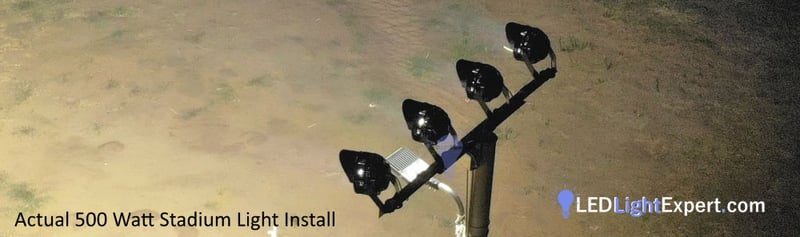
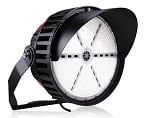
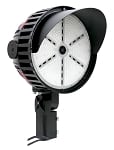
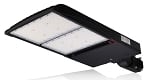
A 450 to 600 watt LED sports light can often replace a 1500 watt metal halide fixture on baseball fields, depending on pole height, beam angle, fixture output, and target light levels. The energy savings can be substantial because the LED fixture uses less wattage and removes the ballast load.
Baseball fields usually need different light levels in different zones. The infield often requires higher foot-candles than the outfield because plays happen faster and the ball changes direction quickly. Little League and recreational fields may use lower targets than college, professional, or broadcast facilities.

Uniformity is just as important as average brightness. A field with bright hot spots and dark pockets can make the ball harder to track than a field with lower but more even light. Recreational fields often plan around 20 to 30 foot-candles in the outfield and 30 to 50 foot-candles in the infield, while higher levels are used for advanced play.
High poles and long throws need narrower optics to reach the target area. Lower poles and shorter throws may use wider distributions. Baseball fields often need a mix of beam angles because home plate, base paths, infield dirt, outfield grass, and warning-track areas sit at different distances from the poles.
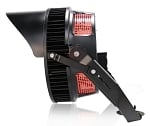
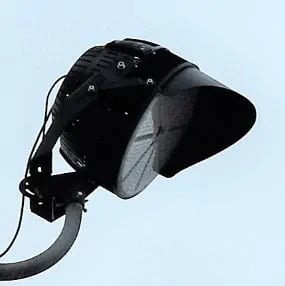
LED sports lights should be aimed so players, spectators, and neighboring properties are not exposed to unnecessary glare. Visors, shields, careful aiming, and a photometric study all help keep light on the field. Controls can reduce output for practice, maintenance, and non-game use.
A photometric study models the field before installation. It shows fixture count, pole locations, aiming angles, expected foot-candles, uniformity ratios, and spill light. That makes it easier to compare fixture options and avoid buying equipment that is either underpowered or excessive for the field.
Use the products above as a starting point, then confirm field dimensions, level of play, pole height, voltage, target light levels, and local lighting requirements before ordering.
Light levels depend on the level of play. Recreational and Little League fields often use about 20 to 30 foot-candles in the outfield and 30 to 50 foot-candles in the infield. College, professional, and broadcast fields require higher levels and tighter uniformity, so they should be planned with a photometric layout.
In many baseball-field applications, a 450 to 600 watt LED sports light can replace a 1500 watt metal halide fixture while using far less power. The right replacement depends on pole height, beam angle, field dimensions, and target foot-candles.
Higher poles and longer throws usually need narrower beam angles to reach the infield, outfield, and warning track without wasting light. Lower poles or shorter throws may use wider optics. A mixed beam plan is common because home plate, bases, and outfield zones have different distances from the poles.
Yes, a photometric study is strongly recommended for permanent baseball field lighting. It shows expected foot-candles, uniformity, pole locations, aiming, glare zones, and spill before the fixtures are purchased or installed.
Replacing 1500 watt metal halide fixtures plus ballast load with 450 to 600 watt LED sports lights can reduce lighting energy use by roughly 60 to 75 percent, depending on the existing system and run hours. The savings are larger on fields with long seasons, night practices, or tournament schedules.
Start with field size, level of play, pole height, pole count, target foot-candles, beam angles, glare control, voltage, and control requirements. The goal is not just brightness; players need uniform light that lets them track the ball safely from pitch to fly ball.
Use the products above as a starting point, then confirm field dimensions, pole height, beam angle, voltage, and target light levels.
Contact LED Light Expert for help confirming the right fixtures before ordering.
Contact UsCall Now: (800) 674-9420


Dara Greaney is the CEO and President of LEDLightExpert.com, a leading company in commercial lighting solutions. Since 2015, he has led the company to achieve remarkable growth and recognition, including being an Inc5000 winner three times: No. 3783 in 2022, No. 2428 in 2021, and No. 531 in 2020.
Editing by David Peguero.
On orders over $49.00
Up to 7 Years Free Warranty On LED Lights