


Quick Answer
LED high bay lights are specialized fixtures designed for spaces with ceilings over 12 feet high and require 10,000+ lumens output. They can be round (UFO) or rectangular (linear), and the right LED high bay can reduce energy use, improve useful light levels, and reduce relamping compared with many metal halide or fluorescent systems. Installation typically requires disconnecting power, removing old fixtures, mounting new hardware, connecting wiring safely, and testing before operation.
LED High Bay Lights Buyers Guide
In warehouses, manufacturing plants, gymnasiums, and other large facilities, LED high bay lights are on the job, providing strong lighting quality, energy efficiency, and long-term savings. For the right facility, an LED high bay upgrade can improve visibility and lower operating costs over time.
Let's explore the benefits of LED high bays. We'll break down the costs involved, and provide a step-by-step installation process. We'll also compare LED high bay lights to traditional lighting options, discuss essential maintenance tips, and help you choose the right type of lights for your specific needs. Finally, we will explain what to compare before choosing LED high bay lights for your facility. Use this guide to evaluate an upgrade, improve an existing high-bay layout, or prepare better questions before requesting a fixture recommendation.
Table of Contents
- What are LED High Bay Lights?
- Benefits of Upgrading to High Bay LED Shop Lights
- Cost Analysis of LED High Bay Retrofitting
- Step-by-Step Guide to Retrofitting High Bay Lights
- Maintenance Tips for LED High Bay Lights
- Types of High Bay Lights and Their Ideal Applications
- Design a Layout for Your High Bay Lights
- FAQs About LED High Bay Lights
What are LED High Bay Lights?
Bay lighting is the name of lights used in commercial bays. Over time they became known as high bay for over 12 feet high and low bay lights for under 12 feet. Today LED high bay lights are any fixtures hung at higher than 12' and over 10,000 lumens. They can be round or rectangular and hang from one or two points.
If your commercial space has high ceilings, LED high bay lights may be the right fixture type. LED high bay lights are special lights that are designed for spaces with high ceilings, such as warehouses, factories, stadiums, or gyms. They provide bright and uniform illumination for large areas, enhancing the visibility and safety of your space.
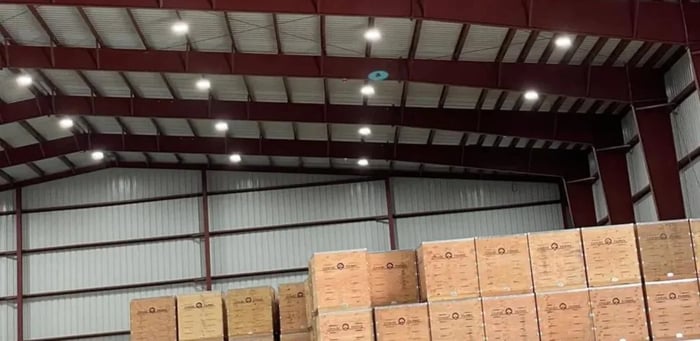
LED High Bay Light Warehouse Installation - LED Light Expert
Benefits of Upgrading to High Bay LED Shop Lights
Switching to high bay LED shop lights can bring advantages across multiple areas when the fixtures are sized and spaced correctly:
Energy Savings and Efficiency
LED high bay lights are known for energy efficiency. They often use less power than traditional lighting solutions like metal halide or fluorescent fixtures while delivering more useful light to the work area when optics and mounting height are matched correctly. This reduced energy consumption can lower utility bills; the Department of Energy notes that LED lighting can cut lighting energy use significantly in the right application. Actual payback depends on fixture count, wattage reduction, run hours, labor, maintenance access, and local electric rates.
Improved Light Quality and Brightness
One of the main advantages of LED high bay lights is improved light quality. LEDs can provide brighter, more uniform distribution and reduce dark spots when spacing, beam angle, and mounting height are planned correctly. The result is a more comfortable and productive environment across warehouse floors, gymnasiums, retail spaces, and other high-ceiling facilities. The enhanced visibility improves safety, reduces eye strain, and can even boost morale in workspaces.
Longevity and Durability
LED high bay lights are built to last. With lifespans exceeding 50,000 hours, these lights can outlast many traditional fixtures by a wide margin. This means fewer replacements and lower maintenance costs over time. LED lights are also more durable, withstanding shocks, vibrations, and extreme temperatures much better than their predecessors. This durability makes them ideal for tough environments like manufacturing plants or outdoor facilities.
Environmental Impact and Sustainability
LEDs can be a lower-impact choice than many traditional lighting options for several reasons. First, their energy efficiency means a lower carbon footprint. Second, LEDs last much longer, which means fewer lamps are discarded and fewer are sitting in landfills. Third, LEDs produce less heat, which can contribute to a cooler work environment and reduce the need for additional cooling systems. Finally, LEDs contain no harmful substances like the mercury found in fluorescent lights.

Cost Analysis of LED High Bay Retrofitting
When considering the switch to high bay LED shop lights, it's essential to weigh both the initial costs and the long-term financial benefits. Below, we break down the factors that contribute to the overall cost-effectiveness of retrofitting with LEDs.
Key Takeaway: LED high bay lights maintain their brightness and efficiency over time, providing consistent, high-quality illumination at a fraction of the cost. The initial higher investment in LEDs is easily justified by the significant savings and reduced environmental impact over their operational lifespan.
- Initial Investment Costs: LED lights are more expensive initially due to their advanced technology and longer lifespan, but this cost is quickly offset by the savings they generate.
- Return on Investment (ROI) Timeline: Depending on the energy rates in your area and the size of your installation, you can start seeing returns in as little as 12 to 24 months. The significant reduction in energy consumption combined with lower maintenance costs accelerates the payback period.
- Long-term Savings: LEDs are highly energy-efficient, consuming up to 80% less power than traditional lighting. This reduction in energy use translates directly into lower utility bills. Additionally, LEDs have a much longer lifespan, so you'll spend less on replacements and maintenance over the years.
- Outperforms Traditional Lighting Solutions: Traditional lighting solutions like metal halide and fluorescent lights tend to degrade quickly, requiring frequent replacements and higher maintenance costs. They also consume more energy and generate more heat, further driving up operational expenses.
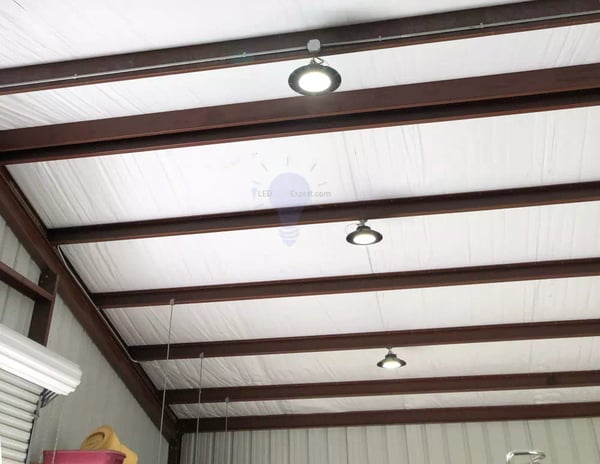
Step-by-Step Guide to Retrofitting High Bay Lights with LEDs
Tools and Materials Checklist
Before you begin retrofitting, gather the necessary tools and materials to ensure a smooth installation. Here's a checklist of what you'll need:
- LED high bay light fixtures
- Mounting brackets or chains (if not already provided)
- Screwdrivers (flathead and Phillips)
- Wire strippers and connectors
- Voltage tester
- Ladder or lift (depending on the height of your ceiling)
- Safety gloves and goggles
- Electrical tape
- Circuit breaker lockout/tagout kit (for safety)
Installation Steps
Follow these steps to successfully retrofit your high bay lights with LEDs:
- Power Off: Always disconnect the power at the circuit breaker before starting any electrical work. Use a lockout/tagout kit to prevent accidental re-energization.
- Remove Existing Fixtures: Disconnect the wiring by unscrewing the wire connectors and separating the wires. If the old fixtures are heavy, have someone assist you to avoid injury.
- Install Mounting Hardware: Depending on your new high bay LED light fixtures, you may need to install new mounting brackets or chains. Secure the hardware to the ceiling, ensuring it can support the weight of the LED fixtures.
- Connect the Wiring: Strip the insulation off the ends of the wires coming from the ceiling and the LED fixture. Connect the wires using wire connectors — typically, black to black (live), white to white (neutral), and green to green or bare copper (ground). Wrap the connections with electrical tape for added security.
- Mount the LED Fixtures: Attach the LED high bay fixtures to the mounting hardware. Ensure the fixtures are securely fastened and the wiring is neatly tucked away.
- Test the Lights: Once everything is in place, restore power at the electrical panel and test the lights. Check for any flickering or issues with brightness. If the lights don't turn on, switch off the power and double-check the wiring connections.
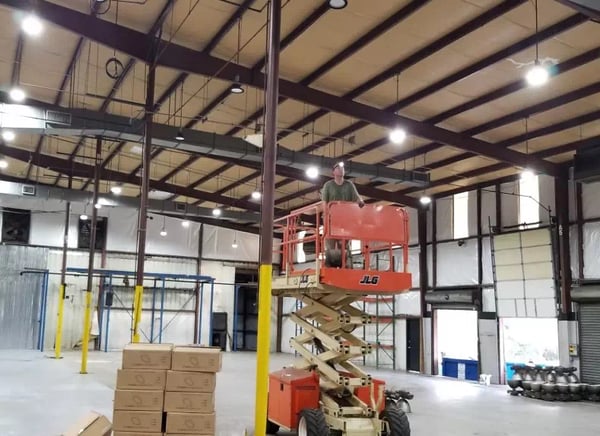
LED High Bay Lights Installation - LED Light Expert
Safety Precautions During Installation
Safety is paramount when working with electrical systems. Follow these precautions to minimize risk:
- Make sure the power is off. Use a voltage tester to confirm that no electricity is flowing to the fixtures.
- Ensure your ladder or lift is stable and rated for the height you're working at.
- Wear safety gloves and goggles to protect against electrical shocks and debris.
- Ensure that the circuit you're connecting the LED lights to can handle the load. If unsure, consult an electrician to verify the capacity.
- If the lights or tools are heavy or awkward, have someone assist you during the installation to prevent accidents.
Troubleshooting Common Issues
Even with careful installation, you might encounter a few issues. Here's how to troubleshoot common problems:
- Lights Won't Turn On: Double-check that the wiring connections are secure and correct. Ensure the circuit breaker is on and the voltage is present at the fixture.
- Flickering Lights: Flickering could indicate a loose connection or an incompatible dimmer switch. Tighten all connections and ensure the dimmer is compatible with LED lighting.
- Uneven Light Distribution: If the light appears uneven, check the alignment of the fixtures and ensure they're mounted at the correct height and distance.
- Excessive Heat: LEDs should not produce excessive heat. If they do, ensure they're not installed in an enclosed space or near other heat-producing devices. Verify that the fixture is rated for the environment.
Maintenance Tips for LED High Bay Lights
To help LED high bay lights perform well, establish a routine for regular cleaning and inspection. Over time, dust and debris can accumulate on the light fixtures, reducing their brightness and efficiency. Here's how to keep them in top condition:
- Perform a visual inspection of your LED shop lights at least once a month. Look for any signs of damage, such as cracks, loose connections, or discoloration. Ensure that the fixtures are securely mounted and that the wiring is intact.
- Dust and dirt can accumulate on the surface of the lights, reducing their output. Clean the fixtures every three months using a soft cloth or brush. For stubborn grime, use a mild detergent solution, but avoid using harsh chemicals that could damage the fixture.
- Observe the lights for any flickering, which can indicate an issue with the electrical connections or the fixture itself. Start by tightening all electrical connections and ensuring the dimmer switch is LED-compatible. If flickering persists, consult an electrician to inspect the power supply.
- If you notice the lights are dimmer than usual, first check for any obstructions or dirt on the fixtures. If cleaning doesn't solve the problem, it could be an issue with the power supply or an aging LED driver. Replacing the driver or checking the voltage levels can often resolve this issue.
- While LEDs produce less heat than traditional lights, improper ventilation can still cause them to overheat. Ensure that the fixtures are not enclosed and have adequate airflow. If the environment is particularly hot, consider installing fixtures specifically designed for high-temperature settings.
Tips for Extending the Lifespan of LED High Bay Lights
LED high bay lights are known for their long lifespan, but there are steps you can take to maximize their durability and performance:
- Install in Suitable Environments: Ensure the high bay LED light fixtures are installed in environments appropriate for their design. For example, if your facility has high humidity or extreme temperatures, choose LED fixtures rated for those conditions to prevent premature failure.
- Use Quality Fixtures and Components: Cheaper alternatives may save money upfront but often fail sooner and require more frequent replacements.
- Avoid Frequent Switching: Constantly turning LED lights on and off can shorten their lifespan. Minimize the number of times the lights are switched on and off. If your facility requires frequent on-off cycles, consider using LEDs with a high on-off cycle rating.
- Monitor and Maintain the Power Supply: Ensure the power supply is stable and within the recommended voltage range for your LED fixtures. Fluctuations in voltage can cause wear on the LEDs and reduce their lifespan. Installing surge protectors can help safeguard your lights from power spikes.

Actual Install 240 Watt Fixtures - LED High Bay Lights - LED Light Expert
Types of High Bay Lights and Their Ideal Applications
Below is an overview of the most common types of high bay lights and the facilities where they are commonly used. You'll find all of these fixtures at LED Light Expert. Please get in touch with our helpful customer care team if you need anything.
Key Takeaway: High bay fixtures come in multiple types designed for different applications. UFO lights provide excellent heat dissipation and efficiency for industrial settings, linear fixtures often work well in retail with wide aisles, and specialized options like motion-sensor and dimmable variants offer additional energy savings and environmental control capabilities.
UFO High Bay Lights
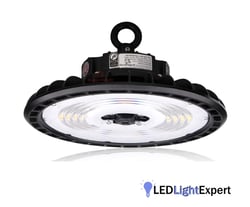
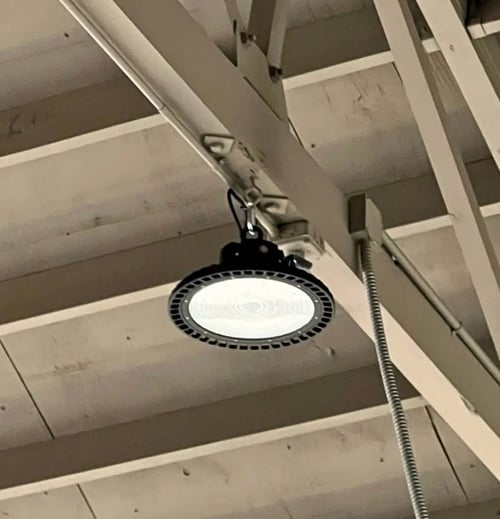
UFO high bay lights are circular, compact, and highly efficient. They're known for their robust design and excellent heat dissipation, making them a popular choice in industrial settings. Warehouses, manufacturing plants, and large retail stores benefit from UFO high bay lights due to their uniform light distribution and durability.
Linear High Bay Lights
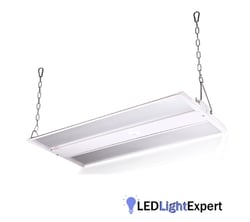
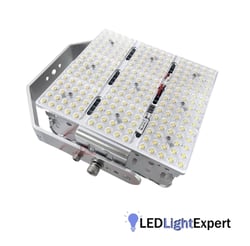
Linear high bay lights are rectangular and replace traditional fluorescent tube lighting. They provide even illumination across large areas and are commonly used in spaces with wide aisles, gymnasiums, auto dealerships, and other applications that need long, linear light distribution.
Motion Sensor Warehouse Lights
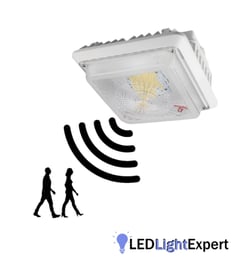
Motion sensor high bay lights are equipped with sensors that detect movement, automatically turning the lights on or off as needed. This feature can improve energy savings by reducing unnecessary runtime in low-occupancy areas. Motion sensors are ideal for warehouses and manufacturing plants where areas are not continuously occupied.
Dimmable High Bay Lights
Dimmable high bay lights offer adjustable brightness, allowing you to control the light levels based on the needs of the environment. This flexibility can further enhance energy savings and improve the overall lighting experience. They're often used by retail stores and gymnasiums, where varying light levels may be required throughout the day.
High Voltage 480v Warehouse Lights
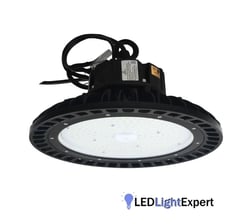
These high bay lights are designed for facilities with higher voltage requirements, ensuring consistent performance in demanding environments. Large-scale industrial facilities and warehouses with high ceilings and high voltage power systems often require 480v lights for optimal performance.
Replacement 400-Watt Metal Halide
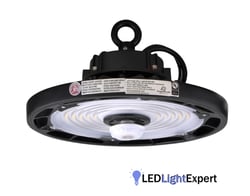
400-watt replacements are used to upgrade from outdated 400-watt metal halide fixtures to LEDs. Facilities like auto dealerships, large retail stores, and warehouses that have traditionally used metal halide lights will benefit most from this upgrade.
Design a Layout for Your High Bay Lights
LED high bay lights are a smart and efficient way to light up your commercial space. They provide bright and uniform illumination for large areas, enhancing the visibility and safety of your space. However, before you buy and install LED high bay lights, you need to plan the layout of your lights carefully. The layout of your lights depends on several factors, such as:
What is The Purpose of Your Space?
Different spaces have different lighting needs and preferences. For example, if you have a retail store, you may want a bright light to attract more customers and showcase your products. If you have a warehouse, you may want a moderate light to improve the work environment for your staff. If you have a storage area, you may want a low light to save energy and reduce costs. The lighting needs of your space are measured in lux, which is the amount of light that falls on a surface per square meter. The recommended lux levels for different spaces are:
- Retail store: At least 800 lux / 74 fc on the ground to create a vibrant and inviting atmosphere.
- Warehouse: Around 500 lux / 46 fc on the ground to provide enough visibility and comfort for your workers.
- Storage: Around 300 lux / 28 fc on the ground to provide sufficient lighting and save energy.
When you know the requirements, it is time to choose the wattage that has enough lumens to reach your desired lux or footcandle number.
Wattage and Lumens - How to choose the correct amount
High Bay LED lights are available in different watts, but it's the lumens you need to keep an eye on. As LEDs get more efficient they will use fewer and fewer watts. You can easily choose one depending on the height where the high bay lights are installed. There are different watts for different levels of height:
- 10-15 feet – This height is ideal for lights with 10,000 to 15,000 lumens.
- 15-20 feet – This height is ideal for lights with 16,000 to 20,000 lumens.
- 20-25 feet – This height is ideal for lights with 20,000 to 30,000 lumens.
- 25-35 feet – For this height, lights around 33,000 lumens are a common starting point.
LED High Bay Light Installation - LED Light Expert
FAQs About LED High Bay Lights
Below, we've addressed some common questions about LED high bay lights. Please contact us if you'd like more information about our products.
The number of LED high bay lights you need depends on the size of the area you're illuminating, the height of your ceilings, and the brightness level required for your specific application. A general rule of thumb is that for every 100 square feet, you need approximately 2,000-3,000 lumens. However, it's best to conduct a lighting assessment or use a lighting layout tool to determine the exact number of fixtures needed to achieve optimal illumination.
The spacing between high bay lights depends on the ceiling height and the beam angle of the fixtures. For warehouse ceilings that are 20-30 feet high, a spacing of 15-20 feet between fixtures is generally recommended. For ceilings over 30 feet, spacing of 20-30 feet is ideal. Proper spacing ensures even light distribution without dark spots or overly bright areas.
Some LED high bay lights are rated for outdoor use, but it's essential to check the IP rating of the fixtures. An IP rating indicates the level of protection against dust and moisture. For outdoor use, look for LED lights with an IP65 or higher rating to ensure they can withstand exposure to the elements. These lights are ideal for outdoor warehouses, loading docks, or large outdoor workspaces.
LED Warehouse Lights Explained
Dan demonstrates everything you need to know about LED high bay lighting.
LED Light Expert Has Your LED High Bay Lights
LED high bay lights from LED Light Expert offer the efficiency, performance, and reliability that modern facilities demand. For the right fit, compare ceiling height, aisle layout, required footcandles, beam angle, voltage, mounting method, controls, and ambient temperature before choosing a fixture. Contact us for help matching those details to the right high bay lights.
Related Articles
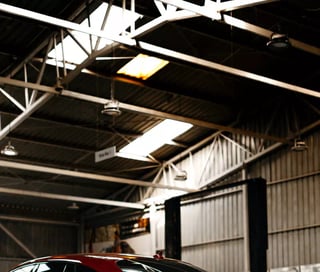 Warehouse Lights Coverage Area
How to calculate LED warehouse light coverage area and determine how many fixtures you need.
Warehouse Lights Coverage Area
How to calculate LED warehouse light coverage area and determine how many fixtures you need.
 LED Shop Lighting Buyers Guide
Complete guide to choosing LED shop lights for garages, workshops, and retail shops.
LED Shop Lighting Buyers Guide
Complete guide to choosing LED shop lights for garages, workshops, and retail shops.
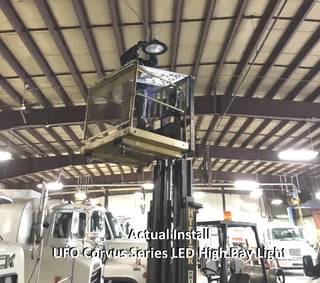 Industrial Lighting Guide
Learn about industrial LED lighting options for warehouses, factories, and large commercial spaces.
Industrial Lighting Guide
Learn about industrial LED lighting options for warehouses, factories, and large commercial spaces.

About the Author


Need Help Choosing LED High Bay Lights?
Our lighting experts can help you find the right LED high bay fixtures for your warehouse, gym, or industrial space.
SHOP LED HIGH BAY LIGHTS


