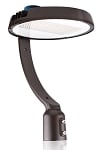
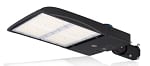
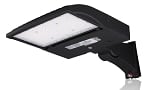
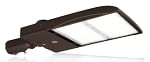
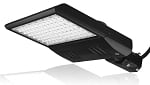
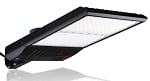
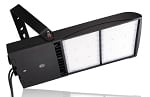
Dimmable LED Parking Lot Lights

USA Based Experts in less than 60 seconds Call Now: 800-674-9420
On orders over $49.00
Up to 7 Years Free Warranty On LED Lights


Dimmable LED parking lot lights let you adjust light output by schedule, sensor, or control system instead of running every fixture at full brightness all night. The goal is simple: keep the lot bright when traffic, security, or camera coverage requires it, then reduce output during low-use hours.
Most commercial dimmable parking lot fixtures use 0-10V controls. Before ordering, confirm that the fixture driver, control wiring, photocell, motion sensor, timer, or building-management system all support the same control method.
0-10V dimming uses a low-voltage DC control signal sent through a dedicated pair of control wires to the LED driver. At 10V, the fixture runs at full output. At the low end, the driver dims to the minimum level it supports, often around 10%.
Common options include manual dimmers, programmable timers, motion sensors, photocells, and building-management controls. Motion sensors can hold fixtures at a lower standby level when no activity is detected, then raise output when vehicles or pedestrians enter the area. Photocells can handle dusk-to-dawn switching, while timers can reduce output during known low-traffic periods.


Adding dimming capability can improve energy use, glare control, and fixture management when the controls match the site.
Confirm driver and control compatibility before ordering. The fixture, dimmer, motion sensor, timer, or building-management system must all support the same 0-10V control method.
LED dimming is different from reducing power to older incandescent lamps. Many high-output LED fixtures need a compatible driver and control method. Standard wall dimmers made for incandescent loads can cause flicker, limited dimming range, audible noise, or driver problems when they are used with the wrong LED fixture.
Analog dimming changes the driver output through a control signal such as 0-10V. Digital dimming methods can use pulse-width modulation or networked controls, depending on the system. For parking lot lights, 0-10V remains common because the fixture power wiring stays separate from the low-voltage control pair.
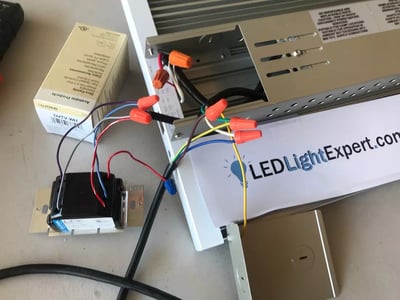
Retrofit projects need a wiring plan. New installations can include the 0-10V control pair in the design. Existing poles may require new low-voltage control wires, compatible sensors at the pole, or a control strategy that works with the available conduit and switching. Before installation, confirm polarity, wire color conventions, local code, and the driver documentation.
When replacing metal halide or high pressure sodium area lights, use the old wattage only as a starting point. A 100W LED fixture around 13,000 lumens may replace some 250W to 320W HID fixtures, while higher-output LED fixtures may be needed for larger lots, taller poles, or wider spacing. Always compare delivered lumens, optics, pole height, and layout instead of using wattage alone.
Dimming can also change how a parking lot is used after hours. A site may keep a lower base level overnight, raise output for vehicles or pedestrians, and still meet camera or security needs when the layout and control settings are planned correctly.
Dimming is one of the most effective ways to reduce parking lot lighting costs when the controls match the site. These answers cover the main planning points.
0-10V dimming is an analog control method that uses a low-voltage DC signal to tell the LED driver how much light to produce. At 10V the fixture runs at full output. At the low end, the fixture dims to the minimum level supported by the driver, often around 10%.
It depends on the driver and wiring. If the fixture already has a 0-10V dimmable driver and accessible control leads, a compatible dimmer, timer, sensor, or control system may be added. If the fixture has a non-dimmable driver, replacing the driver or fixture is usually cleaner than trying to retrofit controls in the field.
Savings depend on fixture wattage, dim level, nightly schedule, occupancy, photocell operation, and whether the lot needs a minimum light level for cameras or security. A lot that dims during low-traffic hours can save meaningful energy, but the right estimate should be based on the actual schedule and control strategy.
Quality LED parking lot fixtures should maintain the same color temperature while dimmed. The light output changes, but the CCT should not shift the way older technologies could. To avoid flicker or poor low-end performance, match the fixture driver with compatible controls.
Reduce full-output runtime when the lot is empty. Dimmable LED parking lot lights let you match output to actual demand: full brightness during peak hours, reduced output overnight, and higher output when motion controls call for it. Confirm fixture compatibility, control wiring, voltage, photocell needs, and layout before ordering.
Contact LED Light Expert0-10V is one of the original electronic lighting control systems and still the most common on commercial outdoor fixtures. A control signal between 0 and 10 volts is carried to the driver on a separate pair of wires, independent of the supply. The driver reads that voltage and sets its output accordingly: at 10 volts it delivers 100% output, and as the signal falls the output falls with it. Because the control pair is separate from the power feed, dimming can be added to a circuit without rewiring the supply.
The saving is proportional and real. A 100 watt LED area light dimmed to 10% output draws about 10 watts. That is the entire argument for controls on a parking lot: a site that must be fully lit at 8pm rarely needs the same level at 3am, and the fixture that runs at reduced output for those hours is also running cooler, which extends the life of the driver and the LEDs.
Pairing dimming with motion sensing is where it becomes most effective. A lot can hold a low baseline level for security and camera coverage and step to full output when a vehicle or person is detected. Warehouses have used this pattern on high bays for years, and it transfers directly to parking and service yards.
A note on dimming methods, because the two are not equivalent. 0-10V is analogue and adjusts driver output directly. PWM, or pulse width modulation, switches the supply on and off rapidly and averages the result - a 50-50 on-off ratio produces roughly 50% brightness. PWM holds colour temperature steady across the dimming range and does not hum, but poor-quality PWM dimmers can flicker visibly at low duty cycles. For outdoor commercial work, 0-10V is the safer default.
Dimming does not change the sizing question, it only changes what happens after installation. The fixture still has to be specified for full output at the level the site needs, then dimmed down from there. For replacements, the working conversions are straightforward: a 250 to 320 watt metal halide or high-pressure sodium fixture is replaced by a 100 watt LED at around 13,000 lumens; a 400 watt metal halide or HPS by a 150 watt LED at about 20,000 lumens; and a 750 watt unit by a 240 watt LED at roughly 32,000 lumens.
Specify the dimming driver at the time of order. Retrofitting dimming capability to a fixture that was not built for it is not practical, and a non-dimming driver cannot be made to respond to a 0-10V signal afterward.
For pole height, spacing, optics, and the broader selection question, the main category covers it: LED parking lot lights.
A dimming driver adds modestly to fixture cost and is almost always worth it on a site that runs all night. The payback comes from two directions at once: the reduced draw during low-activity hours, and the longer driver life that comes from running cooler for much of the night. Where a utility offers a controls or networked-lighting rebate, that shifts the maths further.
What comes with every order:
To quote, send the fixture count, pole height, the wattage being replaced, and how you intend to control the site - scheduled dimming, motion-triggered, photocell, or a combination. The control strategy determines which driver and which sensor, and it is far cheaper to decide before the order than after.
Request PricingCall Now: (800) 674-9420


Dara Greaney is the CEO and President of LEDLightExpert.com, a leading company in commercial lighting solutions. Since 2015, he has led the company to achieve remarkable growth and recognition, including being an Inc5000 winner three times: No. 3783 in 2022, No. 2428 in 2021, and No. 531 in 2020.
Editing by David Peguero.
On orders over $49.00
Up to 7 Years Free Warranty On LED Lights