


Quick Answer
A 150-watt warehouse light covers approximately 40 feet in diameter when mounted at 12–15 feet, about 20 feet at 20-foot heights, and about 25 feet at 25-foot heights. Warehouse lighting commonly uses target light levels based on task complexity, ceiling height, aisle layout, and safety requirements. Photometric lighting studies are the strongest planning tool for estimating placement and lumen output for even, efficient coverage across your space.
Warehouse Lights Coverage Area and How Many Warehouse Lights Do I Need
Objectives of Warehouse Light Coverage Planning

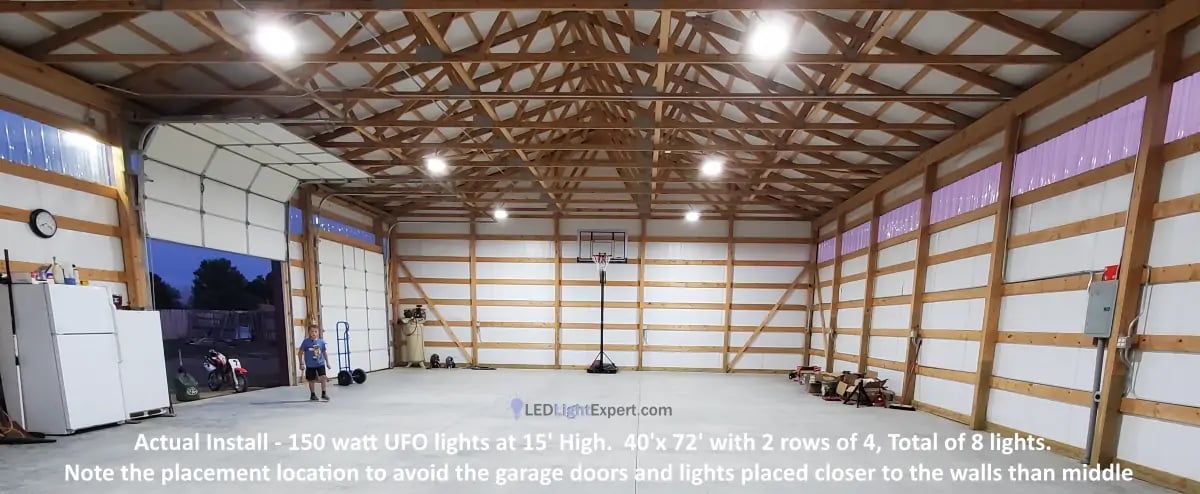
How to Design a Warehouse Light Layout?
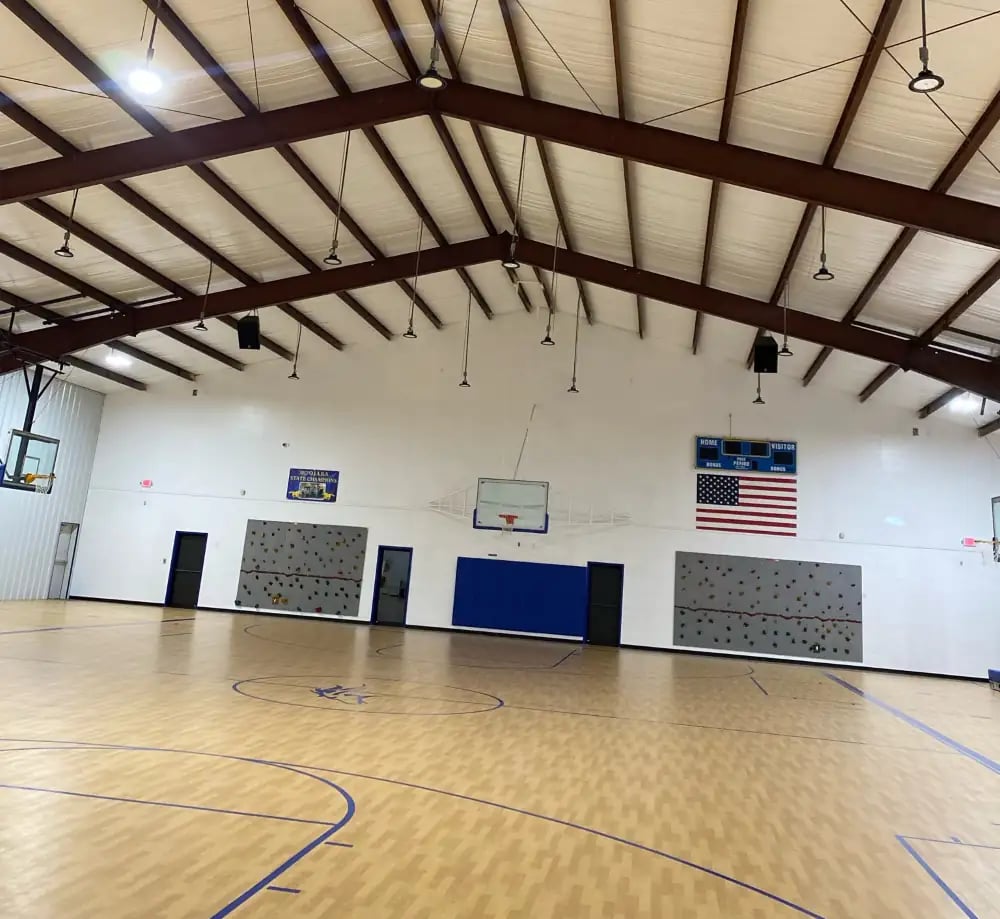
How Much Area Does One Warehouse Light at 150 Watt Cover?
Key Takeaway: A 150-watt warehouse light fixture may cover roughly a 40-foot diameter at 12–15 foot mounting heights in this example, but coverage changes as ceiling height increases — about 20 feet of strong coverage at 20-foot heights and about 25 feet at 25-foot heights. This relationship between height and coverage is critical for calculating the total number of fixtures needed for even, efficient lighting across your warehouse floor.

Warehouse Layouts – Multi Lights
How Many Lights Do You Need for a Warehouse?
- Appropriate lumen per fixture
- Needed footcandles
- Spacing of the lights for even illumination
- Dimming and beam angles may also be considered.
- 12 Ft – Our example is a 40x70 warehouse; 150-watt lights with 120 degree wide angles are commonly used for lower than 18 ft. ceilings. You can go for a 6x3 pattern, which amounts to 18 lights for good coverage.
- 15 Ft. – You can choose to use 100-watt lights for a 40x70 warehouse. You can still use the 6x3 pattern with a spacing of 14ft. for adequate lighting. The pattern can be changed depending on the desired level of brightness.
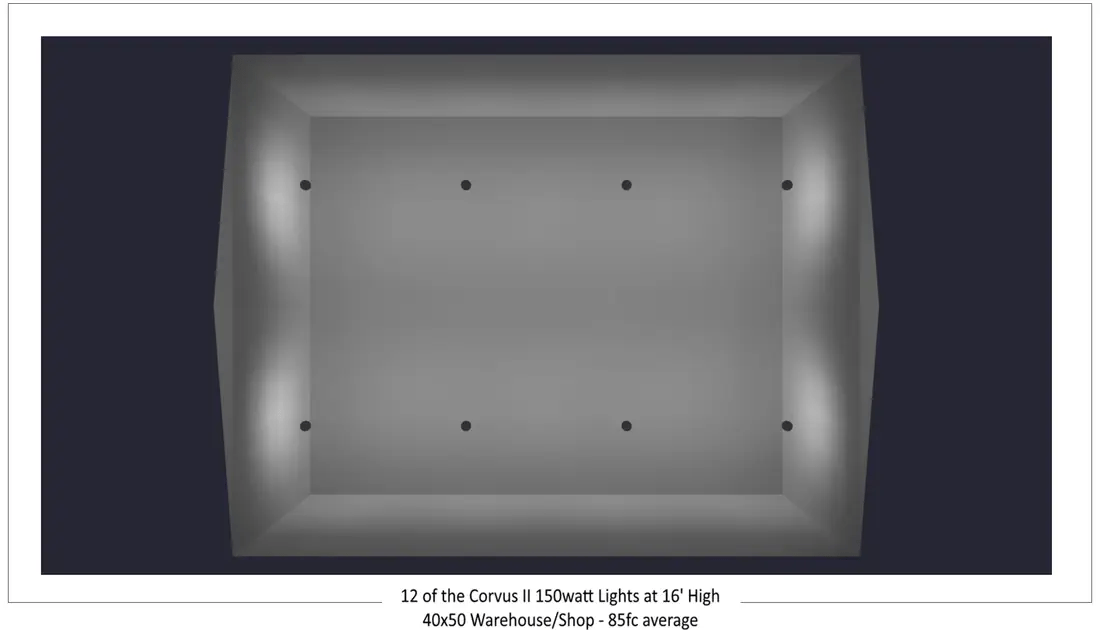
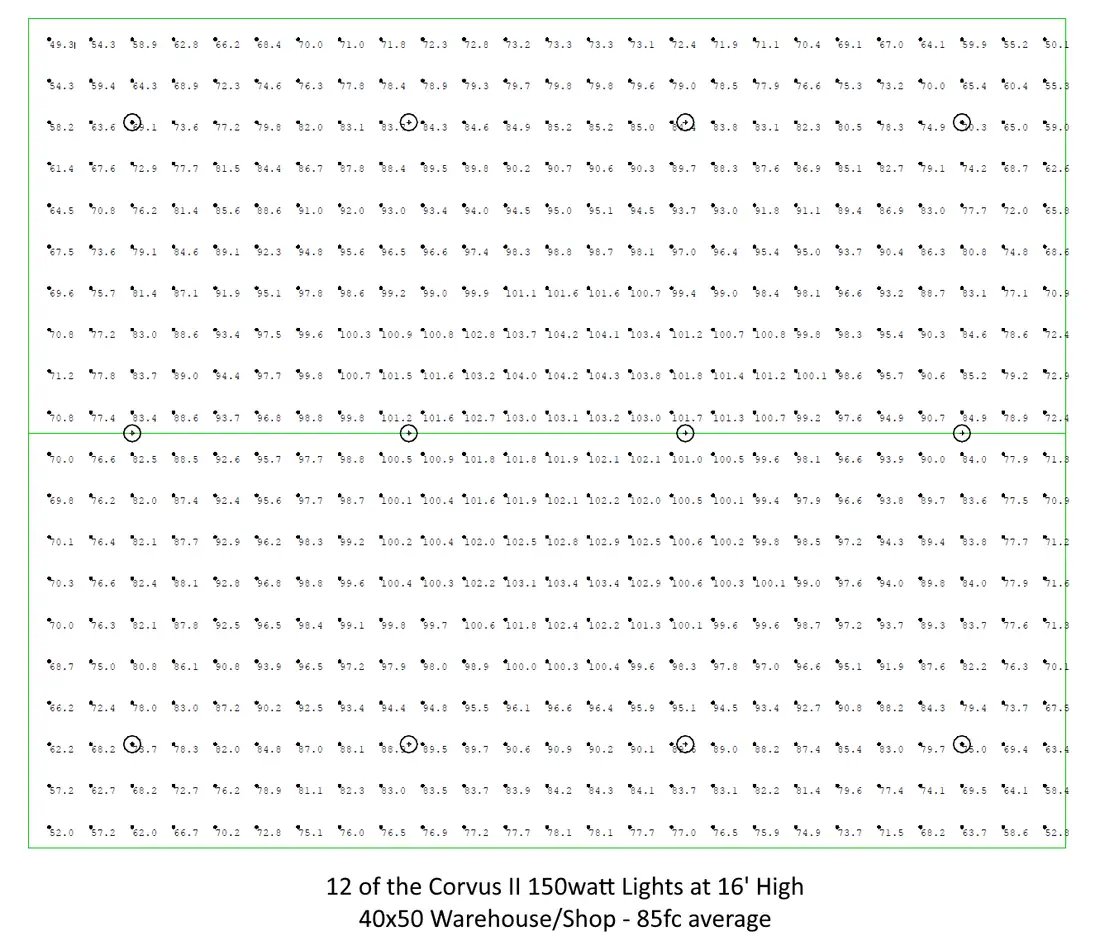
- 20 Ft. – For the same 40x70 warehouse at 20 ft., 240-watt fixtures of about 30,000 lumens in a 2x4 pattern (8 lights, roughly 20 ft. x 17.5 ft. spacing) provide adequate lighting.
- 25 Ft. – At a 25 ft. ceiling, use 240-300W fixtures of about 32,000 lumens in the same 2x4 pattern, for 8 lights in total.
How Many Lights Do You Need for a Brighter Warehouse?
- 12 Ft. – Using the same example above of a 40x70 warehouse, opting for a 7x3 pattern that amounts to a total of 21 lights is sufficient to provide more brightness.
- 15 Ft. – Similarly, for a 100-watt primary warehouse light, opting for a higher pattern such as 7x3, 6x4, or 8x3 will give you more brightness. For higher brightness levels, you can also go for 8x4, which totals 32 100-watt lighting fixtures.
- 20 Ft. – For more brightness, increase the lumens per square foot and reduce the spacing. For instance, instead of 8 lights at about 20 ft. spacing, use 32,000-lumen 240-watt lights at about 15 ft. spacing in a 3x5 pattern, for 15 lights.
- 25 Ft. – Similarly, increase the output to about 35,000 lumens per fixture and use the same 3x5 pattern at about 15 ft. spacing, for 15 lights.
Key Takeaway: For the 40x70 warehouse example, standard brightness takes 18 lower-wattage fixtures at 12–15 ft. ceilings or 8 higher-output fixtures at 20–25 ft. For brighter spaces, counts rise to 15–32 fixtures depending on ceiling height, fixture output, and desired light levels. Spacing, wattage, and lumen output should be planned together to improve coverage while limiting dark areas and over-lit spots.
Elements to Consider When Buying
- Glare - The most common type of warehouse lighting is LED lights. They burn brightly and last a long time, but they can also produce blinding glare. The lighting in a warehouse is often set up to illuminate just one area. If you do not employ glare reflectors, this spotlighting could lead to serious issues. By installing these reflectors around new LED lighting, glare will be reduced, and the number of accidents brought on by staff members being blinded by bright lights will be decreased.
- Ceiling height considerations - In most warehouses, you will discover high ceilings. When putting up a new lighting system, these ceilings can cause a few issues. Fixtures must be matched to the mounting height, or the work area will be poorly lit. You may get advice on what kind of lighting system is appropriate for your warehouse by consulting an experienced lighting professional.
- CRI Rating - Using the Color Rendering Index (CRI), one can assess a light's capacity to display accurate colors. Teams should consider how significantly color impacts elements like clarity and contrast. Give employees adequate light quality and color rendering if they frequently read labels in order to prevent problems. You can determine how realistic a lighting system is by looking at its CRI rating. Because of the issues they can create, it is generally advised to avoid selecting warehouse luminaires with a CRI rating of less than 85.
- Energy Efficiency - Energy efficiency is a crucial factor to take into account when selecting a warehouse lighting system. Any business owner would hate for their energy costs to soar due to installing a new lighting system. Making the switch to LED lights is a practical way to reduce electricity use. These systems often cost more upfront but can reduce operating costs over time.
Frequently Asked Questions
A 150-watt warehouse light's coverage area depends on mounting height. At 12–15 feet, it covers approximately 40 feet in diameter. At 20-foot heights, coverage narrows to about 20 feet in diameter, and at 25-foot heights, approximately 25 feet in diameter. Lumen output and beam angle also influence the actual coverage, which is why photometric studies are useful for final planning.
The number of lights depends on ceiling height, warehouse dimensions, and desired brightness. For a 40x70 warehouse at 12 feet, you need 18 lights (150W, standard brightness). At 15 feet, 18 lights work with proper spacing. At 20 or 25 feet, about 8 higher-output lights (240-300W) in a 2x4 pattern are needed. For brighter spaces, counts rise to about 15–32 fixtures depending on height, fixture output, and spacing.
Consider four key factors: (1) Glare — install reflectors to reduce blinding glare and accidents. (2) Ceiling height — ensure lights hang low enough for adequate workspace illumination. (3) CRI Rating — choose fixtures with CRI of 85 or higher for accurate color rendering, critical for label reading and safety. (4) Energy Efficiency — LED lights often cost more upfront but can reduce operating costs over time depending on wattage reduction, controls, runtime, and electric rates.
Rack Aisles vs Open Floor: Two Different Layouts
The single biggest factor in a warehouse lighting layout is whether the space has racking, because racking changes the problem from lighting a floor to lighting a set of narrow canyons.
On open floor - staging areas, cross-dock, manufacturing bays - fixtures are laid out on a regular grid and the working rule is a spacing-to-mounting-height ratio. Spacing between fixtures of roughly 1 to 1.5 times the mounting height gives good uniformity with typical high bay optics. A 25-foot ceiling therefore wants fixtures somewhere around 25 to 37 feet apart. Wider spacing saves fixtures and costs uniformity, and the scallop pattern on the floor is the visible result.
With racking, that grid is wrong. Fixtures must be positioned over the aisles rather than over the racks, because a fixture centered above a rack lights the top of the rack and leaves the aisle below in shadow. Aisle lighting also wants a different optic: narrow or aisle-specific distributions throw light down into the canyon, where a wide beam mostly illuminates the rack faces at high level. And the measurement that matters shifts from horizontal foot-candles on the floor to vertical foot-candles on the rack face, since that is where the labels and picks are.
The practical consequence is that a racked warehouse and an open warehouse of identical square footage need different fixture counts, different optics, and different layouts. If racking is planned but not yet installed, design for the racked layout - relocating fixtures afterwards costs far more than getting the positions right at the outset.
Two more factors that change the count. Ceiling height sets both wattage and beam angle, because the same square footage under a 20-foot and a 40-foot ceiling needs different fixtures to land the same foot-candles. And surface reflectance matters more than most people credit: a white ceiling and light walls return a meaningful share of the light back into the space, while dark surfaces and high dark racking absorb it, so an identical fixture layout produces measurably different results in the two buildings.
When the layout is settled, the fixtures are here: LED warehouse lighting and LED high bay lights.
Related Articles
 LED High Bay Lights Buyers Guide
Everything you need to know about LED high bay lights for warehouses, gyms, and large indoor spaces.
LED Shop Lighting Buyers Guide
Complete guide to choosing LED shop lights for garages, workshops, and retail shops.
LED High Bay Lights Buyers Guide
Everything you need to know about LED high bay lights for warehouses, gyms, and large indoor spaces.
LED Shop Lighting Buyers Guide
Complete guide to choosing LED shop lights for garages, workshops, and retail shops.
 Industrial Lighting Guide
Learn about industrial LED lighting options for warehouses, factories, and large commercial spaces.
Industrial Lighting Guide
Learn about industrial LED lighting options for warehouses, factories, and large commercial spaces.


