


What Are LED Corn Bulbs and How Do You Choose the Right One?
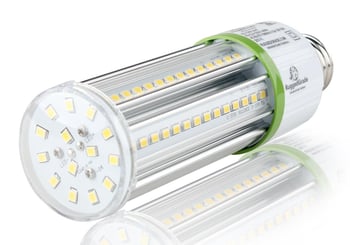
LED corn bulbs are light bulbs that resemble corn on the cob, with LED chips arranged in rows along their tube. They are meant to replace HID lamps and metal halide bulbs, which are commonly used for bright and large-scale lighting applications, such as street lighting, parking lots, and high bay lighting. LED corn bulbs can fit into standard E26 or E39 sockets, but they are much brighter than regular A19 household bulbs.
 |
 |
 |
What Are LED Corn Bulbs?
LED corn bulbs are named for their corn-cob shape, with rows of LED chips around the tube. Chip count varies by style, wattage, and size. They are designed to replace HID and metal halide lamps in parking lots, street lights, high bays, barns, and other fixtures that need more output than a standard household bulb.
How Does an LED Corn Light Bulb Work?
An LED corn light bulb is a type of LED light bulb that has many small LED chips arranged around the circumference of a cylindrical base. The name comes from the resemblance of the bulb to an ear of corn. The LED chips emit light in all directions, creating a 360-degree lighting effect that can evenly illuminate a large area.
An LED corn light bulb works by using a driver that converts the household current to the appropriate level for the LED chips. The driver is stored inside the center of the bulb, and it may also have a fan to cool down the bulb and extend its lifespan. LED corn light bulbs can screw into a standard E26 light bulb socket or the larger mogul E39 light bulb base, depending on the size and wattage of the bulb. You should make sure you order the right one for your fixture.
LED corn bulbs use less power than incandescent, fluorescent, HID, or metal halide lamps to produce comparable light. Good models also last much longer, often 50,000 hours or more, and provide better color quality with a higher CRI. They do not contain mercury, which makes disposal simpler than many fluorescent or HID lamp replacements.
What Is a Ballast Bypass, and Do Corn Bulbs Need One?
A ballast bypass is a process of removing or bypassing the ballast from a lighting fixture and connecting the LED lights directly to the power source. A ballast is a device that regulates the amount of current or electricity that flows through a circuit, such as a fluorescent or metal halide light bulb. A ballast is necessary for these types of bulbs, as they need a high initial voltage to start and a low constant voltage to operate.
However, LED lights do not need a ballast, as they have their own driver that controls the current and voltage. A driver is a circuit board based device that converts the power input to the appropriate level for the LED lights. A driver can also provide other features, such as dimming, color changing, or motion sensing.
If you are replacing an incandescent bulb, no ballast bypass is needed because incandescent fixtures do not use a ballast. If you are replacing fluorescent, HID, or metal halide lamps, the ballast usually must be removed or bypassed so line voltage feeds the LED driver directly. Turn power off first, confirm wiring with the product diagram, and have a qualified electrician handle the work when you are not comfortable with fixture wiring.
LED Corn Bulb Overview: Size, Bases, Ballast Bypass, and HID Replacement
LED Corn light Bulb Overview -What are they? How to Use them? What are LED Corn bulbs - explained - Size and ballast removal - 360 vs directional bulbs - Metal Halide and High Pressure Sodium replacements....
Aries III LED Corn Bulb Video: Output, Build Quality, and Demo
Unboxing and demo of the Aries III high-output LED corn bulb series. The Aries III series is designed for high output and efficient retrofit use, with models rated at 130+ lumens per watt under DLC 5.1 testing. Compare output, base, voltage, enclosed-fixture rating, and fixture fit before buying.
Why Are LED Corn Bulbs So Popular?
The use of LED Light bulbs has increased rapidly in recent years. LED corn bulbs have many advantages over HID lamps and metal halide bulbs, such as:
- Easy installation: LED corn bulbs screw into the existing E26 or E39 socket. Replacing an HID or metal halide lamp usually requires a one-time ballast bypass; after that, there is no ballast or transformer to maintain.
- Bright and clear light: LED corn bulbs can produce more lumens (light output) per watt (power input) than HID lamps and metal halide bulbs. This means they can provide brighter and clearer light with less energy consumption. They also have a high color rendering index (CRI) of above 80 Ra, which means they can show the true colors of the objects they illuminate.
- Long lifespan and low maintenance: Quality LED corn bulbs are commonly rated around 50,000 hours, with some models rated higher depending on driver quality, heat management, fixture ventilation, and runtime. That is typically longer than many HID or metal halide lamp replacement cycles. This means they can save you money and time on buying and replacing bulbs, as well as reduce your environmental impact and waste. They also have a low lumen depreciation, which means they can maintain their brightness and quality over time. They also generate less heat than many HID lamps and do not contain mercury like metal halide or high-pressure sodium lamps; dispose of bulbs and drivers according to local electronic-waste rules.
|
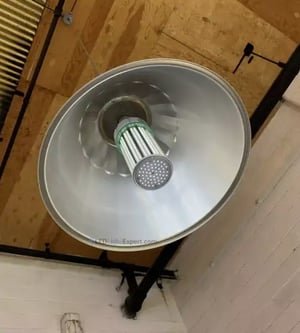
The image below shows an LED corn light bulb installed in a ceiling fixture: 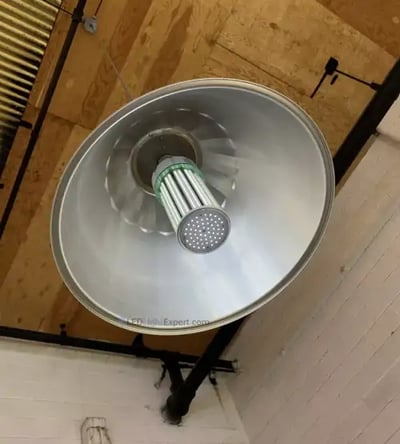
|
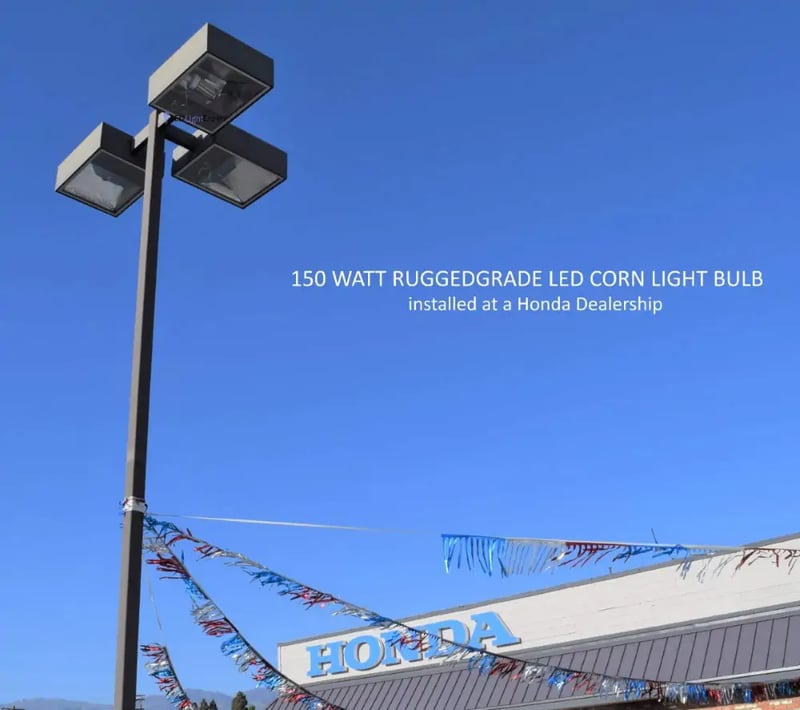
Here are corn light bulbs in a parking lot fixture: 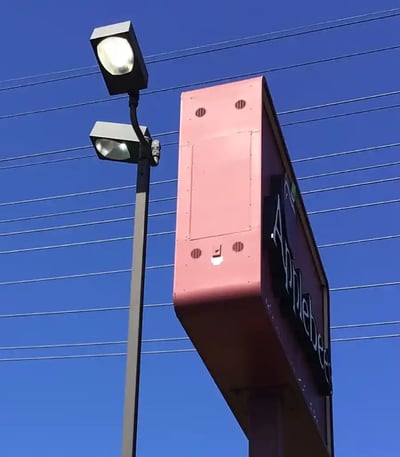
|
Here is a smaller corn light bulb installed in a small can light fixture: 
|
Did you know? How long does an LED corn bulb last before it loses light? A good LED loses less than 2% of its light in the first 6,000 hours and no more than 10% by 36,000 hours. An incandescent bulb lasts just 1,500 hours total. That's a BIG upgrade!
What is the difference between E26 and E39?
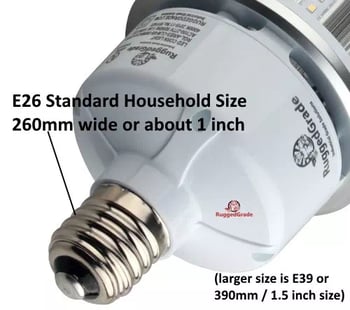
There are 2 base types for corn bulbs: E26 and E39. Here is how to find the correct base for you:
- E26 Base Bulbs: This is called the Medium Edison Screw, or one-inch Edison Screw. It is the standard base for most bulbs. "E" stands for Edison, while 26 indicates the diameter of the base in mm. E26 is the standard base for 120-volt bulbs, which is why they are mostly found in homes. See E26 base corn cob bulbs here.
- E39 Base Bulbs: This is called the Mogul Edison Screw, sometimes known as the Goliath Edison Screw. Similarly, the "E" stands for Edison and 39 is the diameter of the base. They are special because of their wide usage in industrial or farm applications. They are mostly used in higher output bulbs of 150 watts HID and higher such as factories, roads, and warehouses. They are 1.5 inches in diameter and are clearly larger than E26. See E39 corn cob bulbs here.

How to Install an LED Corn Bulb: Before, After, and Wiring Basics
How to Install an LED Corn Light Bulb - Before & After installation shots + Drone - LED Corn Cob Bulb installation & what you need to know! Actual install of an LED Corn Bulb at the Del Mar Fair Gro...
How to Choose the Right Amount of Lumens For A Corn Light?
One of the important things to consider when buying a corn light is the lumens. This is the amount of light that the bulb produces, which is different from watts. Watts measure the power the bulb uses; with older bulbs, watts were a rough guide to brightness. However, as LEDs have become more efficient, lumens are a better way to compare the brightness of different bulbs. A lumen is a unit that measures the brightness of the LED bulb. So when you are shopping for LED corn bulbs, you should focus on lumens instead of watts.
To give you some reference points, you should select 800 lumens for a 60 watt bulb or 1,100 lumens for a 75 watt bulb. For outdoor security lights, you should choose 2500 to 6000 lumens for smaller spaces and higher lumens for bigger or commercial spaces. For replacing metal halide bulbs, you should use the interchange chart that can be found below.
How to Choose the Right LED Replacement Corn Bulb for Metal Halide?
If you want to replace your HID or metal halide bulbs with LED lights, you need to consider the lumen output and the wattage of the LED products. Lumen output is the measure of how much light a bulb produces, while wattage is the measure of how much energy it consumes. LED lights are more energy-efficient and durable than metal halide bulbs, which lose up to 75% of their lumen output over five years. Here are some guidelines for choosing the right LED replacement for different wattages of metal halide bulbs:
- For 1500-watt metal halide bulbs, you need at least 60,000 lumens of LED light. You can choose a 500-watt LED fixture for lower installations or a 500-watt stadium light for higher installations.
- For 1000-watt metal halide bulbs, you need at least 40,000 lumens of LED light. You can choose a 300-watt LED bulb, fixture or retrofit kit. However, note that the 300-watt bulbs are not rated for enclosed fixtures, so it is better to opt for a fixture in this case.
- For 400-watt metal halide bulbs, you need between 13,000 and 20,000 lumens of LED light. You can find a fixture in this range or visit our 100-watt-and-up corn light page. There you will see bulbs of 100 watts, 120 watts or 150 watts. These are all common replacements for this wattage.
- For 250-watt metal halide bulbs, you need between 9,000 and 12,000 lumens of LED light. The popular choice is an 80-watt LED corn bulb, but you can go for a 100-watt one if you want more brightness.
- For 150-watt or 175-watt metal halide bulbs, you need between 7,000 and 9,600 lumens of LED light. A common option is a 60-watt or an 80-watt LED corn bulb, depending on fixture condition and target light level.
- For 75-watt or 125-watt metal halide bulbs, you need between 4,000 and 8,000 lumens of LED light. The ideal choice is a 40-watt or a 60-watt LED corn bulb.
What LED Corn Bulb Replaces a 400-Watt Metal Halide?
To replace a 400-watt metal halide we recommend from 13,000 lumens to 20,000 lumens. Metal halide starts out very bright but then loses 70% of its light output. An 18000 lumen bulb or fixture will feel like a 400 watt metal halide after about 6 months. A 13,000 lumen LED bulb or Luminaire will feel like a 5 year old 400w metal halide bulb.
Metal Halide to LED Conversion Video: Retrofit Basics to Check
Metal Halide to LED Conversion Video: Retrofit Basics to Check. We walk through conversion interchanges; -250--1500 watt Metal Halide Replacements with LED -check...
How to Choose the Right Kelvin Color for an LED Corn Bulb?
LED corn bulbs come in different color temperatures, measured in kelvins (K). The color temperature affects the appearance and mood of the light. Here are the differences between the common color temperatures for LED corn bulbs:
- 3000K LED Bulbs: This color temperature produces a warm white light often suited for homes and restaurants. It creates a cozy and relaxing environment.
- 4000K LED Bulbs: This color temperature produces a natural white light that is great for offices and other work areas. It provides a clear and bright illumination.
- 5000K LED Bulbs: This color temperature produces a pure white light that is great for large spaces and outdoors. It mimics daylight and enhances visibility.
- 5700K LED Bulbs: This color temperature produces a cool white light that has a bluish tint to it. It is ideal for attracting attention in gas stations or signage, but should be used with caution.
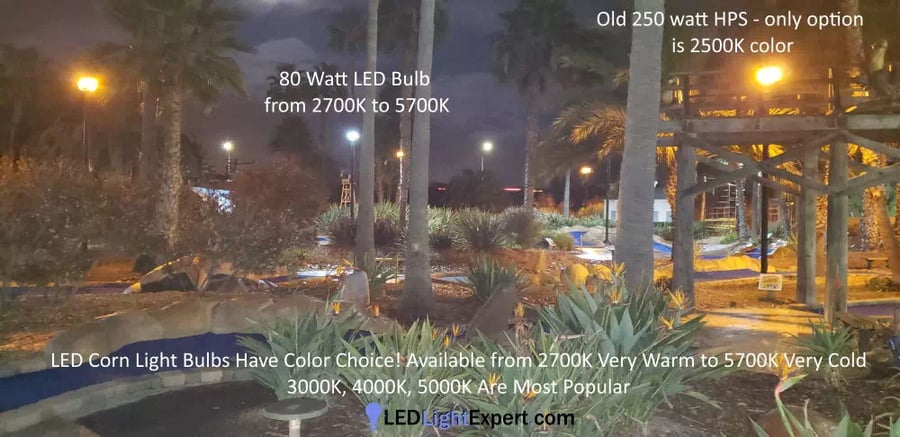
See this image for the kelvin colors
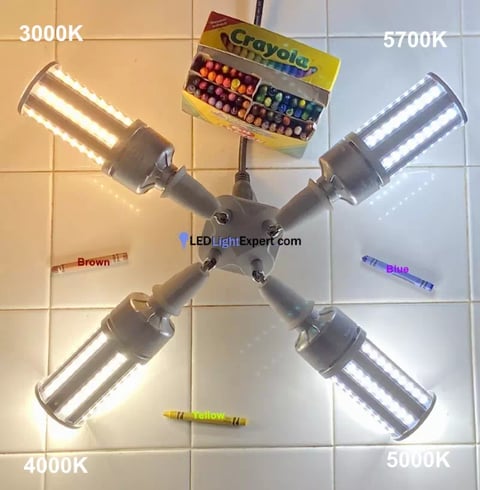
Use the lowest color temperature that still provides the visibility the space needs. Higher CCT options such as 5700K and 6500K can increase perceived glare and blue-light exposure at night, so many outdoor projects now choose 5000K or lower when code, safety, and visibility requirements allow.
How Do You Choose Between 360-Degree, Flat, and Directional Corn Bulbs?
Shape controls where the light goes. A flat or downlight-style corn bulb sends most light in one direction, which can be more efficient in ceiling cans, wall sconces, and some high bay fixtures. A 360 degree corn bulb sends light in all directions and works well in post tops, barn lights, and fixtures with reflectors that spread light evenly. Choose the shape based on socket orientation, reflector design, and whether the fixture needs downward or omnidirectional output.
What are the Different Shapes of LED Corn Light Bulbs?
LED corn light bulbs are named after their resemblance to corn on the cob, but they come in different shapes and sizes to suit different lighting needs. Here are some of the common shapes of LED corn light bulbs:
Flat Style Bulb: This shape has a flat top and a cylindrical body with LED chips on the sides. It is suitable for horizontal or vertical installations, and it can provide a wide beam angle of 180 degrees. It is often used for street lighting, wall packs, or canopy lighting. Here is an example of a flat style bulb:

360 Degree Round Bulb: This shape has a round top and a cylindrical body with LED chips on all sides. It can provide a full beam angle of 360 degrees, which means it can emit light in all directions. It is ideal for omnidirectional lighting applications, such as post top lights, pendant lights, or bollard lights. Here is an example of a 360 degree round bulb:
Down Bulb: This shape has a cone-shaped top and a cylindrical body with LED chips on the lower half. It can provide a narrow beam angle of 90 degrees or less, which means it can focus light downward. It is useful for downward lighting applications, such as ceiling lights, high bay lights, or warehouse lights. Here is an example of a down bulb:

Finding the Right Size or Length of the Corn Bulb for You
Corn bulbs are available in plenty of sizes based on the wattage and the quality of the technology. Bulbs with fans are much smaller than anything else out there, but do make fan noise. Fanless bulbs are larger, but silent. You must measure and write down the space you have in your current fixtures in order to find your new bulb. Product images and spec sheets show the dimensions. It is recommended to leave space for cooling around any corn light bulb.
Use this size diagram to confirm a bulb will fit your fixture:

What are strong corn light bulb options? Read the corn bulb comparison here.
Are LED Corn Light Bulbs Rated for Enclosed Fixtures?
Many LED corn bulbs are enclosed-fixture rated, but not all of them. Check the spec sheet before installing one inside a sealed or tight fixture, and leave room around the bulb for heat to escape. Some very large 200W, 240W, and 300W corn bulbs are not enclosed rated and need open fixtures. Ratings vary by series, so verify the exact product before buying.
What Voltage Do LED Corn Bulbs Use?
Like any electrical product, an LED corn bulb must match the building voltage. LED corn bulbs work from 90 to 277V AC in the standard-voltage version or from 200 to 480V AC in the high-voltage version. Here are some common voltages that the corn bulbs can be used in. Standard voltage works on:
- 120 volts
- 208 volts
- 220 volts
- 240 volts
- 277 volts
High voltage works on:
- 240 volts
- 277 volts
- 347 volts
- 480 volts
Conclusion: Final Selection Checks
If you aren't sure which LED corn bulb is the correct replacement for your HID lamp, metal halide bulb or any other lighting type you can ask a lighting expert who can help you find the right option for your project.
How to Install an LED Corn Light Bulb
About 15 minutes
Replacing old HID Metal Halide or High Pressure Sodium bulbs with LED is a great way to save money, get more light and reduce maintenance. Here are a few easy steps to install the new corn cob bulb and get it working correctly.
Necessary Items: LED Corn Light Bulb, A ladder, lift or other safe access to the fixture, Wire nuts
Tools: Wire strippers, Screwdriver
Step 1: Preparations
Safety First. Ensure you have a secure lift or ladder to the fixture. Safety harness and clips should be used for higher installs. Kill the power at the breaker and double check.

Step 2: Remove the Old Bulb
The old bulbs are glass and may be in very tight. Carefully remove the bulb.
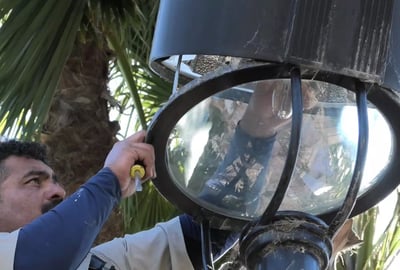
Step 3: Locating and Bypassing the Ballast
The ballast was used to ensure strong power to the old HID bulbs, but it will damage LEDs, which have a built-in driver. In most cases it's easier to leave the ballast and just wire around it. Connect the building line to the line of the socket. Connect the building neutral to the neutral of the socket. Make sure it's properly grounded. Secure the new connections with wire nuts and electrical tape if necessary
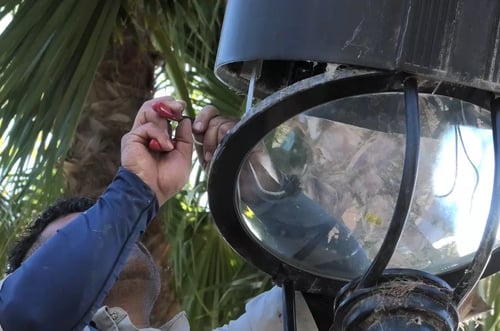
Step 4: Install the new LED Corn Light Bulb
With the power going straight to the socket, now it's time for the new bulb. Carefully screw in the new bulb until secure. Some bulbs may require a safety chain which should be installed at this time
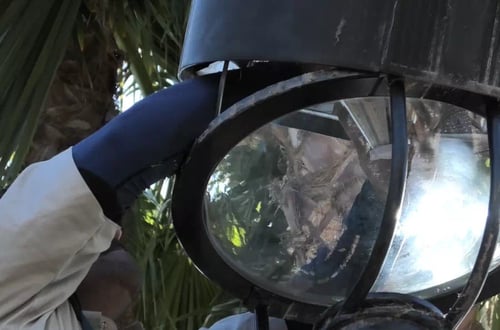
Step 5: Turn on the power and test
If the fixture is enclosed go ahead and close it up at this point. Make sure everything is safe and turn the power back on. Double check to ensure all lights are working and the area is safe for users to return to.
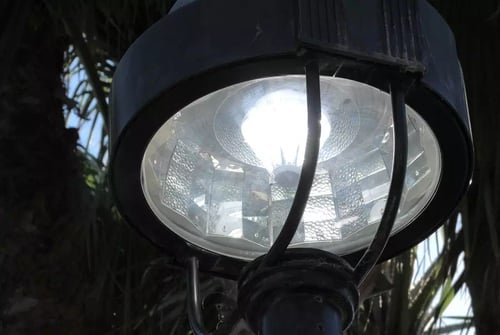
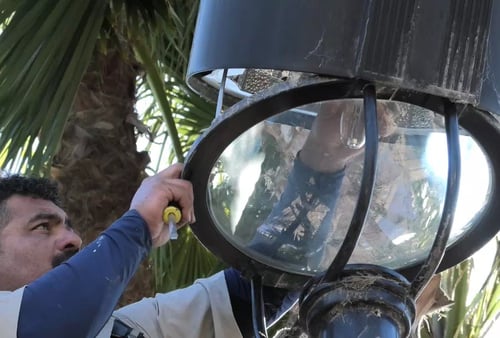
See the install step pictures taken from our video
Frequently Asked Questions About LED Corn Light Bulbs
LED Corn Bulbs are named for their appearance, as they resemble corn on the cob. They have rows of square light diodes on all sides of their tube. The number of LED chips, from dozens to hundreds per bulb, depends on the style, wattage, and size of the bulb, with each LED ranging from 0.1 watts to 3 watts on average. They are designed to replace HID lamps and metal halide bulbs. As one of the most versatile LED light bulbs available, they are ideal for use in areas such as parking lots, street lighting, and high bay lighting, but can be used in smaller areas around homes and businesses.
LED corn bulbs have many advantages over HID lamps and metal halide bulbs including easy installation into existing sockets (usually after a one-time ballast bypass), brighter and clearer light with higher lumens per watt and a CRI above 80 Ra, and longer rated life than many HID lamps. They generate less heat than many HID systems and do not contain mercury like metal halide or high-pressure sodium lamps. They are commonly used as LED retrofit replacements in existing fixtures.
There are 2 base types for corn bulbs: E26 and E39. E26 (Medium Edison Screw) has a 26mm diameter base and is the standard for 120-volt bulbs found mostly in homes. E39 (Mogul Edison Screw) has a 39mm diameter base and is used in industrial or farm applications with higher output bulbs of 150 watts HID and higher, such as factories, roads, and warehouses. They are 1.5 inches in diameter and are clearly larger than E26.
One of the important things to consider when buying a corn light is the lumens. Lumens measure brightness, which is different from watts that measure energy consumption. Select 800 lumens for a 60 watt bulb or 1,100 lumens for a 75 watt bulb. For outdoor security lights, choose 2500 to 6000 lumens for smaller spaces and higher lumens for bigger or commercial spaces. For replacing metal halide bulbs, use the interchange chart on this page.
If you want to replace your HID or metal halide bulbs with LED lights, you need to consider the lumen output and the wattage. LED lights are more energy-efficient and durable than metal halide bulbs, which lose up to 75% of their lumen output over five years. Guidelines: 1500W metal halide needs 60,000+ lumens LED, 1000W needs 40,000+ lumens, 400W needs 12,000-18,000 lumens (100-150W corn bulb), 250W needs 9,000-12,000 lumens (80W corn bulb), 150-175W needs 7,000-9,600 lumens (60-80W corn bulb), and 75-125W needs 4,000-8,000 lumens (40-60W corn bulb).
To replace a 400-watt metal halide we recommend from 13,000 lumens to 20,000 lumens. Metal halide starts out very bright but then loses 70% of its light output. An 18000 lumen bulb or fixture will feel like a 400 watt metal halide after about 6 months. A 13,000 lumen LED bulb or Luminaire will feel like a 5 year old 400w metal halide bulb.
LED corn bulbs come in different color temperatures measured in kelvins (K). 3000K produces warm white light suited to homes and restaurants. 4000K produces natural white light for offices and work areas. 5000K produces crisp white light for large spaces and many outdoor applications. 5700K and 6500K produce cooler, bluer light and should be used only when that appearance and visibility profile fits the site.
There are many types of LED corn bulbs when it comes to shapes. The flat bulb offers 180 degrees of light and the down bulb a narrower beam, both focused in one direction, suitable for ceiling lights or wall sconces. The 360 degree corn bulb provides light in all directions and is more versatile and cost-effective. With a reflector, you can even out the light and avoid glare. 360 degree bulbs are a common choice for many applications such as high bay lights, post tops or barn lights.
Many LED corn bulbs are enclosed-fixture rated, but not all of them. Check the spec sheet before installing one inside a sealed or tight fixture, and leave room around the bulb for heat to escape. Some very large 200W, 240W, and 300W corn bulbs are not enclosed rated and need open fixtures. Ratings vary by series, so verify the exact product before buying.
LED corn bulbs work from 90 to 277V AC in the standard-voltage version or from 200 to 480V AC in the high-voltage version. Standard voltage works on 120, 208, 220, 240, and 277 volts. High voltage works on 240, 277, 347, and 480 volts.
Related Articles



Need Help Choosing the Right LED Corn Bulb?
Our lighting experts can help match an LED corn bulb to the fixture base, bypass or ballast setup, enclosed-fixture rating, lumen target, color temperature, and mounting orientation. Call us with the existing bulb and fixture details for a focused replacement recommendation.
CONTACT US


