


Energy Reduction
With Motion Dimming
LED Fixture Mix
NextGen III Per Pole
Church Parking Lot LED Retrofit — Our Lady of Fatima Church
Our Lady of Fatima Church in San Clemente, California contacted us for a complete LED lighting retrofit of their parking lot and building areas. The church had aging 250-watt metal halide fixtures that left dark areas and used more energy than the LED retrofit target.
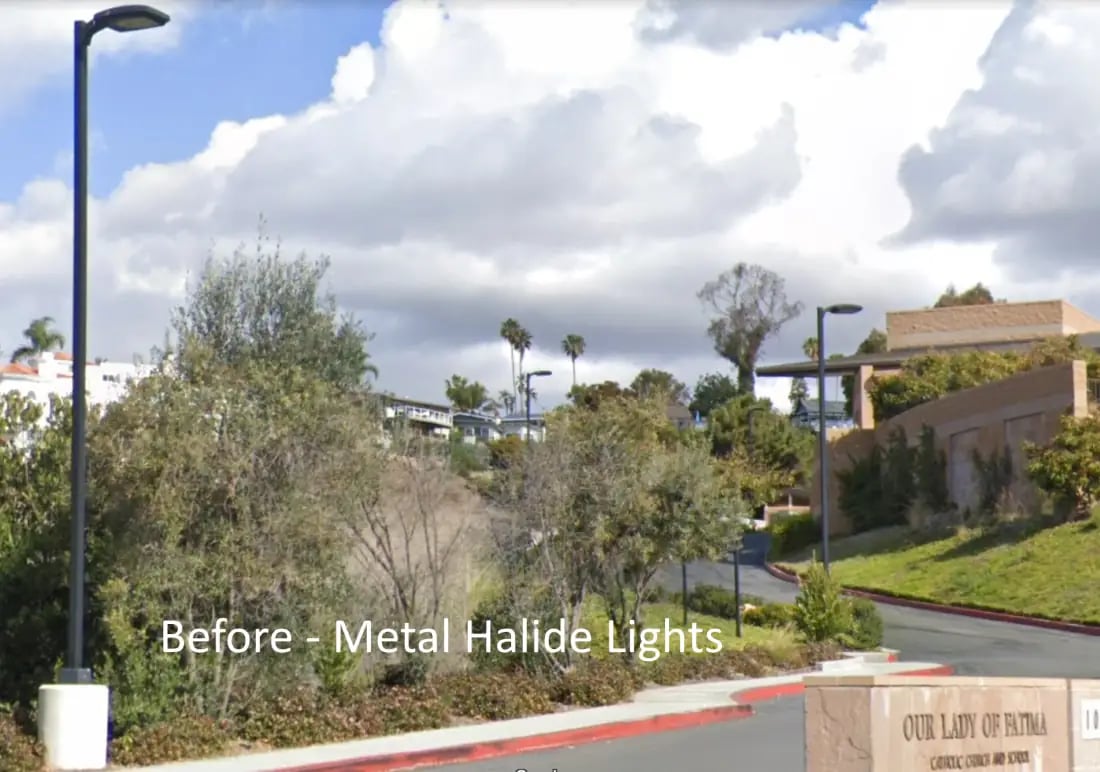
Before Installation — Challenges
- Eight pole-mounted 250-watt metal halide fixtures
- Poor visibility, particularly at rear building entrance
- High energy consumption
- Dark areas creating visibility concerns
Solution Implemented
We designed a comprehensive solution combining multiple lighting strategies:
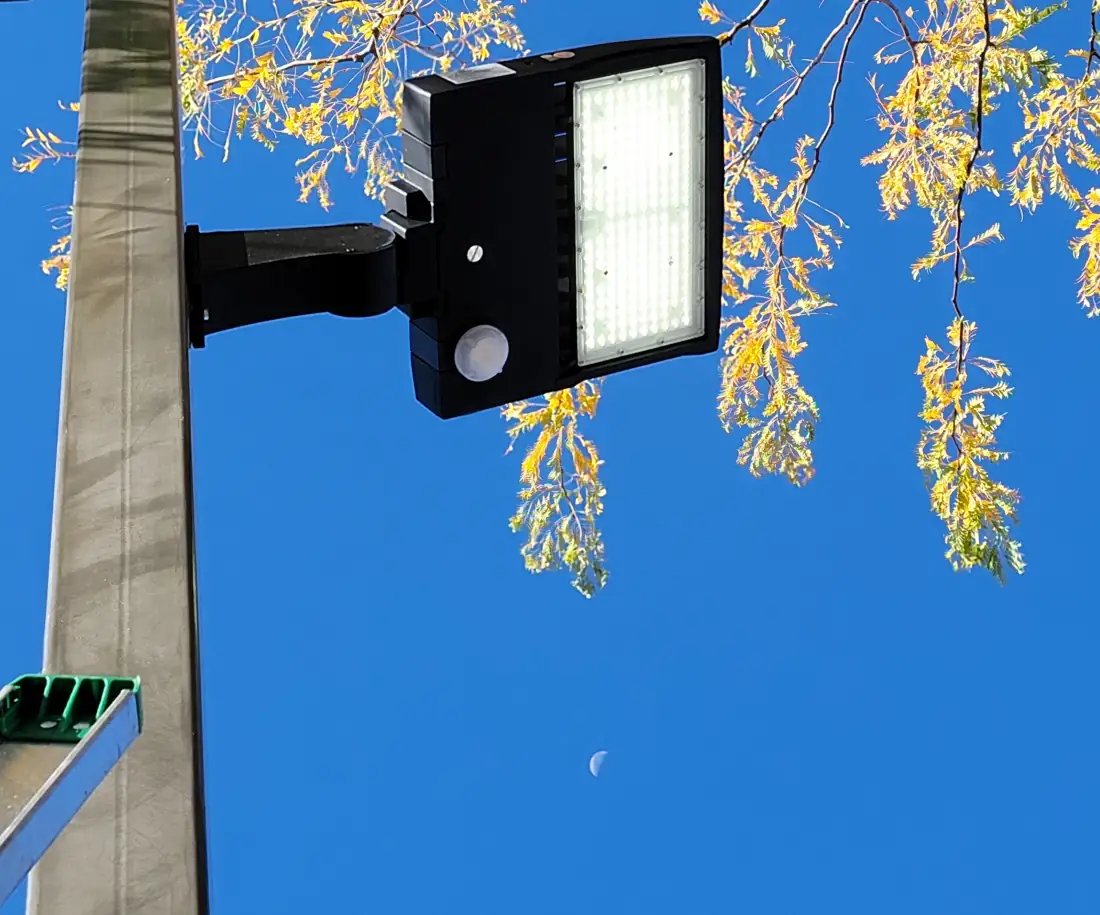
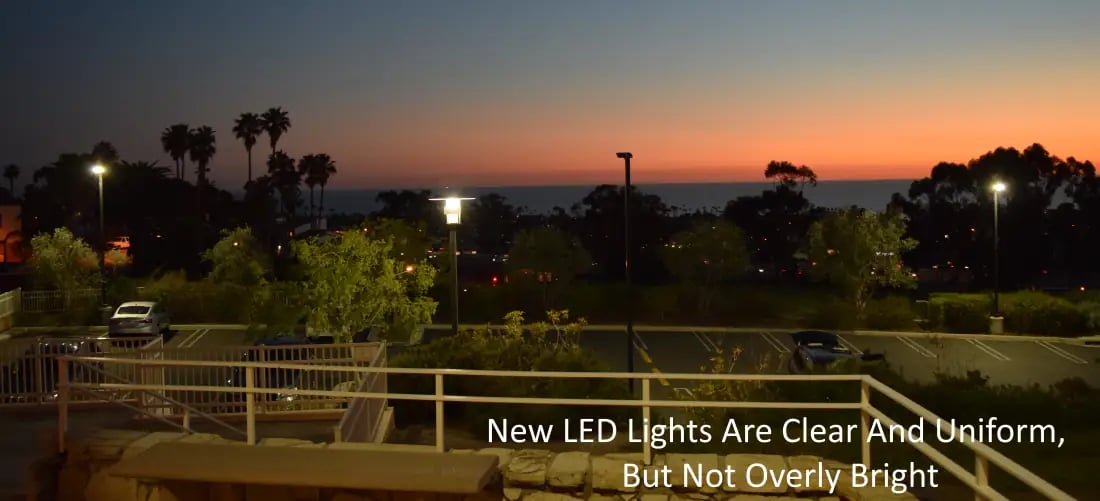
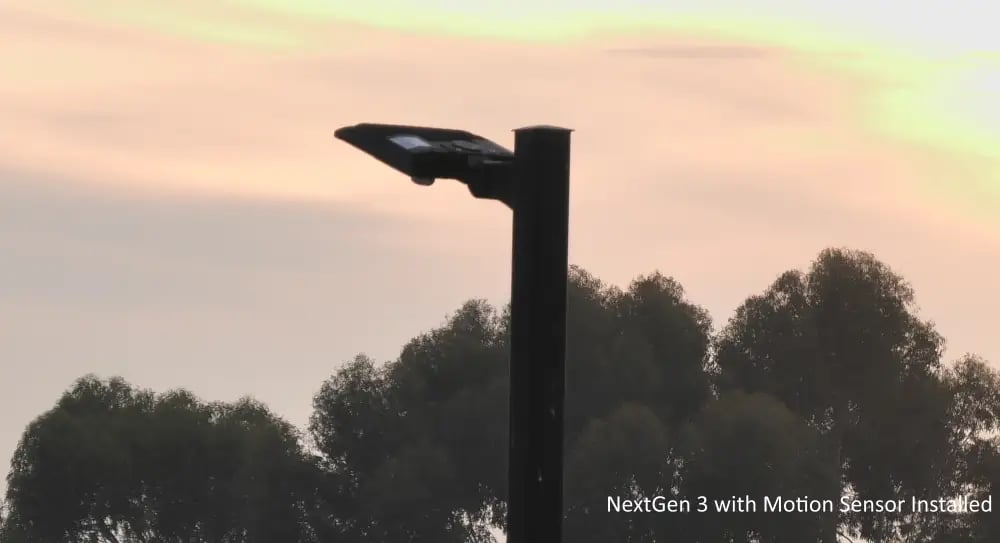
- Eight 150-watt NextGen III LED lights with motion sensors — Mounted on existing poles to replace the old metal halides
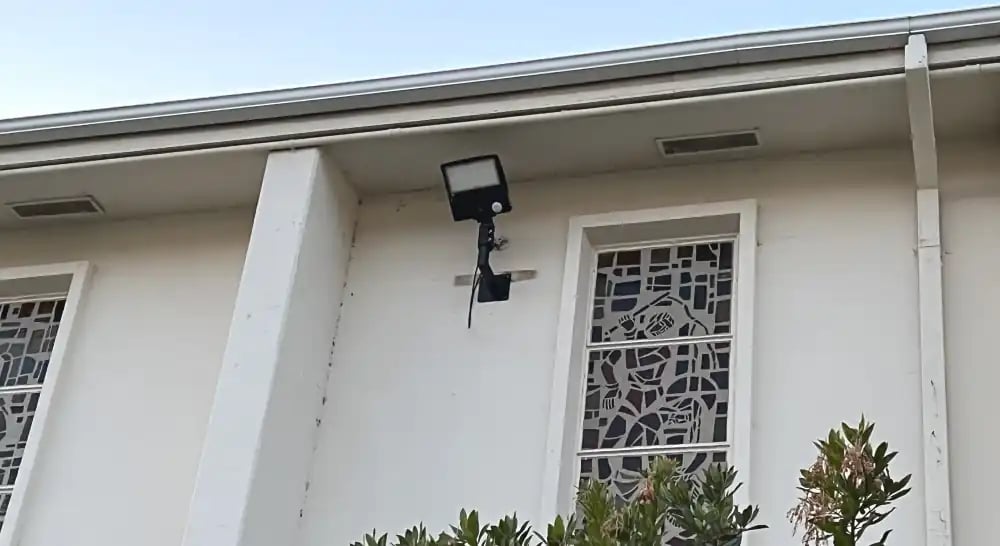
- Two 300-watt LED fixtures — Mounted on building without motion sensors for continuous illumination
- Two solar lights — Added for rear building area for further energy savings
Key Takeaway: The combination of pole-mounted NextGen III fixtures with motion sensors, building-mounted continuous fixtures, and solar lights for remote areas demonstrates a layered approach that maximizes both coverage and energy efficiency.


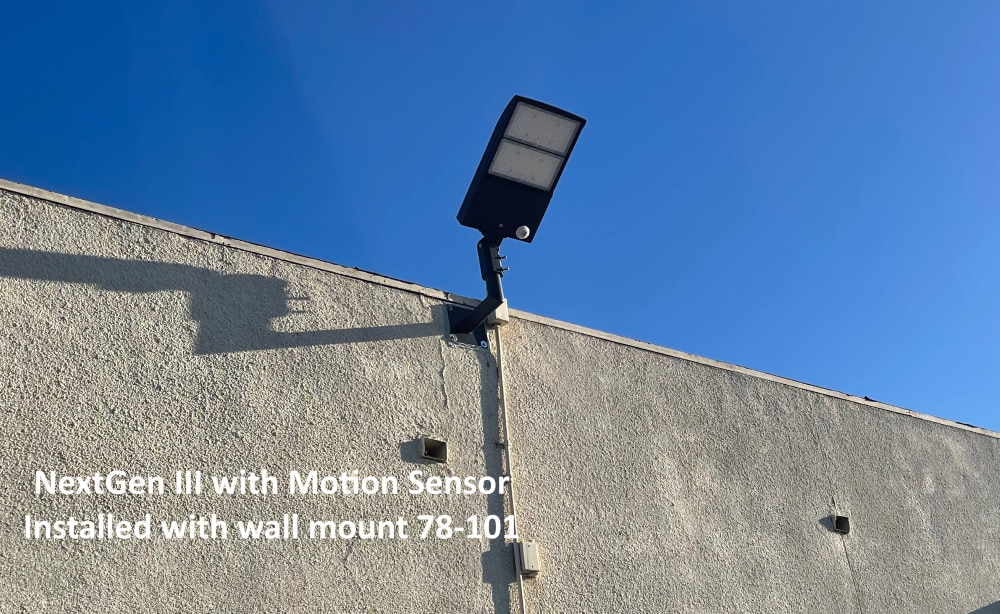
Motion Sensor Configuration
The motion sensor strategy maximizes energy savings:
- 30% brightness when no motion detected (idle state)
- 70% brightness when motion is detected (active state)
- Automatic dimming reduces energy consumption significantly during low-activity periods
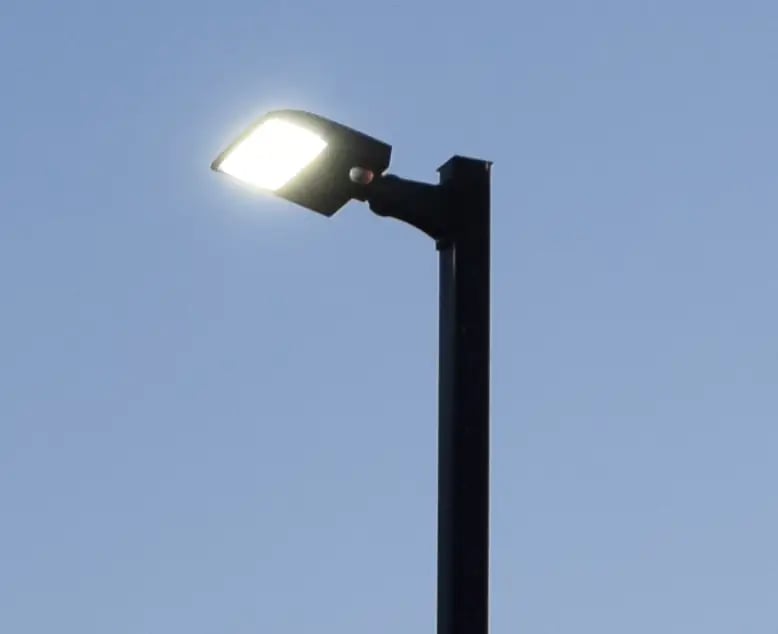
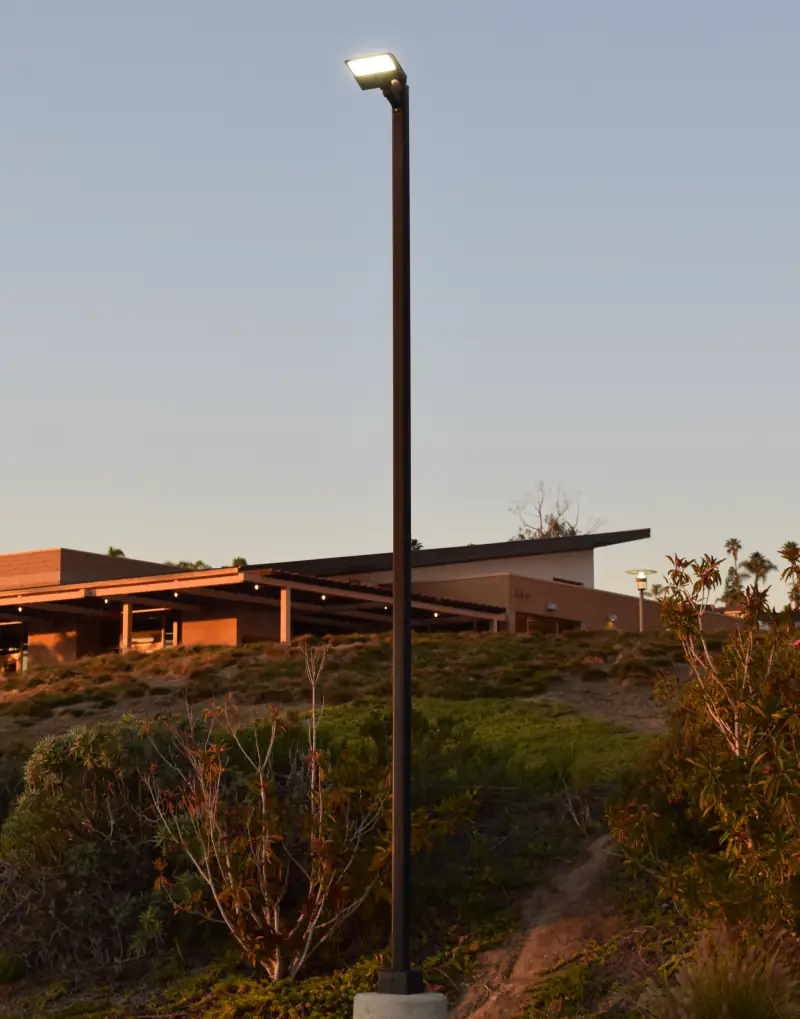
What to Review Before a Similar Retrofit
For a parking lot retrofit like this, start with the current fixture wattage, pole height, mounting style, voltage, and the areas where people feel unsafe or visibility drops. Those details help determine whether the project should reuse poles, add wall-mounted fixtures, use motion sensors, or add solar lighting where trenching power is expensive.
The lesson from this church project is that the right layout is rarely one fixture type everywhere. Pole lights handled the main parking area, building-mounted fixtures supported the entrances, motion sensors reduced wasted energy, and solar lights solved a rear-area power problem.
Energy Results
The retrofit achieved impressive energy savings:
- 60% reduction in energy consumption at full brightness
- Up to 80% reduction with motion sensor dimming capabilities enabled
Key Takeaway: Motion sensor dimming can improve savings beyond full-bright operation; the 30%/70% idle/active configuration provides baseline visibility while reducing runtime at full output during quiet parking lot hours.
Professional Resources and Layout Review
- Photometric study conducted to forecast light distribution and coverage
- Aerial drone footage documenting before and after installation
- Video includes footcandle readings and motion sensor range demonstration
- Coverage analysis shows improved uniformity and visibility
This installation demonstrates practical LED conversion methodology for commercial parking lot applications with energy optimization through smart motion-sensing technology.

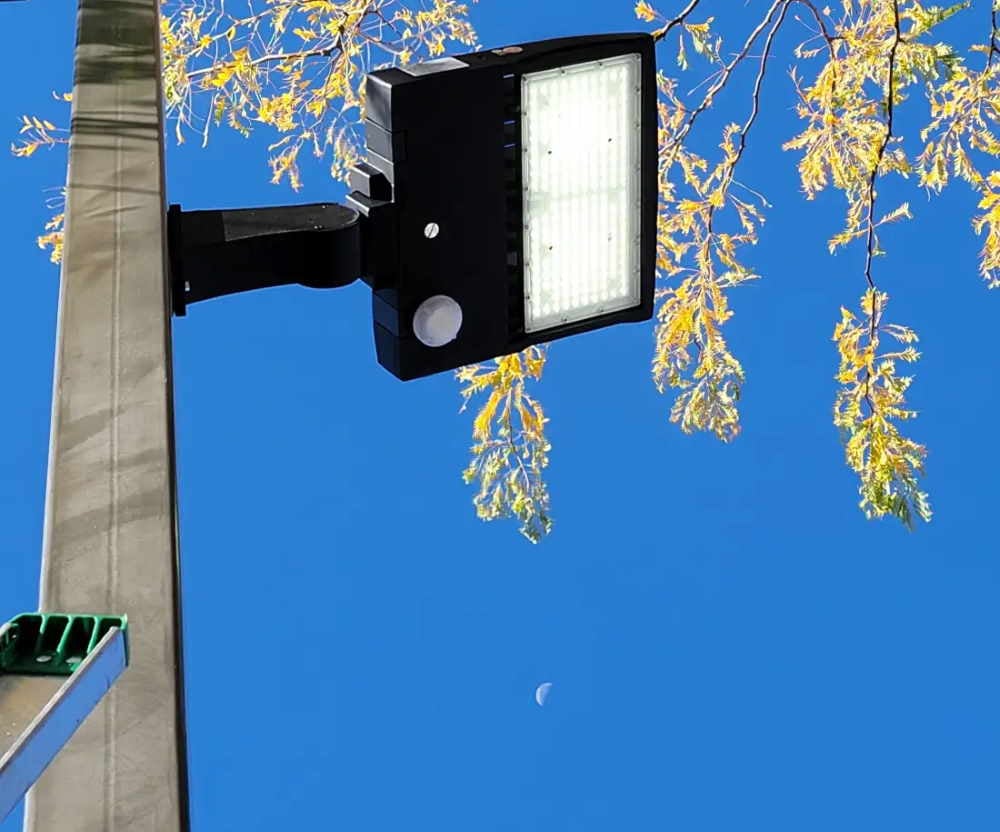
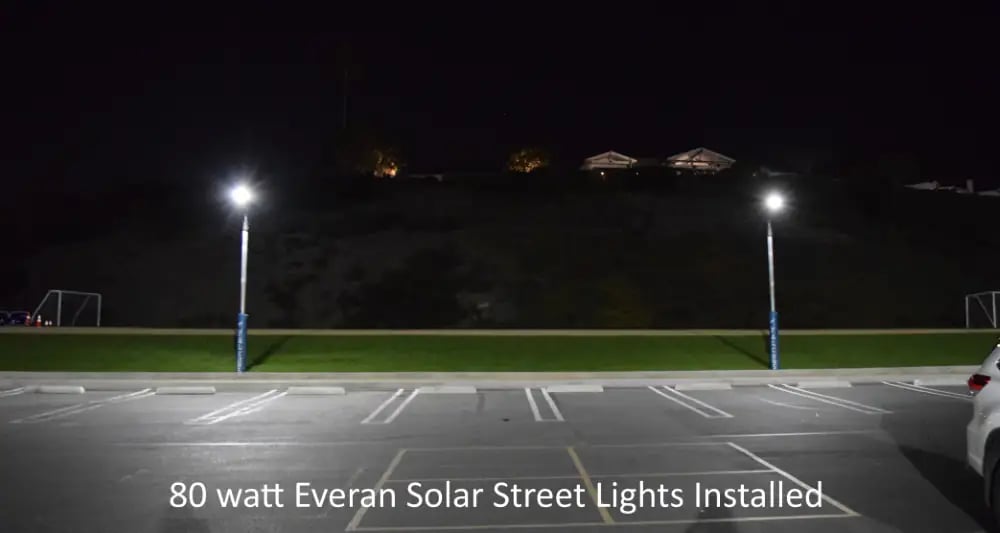
Solar Parking Lot Lights — Rear Building Installation
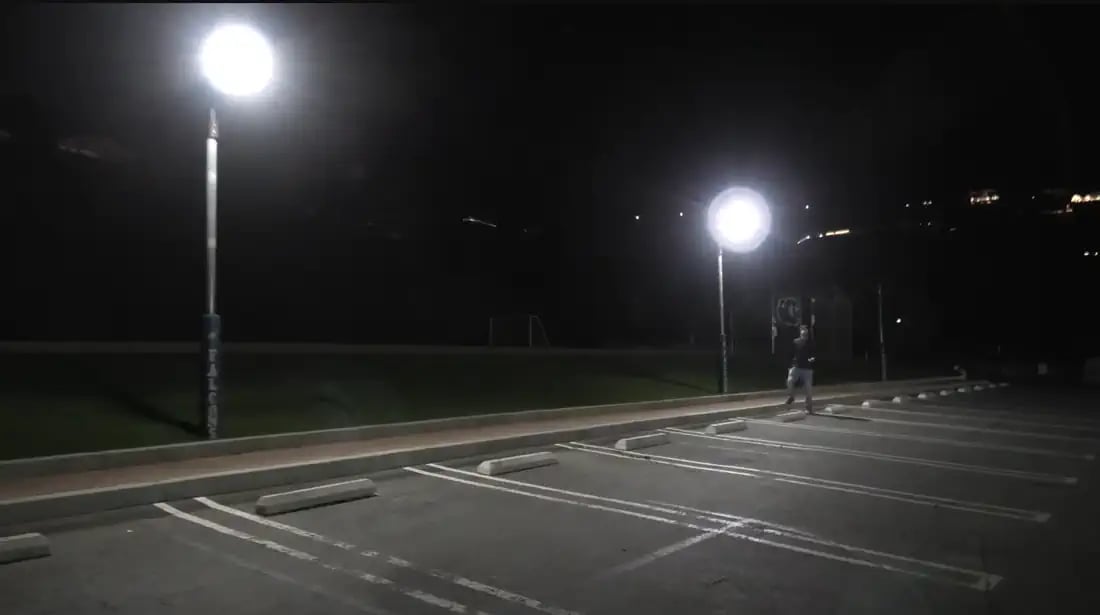
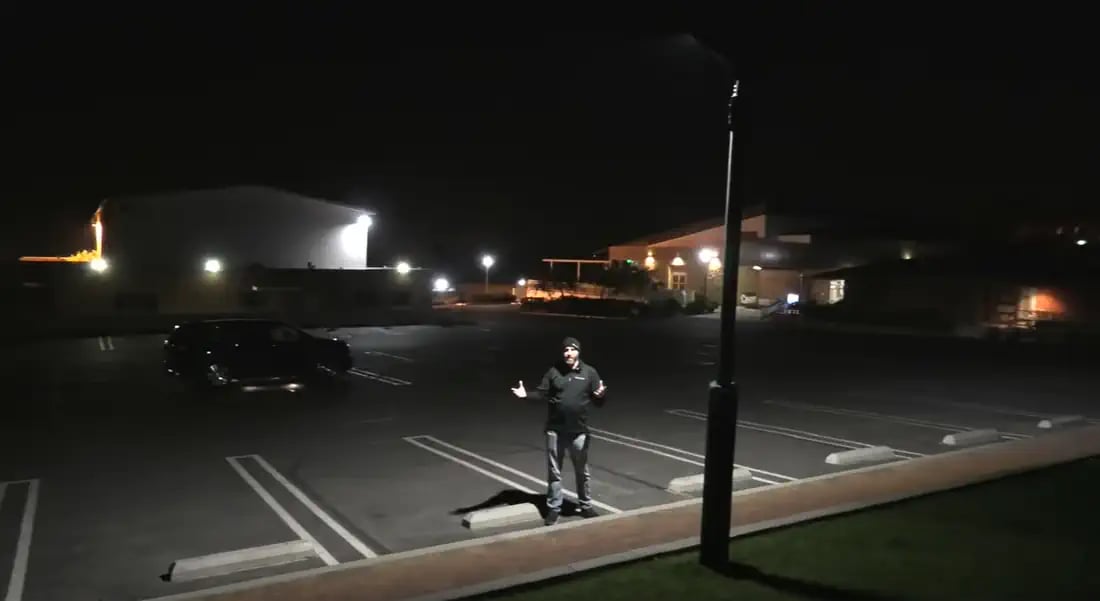
In addition to the LED pole lights and wall packs, two solar parking lot lights were installed at the rear building entrance where running electrical would have been costly. The Everan solar street lights provide off-grid illumination without a fixture-level utility connection — charging during the day and lighting automatically at dusk.
Project FAQs
What made this parking lot lighting upgrade work?
The project matched LED fixture output, optics, mounting height, and motion sensor behavior to the church parking lot layout instead of choosing lights by wattage alone.
When should a parking lot use motion sensors?
Motion sensors are useful when traffic varies by time of day. They can reduce energy use while keeping a higher light level when vehicles or pedestrians enter the area.
What should I gather before planning a similar parking lot retrofit?
Collect pole heights, existing fixture wattage, lot dimensions, voltage, photos, target light levels, and any dark spots. A light study can help review fixture count and coverage before purchase.
More Case Studies & Guides
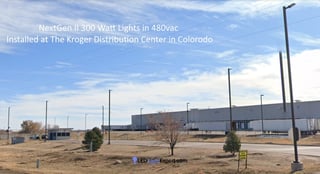 LED Parking Lot Lights Buyers Guide
Complete guide to choosing the right LED parking lot lights for commercial applications.
LED Parking Lot Lights Buyers Guide
Complete guide to choosing the right LED parking lot lights for commercial applications.
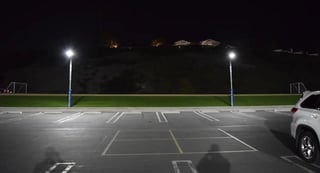 Solar Parking Lot Lights Case Study
How solar LED parking lot lights can provide off-grid illumination where trenching power is difficult.
Solar Parking Lot Lights Case Study
How solar LED parking lot lights can provide off-grid illumination where trenching power is difficult.
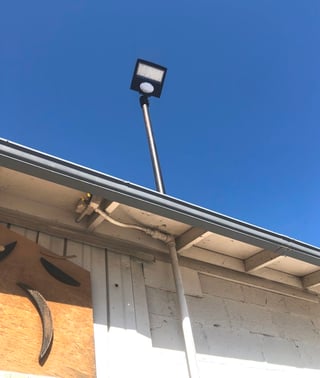 Motion Sensor Lights Guide
Everything you need to know about motion sensor LED lights for commercial properties.
Motion Sensor Lights Guide
Everything you need to know about motion sensor LED lights for commercial properties.


Ready for Your Own Parking Lot Lighting Upgrade?
Our lighting experts provide free photometric studies for qualifying projects and consultations — we'll help you select the right LED parking lot lights with motion sensors for your property.
SHOP PARKING LOT LIGHTS


