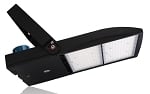
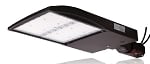
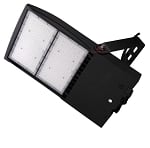
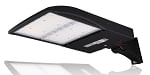
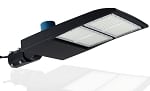
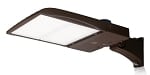
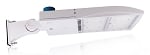
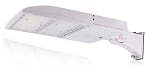
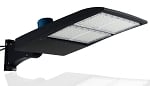
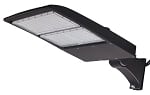
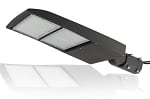
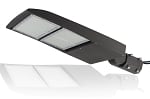
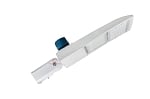
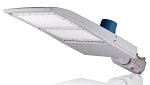
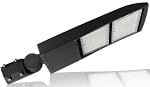
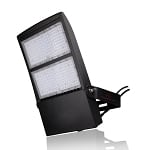
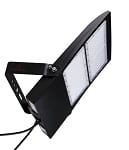
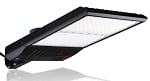
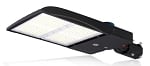
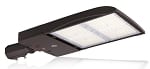
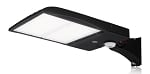
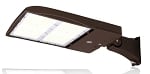
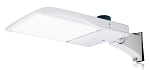
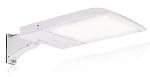
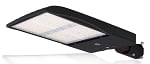
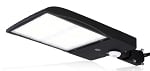
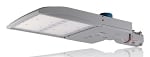
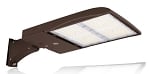
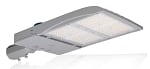
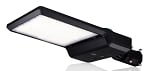
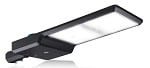
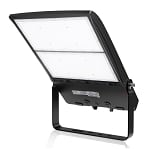
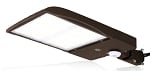
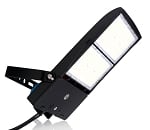
300 Watt LED Parking Lot Lights

USA Based Experts in less than 60 seconds Call Now: 800-674-9420
On orders over $49.00
Up to 7 Years Free Warranty On LED Lights

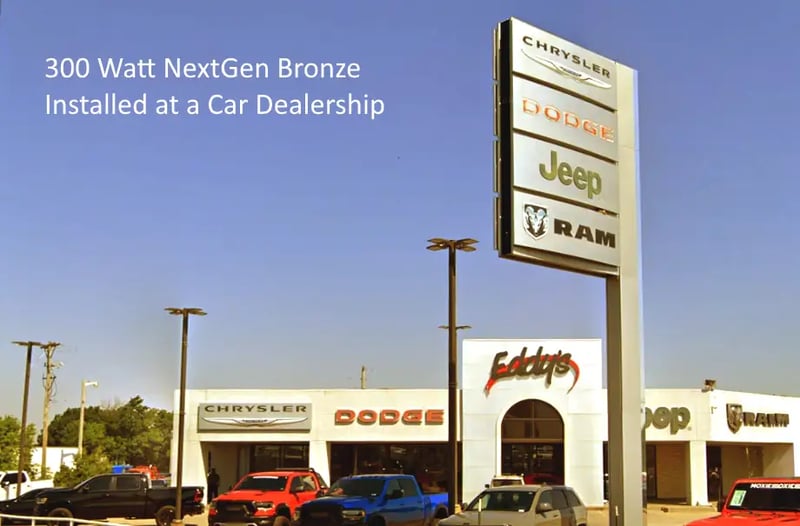
A 300 watt LED parking lot light is built for larger lots and higher mounting heights where smaller fixtures leave gaps or require too many poles. It is commonly used at car dealerships, shopping centers, logistics yards, school and business campuses, industrial sites, and wide commercial parking areas. In many retrofit projects, 300W LED fixtures replace older 750W to 1000W metal halide or high pressure sodium lights, depending on lumen output and optics.

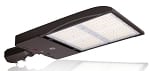
Many 300W LED parking lot lights fall in the 40,000 to 48,000 lumen range, but current models vary. Use delivered lumens, optical distribution, voltage, controls, and mounting height as the real comparison points. The same wattage can perform very differently depending on the LED package, driver, and lens.
300W fixtures are often used on poles around 25 to 35 feet, especially where the goal is to cover broad pavement from fewer locations. That output can be useful, but it also raises the importance of glare control. A fixture aimed too high or mounted with the wrong distribution can create bright eye-level glare while still leaving uneven light on the ground.
For parking lots, Type III and Type IV distributions often work well along rows and perimeters. Type V can work in open center-pole layouts. The correct spacing depends on pole height, pole setback, pavement color, surrounding buildings, and required foot-candle levels. Large commercial projects should use a photometric study before purchase so the layout meets the target average, minimum, and uniformity numbers.
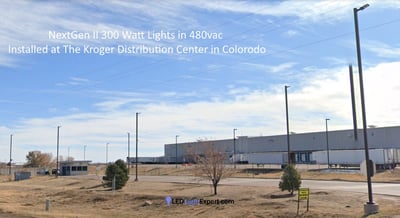
Check site voltage early. Many area lights support 100-277V or 120-277V, while larger commercial lots, industrial yards, and sports-adjacent sites may need 277-480V. Photocells are common for dusk-to-dawn control. Motion sensors and dimming can reduce output during low-traffic hours, but sensor placement and timeout settings should be chosen around how vehicles and pedestrians actually move through the site.
5000K is common for high-visibility commercial lots. 4000K is often a better fit when the property borders homes, hotels, offices, or code-restricted areas. Good 300W LED fixtures also reduce maintenance compared with HID systems because they avoid lamp and ballast replacement. Long fixture life matters most on higher poles, where service usually requires a lift or bucket truck.
Use 300W parking lot lights when the project has tall poles, large spacing, broad pavement, or older high-wattage HID fixtures that need a serious LED replacement. Do not use 300W just because it sounds safer. Over-lighting can waste energy, create glare, and make cameras perform worse in high-contrast areas. A lighting plan can show whether 240W, 300W, or a higher-output fixture gives the best balance of coverage, comfort, and operating cost.
300W parking lot planning starts with the reason this wattage became common: it can be a strong LED substitute for older high-wattage HID fixtures, including many 1000 watt metal halide applications, while using far less power. Typical models may produce around 42,000 lumens and provide broad area coverage, but the right fixture still depends on optics, pole height, spacing, voltage, controls, and glare limits.
Also compare core electrical and optical checks. Many 300W fixtures are offered in standard voltage ranges such as 100-277VAC and high-voltage ranges such as 277-480VAC. Look at CRI, lumens, Kelvin, beam angle, and voltage before ordering. Common Kelvin options include 5000K bright white for high visibility and 3000K warm white where a softer look is needed. The old guide referenced CRI greater than 75 Ra, LED output between 40,000 and 45,000 lumens, and long life from 50,000 to more than 100,000 hours.
Mounting is a major decision on 300W parking lot lights because higher output magnifies mistakes. Compare slip fitter mounts, direct mounts, trunnion mounts, yokes, and other fixing structures for round poles, square poles, and flat surfaces. The mount affects stability, aiming, and coverage, so it should match the pole, tenon, bracket, or wall condition already on the site.
Controls should also be selected at the beginning. Photocells support dusk-to-dawn operation and can help with automatic lighting adjustments. PIR motion sensors add another layer of control by reducing output when the area is empty and raising it when occupancy is detected. Durable corrosion-resistant aluminum housing helps the fixture survive harsh weather, while careful aiming and multidirectional adjustability reduce light pollution and keep illumination on the parking lot rather than into neighboring properties.
Use a 300W checklist when the site needs powerful area lighting across a large space. Record wattage, delivered lumens, beam angle, pole height, pole spacing, voltage, mounting option, CRI, Kelvin, photocell, motion sensor, PIR control, driver, housing, corrosion resistance, and aiming range. A useful planning baseline describes 300W fixtures as a direct substitute for 1000 watt metal halides, using about 300 watts while producing around 42,000 lumens. It also referenced 40,000 to 45,000 lumens, 120-degree beam angle, CRI greater than 75 Ra, and life from 50,000 to more than 100,000 hours.
Voltage and mounting deserve early attention. Many fixtures are available in 100-277VAC for standard sites and 277-480VAC for high-voltage parking lot lights. Mounting options may include slip fitter mount, direct mount, trunnion mount, yoke mount, round pole hardware, square pole hardware, and other fixing structures. The mount changes the stability of the fixture and the coverage area, so match it to the existing pole, tenon, bracket, or wall before ordering.
Controls and color also affect performance. Photocells provide dusk-to-dawn operation. PIR motion sensors can reduce output when the parking lot is empty and raise output when occupancy is detected. 5000K produces a pure white, daylight-like appearance that can improve color rendering and object identification. 3000K warm white may be used where a softer appearance is required. Durable aluminum casing, corrosion-resistant finish, adjustability, and multidirectional aiming help the fixture survive weather while keeping illumination on the parking area and reducing unwanted spill light.
A 300 watt LED parking lot light often replaces older 750W to 1000W metal halide or high pressure sodium fixtures, depending on delivered lumens, optics, pole height, and spacing. Compare the full fixture specification rather than using wattage alone.
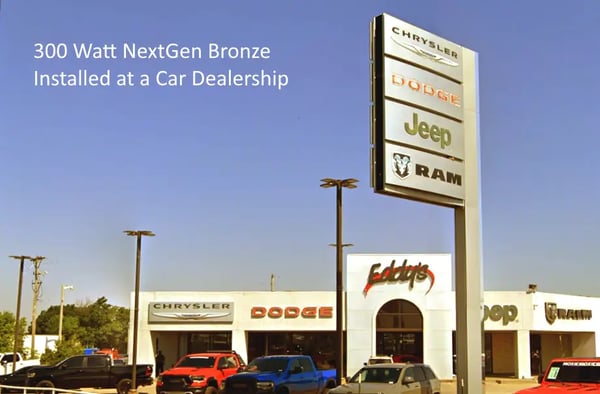
300W LED parking lot lights are used in large parking lots, car dealerships, campuses, shopping centers, distribution yards, industrial sites, and other outdoor areas with higher poles or wider spacing.
Many 300W parking lot lights are mounted around 25 to 35 feet. The correct height depends on fixture optics, required light levels, pole spacing, and glare limits. A photometric study is recommended for larger commercial projects.
Many 300W LED parking lot lights are available with photocells for dusk-to-dawn operation. Some models also support motion sensors, dimming leads, wattage selectability, Kelvin selectability, or external control systems.
Send pole height, spacing, voltage, mounting type, and the old fixture wattage. We can help compare 300W fixtures against lower or higher output options before the project is ordered.
Contact LED Light ExpertCall Now: (800) 674-9420
Dara Greaney is the CEO and President of LEDLightExpert.com, a leading company in commercial lighting solutions. Since 2015, he has led the company to achieve remarkable growth and recognition, including being an Inc5000 winner three times: No. 3783 in 2022, No. 2428 in 2021, and No. 531 in 2020.
Editing by David Peguero.
On orders over $49.00
Up to 7 Years Free Warranty On LED Lights