LED Spot Lights
The most common question in directional lighting: should you use a spot light or a flood light ? The answer depends entirely on what you are trying to illuminate.


USA Based Experts in less than 60 seconds Call Now: 800-674-9420

On orders over $49.00

Up to 7 Years Free Warranty On LED Lights
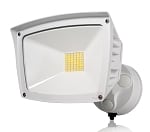

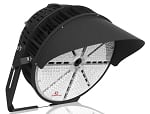
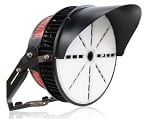
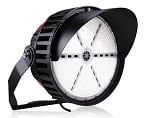

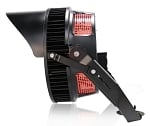

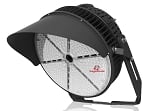
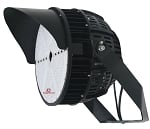

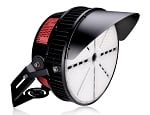
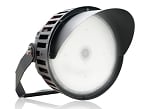
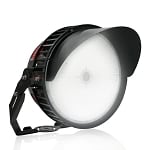
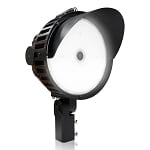
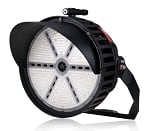


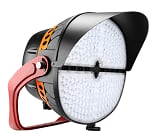
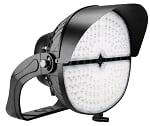
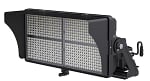
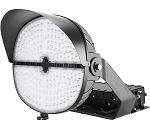
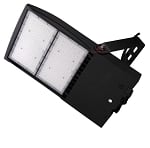
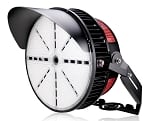


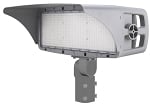
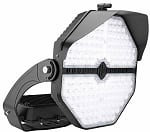

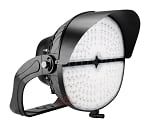

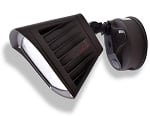
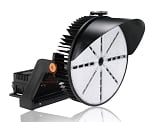


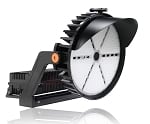


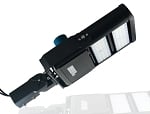

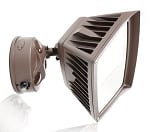
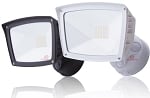

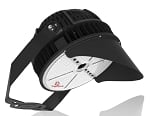








The most common question in directional lighting: should you use a spot light or a flood light? The answer depends entirely on what you are trying to illuminate. A spot light concentrates its beam onto a small target area, while a flood light spreads its output across a wide zone. Below is a direct comparison.
| Characteristic | Spot Light | Flood Light |
|---|---|---|
| Beam Angle | 10°–25° | 60°–120°+ |
| Beam Diameter at 20 ft | 3.5–8.9 ft | 23–69+ ft |
| Peak Intensity (candela/lumen) | Higher — light concentrated on target | Lower — light spread over wide area |
| Best For | Flags, signs, trees, architectural details, security focus | Parking lots, building facades, sports fields, loading docks |
| Light Spill | Minimal — controlled edges | Significant — fills surrounding area |
| Typical Wattage Range | 10W–150W | 30W–1500W |
| Mounting | Ground stake, knuckle mount, adjustable yoke | Pole, wall, trunnion, yoke |
If the target is a single object — a flag, a sign face, a tree canopy, a building column — use a spot light. If you need to illuminate an area where people walk, park, or work, use a flood light.
A spot light's beam angle determines the diameter of the illuminated area at a given throw distance. The formula is: beam diameter = 2 × distance × tan(beam angle ÷ 2). Here are practical values for common beam angles.
| Beam Angle | At 10 ft | At 20 ft | At 30 ft | At 50 ft |
|---|---|---|---|---|
| 10° | 1.7 ft | 3.5 ft | 5.2 ft | 8.7 ft |
| 15° | 2.6 ft | 5.3 ft | 7.9 ft | 13.2 ft |
| 20° | 3.5 ft | 7.1 ft | 10.6 ft | 17.6 ft |
| 25° | 4.4 ft | 8.9 ft | 13.3 ft | 22.2 ft |
For a residential flagpole at 25 feet, a 10° beam creates a 4.4 ft spot — tight enough to cover the flag without lighting the neighbor's yard. For a large building sign at 30 feet, a 20° beam gives a 10.6 ft spot — enough to wash the full sign face evenly.
Different applications require different wattages, beam angles, and mounting styles. Use this guide to match the right spot light to your project.
Flagpole lighting: A 20–25 ft residential flagpole typically needs a 10°–15° beam at 2,000–5,000 lumens. Ground-stake or in-grade fixtures aimed upward work best. Commercial flagpoles over 30 ft may require 10,000+ lumens with a narrow 10° beam to maintain sufficient intensity at the flag. See our flags and flagpoles category for dedicated options.
Sign illumination: The goal is even wash across the sign face. A 15°–25° beam is typical, depending on throw distance and sign dimensions. Multiple fixtures may be needed for signs wider than 8 feet. For dedicated sign lights, fixtures with adjustable optics allow fine-tuning after installation.
Landscape accent lighting: Tree uplighting, garden features, and architectural columns use 10°–20° beams at 500–3,000 lumens. Landscape spot lights with ground stakes are the most common form factor. Low-voltage (12V) fixtures fed from a landscape lighting transformer are standard for residential installations.
Security lighting:Security spot lights are aimed at entry points, gates, or perimeters. Wattage ranges from 20W to 100W+ depending on throw distance. Many security applications pair a narrow-beam spot light with a motion sensor or photocell for dusk-to-dawn operation.
Architectural facade lighting: Building columns, entryways, and textured walls benefit from narrow spot lighting that creates shadow contrast across the surface. A 10°–15° beam placed close to the wall produces dramatic grazing effects that reveal texture.
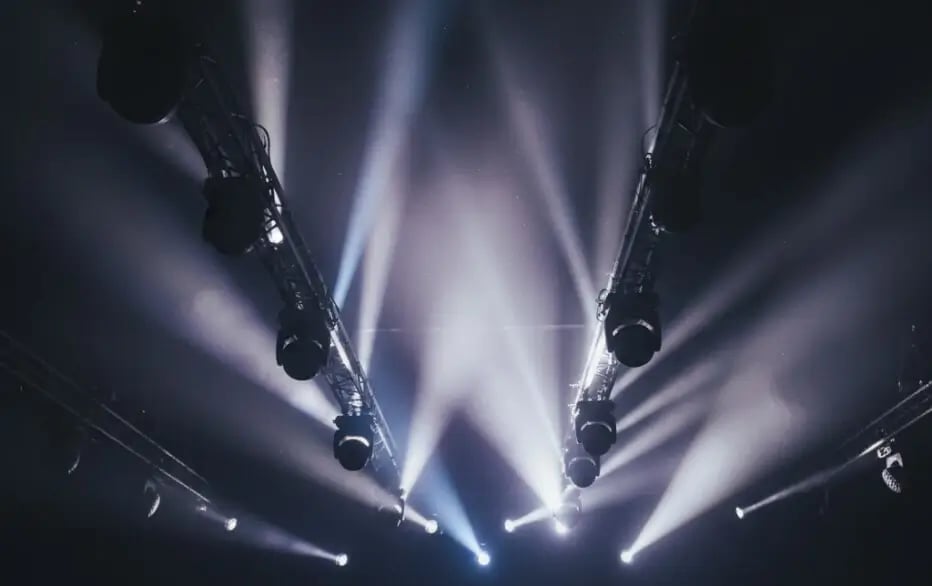
A spot light is only as good as its aim. Because the beam is narrow, even a few degrees of misalignment will miss the target entirely. Choose a mounting method that allows precise aiming and stays locked in position over time.
Adjustable knuckle mount: The most common mount for outdoor wall or surface applications. A knuckle joint allows tilt and rotation, then locks with a set screw. Good for signs and architectural features where the aim is set once and left.
Ground stake: Used for landscape spot lights aimed upward at trees, columns, or flags. Stakes push into soil and allow angle adjustment. Choose stainless steel or composite stakes for longevity — painted steel rusts within a season in most climates.
Yoke/trunnion mount: Heavy-duty mounting for commercial spot lights on poles or structures. The yoke provides full 360° horizontal rotation and 180° vertical tilt. Used for flagpole and sign lighting where the fixture is mounted at a distance from the target.
IP rating for outdoor use: Any spot light installed outdoors must carry an appropriate Ingress Protection rating. IP65 is the minimum for exposed outdoor use — it resists low-pressure water jets and dust. In-ground or near-ground fixtures exposed to standing water should be IP67 or higher.
A spot light has a narrow beam angle — typically 10° to 25° — that concentrates light on a specific target. A flood light has a wide beam angle of 60° to 120° or more that spreads light across a large area. Use a spot light when you need to illuminate a single object like a flag, sign, or tree. Use a flood light when you need to light an area where people walk, work, or park.
For a residential flagpole at 20–25 feet, a 10° to 15° beam angle provides a tight, focused spot that covers the flag without significant spill. A 10° beam at 25 feet creates a spot approximately 4.4 feet in diameter. Commercial flagpoles over 30 feet generally need a narrower 10° beam with higher lumen output (10,000+ lumens) to maintain sufficient intensity at the flag.
IP65 is the minimum for spot lights installed in exposed outdoor locations — it protects against low-pressure water jets and dust infiltration. Fixtures mounted at ground level or in areas subject to standing water, sprinkler spray, or flooding should be IP67 or higher. Indoor applications do not require IP-rated fixtures.
Yes, in most cases. LED spot light bulbs are available in common base types including E26, GU10, and MR16, and in wattage equivalents from 35W halogen through 150W PAR38. Confirm the base type, voltage (120V or 12V), and physical dimensions match your existing fixture before purchasing. LED replacements typically use 80–85% less energy than the halogen bulbs they replace.
Lumen requirements depend on the target and throw distance. Landscape accent lighting on trees or garden features typically needs 500–2,000 lumens. Sign illumination at 15–25 feet usually requires 2,000–5,000 lumens. Flagpoles and tall structures at 30+ feet may need 5,000–15,000 lumens. Higher lumen counts are needed as throw distance increases because beam intensity drops with the square of the distance.
3000K (warm white) is preferred for residential landscape and architectural accent lighting because it produces a warm, inviting tone that blends well with natural surroundings. 4000K (neutral white) works well for sign lighting where readability matters. 5000K (daylight white) is used in security and commercial applications where maximum visibility is the priority. Warm temperatures render foliage and stone more naturally than cool temperatures.
Some LED spot lights are dimmable, but compatibility depends on both the fixture driver and the dimmer type. LED fixtures require dimmers rated for LED loads — standard incandescent dimmers can cause flickering, buzzing, or premature failure. Always check the product specification sheet for dimming compatibility and recommended dimmer models before installation.
LED spot lights are available in 12V, 24V, 120V, and 120–277V configurations. Low-voltage 12V fixtures are standard for landscape lighting systems fed from a transformer. Line-voltage 120V fixtures are used for direct-wired wall and pole-mounted applications. Commercial and industrial spot lights rated 120–277V accept universal voltage input and work with any standard commercial electrical service without a transformer.
From decorative accents to functional security lighting, our LED spot lighting solutions are built for precision and durability. If you need help selecting the right fixture or bulb, our lighting specialists are ready to assist.
Contact us for expert guidance on choosing the right LED spot lights for your project.
Contact UsCall Now: (800) 674-9420


Dara Greaney is the CEO and President of LEDLightExpert.com, a leading company in commercial lighting solutions. Since 2015, he has led the company to achieve remarkable growth and recognition, including being an Inc5000 winner three times: No. 3783 in 2022, No. 2428 in 2021, and No. 531 in 2020.


Editing by David Peguero.

On orders over $49.00
Up to 7 Years Free Warranty On LED Lights