3000k Light Bulbs

USA Based Experts in less than 60 seconds Call Now: 800-674-9420
On orders over $49.00
Up to 7 Years Free Warranty On LED Lights


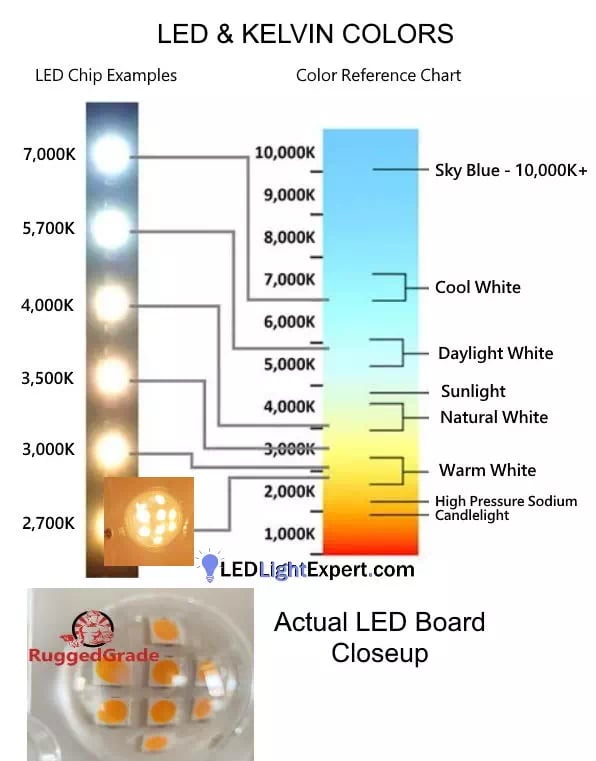
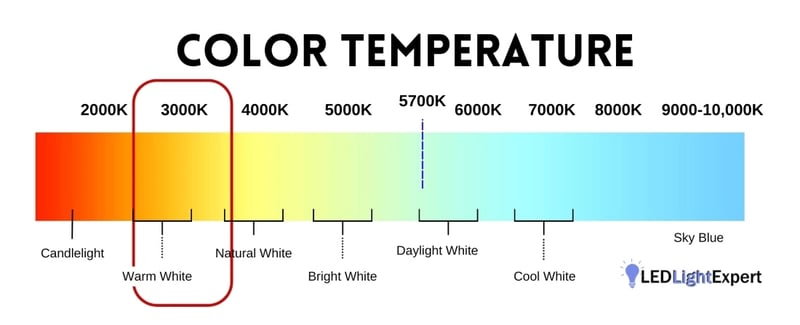
Color temperature is measured in Kelvin (K) and describes the visual appearance of white light on a spectrum from warm amber to cool blue-white. At 3000K, an LED produces a warm white tone that closely matches the output of a halogen lamp — noticeably warmer than office fluorescent (typically 4100K) but cleaner and more neutral than the deep amber of a traditional incandescent bulb (2700K). This position on the Kelvin scale makes 3000K a useful warm-white option for commercial and hospitality applications where light quality affects comfort, color appearance, and how the space feels.
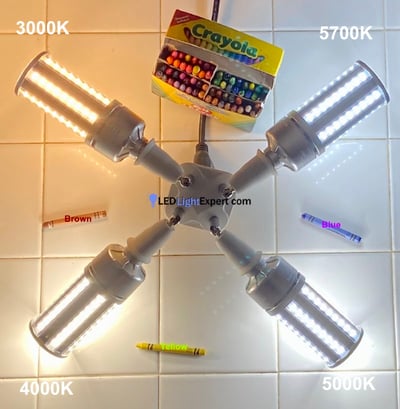
The physics behind color temperature is straightforward. Most white LEDs use a blue LED chip with a phosphor coating. The phosphor converts a portion of that blue energy into longer wavelengths such as yellow, orange, and red. A 3000K phosphor blend shifts more energy toward the red-yellow end of the visible spectrum, producing the characteristic warm glow. A 5000K blend allows more of the native blue through, resulting in the crisp daylight appearance used in warehouses and task lighting. A 3000K bulb and a 5000K bulb of the same wattage draw the same power, though total lumens can vary by product design, phosphor blend, and LED package. The difference is entirely in the spectral distribution of the light, not the quantity.
Lighting designers specify 3000K for spaces where human comfort, visual warmth, and natural color rendering are priorities. Restaurants, hotel lobbies, boutique retail, senior living facilities, residential common areas, and reception spaces all benefit from the warm tone. Many people perceive 3000K light as warmer and more relaxed because it resembles evening, hospitality, and residential lighting more than cooler task lighting. In retail environments, 3000K renders skin tones, wood finishes, fabrics, and food more naturally than cooler alternatives, making products look more natural under display lighting. For spaces where understanding LED light color temperatures drives purchasing decisions, 3000K is the option that prioritizes visual warmth and comfort.


The warm-to-cool spectrum in commercial LED lighting typically spans four standard color temperatures, each suited to different environments. 3000K delivers a warm white with a subtle yellow undertone — well suited for hospitality, dining, and any customer-facing space where ambiance matters. 3500K sits at the warm-neutral boundary, offering slightly more visual clarity while retaining warmth — a common choice for medical waiting rooms, open-plan offices, and retail environments that need both comfort and task performance. 4000K is a true neutral white favored for offices, classrooms, and healthcare examination rooms where visual acuity and alertness take priority. 5000K approximates midday daylight and is the standard for warehouses, manufacturing floors, and inspection stations where maximum contrast and color discrimination are required.
Color Rendering Index (CRI) measures how accurately a light source reveals the true colors of objects compared to a reference source. At 3000K, CRI becomes particularly important because warm light is often chosen specifically for its color-rendering qualities. A 3000K LED with a CRI of 80 can render colors less accurately than a 90+ CRI option. For restaurants, galleries, retail displays, and residential applications, specify 90 CRI or higher at 3000K to get the full benefit of warm-white illumination. The cost difference for high-CRI LEDs varies by product line, but the visual improvement can matter in restaurants, galleries, retail displays, and residential-style commercial spaces.
Many modern LED fixtures and bulbs now offer Kelvin-selectable technology — a built-in switch that allows the installer to choose between multiple color temperatures (commonly 3000K/4000K/5000K) from a single SKU. This is valuable for contractors and facility managers who serve diverse spaces: one product covers multiple applications, reducing inventory and allowing on-site color matching. For 3000K-specific applications, verify that the fixture is set to the correct position before final installation — a common field error is leaving a Kelvin-selectable fixture at its factory default (often 4000K or 5000K), resulting in cooler light than intended.
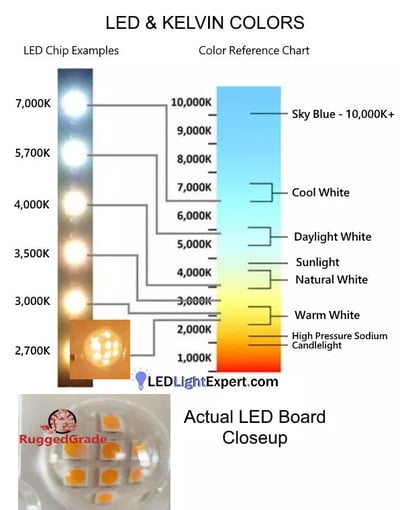
3000K refers to the correlated color temperature (CCT) of the light source, measured in Kelvin. At 3000K, an LED emits a warm white light with a slight yellow undertone — similar to the color of a traditional halogen bulb. The Kelvin scale describes color appearance, not brightness or heat. Lower Kelvin numbers (2700K to 3000K) produce warmer, more amber tones. Higher numbers (4000K to 5000K+) produce cooler, bluer white light. 3000K sits at the warm end of the commercial lighting spectrum and is widely used where visual comfort and ambiance are priorities.
3000K LEDs are well suited for environments where the quality of light directly affects the experience — restaurants, hotel lobbies, retail showrooms, residential living spaces, reception areas, and senior living facilities. The warm tone reduces visual harshness, renders skin tones naturally, and creates a perception of comfort that cooler color temperatures cannot replicate. In commercial settings, 3000K is preferred for front-of-house areas while 4000K or 5000K may be used in back-of-house, warehouse, or task lighting zones where visual acuity takes priority over ambiance.
Brightness is determined by lumens, not color temperature. A 3000K LED can be just as bright as a 5000K LED of the same wattage — the difference is the color of the light, not the quantity. A 100W LED corn bulb at 3000K may be close in output to a comparable 5000K model, but exact lumens should be checked on the product specification sheet. Warmer light can also feel subjectively softer than cooler light, even when measured lumen output is similar. For task-intensive work environments like manufacturing or inspection stations, 4000K to 5000K is preferred not for brightness but for contrast and visual acuity.
Mixing color temperatures in the same visual field creates a noticeable and generally undesirable contrast — fixtures appear to be different colors, which looks unintentional and unprofessional. However, deliberate zoning is common and effective. Many commercial spaces use 3000K in customer-facing areas (dining rooms, lobbies, showrooms) and 4000K or 5000K in functional areas (kitchens, stock rooms, service corridors). The key is that adjacent fixtures within the same visual zone should match. When replacing bulbs in a multi-fixture space, replace all fixtures in that zone at once to maintain consistency.
The three warm-white color temperatures serve overlapping but distinct purposes. 2700K produces a noticeably amber tone similar to a traditional incandescent bulb — preferred for residential bedrooms, living rooms, and intimate dining settings. 3000K is slightly whiter and more neutral while still reading as warm — the standard choice for hospitality, retail, and commercial spaces that want warmth without the residential amber cast. 3500K sits at the boundary between warm and neutral white — used in offices, medical waiting rooms, and retail environments that need a balance of comfort and visual clarity. The differences are subtle but visible when compared side by side.
No. Color temperature has no meaningful effect on energy consumption. A 60W LED corn bulb draws 60 watts regardless of whether it is 3000K or 5000K. The color difference comes from the phosphor coating on the LED chip, not from additional energy input. The phosphor converts the LED's native blue light into the desired white spectrum. A warmer phosphor blend shifts more energy toward the red-yellow end, while a cooler blend allows more blue through. Both conversions operate at essentially the same electrical efficiency. Choose color temperature based on application needs, not energy concerns.
For 3000K lighting, color quality matters as much as wattage. Our lighting experts can help select the bulb type, lumen output, CRI, and dimming compatibility for the fixture and room. Call us at (800) 674-9420 or contact us online for a free consultation.
Call Now: (800) 674-9420


Dara Greaney is the CEO and President of LEDLightExpert.com, a leading company in commercial lighting solutions. Since 2015, he has led the company to achieve remarkable growth and recognition, including being an Inc5000 winner three times: No. 3783 in 2022, No. 2428 in 2021, and No. 531 in 2020.
Editing by David Peguero.
On orders over $49.00
Up to 7 Years Free Warranty On LED Lights