


Quick Answer
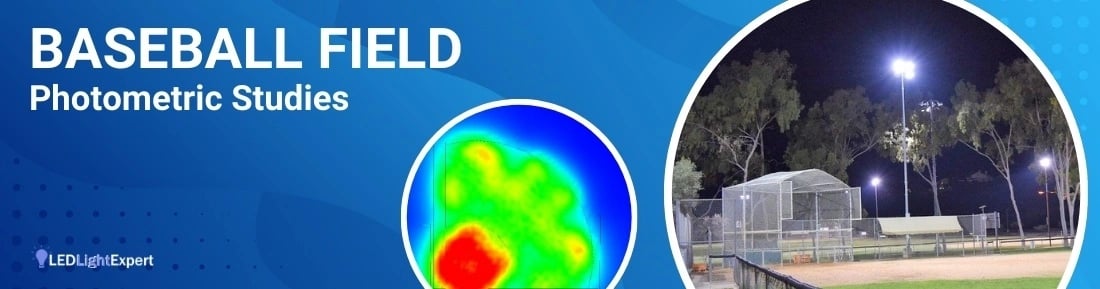
Baseball field photometric studies compare field size, pole height, fixture count, wattage, and average footcandles before installation. The real examples below show how different baseline and outfield layouts change the final light level.
Baseball Field Photometric Light Study Examples
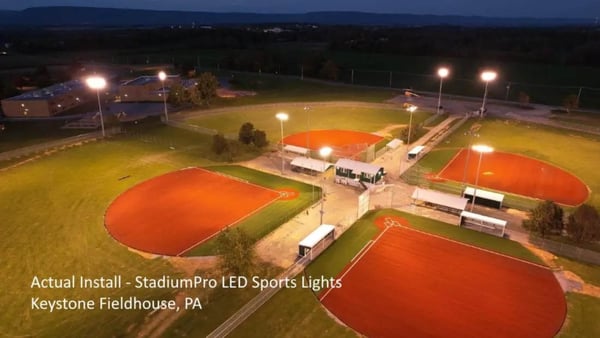
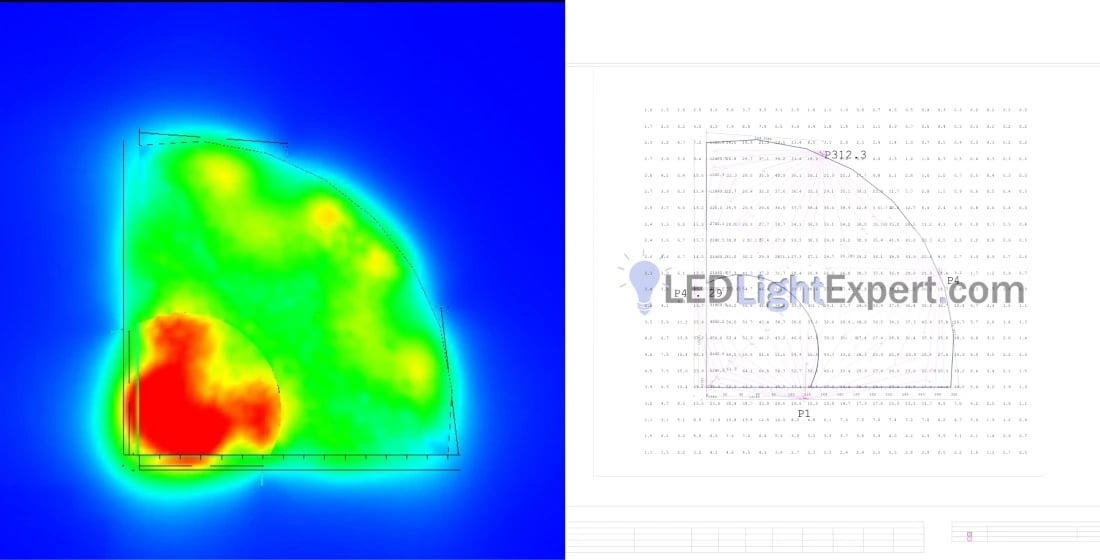
- Baseball Field - 200ft -Baseline - 4qty 60ft High Poles - 32qty 500w Lights - 51fc/31fc avg - (202)
- Baseball Field - 200ft -Baseline - 4qty 50ft High Poles - 20qty 800w Lights - 51fc/34fc avg - (203)
- Baseball Field - 200ft -Baseline - 4qty 60ft High Poles - 20qty 800w Lights - 51fc/34fc avg - (204)
- Baseball Field - 250ft -Baseline - 6qty 50ft High Poles - 44qty 500w Lights - 51fc/37fc avg - (205)
- Baseball Field - 250ft -Baseline - 6qty 60ft High Poles - 44qty 500w Lights - 51fc/37fc avg - (206)
- Baseball Field - 250ft -Baseline - 6qty 60ft High Poles - 26qty 800w Lights - 51fc/36fc avg - (208)
- Baseball Field - 275ft -Baseline - 6qty 60ft High Poles - 48qty 500w Lights - 51fc/33fc avg - (209)
- Baseball Field - 275ft -Baseline - 6qty 70ft High Poles - 48qty 500w Lights - 51fc/33fc avg - (210)
- Baseball Field - 300ft -Baseline - 6qty 60ft High Poles - 38qty 800w Lights - 52fc/31fc avg - (211)
- Baseball Field - 300ft -Baseline - 6qty 70ft High Poles - 38qty 800w Lights - 54fc/33fc avg - (212)
- Baseball Field - 300ft -Baseline - 6qty 60ft High Poles - 28qty 1400w Lights - 52fc/37fc avg - (213)
- Baseball Field - 300ft -Baseline - 6qty 70ft High Poles - 28qty 1400w Lights - 54fc/38fc avg - (214)
- Baseball Field - 200ft -Baseline - 6qty 60ft High Poles - 18qty 500w Lights - 31fc/19fc avg - (215)
- Baseball Field - 200ft -Baseline - 4qty 50ft High Poles - 18qty 500w Lights - 30fc/19fc avg - (216)
- Baseball Field - 200ft -Baseline - 4qty 40ft High Poles - 18qty 500w Lights - 28fc/18fc avg - (217)
- Baseball Field - 330ft -Baseline - 400 center - 6qty 80ft High Poles - 64qty 800w Lights - 62fc/45fc avg - (218)
- Baseball Field - 330ft -Baseline -400 center - 6qty 80ft High Poles - 36qty 1400w Lights - 51fc/37fc avg - (219)
- Baseball Field - 330ft -Baseline -400 center - 6qty 80ft High Poles - 48qty 800w Lights - 51fc/32fc avg - (220)
- Baseball Field - 330ft -Baseline -400 center - 8qty 80ft High Poles - 50qty 1400w Lights - 72fc/51fc avg - (221)
- Baseball Field - 300ft -Baseline - 6qty 60ft High Poles - 26qty 800w Lights - 32fc/22fc avg - (222)
- Baseball Field - 300ft -Baseline - 6qty 60ft High Poles - 40qty 500w Lights - 32fc/21fc avg - (223)
LED Lighting Options for Baseball Fields
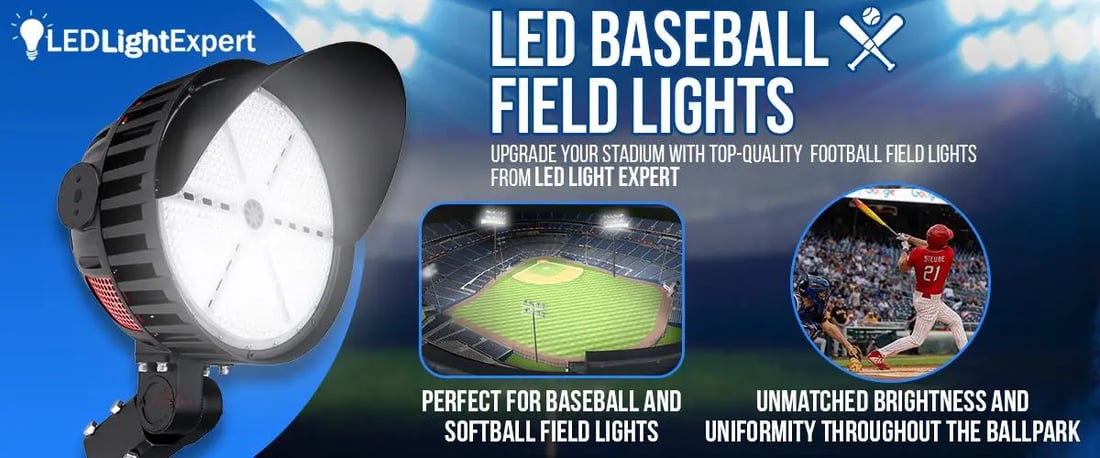
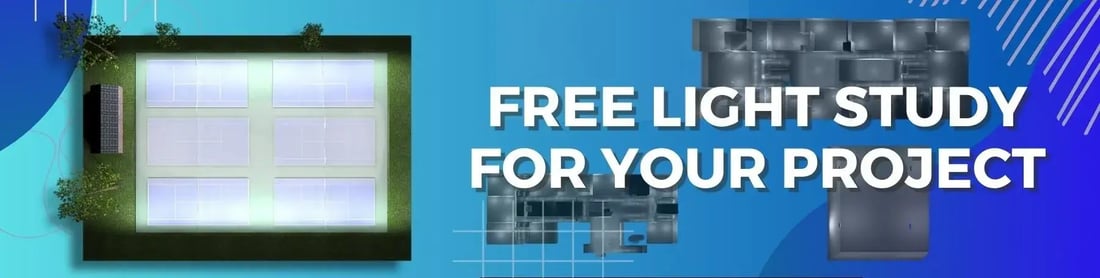
Key Takeaway: For baseball, average footcandles and uniformity both matter. A bright infield with dark outfield pockets can still play poorly, so compare pole layout, aiming, and fixture count before ordering lights.
How to Use These Study Examples
Use these real examples as planning references, not one-size-fits-all prescriptions. Site dimensions, pole setbacks, mounting height, beam angle, voltage, local code, and target light levels can all change the fixture count and aiming plan.
When comparing studies, look at the field or area size, pole height, fixture count, wattage, average footcandles, and whether the layout controls spill light outside the target area.
Photometric Study FAQs
It shows expected light levels, fixture locations, aiming, mounting heights, beam patterns, and uniformity before installation. The goal is to confirm the lighting plan before poles and fixtures are ordered; for new projects, request a free photometric lighting study with site dimensions and mounting details.
Average footcandles can look good even when some areas are too bright and others are too dark. Review uniformity, glare, pole placement, and spill light along with the average.
Send dimensions, mounting heights, pole locations, voltage, photos, target light levels, and any code, neighbor, camera, or spill-light requirements. More site detail makes the layout more useful.
Related Articles
 Photometric Study GuideLearn what a photometric study is and how to use it before buying lights.
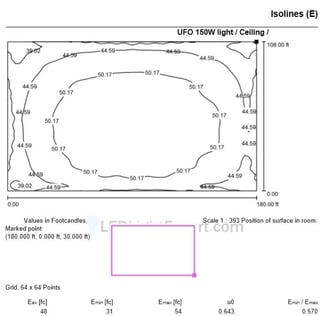 How to Read a Photometric StudyUnderstand footcandle grids, uniformity ratios, isolines, and fixture schedules.
 Request a Free Light StudySend dimensions, pole locations, and target light levels for layout help.
About the Author


Need a Photometric Light Study?
Send the area dimensions, pole locations, mounting height, target footcandles, voltage, and any glare or spill-light concerns. Our lighting team can help compare layouts before fixtures are ordered.
REQUEST A FREE LIGHT STUDY


