


Quick Answer
Golf course and driving range photometric studies show how far the light carries, how evenly the tee line and landing zones are covered, and whether fixture aiming creates glare or spill. Review pole height, fixture count, beam angle, target distance, neighboring property lines, and ball-flight visibility before choosing lights.
Golf Course and Driving Range Photometric Study Examples
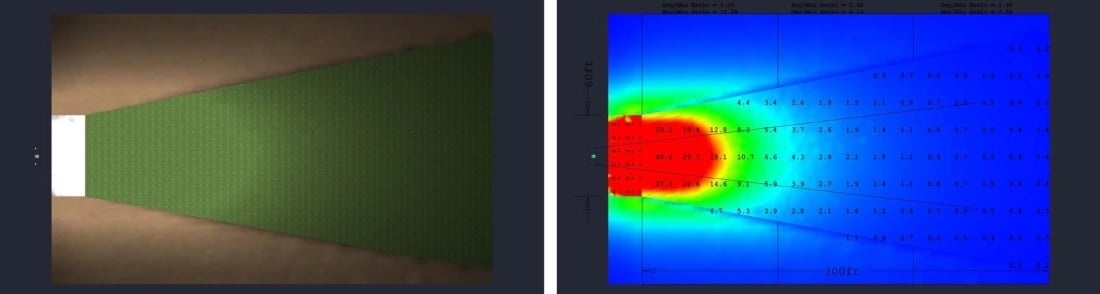
- Golf Course Driving Range-60-X-300-3-TEE-Driving Range - 1qty 20ft High Poles - 2qty 1400w Lights - (501)
- Golf Course Driving Range-100-X-300-medium lane-Driving Range - 2qty 20ft High Poles - 4qty 1400w Lights - (502)
- Golf Course Driving Range-150-X-400- Large Commercial-Driving Range - 3qty 30ft High Poles - 6qty 1400w Lights - (503)
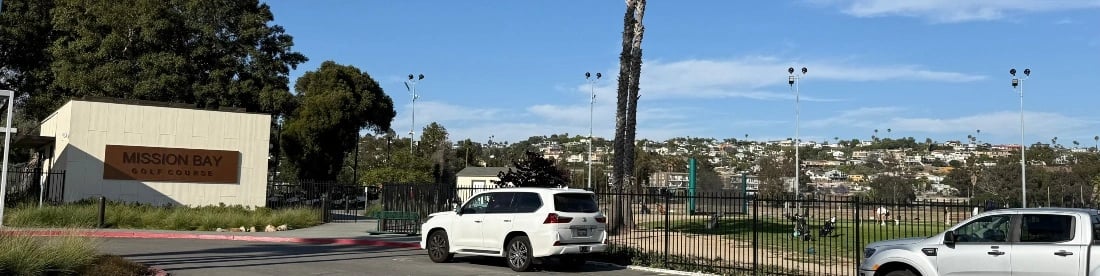
Golf Driving Range Case Study - Mission Bay Golf Course
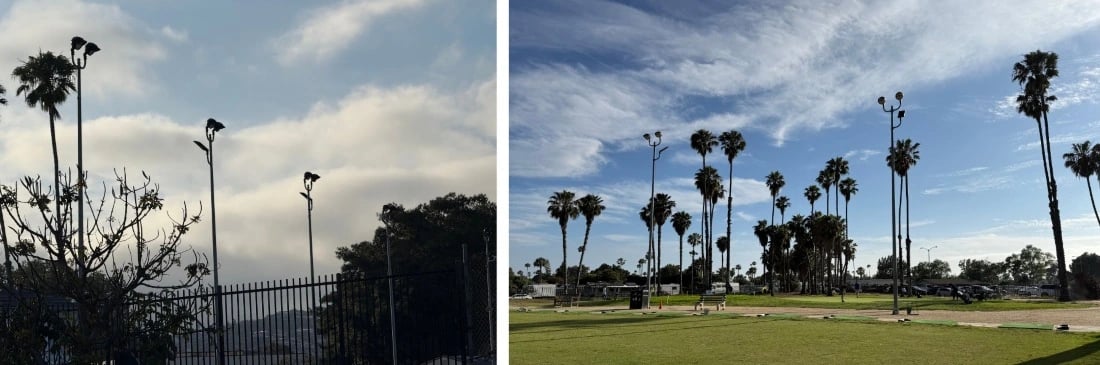
LED Lighting Options for Golf Courses
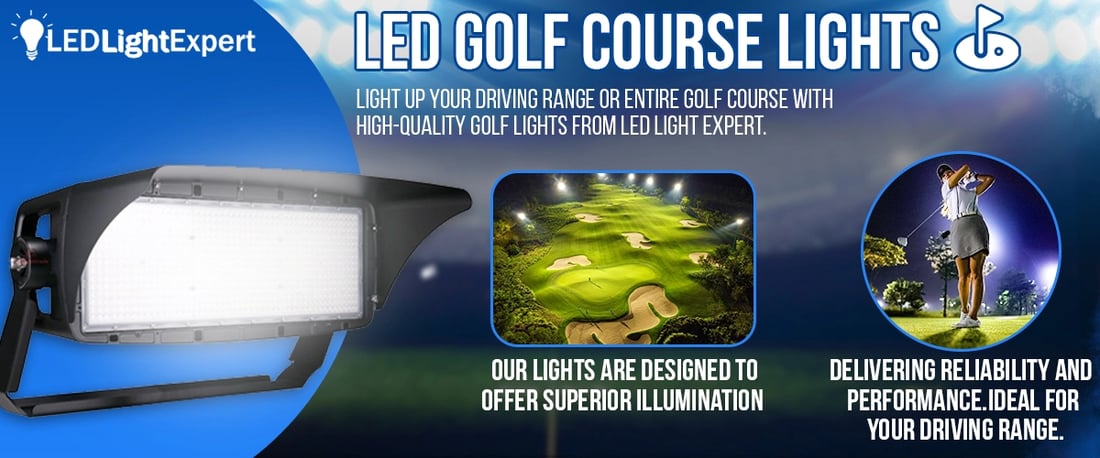
Key Takeaway: Driving ranges need long throw, controlled beam spread, and careful spill control. A layout study helps confirm both ball tracking visibility and surrounding-area impact.
How to Use These Study Examples
Use these real examples as planning references, not one-size-fits-all prescriptions. Site dimensions, pole setbacks, mounting height, beam angle, voltage, local code, and target light levels can all change the fixture count and aiming plan.
When comparing studies, look at the field or area size, pole height, fixture count, wattage, average footcandles, and whether the layout controls spill light outside the target area.
Photometric Study FAQs
It shows expected light levels, fixture locations, aiming, mounting heights, beam patterns, and uniformity before installation. The goal is to confirm the lighting plan before poles and fixtures are ordered; for new projects, request a free photometric lighting study with site dimensions and mounting details.
Average footcandles can look good even when some areas are too bright and others are too dark. Review uniformity, glare, pole placement, and spill light along with the average.
Send dimensions, mounting heights, pole locations, voltage, photos, target light levels, and any code, neighbor, camera, or spill-light requirements. More site detail makes the layout more useful.
Related Articles
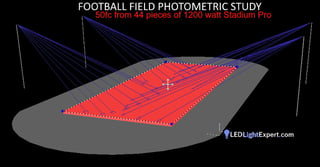 Photometric Study GuideLearn what a photometric study is and how to use it before buying lights.
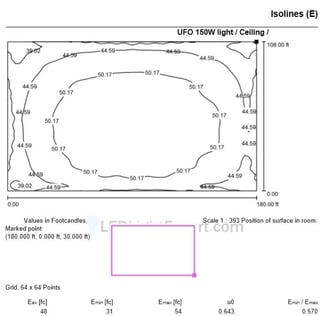 How to Read a Photometric StudyUnderstand footcandle grids, uniformity ratios, isolines, and fixture schedules.
 Request a Free Light StudySend dimensions, pole locations, and target light levels for layout help.
About the Author


Need a Photometric Light Study?
Send the area dimensions, pole locations, mounting height, target footcandles, voltage, and any glare or spill-light concerns. Our lighting team can help compare layouts before fixtures are ordered.
REQUEST A FREE LIGHT STUDY


