LED Marijuana Grow Lights

USA Based Experts in less than 60 seconds Call Now: 800-674-9420
On orders over $49.00
Up to 7 Years Free Warranty On LED Lights

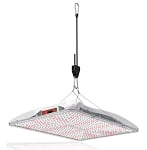
LED grow lights should be chosen by the plant stage, spectrum, fixture output, coverage area, mounting height, heat load, and control strategy. The right layout gives the canopy consistent usable light without creating excess heat or wasted energy.
Indoor cultivation depends on usable light, not fixture wattage alone. Full-spectrum LED grow lights are commonly used because they support vegetative growth and flowering without changing lamp types. Review PAR output, PPFD maps, dimming range, fixture spacing, and recommended hanging height for the actual growing area.
Red, blue, green, and white light all play a role in plant development. The fixture should provide the intensity and distribution needed across the canopy, with enough control to adjust output as plants mature. In larger rooms, layout planning is just as important as fixture selection because overlapping beams determine uniformity.
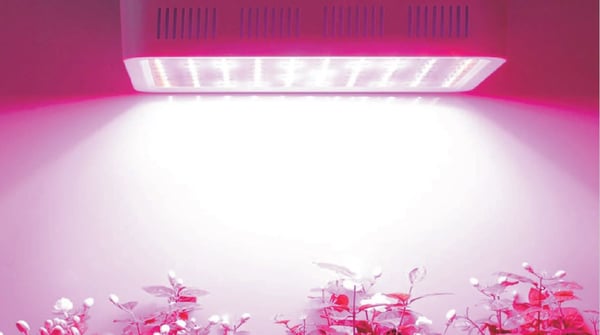
Manufacturers usually publish coverage maps by mounting height. Use those maps to avoid hot spots directly below the fixture and low-light edges between fixtures. A dimmable fixture can make commissioning easier because output can be adjusted after installation.

Cannabis grow light planning includes several practical details. It used a simple planning rule of about 10 watts of LED light for every square foot of growing area, then correctly warned that spectrum, layout, and plant stage matter more than wattage alone. It also pointed buyers toward full-spectrum grow lights rather than chasing one color. If full spectrum is not available, the original planning guidance discussed 2700K or 4000K for stronger red output and adding 5000K when more blue is needed.
Cannabis grow lighting is designed to promote growth in indoor cannabis, hemp, vegetables, and other plants. For years, high-intensity discharge fixtures such as HPS were the standard grow-room source. LED grow lights became popular because they can run cooler, use less electricity, dim more easily, and last longer while still delivering strong plant-usable output. That does not mean every LED fixture is correct for cultivation. The room still needs the correct spectrum, PPFD, coverage, fixture spacing, mounting height, heat management, and control plan.
Full-spectrum lighting for cannabis is usually discussed across the 400 nm to 720 nm range, the photosynthetically active radiation range plants use for photosynthesis. This range can include near-ultraviolet through visible colors and toward infrared, closer to natural sunlight than older narrow-color LED approaches. Red light, often discussed around 600 nm to 800 nm, is important during flowering and budding. Too much red at the wrong time can stretch plants, so red-heavy output should be used around the growth stage and crop plan.
Blue-rich light is important for vegetative and seedling development. Useful planning guidance also discussed 500 nm to 600 nm light, 280 nm to 400 nm ultraviolet exposure, CRI, and R9. CRI measures how accurately a light source renders colors from 1 to 100, while R9 focuses on saturated red. R9 matters in horticulture because red output is tied to flowering response. Spectrum charts, PAR data, PPFD maps, and dimming behavior are more useful than the fixture color appearance alone.
Kelvin describes visual color temperature, not the actual physical heat of the fixture. Higher Kelvin appears cooler and bluer. Lower Kelvin appears warmer and redder. Common planning guidance uses 2700K for flowering and fruiting, 4000K for vegetative growth, and 5000K or higher when a grower needs more blue. Those are starting points, not universal rules. Many growers succeed outside those ranges when the fixture provides full-spectrum output and the canopy receives the target PPFD.
For any grow room, compare fixture spectrum, wattage, driver efficiency, lens angle, PPFD map, coverage area, hanging height, dimming zones, and HVAC load together. Plants can be damaged by too much light, too much UV, poor airflow, heat buildup, or uneven fixture spacing. A good LED grow light layout gives the crop enough usable light while keeping the canopy even from the center to the edge.
Cannabis grow light selection starts with the crop, the growth stage, and the room. Cannabis, marijuana, hemp, vegetables, and other plants all depend on light that supports photosynthesis. Useful planning guidance explained that legalization made cannabis growing more mainstream and that the industry moved from high-intensity discharge sources toward light-emitting diode fixtures. HPS can still produce strong output, but LED grow lights offer lower heat, longer life, dimming, control compatibility, and efficient plant-usable illumination.
For rough planning, the old rule of 10 watts of LED per square foot is still a quick starting point. It should be checked against the fixture PPFD map, coverage chart, and crop target. The grower should compare canopy size, aisle space, rack height, hanging height, electrical load, HVAC capacity, beam angle, dimming zones, and full-spectrum output. Better results come from a stable room, not from wattage alone. A grower can have powerful fixtures and still get poor results if the light is uneven, the edge of the canopy is low, or the plants are too close to the LEDs.
Full-spectrum cannabis grow lights are designed to cover the wavelengths plants use across the growing cycle. A useful planning baseline describes the 400 nm to 720 nm range, PAR, and photosynthetically active radiation. It also discussed near-ultraviolet, visible colors, and infrared as part of the broader spectrum. Full spectrum helps avoid gaps in the light plants need. Older multi-color LED approaches used separate red, blue, and other colored diodes, but modern fixtures often use white and full-spectrum LED packages that do not look multi-colored even when the spectrum is appropriate.
Red, blue, green, and white light affect the growing cycle in different ways. Red light, often in the 600 nm to 800 nm range, is important during flowering and budding. It signals seasonal change and can encourage flowering when the plant is ready. Too much red light too early can stretch cannabis plants and create elongated growth. Blue-rich light is important for vegetative and seedling development. Useful planning guidance also discussed 500 nm to 600 nm light and 280 nm to 400 nm UV exposure. UV can affect plants, but too much UV can damage plants, just as too much UV can harm people.
Kelvin guidance helps when a buyer cannot compare full spectrum data. Kelvin is a visual color temperature, not the physical heat of the fixture. Higher Kelvin appears cooler and bluer. Lower Kelvin appears warmer and redder. The original recommendations were 2700 degrees Kelvin for flowering and fruiting, 4000 degrees Kelvin for vegetative growth, and 5000 degrees Kelvin or higher when the grower needs more blue. These temperatures are suggestions. Many growers work outside them, so the fixture spectrum chart and PPFD data should carry more weight than Kelvin alone.
CRI and R9 are also part of the planning guide. CRI measures color rendering from 1 to 100. R9 measures saturated red, which matters because red output is important in horticulture and cannabis lighting. A fixture with good CRI can make plants easier to inspect, but CRI is not the same as plant output. PAR, PPFD, spectrum, fixture spacing, lens angle, hanging height, and dimming behavior are the important grow-room metrics. The grower should use all of them before choosing a fixture for a cannabis operation. Cannabis growers will also compare Kelvin temperatures, growing phase, full spectrum source, and whether the fixture will mimic sunlight closely enough for the operation.
The answer depends on crop type, growth stage, fixture efficacy, mounting height, and target PPFD. Use the fixture manufacturer's coverage chart and PPFD map instead of wattage alone.
Many indoor growers use full-spectrum fixtures because they provide balanced output for multiple growth stages. If choosing by CCT, review the spectrum chart and PAR data rather than color temperature alone.
LED grow lights often use less energy, produce less radiant heat, and reduce lamp-change maintenance compared with HPS systems. HPS can still produce strong output, but LEDs are easier to control and often reduce HVAC load.
PAR is the range of light wavelengths plants use for photosynthesis. For grow lighting, PAR, PPFD, spectrum, fixture spacing, and mounting height are more useful selection details than wattage alone.
Hanging height depends on fixture intensity and growth stage. Check the manufacturer's PPFD map and recommended mounting range, then adjust output or height to avoid hot spots and low-light edges.
Yes, in most comparable layouts. LED fixtures commonly reduce lighting power and heat load while delivering strong usable plant light, especially when paired with dimming and a well-planned layout.
LED Light Expert can help compare spectrum, output, hanging height, dimming, and fixture spacing for indoor growing projects. Confirm the room dimensions, canopy target, and electrical requirements before ordering.
Contact LED Light ExpertFixture spacing should be planned with the canopy size, aisle space, rack height, and HVAC capacity in mind. A strong layout avoids stacking too much light directly below each fixture and keeps the edge of the canopy from falling below the target PPFD. Electrical load, dimming zones, and service access should be reviewed before installation.
When comparing fixtures, ask for spectrum data, PPFD maps, recommended mounting heights, warranty terms, and control compatibility. Those details make it easier to compare real performance instead of relying on wattage or fixture size alone.
On orders over $49.00
Up to 7 Years Free Warranty On LED Lights