Solar Sign Lights for Outdoor and Commercial Use
USA Based Experts in less than 60 seconds Call Now: 800-674-9420
On orders over $49.00
Up to 7 Years Free Warranty On LED Lights

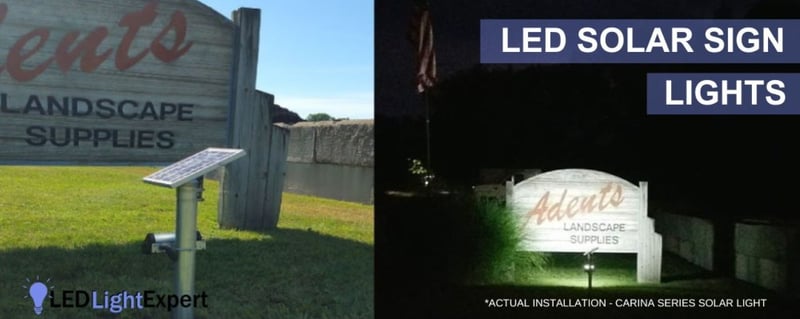
Solar sign lights are useful when a sign needs nighttime visibility but trenching, conduit, or new electrical service is expensive. Each system depends on the same basic pieces: solar panel, battery, LED light source, mounting arm, charge controller, and dusk-to-dawn operation.
Good performance starts with sun exposure. A panel shaded by trees, rooflines, poles, or the sign itself will not recharge consistently. Battery capacity, winter sun hours, sign size, and desired nightly runtime should be reviewed before selecting a fixture.
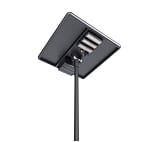
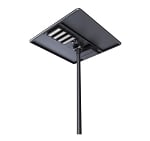
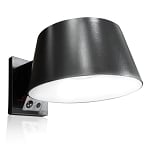
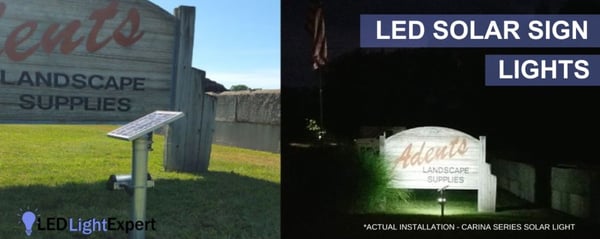
Small address signs may only need one compact fixture. Monument signs, business signs, and entrance signs may need multiple fixtures or wider optics for even coverage. Gooseneck-style lights work well from above, while flood-style solar lights can illuminate larger sign faces from the ground or a side mount.
Check lumen output, beam angle, mounting distance, battery type, panel wattage, run-time claim, and IP rating. In cloudy or winter conditions, a larger panel and battery may be needed to maintain dusk-to-dawn operation.
A solar sign light with a bright LED module will still disappoint if the panel is undersized or shaded. Review average sun hours, winter conditions, sign operating hours, and whether the light must run every night or only during business hours. A larger battery gives the system more reserve for cloudy stretches.
For signs with glossy faces, test aiming carefully. Too steep an angle can create glare or hotspots, while too shallow an angle may miss the lower portion of the sign.
Solar sign lights are used when a sign needs nighttime visibility and running grid power is expensive, disruptive, or unavailable. Dusk-to-dawn solar sign lighting can operate without separate timers or motion sensors when the panel, battery, fixture wattage, and sun exposure are sized correctly. Solar is especially useful for monument signs, entrance signs, neighborhood signs, business signs, billboards, sign cabinets, and remote locations where trenching would cost more than the lighting system.
Sign lighting is broader than solar. It is any lighting system used to illuminate signs, logos, address numbers, corporate markings, menu boards, murals, shelves, awnings, walls, or decorative features. Traditional gooseneck sign lights use rounded angle shades on curved arms to place light on the sign face. Other sign systems use strip modules, channel-letter modules, backlighting, flood-style fixtures, or internal cabinet lighting. The right method depends on sign material, size, distance, mounting, and the look the business wants at night.
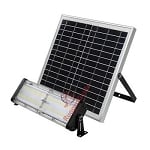
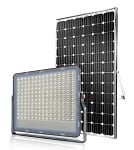
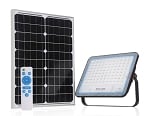
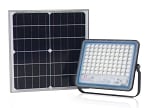
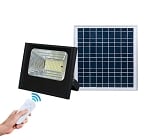
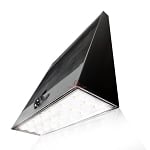
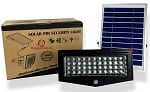
A solar sign light has four practical parts: the solar panel, the battery, the LED light source, and the controller. During daylight, the panel converts sunlight into electricity and charges the battery. At night, the controller powers the LED until the scheduled run time ends or daylight returns. A larger sign, longer dusk-to-dawn schedule, shaded panel, or winter climate requires more battery and panel capacity. A small panel paired with a high-output fixture may look good on paper but fail after several cloudy days.
Solar sign lighting can be front-lit, backlit, cabinet-mounted, or used with LED modules and ribbon inside certain sign assemblies. LEDs are preferred because they use less power than older incandescent or fluorescent sources, which makes the battery and panel easier to size. Maintenance still matters: dust, bird droppings, insects, panel angle, snow, battery age, and local code requirements can all affect performance. For any sign, check permitted brightness, uplight, glare, and property-line rules before installation.
A solar sign light has to balance sign brightness, panel rating, battery capacity, nightly run time, and local sun. The solar panel is usually mounted where it can collect daylight without shade from trees, buildings, awnings, or the sign itself. A controller stores energy in the battery during the day and powers the LED sign light at night. Dusk-to-dawn operation is simple for users, but it requires enough stored energy for the longest nights and cloudy weather.
Sign lights can front-light a monument sign, wash a logo from a gooseneck arm, illuminate address numbers, light a cabinet, or backlight a sign face. Outdoor applications include business signs, entrance signs, neighborhood signs, billboards, decorative walls, awnings, murals, and corporate markings. Interior sign lighting can highlight menu boards, bakery displays, bar signs, restaurant walls, retail shelves, artwork, and design features. Each sign type needs a different light level and mounting distance.
A solar panel charges a battery during the day. At night, a controller powers the LED light, often using dusk-to-dawn operation. Runtime depends on sun exposure, battery capacity, fixture wattage, and weather.
Start with sign width, height, mounting distance, desired brightness, and available sun. Larger signs or shaded sites may need multiple fixtures, wider optics, or a larger panel and battery.
They can, but runtime is reduced when daily charging is low. For reliable winter operation, choose enough panel wattage and battery capacity for the local sun conditions.
Mount the panel where it receives direct sun for much of the day, away from trees, roof shadows, and the sign face. Panel orientation is often as important as fixture brightness.
Solar sign lights can avoid trenching or new electrical service when the panel and battery are sized for the sign and local sun. Explore our solar-powered sign lights for business signs, monument signs, and property entrance signs.
Contact LED Light ExpertA solar sign light is four components working as a system, and understanding them is what separates a fixture that runs all winter from one that goes dark in November.
The solar panel converts daylight to electrical energy. Its rating and, just as importantly, its orientation and shading determine how much energy is available. The battery stores that energy and powers the light after dark. Capacity is what determines autonomy: a 3.7V/4400mAh battery can power a 200 lumen LED for up to two consecutive nights, which is what allows the fixture to keep working through a cloudy spell rather than failing on the first overcast day.
The LED itself is rated in lumens and colour temperature. A 200 lumen output provides clear illumination for a medium-sized sign or display. Colour temperature sets the character: 3000K produces a warm white that suits monument signs, stone, and hospitality properties, while 5000K produces a cool white that reads as brighter and crisper on commercial signage.
The dusk-to-dawn sensor reads ambient light and switches the fixture. Sensitivity is specified in lux - a sensor rated at 10 lux switches on when ambient light falls below roughly twilight level and off again when it rises above it at dawn. That is what makes the fixture fully automatic with no wiring, no timer, and no seasonal adjustment.
The practical consequence: solar sign lighting is sized on the worst case, not the average. Panel orientation, expected winter daylight, and battery autonomy have to be considered together, and a system specified for July performance will disappoint in December.
Solar makes the strongest case where running power to the sign is expensive or disruptive - monument signs at property entrances, signage across a car park from the building, and anywhere trenching would mean cutting a driveway. Where mains power is already at the sign, a wired fixture is usually cheaper and more predictable.
What comes with every order:
To specify, send the sign dimensions, the mounting position relative to the sign face, and the site location, since latitude and typical winter cloud cover affect how the system should be sized. Note any shading from trees or buildings across the day - a panel shaded for three hours each afternoon is a materially different system from one in full sun.
Request PricingCall Now: (800) 674-9420
Dara Greaney is the CEO and President of LEDLightExpert.com, a leading company in commercial lighting solutions. Since 2015, he has led the company to achieve remarkable growth and recognition, including being an Inc5000 winner three times: No. 3783 in 2022, No. 2428 in 2021, and No. 531 in 2020.
Editing by David Peguero.
On orders over $49.00
Up to 7 Years Free Warranty On LED Lights