LED Strip Lights

USA Based Experts in less than 60 seconds Call Now: 800-674-9420
On orders over $49.00
Up to 7 Years Free Warranty On LED Lights


LED strip lights can mean flexible tape light, rigid linear strip fixtures, or surface-mounted commercial strips. Start by deciding which format the project needs. Flexible tape is best for coves, shelves, cabinets, displays, signs, and tight accent runs. Rigid strip fixtures are better for garages, utility rooms, workbenches, back-of-house spaces, and long commercial runs that need a fixture body.
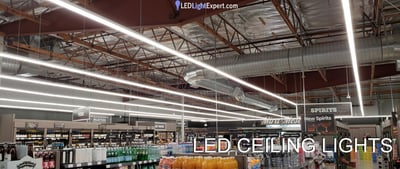
For tape light, compare voltage, watts per foot, lumens per foot, LED density, color temperature, IP rating, connector type, and maximum run length. For rigid strip fixtures, compare fixture length, delivered lumens, mounting method, lens, voltage, and controls.
Most flexible LED strips use 12V or 24V DC power. Longer runs usually perform better at 24V because voltage drop is lower. Size the power supply by multiplying watts per foot by total length, then add headroom so the driver is not run at its limit.
Aluminum channels protect the strip, help manage heat, hide wiring, and support diffusers. Diffusers soften visible diode dots but also reduce output, so they should be selected before final brightness is judged.

Use low-output strips for soft accent light and higher-output strips for task areas, retail displays, and work surfaces. Outdoor or wet-location runs need the correct IP rating, sealed connectors, and a power supply rated for the environment. Split long runs into shorter feeds when the far end starts to dim.
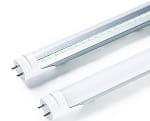
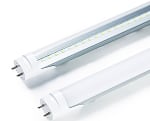
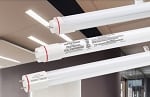
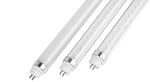
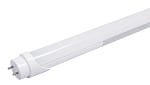
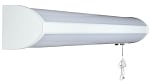
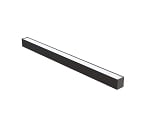
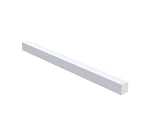
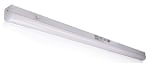
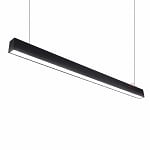
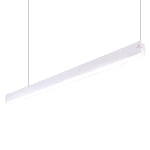
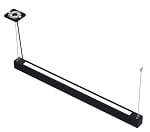
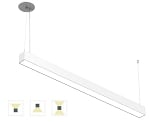
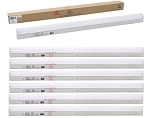
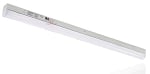
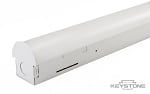
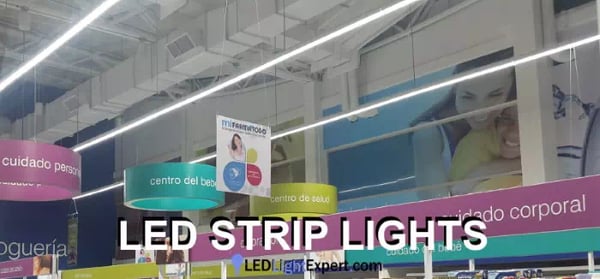
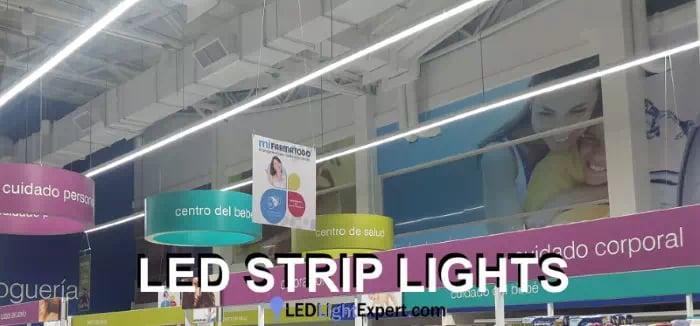
The earlier guide used two meanings for strip lighting, and both are useful when cleaned up. Flexible LED tape is the roll of uncovered LEDs used for shelves, coves, cabinets, signs, and accent lines. Commercial linear strip fixtures are the 2-foot, 4-foot, and 8-foot surface-mounted fixtures often used in manufacturing plants, retail stores, warehouses, garages, utility rooms, and back-of-house spaces.
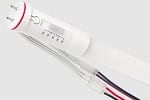
Flexible DC strips may use 12V or 24V power, adhesive backing, 30 or 60 LEDs per meter, waterproof jacket options, and cut points that vary by product. Surface-mounted strip fixtures are usually chosen by fixture length, lens, lumen output, voltage, mounting method, and whether the fixture needs linking, dimming, or emergency backup.
For either style, the complete system matters more than the strip alone. Confirm power supply, transformer or driver, connector type, maximum run length, voltage drop, aluminum channel, diffuser, and operating location before ordering.
Brightness levels vary widely. Low-output strips create ambiance in coves or shelves, while brighter strips can serve workbenches, display cases, task areas, and signs. LED density, diode number, watts per foot, diffuser material, and driver quality all change visible output. Compared with conventional fluorescent strip lamps, LED strips usually draw less power, offer more compact lengths, and make it easier to place light in tight spaces.
Surface-mounted strip fixtures are a different choice from flexible tape. They are often used in parking garages, workshops, warehouses, and business spaces where a rigid body, lens, and easy mounting are more important than bending around corners. Consider durability, output, mounting foot pattern, connector access, driver location, and the setting before choosing flexible tape or a rigid fixture.
Most LED strip lights use 12V or 24V DC power. Longer runs often use 24V to reduce voltage drop. A compatible power supply is required when the building power is 120V or 277V AC.
Brightness is usually compared in lumens per foot. Accent lighting can use lower output, while task lighting, displays, and work areas need higher lumens per foot and often benefit from a diffuser.
Outdoor or wet-location strip lights need an appropriate IP rating, sealed connectors, compatible channels, and a power supply rated for the environment.
Multiply watts per foot by total strip length, then add headroom so the power supply is not operated at its limit. Also account for voltage drop on longer runs.
Not always, but channels improve appearance, protect the strip, help with heat, and allow diffusers to soften dots and glare.
Choose LED strip lights by voltage, watts per foot, lumen output, run length, driver size, channel, diffuser, IP rating, and mounting location.
Contact us for help matching strip, driver, channel, diffuser, and controls to your project.
Contact UsCall Now: (800) 674-9420
Dara Greaney is the CEO and President of LEDLightExpert.com, a leading company in commercial lighting solutions. Since 2015, he has led the company to achieve remarkable growth and recognition, including being an Inc5000 winner three times: No. 3783 in 2022, No. 2428 in 2021, and No. 531 in 2020.
Editing by David Peguero.
On orders over $49.00
Up to 7 Years Free Warranty On LED Lights