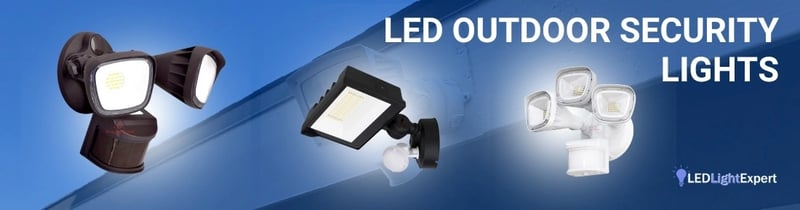
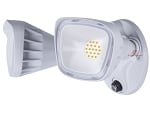
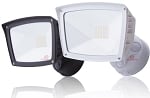
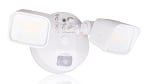
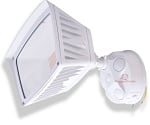
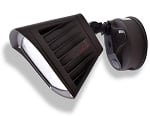
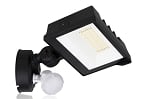
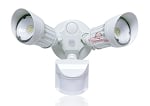
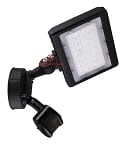
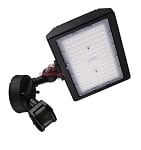
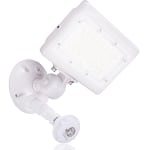
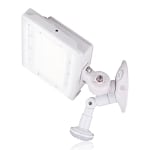
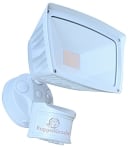
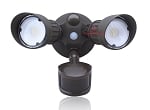
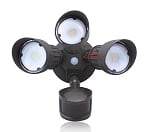
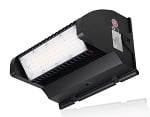
LED Outdoor Security Lights

USA Based Experts in less than 60 seconds Call Now: 800-674-9420
On orders over $49.00
Up to 7 Years Free Warranty On LED Lights

Outdoor security lighting should improve visibility at entrances, driveways, parking areas, loading docks, walkways, and building perimeters without creating glare or dark shadows. The right fixture depends on mounting height, area size, beam spread, voltage, controls, and how people or vehicles move through the site.
Motion sensors are useful where light should rise when movement is detected. Dusk-to-dawn photocells are better where an area needs steady night lighting. Some projects combine both: a lower background light level after dark with a higher level when people or vehicles arrive.
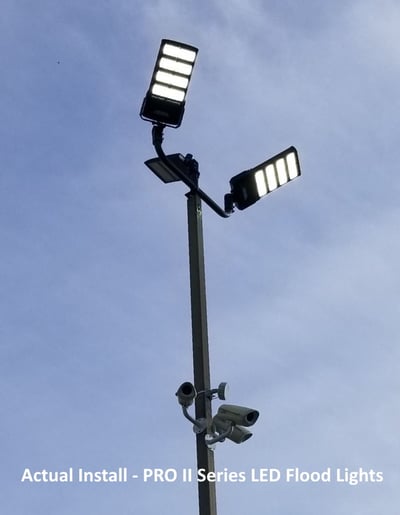
For security cameras, avoid aiming lights directly into the lens. Even coverage and controlled contrast usually work better than one very bright fixture.

Residential entries and driveways may use modest wattage fixtures, while commercial yards and parking areas may need higher output and a photometric check. 4000K is a balanced choice for many properties; 5000K can improve contrast where visibility is the priority. Fully exposed fixtures should use an outdoor rating suitable for rain, dust, and temperature swings.
Security lighting plans should start with entrances, building corners, stairways, parking lots, walkways, loading areas, and other places where people need to recognize surfaces, objects, vehicles, and movement after dark. The goal is not simply high output. The goal is usable contrast without glare or dark pockets.
Color temperature affects how the site feels and how cameras see the scene. 4000K is a balanced commercial choice. 5000K can improve contrast where identification is the priority. Housing color, mounting bracket, wall or pole location, IP rating, photocell, motion sensor, and timer settings all affect whether the fixture works after installation.
Motion sensors draw attention to movement and reduce energy use. Dusk-to-dawn photocells keep areas lit all night. Many sites use both, with lower background lighting and higher output when motion is detected.
Lumens, mounting height, and beam spread decide how much property a security fixture can illuminate. Small patios, porches, and driveways may need modest output, while larger parking lots, building backs, roof lines, and loading areas need brighter fixtures or more fixtures. Square footage, wall height, pole height, and surrounding brightness all affect the result.
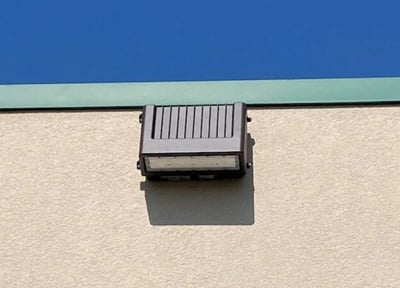
Mounting hardware matters. Security lights may use wall brackets, slip fitter mounts, yoke mounts, trunnions, or pole arms. A slip fitter works on a tenon, while a bracket or trunnion may be better on a wall or flat surface. Housing color, softer residential appearance, deeper commercial beam reach, and IP rating should be chosen for the environment.
Security lighting can reduce hiding places, but it should not blind users. Avoid bright hot spots near cameras or doors. Use multiple controlled fixtures when one large luminaire would create glare, shadows, or uneven ground visibility.
Security lights are used around homes, businesses, gates, entrances, windows, patios, driveways, parking spaces, and larger properties. The fixture should illuminate the ground and the area people actually use. A well-lit entrance can help visitors see steps, curbs, and obstacles. A parking lot with fewer dark spots can reduce accident risk and make activity easier to see.
Brightness is measured in lumens, but lumens alone do not decide coverage. A bright luminaire mounted too low can glare. A larger fixture mounted too high can miss the back of the property. Wall mount, slip fitter mount, bracket mount, and pole mount choices should match the installation surface and the square footage of the area. Security lighting can reduce dark areas and support cameras, but it works best as part of a complete system that also considers sightlines, landscaping, access control, and site management.
For residential driveways and entrances, 20 to 30-watt LED security lights typically provide sufficient coverage. Commercial parking areas and building perimeters usually require 50 to 150-watt fixtures depending on the area size and mounting height. A 30-watt LED security light often produces roughly 3,000 to 4,000 lumens; actual coverage depends on mounting height, beam angle, aiming, obstructions, and the target light level.
Each serves a different purpose. Motion sensor security lights activate only when movement is detected, saving energy and drawing attention to activity around your property. Dusk-to-dawn lights provide continuous illumination from sunset to sunrise, which deters trespassing and improves safety in consistently trafficked areas. Many property owners combine both types — dusk-to-dawn for general area lighting and motion sensors at entry points and blind spots.
5000K (daylight white) is the most common choice for security lighting because it provides high contrast and clear visibility for identifying faces, vehicles, and objects at a distance. Security cameras also perform better under 5000K light. For residential areas where aesthetics matter more, 4000K (neutral white) offers a good balance between visibility and a less harsh appearance.
Outdoor security lights should be rated IP65 at minimum, which means fully sealed against dust and protected from water jets in any direction. This rating handles rain, sprinklers, and pressure washing. For coastal, industrial, or fully exposed locations, IP66 or IP67 is recommended. The first digit (6) indicates complete dust protection, and the second digit (5, 6, or 7) indicates increasing water resistance. Fixtures mounted under eaves or overhangs can sometimes use IP44, but fully exposed mounts should always be IP65 or higher.
Select the appropriate lighting layout for your needs. Confirm fixture dimensions, voltage, mounting, and lead time before ordering.
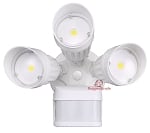
Shop NowCall Now: (800) 674-9420
Dara Greaney is the CEO and President of LEDLightExpert.com, a leading company in commercial lighting solutions. Since 2015, he has led the company to achieve remarkable growth and recognition, including being an Inc5000 winner three times: No. 3783 in 2022, No. 2428 in 2021, and No. 531 in 2020.
Editing by David Peguero.
On orders over $49.00
Up to 7 Years Free Warranty On LED Lights