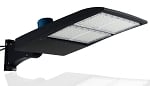
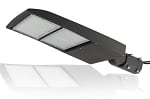
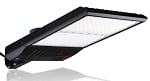
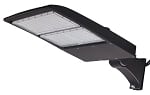
LED Basketball Court Lights

USA Based Experts in less than 60 seconds Call Now: 800-674-9420
On orders over $49.00
Up to 7 Years Free Warranty On LED Lights
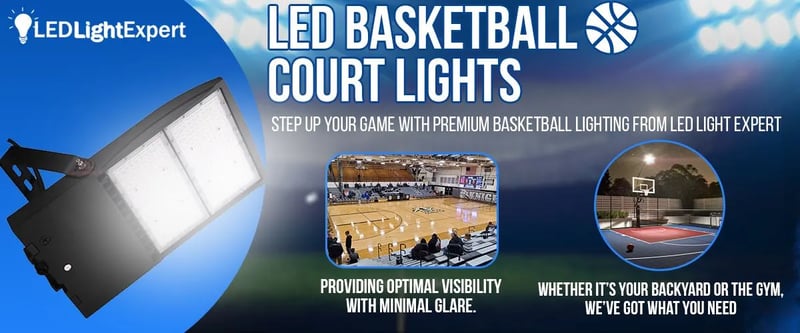
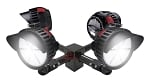
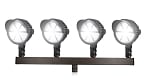
Basketball demands clear visibility at every point on the court — players tracking a fast-moving ball, referees making split-second calls, and spectators following the action all depend on consistent, commercial-grade lighting. LED basketball court lights deliver the foot-candle levels, uniformity ratios, and color rendering required by IES (Illuminating Engineering Society) standards while consuming significantly less energy than traditional metal halide or HPS sports lighting. Whether the project is a recreational outdoor court, a competitive indoor facility, or a multi-use gymnasium, LED technology provides the performance and reliability that basketball lighting demands.
IES standards establish specific foot-candle requirements based on the level of play. Recreational and amateur indoor courts typically require 30 to 50 foot-candles, while competitive indoor courts need 50 to 75 foot-candles for adequate visibility during fast play. Outdoor recreational courts require 20 to 30 foot-candles, with competitive outdoor facilities needing 30 to 50 foot-candles. Professional and televised events may require higher foot-candle levels with tighter uniformity ratios so cameras and spectators can follow play clearly.
Uniformity ratio — the relationship between average and minimum light levels across the court surface — is equally important. A ratio of 2:1 or better (average to minimum) helps reduce dark spots and bright zones that can disrupt player vision. LED fixtures with precision-engineered optics achieve these uniformity targets more consistently than legacy HID sources, which tend to produce uneven coverage as lamps age and degrade.
A standard full-size basketball court (94 x 50 feet) typically requires 6 to 12 LED fixtures depending on wattage, mounting height, and beam distribution. Outdoor courts with 25 to 30 foot poles commonly use 6 to 8 fixtures at 300 to 500 watts each for recreational play. Indoor courts with 20 to 25 foot ceiling heights may use 8 to 12 LED high bay fixtures at 150 to 300 watts. A photometric study is the most reliable way to determine exact fixture count, placement, and aiming angles for any specific court layout.
Many basketball court projects use 4000K to 5000K white light, depending on the space, neighbors, camera needs, and player comfort. Cooler settings can look crisp, while neutral settings may reduce perceived harshness outdoors. For outdoor residential courts where light pollution is a concern, 4000K (neutral white) offers a balance between visibility and reduced impact on neighboring properties.
Glare control is critical on basketball courts where players frequently look upward toward the basket and backboard. LED fixtures with precisely designed reflectors and lens arrays direct light downward onto the playing surface while minimizing spill light and high-angle brightness that causes visual discomfort. Full cutoff and shielded optics are especially important on outdoor courts to contain light within the property boundary.
Long-life LED basketball court fixtures can reduce maintenance compared with older HID systems, especially on pole-mounted outdoor installations where service may require lift equipment and facility downtime. LED fixtures also deliver instant-on performance with no warm-up period — a practical advantage for facilities with scheduled usage where lights are turned on and off multiple times per day. Energy savings depend on the old system, run hours, controls, and target light level, but LED basketball court lighting can reduce operating cost when the layout is designed correctly.
Share court dimensions, indoor or outdoor location, mounting height, pole locations, voltage, target light level, and control needs. A photometric layout can check fixture count, aiming, glare, and uniformity before equipment is ordered.
Find answers to common questions about LED basketball court lights including features, installation, and specifications:
Indoor basketball courts require 30-50 foot-candles for recreational play and 50-75 foot-candles for competitive play. Outdoor basketball courts need 20-30 foot-candles for recreational use and 30-50 foot-candles for competitive play. Higher levels (75-100+ fc) are needed for televised or professional events. Uniformity ratio should be at least 2:1 (average to minimum) for competitive play.
A standard full-size basketball court (94 x 50 feet) typically requires 6-12 LED fixtures depending on wattage and mounting height. For outdoor courts with 25-30 foot poles, 6-8 fixtures at 300-500 watts each provides adequate recreational lighting. Indoor courts with 20-25 foot ceilings may use 8-12 LED high bay fixtures at 150-300 watts. A photometric study ensures proper placement and coverage.
5000K-5700K (daylight white) is the preferred color temperature for basketball court lighting because it supports clear visibility, color rendering, and contrast for tracking a fast-moving ball. For outdoor residential courts where light pollution is a concern, 4000K (neutral white) offers a good balance between visibility and reduced glare to neighbors.
LED basketball court lighting costs vary by court type and level of play. Outdoor recreational courts typically cost $3,000-$8,000 for fixtures (not including poles and installation). Indoor courts using high bay fixtures may cost $2,000-$6,000 for fixtures. Full systems with poles, fixtures, wiring, and installation for outdoor courts range from $15,000-$40,000 depending on the number of poles and fixture quality.
Share court dimensions, indoor or outdoor mounting, pole or ceiling height, level of play, voltage, and glare concerns. A photometric plan can verify foot-candles and uniformity before ordering.
Call Now: (800) 674-9420
Dara Greaney is the CEO and President of LEDLightExpert.com, a leading company in commercial lighting solutions. Since 2015, he has led the company to achieve remarkable growth and recognition, including being an Inc5000 winner three times: No. 3783 in 2022, No. 2428 in 2021, and No. 531 in 2020.
Editing by David Peguero.
On orders over $49.00
Up to 7 Years Free Warranty On LED Lights