Flags and Flagpoles

USA Based Experts in less than 60 seconds Call Now: 800-674-9420
On orders over $49.00
Up to 7 Years Free Warranty On LED Lights

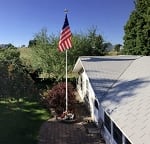
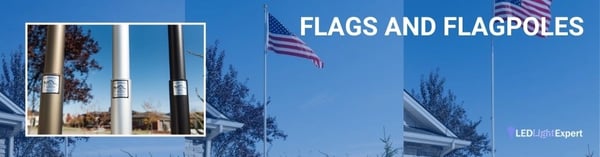
A flagpole project starts with the site, not the pole catalog. Confirm where the flag will be seen from, how much wind the location receives, whether the pole is permanent or portable, and whether the flag will be displayed after dark. Commercial sites, schools, government buildings, dealerships, parks, and homes all have different height, foundation, and maintenance needs.
Fixed in-ground poles are the strongest choice for permanent displays. Telescoping and sectional poles are useful when the owner needs easier flag changes, seasonal storage, or a lower installation cost. Internal halyard systems hide the rope inside the pole for a cleaner look and better tamper resistance; external halyards are simpler and easier to service.
Flag size should stay proportional to pole height. A 3 by 5 foot flag is commonly used on shorter residential poles around 15 to 20 feet. Larger commercial poles need larger flags, but the flag must also match the pole rating and local wind exposure. Oversizing the flag can overload the pole and shorten flag life.
Aluminum is common for many commercial and residential flagpoles because it balances strength, weight, cost, and corrosion resistance. Fiberglass can be useful in coastal or high-wind environments. Steel is typically reserved for very tall or heavy-duty poles and usually requires more installation planning.

If a flag is flown after dark, it should be illuminated. Two or three directional LED spotlights are usually better than one fixture because the flag moves and the pole can cast a shadow. Place two fixtures roughly opposite each other or three fixtures around the pole, then aim toward the ball or upper flag area so the flag remains visible as it turns in the wind.
Fixture output depends on pole height, flag size, setback, beam angle, voltage, and ambient light. Low-voltage residential systems often place fixtures closer to the pole, while larger commercial and line-voltage systems may need more setback and higher output. Confirm wet-location rating, glare control, wiring method, and service access before installation.
Permanent flagpoles may use ground-set foundations, shoe bases, hinged bases, internal halyards, or external halyards. Telescoping flagpoles use nested sections that collapse for storage or flag changes, while sectional poles use joined pieces for a lower-cost installation. Commercial sites should also check wind rating, pole wall thickness, finish, rope or cable hardware, truck assembly, cleat height, and whether tamper resistance is needed.
Viewing angle matters. A flag meant to be seen from the street should be placed where the sight line is clear, away from trees, signs, overhead lines, and building edges. Flag lighting should account for flag movement, pole shadow, low-voltage or line-voltage wiring, fixture setback, beam spread, and the size of the flag at full extension.
A flag display looks right when the flag, pole, base, and viewing distance work together. Short residential poles can carry smaller flags, while commercial or public displays may need a larger flag and a stronger pole. Check the longest flag dimension against pole height, wind exposure, halyard hardware, and the pole rating before choosing size.
Flagpoles for organizations, dealerships, schools, government buildings, parks, and homes may use different materials and bases. Steel can support very tall flagpoles, aluminum is common for commercial poles, and fiberglass can be useful where corrosion or wind exposure is a concern. The pole location should make the flag visible without blocking signs, sidewalks, drives, or the street view.
Common flagpole options include fixed in-ground poles, telescoping poles, sectional poles, wall-mounted poles, internal halyard poles, and external halyard poles. Choose by height, material, wind rating, foundation, halyard style, and lighting needs.
Flag size should be proportional to pole height and wind exposure. A 3 by 5 foot flag is common on shorter residential poles, while taller commercial poles need larger flags matched to the pole rating. Oversizing the flag can overload the pole.
Use two or three outdoor-rated LED spotlights aimed toward the upper pole and flag area. Multiple fixtures help reduce shadows as the flag moves. Choose beam angle and output by pole height, flag size, setback, and surrounding light.
Permanent ground-set flagpoles usually need a concrete foundation sized for pole height, soil, and wind load. Shoe-base poles mount to concrete with anchor bolts. Follow manufacturer foundation instructions and local requirements.
Share pole height, flag size, site exposure, foundation type, and whether the flag is displayed at night. We can help compare pole options and LED flag-light fixtures.
Call Now: (800) 674-9420
Dara Greaney is the CEO and President of LEDLightExpert.com, a leading company in commercial lighting solutions. Since 2015, he has led the company to achieve remarkable growth and recognition, including being an Inc5000 winner three times: No. 3783 in 2022, No. 2428 in 2021, and No. 531 in 2020.
Editing by David Peguero.
On orders over $49.00
Up to 7 Years Free Warranty On LED Lights