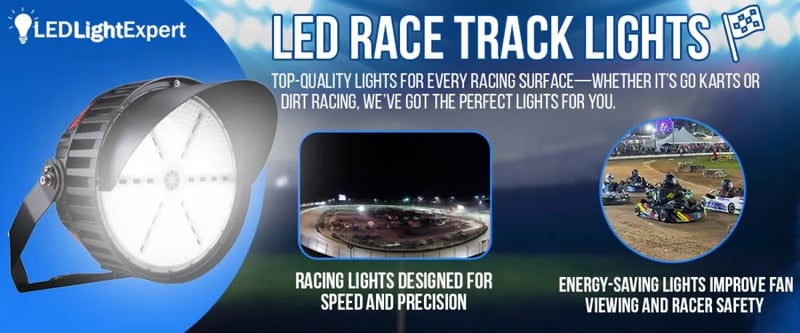
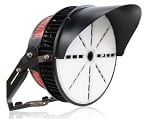
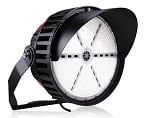
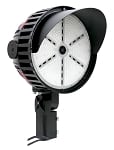
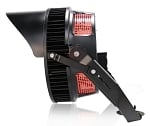
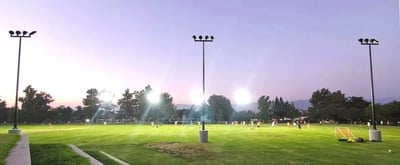
LED Race Track Lights

USA Based Experts in less than 60 seconds Call Now: 800-674-9420
On orders over $49.00
Up to 7 Years Free Warranty On LED Lights

Race track lighting is different from general area lighting because drivers, spectators, crews, and cameras all need visibility while vehicles are moving at speed. A good design checks horizontal and vertical illumination, uniformity, glare, pole placement, spill light, and the surface reflectance of the track.
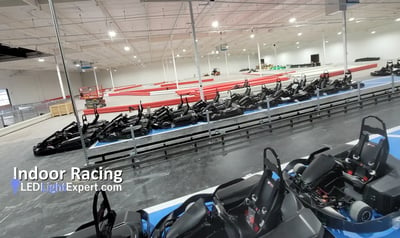
Dirt, asphalt, concrete, and polished indoor tracks all behave differently. Dirt absorbs more light and creates less surface reflection. Asphalt and concrete reflect more light and can create glare if fixtures are aimed poorly. Indoor karting and polished surfaces may need more fixtures at lower output to keep the light even.
Many race track projects target hundreds of lux, with higher levels for televised events or sanctioning-body requirements. The exact level should come from the event type, track geometry, speed, viewing distance, and local requirements. A photometric study is the right way to test pole locations, fixture wattage, beam angles, and aiming before purchase.
Uniformity matters because harsh bright-to-dark transitions can make it harder for drivers to read the track. Glare control and shielding also help reduce light spill toward neighbors and spectators.

High-output LED sports lights can support different scenes when paired with compatible controls. Full output may be used for racing, while lower levels can serve practice, cleanup, or maintenance. Confirm dimming method, surge protection, mounting structure, and fixture ratings for vibration, weather, and heat.
Race track lighting should be planned around dirt ovals, asphalt circuits, concrete tracks, drag strips, off-road courses, indoor karting, pit lanes, spectator seating, and broadcast or camera positions. Dirt absorbs more light; polished indoor surfaces reflect more light; asphalt and concrete sit between those extremes. Those differences affect aiming, fixture count, pole placement, and glare.
Light pollution and glare are not side issues for motorsports. Poorly aimed fixtures can spill light into nearby homes, reduce central brightness on the racing surface, and make it harder for drivers or spectators to see comfortably. A practical photometric example starts with track area and target lux, then checks vertical and horizontal illumination, uniformity, pole locations, and fixture aiming before equipment is purchased.
Race track lamps support racers, crews, spectators, cameras, and safety staff. The lighting design should make vehicles, track edges, barriers, flags, people, and surface changes visible at speed. Brightness alone is not enough; lighting quality depends on uniformity, glare control, vertical light, horizontal light, color rendering, and the way drivers move through curves and straightaways.
Older race track lighting often used metal halide, HPS, mercury vapor, or halogen floods. LED systems can improve control, but the design still has to account for rain, wind, heat, vibration, track shape, and local conditions. Dirt tracks, cement tracks, concrete, asphalt, indoor tracks, off-road tracks, and drag strips all require different fixture locations and aiming.
Race track lights are used for nighttime racing where drivers, crews, spectators, and cameras need bright and uniform illumination. Older race track lighting often used metal halide, HPS, halogen flood, or mercury vapor lamps. LED race track fixtures became popular because they can provide strong brightness, better color rendering, faster switching, and more controlled aiming when the design is handled correctly.
Several v0 planning points remain important. Color Rendering Index affects how spectators, drivers, and cameras perceive colors. Lux level affects whether racers can read the track at speed. Uniformity reduces the risk of harsh bright and dark transitions, and flicker performance matters where smartphones, high-speed cameras, slow-motion video, or modern broadcasting are used. Outdoor race track lights also need to withstand rain, wind, heat, vibration, and the service conditions around the venue.
The best lighting design for racing areas starts with the track length, area, surface, pole height, pole location, and target lux. Horizontal lux levels describe light on the ground or track surface; vertical lux levels describe light on cars, drivers, barriers, flags, and people. A photometric study can test those values before installation and show whether the equipment and aiming plan are appropriate for the track.
Surface material changes the design. Dirt tracks absorb light and create little reflection. Concrete and asphalt reflect some light and can create glare if fixtures are aimed poorly. Indoor tracks and polished surfaces are usually more reflective, so they may need more fixtures at smaller outputs to maintain uniformity without creating uncomfortable glare for drivers or spectators.
Lighting a race track requires specialized knowledge. Here are answers to the most common questions we receive:
Many race track projects target hundreds of lux, and televised or sanctioning-body events may require higher horizontal and vertical light levels. The right target depends on the event type, speed, viewing distance, surface, and governing requirements. A photometric study is useful for checking requirements before installation.
Multiply the track area in square meters by the required lux level to determine total lumen demand. For example, a 1,000-square-meter area requiring 800 lux needs approximately 800,000 lumens, which translates to roughly 6,000 watts of modern LED lighting. Our lighting experts can design a custom photometric study for your specific track layout and requirements.
Each surface type affects lighting design differently. Dirt tracks absorb light and produce virtually no surface reflection, simplifying the design. Concrete and asphalt tracks reflect a small amount of light that must be accounted for in fixture aiming. Indoor tracks with polished surfaces are the most reflective — using more fixtures at lower individual wattages helps maintain uniformity and prevent glare off the racing surface.
LED race track fixtures use precision optics and shielding to direct more light onto the racing surface, pits, and spectator areas. Compared with broadly aimed traditional floodlights, a well-aimed LED system can reduce spill beyond the venue perimeter and help with local light-trespass or dark-sky requirements.
A quarter-mile oval track typically requires 40-80 LED fixtures rated at 600-1500W each, depending on pole height and target illumination levels. Larger tracks and road courses require proportionally more fixtures. A professional photometric design accounts for the unique curved geometry of race tracks to support uniform coverage without dark spots.
5000K daylight white is a common choice for race track LED lighting because it supports crisp visibility and camera-friendly color. Some facilities use 4000K for a slightly warmer look or 5700K where a cooler, brighter perception is preferred.
Yes. Many high-output LED sports lights support 0-10V dimming, allowing facility operators to adjust brightness for different event types — full power for nighttime races, reduced levels for practice sessions, and low-level maintenance lighting. Dimming can reduce energy use during non-peak operation and may reduce stress on the system when controls are designed correctly.
Share track dimensions, surface type, pole locations, target lux, voltage, event level, and broadcast needs. A photometric plan can check coverage and glare before ordering.
Call Now: (800) 674-9420
Dara Greaney is the CEO and President of LEDLightExpert.com, a leading company in commercial lighting solutions. Since 2015, he has led the company to achieve remarkable growth and recognition, including being an Inc5000 winner three times: No. 3783 in 2022, No. 2428 in 2021, and No. 531 in 2020.
Editing by David Peguero.
On orders over $49.00
Up to 7 Years Free Warranty On LED Lights