

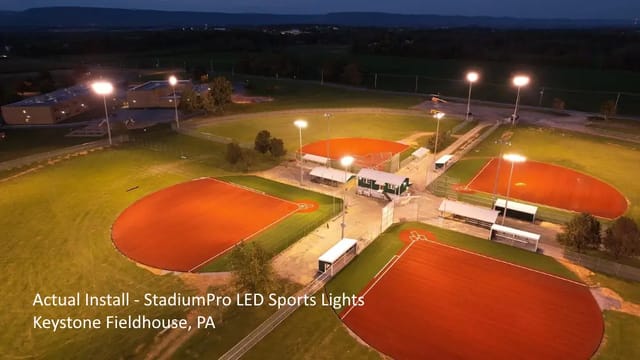
Quick Answer
LED sports lighting changed the design conversation from lamp replacement to optics, controls, uniformity, glare, spill, flicker, scenes, and maintenance access.
How LED Lighting Changed Sports Lighting
LED sports lighting changed the design conversation from lamp replacement to optics, controls, uniformity, glare, spill, flicker, scenes, and maintenance access. The right system still depends on the sport and play level.
What to Check First
- Confirm sport, court or field size, pole positions, play level, and camera needs.
- Review average light, minimum light, uniformity, glare, spill, flicker, and aiming.
- Plan scenes, dimming, scheduling, and maintenance access.
Application Decision Table
| Use Case | Practical Guidance |
|---|---|
| Recreation | Simple controls and practical uniformity may be enough. |
| School and club play | Glare, spill, and vertical light deserve closer review. |
| Camera use | Flicker, vertical light, and color quality matter more. |
Common Mistakes to Avoid
- Using one fixture count for every sport.
- Ignoring glare from player sight lines.
- Skipping photometric review before ordering.
What LED Changed for Sports Facilities
Sports lighting is not only about brightness. Players need to track the ball, spectators need comfort, cameras need stable light, and facility managers need reliable controls. LED systems made instant start, zoning, dimming, tighter optics, and lower maintenance more practical than older metal halide systems.
| Sports-lighting factor | LED advantage |
|---|---|
| Instant start | No warm-up delay for practices, events, or restarts. |
| Aiming and optics | Better beam control can reduce spill and improve uniformity. |
| Controls | Scenes, dimming, scheduling, and zones are easier to manage. |
| Maintenance | Longer service intervals reduce lift work on poles and courts. |
More Details to Consider
How LED Lighting Has Transformed the Modern Sports Industry. Why are LED Lights Better for Sports. LED lighting is a technological innovation that has revolutionized the sports industry in many ways. LED stands for light-emitting diode, which is a semiconductor device that converts electricity into light. LED lights are more energy-efficient, durable, and versatile than traditional lighting sources, such as incandescent, fluorescent, or metal halide lamps. LED lights are widely used for various sports applications, such as basketball court lighting, sport court lighting, tennis court lighting, soccer field lighting, and stadium lighting.
Here are some of the benefits and advantages of LED lighting for sports: • Cost Savings: LED lights consume much less energy than conventional lights, which means lower electricity bills for sports facilities and events. Energy savings compared with metal halide can be significant, but the percentage depends on fixture wattage, hours of use, controls, and the light level required for the sport. LED lights also last longer than conventional lights, which means less frequent replacements and maintenance costs.
For example, a typical metal halide lamp has a lifespan of 15,000 to 20,000 hours, while many LED sports fixtures are rated for long service lives, depending on fixture quality, heat, driver design, and operating conditions. That can translate to meaningful savings over time. • Performance Improvement: LED lights provide better light quality and optical performance than conventional lights, which can enhance the visibility and safety of players and spectators. LED lights have a high color rendering index (CRI), which measures how accurately a light source reveals the true colors of objects.
A high CRI means that the colors on the field or court are more vivid and realistic, which can improve the visual experience and the accuracy of referees and judges. LED lights are also available across the color temperature (CCT) range, which measures how warm or cool a light source appears. For sports, a higher CCT means the light is more white or blue, which can create a brighter and more stimulating atmosphere for sports activities.
LED lights can also use narrow beam angles, which means they can focus the light on a specific area or direction, which can reduce glare and light pollution. • Environmental Benefits: LED lights are more environmentally friendly than conventional lights, which can reduce the carbon footprint and ecological impact of sports facilities and events. LED lights do not contain mercury or other hazardous substances that can pollute the air, water, or soil when disposed of improperly.
LED lights also do not emit ultraviolet (UV) radiation or infrared (IR) heat, which can harm the health of humans and animals. LED lights also produce less waste heat than conventional lights, which can reduce the cooling load and greenhouse gas emissions of sports facilities. • Control and Flexibility: LED lights are more controllable and flexible than conventional lights, which can offer more options and possibilities for sports facilities and events. LED lights can be dimmed, switched on and off, or changed in color and intensity with ease and speed.
This can create different effects and moods for different occasions and purposes. For example, LED lights can create dynamic shows and displays for opening ceremonies, halftime shows, or celebrations. LED lights can also be programmed and synchronized with music, sound, or other media for enhanced entertainment and interaction. LED lights can also be controlled remotely or wirelessly through mobile devices or web applications. Better Beam Angles with LED Lights Mean More Lumens on the Field.
The beam angle of LED sports lighting is an important factor that affects the quality and distribution of light on the field or court. The beam angle is the angle at which the light is emitted from the LED fixture. A narrower beam angle produces a more focused and intense light, while a wider beam angle provides a more diffuse and uniform light. According to the National Electrical Manufacturers Association (NEMA), there are seven categories of beam angles for light fixtures, ranging from very narrow (10° to 18°) to very wide (130° or more).
The optimal beam angle for LED sports lighting depends on several factors, such as the height of the fixture, the size and shape of the field or court, the desired level of illumination, and the type of sport. Generally, narrower beam angles are preferred for larger venues and higher heights, where precise lighting control and higher illuminance levels are required. For example, a 400-watt LED stadium light can have a beam angle of 12° to 60°, depending on the application.
Narrower beam angles are also useful for highlighting specific areas or features in high-intensity sports, such as athletics or cricket. Wider beam angles are suitable for smaller venues and lower heights, where broad coverage and lower illuminance levels are sufficient. For example, a 15-watt LED bulb can have a beam angle of 80° to 130°, depending on the model. Wider beam angles also work well for smaller courts and recreational play, such as badminton or club-level tennis.
Some LED sports lighting fixtures can also offer adjustable or multiple beam angles, which can provide more flexibility and versatility for different situations and purposes. For example, some LED floodlights can have a beam angle of 25° to 120°, which can be changed by rotating the lens or switching the modules. Some LED spotlights can have a beam angle of 10° to 60°, which can be changed by using different reflectors or lenses.
Choosing the right beam angle for LED sports lighting is crucial for ensuring optimal visibility, safety, and performance for both players and spectators. It can also affect the energy efficiency, environmental impact, and aesthetic appeal of the lighting system. Therefore, it is advisable to consult with a professional lighting designer or engineer before selecting or installing LED sports lighting fixtures. As you can see, LED lighting has transformed the modern sports industry in many ways. LED lighting offers cost savings, performance improvement, environmental benefits, and control and flexibility for sports facilities and events.
If you are interested in upgrading your sports lighting to LED lighting, you can contact us today for more information and assistance. We have a wide range of LED products that can meet your needs and budget. We can also help you with lighting audits, rebate information, installation services, and energy savings tracking. Read more about LED Sports lighting here.
Frequently Asked Questions
- What is the main point of How LED Lighting Changed Sports Lighting?
- LED sports lighting changed the design conversation from lamp replacement to optics, controls, uniformity, glare, spill, flicker, scenes, and maintenance access.
- What should I check first?
- Confirm sport, court or field size, pole positions, play level, and camera needs.
- Do controls matter?
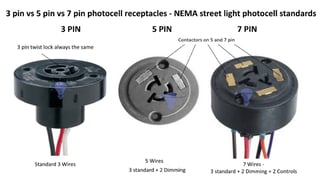
- Yes. Sensors, timers, dimmers, photocells, and schedules often determine how well the lighting works in daily use.
- When should I ask for help?
- Ask for help when layout, glare, wiring, controls, code, safety, or product compatibility is uncertain.

Ready to Upgrade Your LED Lighting?
Our lighting specialists can help compare options, confirm light levels, and quote products that fit the site.
Call 800-674-9420 or email [email protected]
Monday-Friday, 8am-5pm PST

About the Author
Dara Greaney is founder and CEO of LED Light Expert with deep expertise in commercial LED lighting, retrofits, and photometric planning.
Editing by David Peguero
Tagged Products



Trusted by Thousands
Our customers love us — and we love them back.


-
 Free Shipping
On orders over $49.00
-
 Free Extended Warranty
Up to 7 Years Free Warranty On LED Lights
-
100% Satisfaction Guarantee
