

Posted by Dara Greaney on 9/23/2026 to
Pole Lights
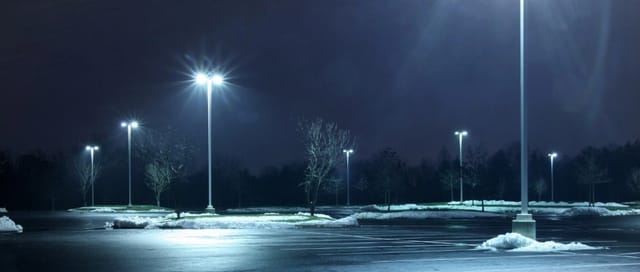
Parking lot lighting has to cover enough pavement to support visibility without creating harsh glare, wasted light, or expensive maintenance problems. Pole height plays a major role in that balance. A pole that is too short may require more fixtures and tighter spacing. A pole that is taller than the property needs can spread light farther, but it may also place the fixtures above nearby buildings, increase structural demands, and make service more difficult.
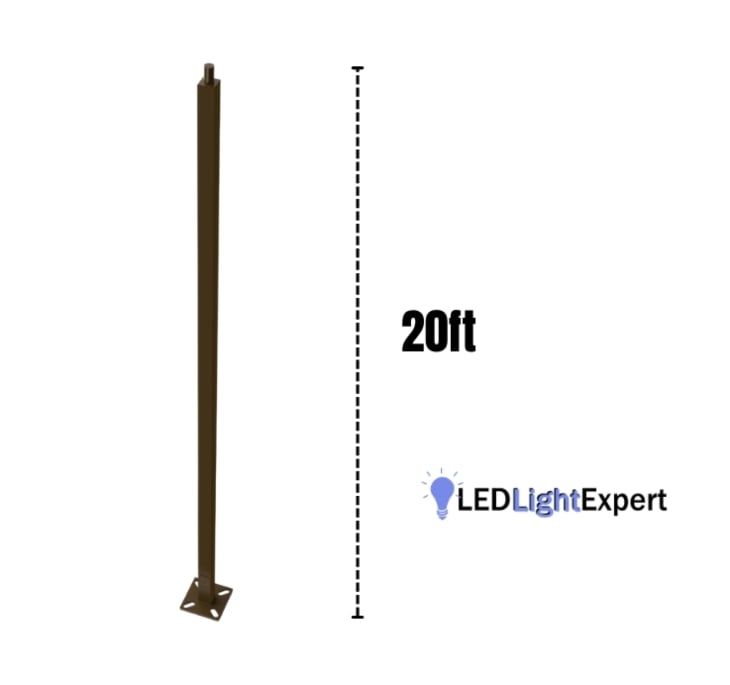
For many commercial properties, a 20 foot light pole lands in a useful middle range. It provides more mounting height and coverage than a short pedestrian-scale pole while remaining practical for medium-sized lots, drive aisles, and perimeter locations. It can support many common LED area lights and several mounting arrangements, giving designers flexibility without pushing the project into a much taller pole class.
Height alone does not determine lighting quality. Fixture output, optical distribution, pole placement, nearby property lines, and required light levels must all be considered together. Still, the 20-foot height is a strong starting point for many projects.
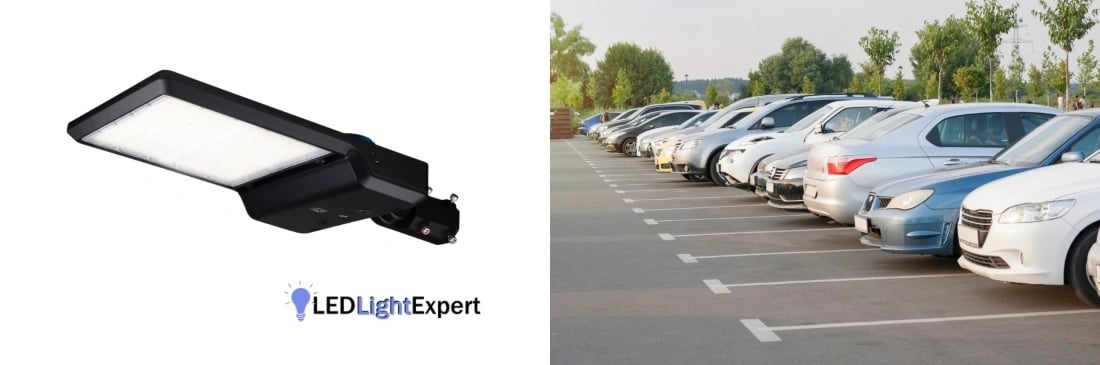
For many commercial properties, a 20 foot light pole lands in a useful middle range.
Section 1: Why Choose 20 Foot Poles for LED Parking Lot Lighting?
Good Balance Between Coverage and Light Intensity
Mounting a fixture higher generally allows its light pattern to cover a larger area. As the light spreads, however, the illumination reaching the pavement changes. A good design matches the pole height with the fixture's lumen output and optics so the pavement receives useful, reasonably even light.
A 20 foot pole provides enough height for many LED parking lot fixtures to distribute light across parking spaces and drive lanes without placing the fixture excessively far from the ground. This can help a designer create broad coverage while maintaining the light intensity needed for the property.
Suitable for Many Medium-Sized Parking Lots
Twenty-foot poles are often a practical choice for lots larger than a small storefront parking area but smaller than a regional shopping center, airport lot, or large campus. The height can serve both vehicles and pedestrians while remaining in proportion to many one-story and low-rise buildings.
Helps Reduce Dark Spots When Properly Spaced
Dark spots usually occur because fixture patterns do not overlap adequately, poles are placed too far apart, or an obstacle blocks the light. A well-planned system uses controlled overlap between adjacent luminaires to improve uniformity across the lot.
With suitable LED output and optics, 20 ft light poles can support this overlap without crowding the site with poles. Their moderate height also gives designers options for placing fixtures along perimeters, within parking islands, or near dividing lines between parking rows. A photometric plan is still needed to reveal low-light areas before installation.
“The best parking lot layout is not the one with the tallest poles or the brightest fixtures. It is the one that puts the right amount of light where people need it.”
Works With a Wide Range of LED Parking Lot Fixtures
LED area lights are available in many lumen packages, wattages, optical patterns, housing sizes, and mounting styles. That variety allows a 20 foot light pole to serve several roles. A single fixture may be used along a narrow edge, while two or more fixtures can be mounted on a pole that serves opposing parking rows or a larger intersection within the lot.
The fixture must be suitable for the mounting height and intended coverage area. A brighter fixture is not automatically a better choice. Too much output can create excessive brightness, glare, spill light, and poor transitions between bright and dark areas. The optical distribution and aiming are just as important as the lumen rating.
Easier Maintenance Than Very Tall Poles
LED fixtures require less frequent relamping than older discharge lighting, but they still need inspection, cleaning, driver replacement, and occasional repair. Reaching a 20-foot mounting height is generally less complicated than servicing fixtures on much taller poles. Equipment access, worker safety, and site traffic must still be considered.
Section 2: Ideal Applications for 20 Foot Light Poles
Commercial Parking Lots
A 20 ft light pole can work well for retail stores, office buildings, restaurants, churches, and community facilities. These properties often need coverage across parking stalls, access lanes, sidewalks, and entrances without lighting a very large parcel from a few tall poles.
Retail sites may use single fixtures along the property edge and twin fixtures between parking rows. Restaurants may need careful shielding to limit light near outdoor seating, drive-through lanes, nearby homes, or public streets. Churches and community buildings can pair event lighting with controls for periods when the lot is empty.
Apartment and Multi-Family Properties
Resident parking areas need consistent visibility without sending unwanted light into bedroom windows. Twenty-foot poles can serve parking stalls, drive aisles, and guest parking while staying closer to the scale of many apartment buildings than a 30-foot installation would.
The design should coordinate pole locations with windows, landscaping, walkways, fire lanes, and accessible parking. House-side shields or backlight-control optics may be appropriate near buildings and property lines. Poles may also need protection from vehicle impacts.
Small-to-Medium Business Properties
Many local businesses need lighting for employee parking, customer parking, loading access, and entrances. A 20 foot pole can cover these connected areas without feeling oversized. Controls may reduce output after closing while leaving appropriate light at entrances or security-sensitive areas.
Shopping Centers
Smaller shopping centers and neighborhood retail strips may use 20 ft light poles across parking rows, near pedestrian routes, and around the property perimeter. The pole height can support a coordinated lighting pattern while allowing more precise control near storefronts and neighboring parcels.
Pedestrian areas deserve separate attention. A plan that meets a pavement average can still leave poor vertical visibility near crossings, cart returns, or walkways. Fixture selection and pole placement should help people see other pedestrians, curbs, vehicles, and changes in direction. Building-mounted lights may supplement pole-mounted fixtures near entrances and covered walks.
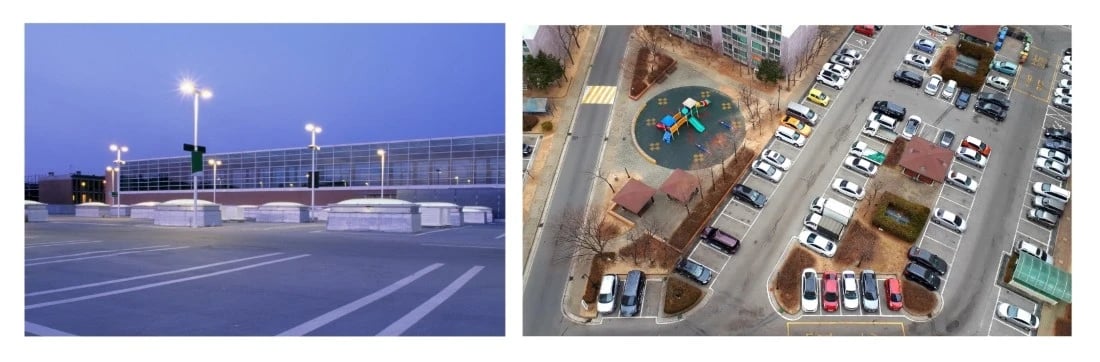
These properties often need coverage across parking stalls, access lanes, sidewalks, and entrances without
lighting a very large parcel from a few tall poles.
Section 3: How Far Apart Should 20 Foot Light Poles Be?
There is no single spacing measurement that works for every parking lot. Rules based only on a multiple of mounting height can be useful for early estimating, but they cannot replace calculations using the actual fixture and property layout. Two LED fixtures with similar wattages can produce very different patterns because their lumen output, optical system, tilt, and shielding differ.
Several factors affect spacing:
- Fixture lumen output: Higher output may extend useful coverage, but it can also increase glare or create bright areas directly beneath the pole.
- Beam distribution: The optical pattern determines how light travels forward, sideways, and behind the fixture.
- Parking lot dimensions: Long rows, irregular corners, islands, slopes, and obstructions influence pole placement.
- Required footcandles: The target illumination depends on the application, local requirements, and project criteria.
- Uniformity requirements: Average light alone does not describe how evenly the lot is illuminated. Minimum levels and average-to-minimum relationships matter too.
A photometric lighting plan models the proposed fixtures, mounting heights, aiming, and pole positions. It shows calculated light levels at points across the site and helps identify dark zones, bright hot spots, spill light, and weak coverage near boundaries. The plan should use the manufacturer's photometric file for the exact luminaire configuration being considered.
Excessive spacing can leave dark areas between poles even if the fixtures appear bright when viewed from a distance. Moving poles closer is one possible correction, but it is not the only one. A different optical distribution, lumen package, mounting arrangement, or pole location may produce a better result. The layout should be adjusted through photometric analysis rather than guesswork.
Section 4: 20 Foot Pole Height vs. Other Parking Lot Pole Heights
Pole heights commonly used for outdoor area lighting include 15, 20, 25, and 30 feet or more. A 15-foot pole may suit compact lots, pedestrian-focused areas, or locations where light must be kept below nearby windows. A 20-foot pole is often used for general commercial parking. A 25-foot pole can extend coverage across larger areas, while poles of 30 feet and above are more common on large lots, campuses, and other broad sites.
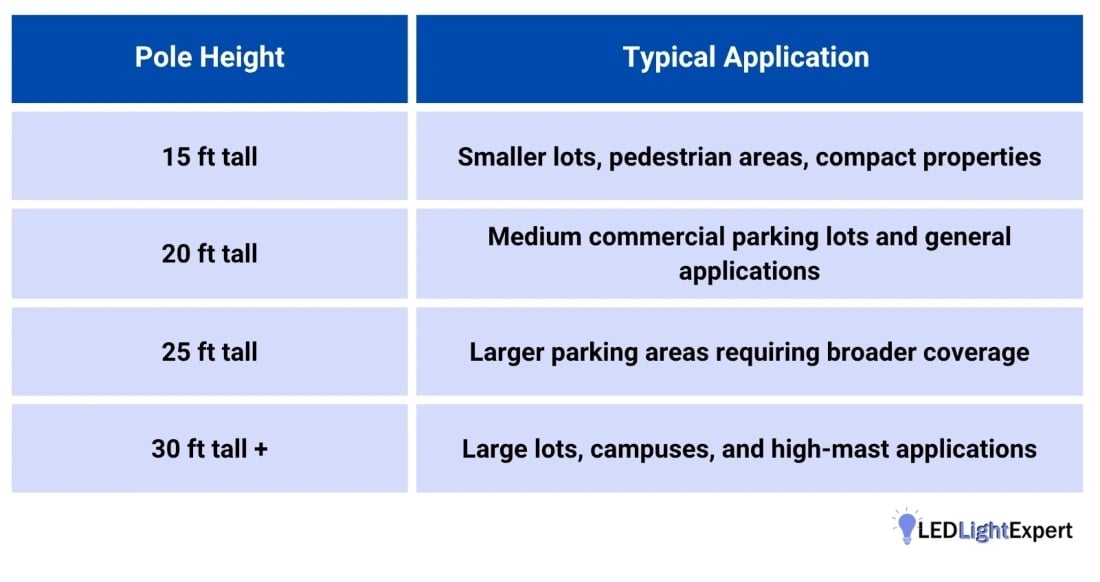
The tallest available pole is not automatically the best solution. Taller poles can widen coverage, but they may require higher-output fixtures, larger foundations, different structural ratings, and more specialized maintenance access. They can also spread light beyond the intended area if the optics are not carefully selected.
Fixture optics change how a given mounting height performs. A forward-throw distribution can send light from a perimeter toward the lot. A broader symmetric pattern may suit a pole placed within an open area. As mounting height changes, the designer may need a different lumen package or optical distribution to maintain the desired illumination and uniformity. This is why pole height and fixture selection should be evaluated as one system.
Section 5: 20ft Pole Light Mounting Options
Direct-Arm Mounting
Direct-arm mounts attach the luminaire to the side of a compatible pole or mounting plate. They create a clean appearance and can provide a secure, fixed orientation. The pole and fixture must have matching drilling patterns or approved adapter hardware. Direct-arm configurations are often used on square steel poles, although product-specific options vary.
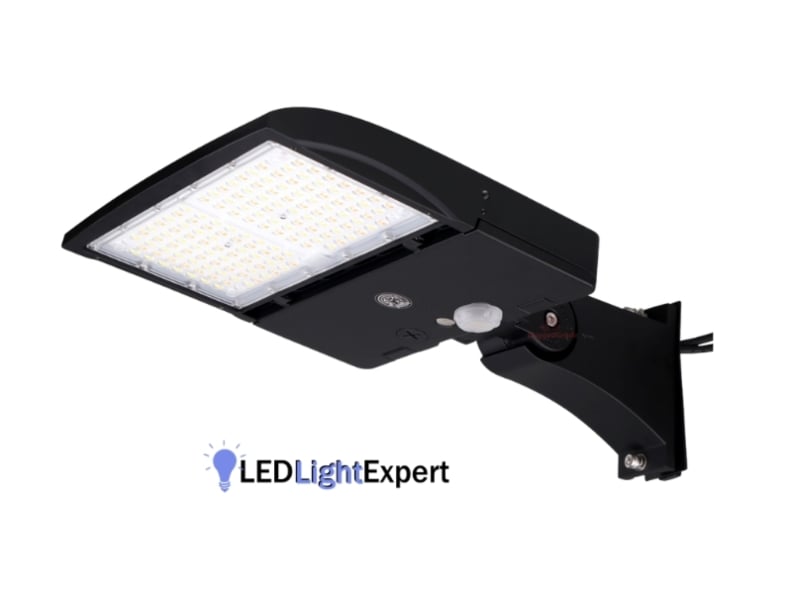
Slip-Fitter Mounting
A slip fitter installs over a compatible tenon and often allows the fixture angle to be adjusted.
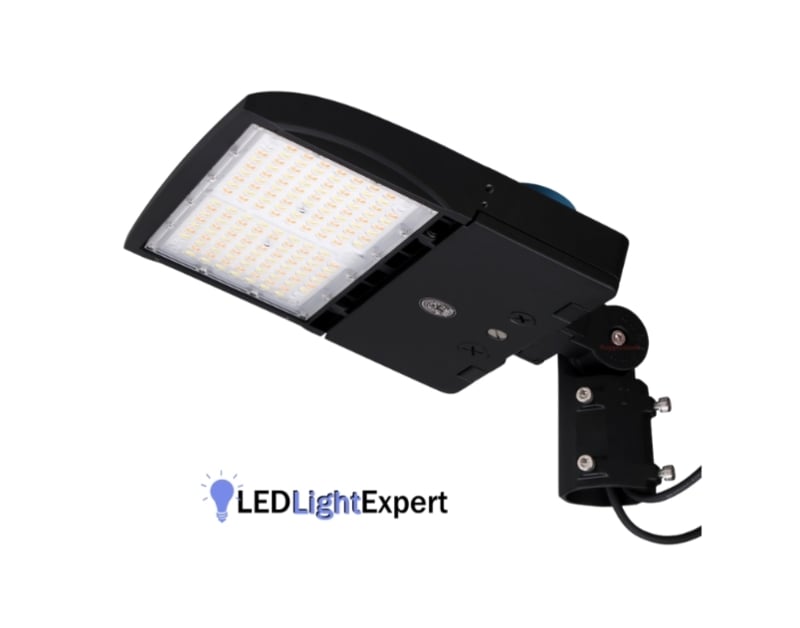
Tenon-Mounted LED Fixtures
Tenons mounts provide a connection point for slip fitters, bullhorns, and other brackets. A top tenon can support one fixture or a bracket carrying multiple fixtures. Tenon diameter, bracket configuration, fixture weight, and total projected area must match the pole manufacturer's requirements.
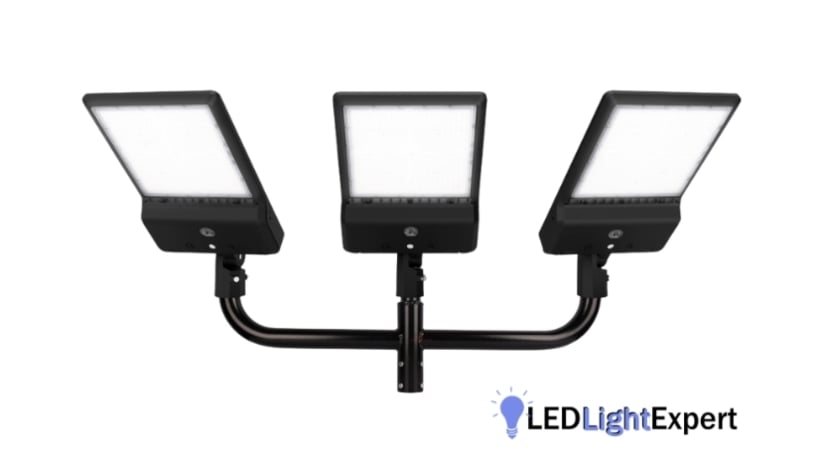
Adjustable Mounting Configurations
Adjustable mounts can help direct light toward irregular corners or special activity areas. They should not be treated as a substitute for the correct optical distribution. Aiming changes made in the field can alter the original photometric results, so final angles should be documented and verified.
The right mounting configuration depends on the fixture, pole shape, pole-top design, number of luminaires, desired direction, and structural limits. Hardware should be listed or approved for the intended components and installed according to manufacturer instructions. Mixing parts based only on appearance or nominal size can create fit and loading problems.
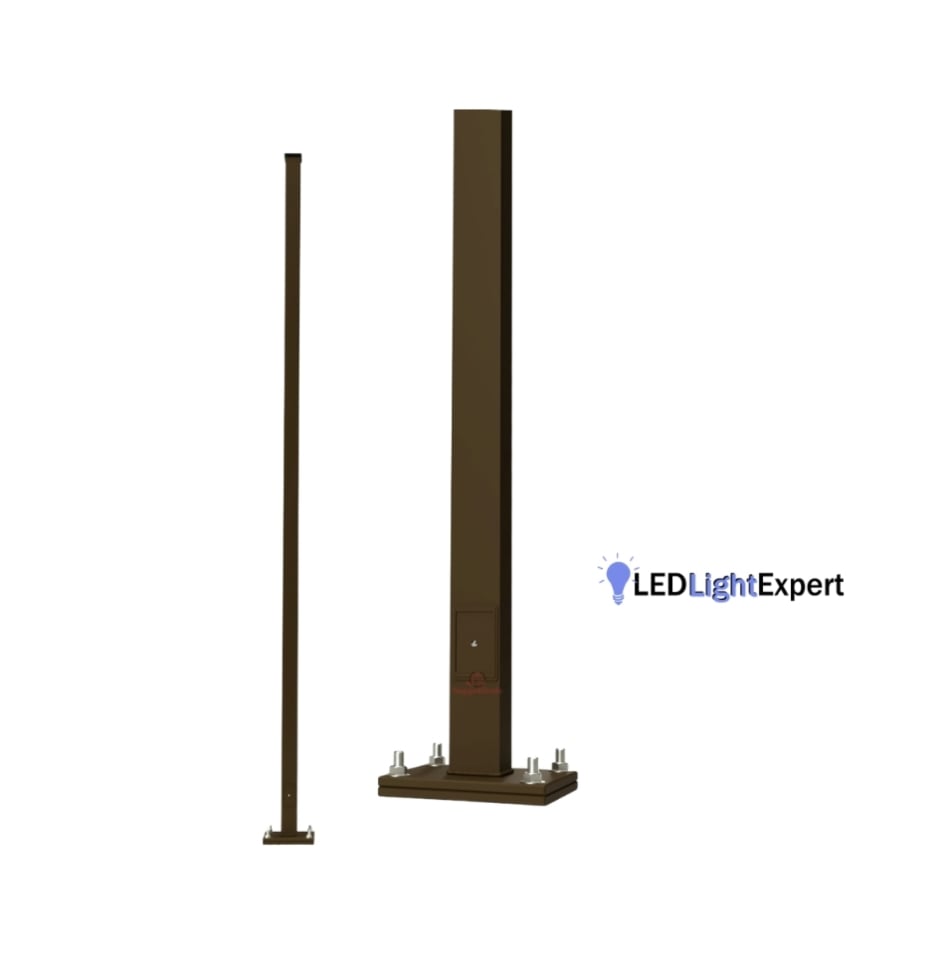
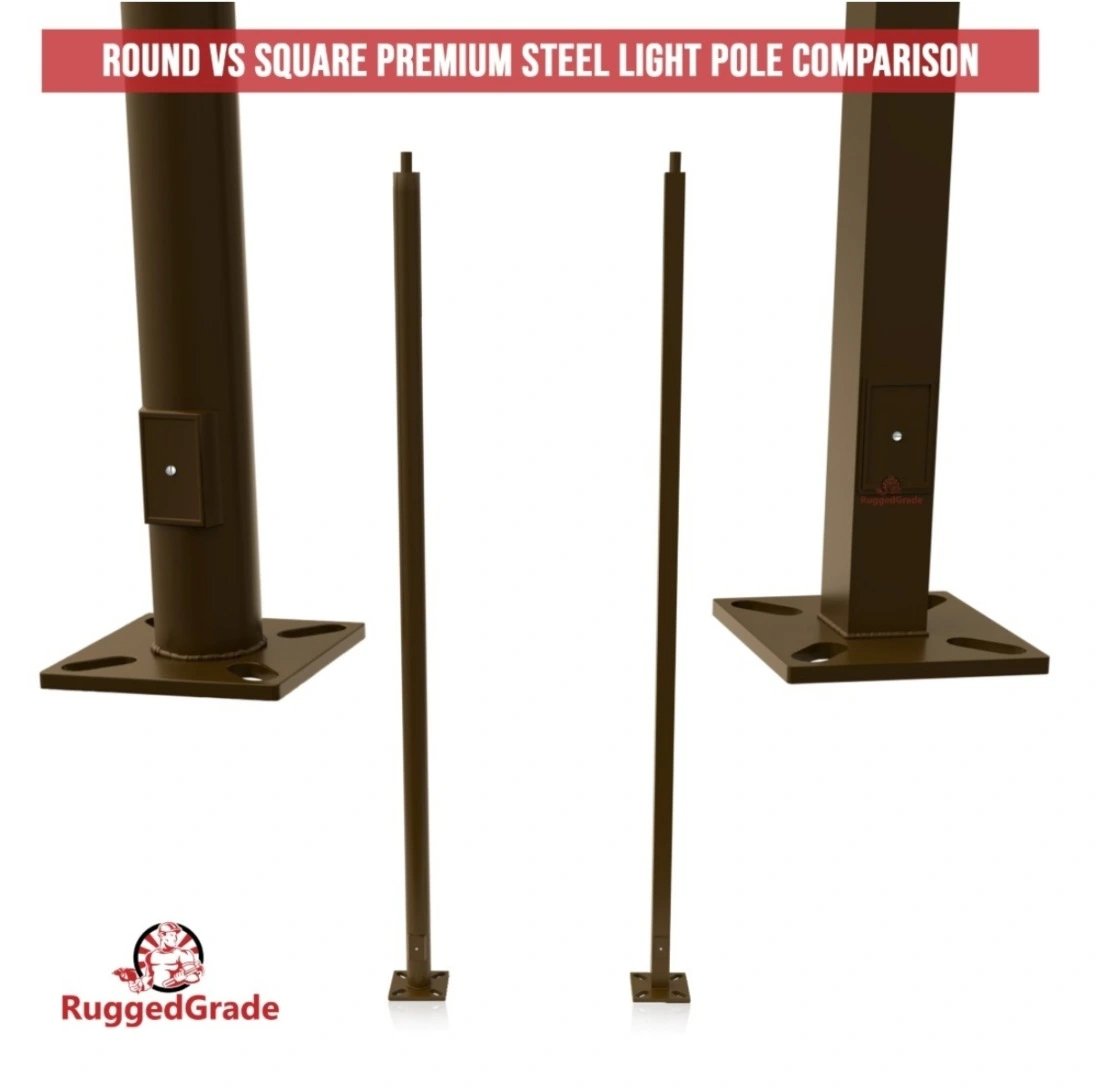
20 Foot Light Pole- 4 inch Square Tube light Pole - Premium Surface Mount Light Poles
Section 6: Wind Load and Structural Requirements for 20ft Pole Light Installations
Light poles are structural components exposed to wind for their entire service life. Wind acts on the pole, fixtures, brackets, signs, banners, cameras, and any other attached equipment. Even a 20 foot pole must be selected for the project's site conditions and complete mounted assembly.
Effective Projected Area, usually listed as EPA, represents the wind-exposed area of a fixture or accessory after accounting for its shape. Pole manufacturers publish allowable EPA values under stated wind conditions. The combined EPA of all fixtures and attachments must stay within the pole's rating for the applicable configuration. Fixture weight also matters, but a lightweight fixture with a large housing can still present meaningful wind area.
Local design wind speed, exposure, risk category, code edition, and regional conditions affect structural selection. Coastal zones and open terrain may impose different demands than sheltered inland sites. The authority having jurisdiction and the project's structural professional should determine the criteria. A pole should never be chosen from height alone.
Foundations and anchor bolts transfer loads from the pole into the ground. Their design depends on pole reactions, soil conditions, frost depth, drainage, concrete requirements, and local code. Anchor-bolt size and spacing must match the pole base plate. Substituting a generic foundation without checking these factors can compromise the installation.
Only poles designed for the intended location and loading should be used. Adding banners, security cameras, extra fixtures, or larger replacement luminaires later can change the structural demand. Proposed additions should be reviewed before anything is attached.
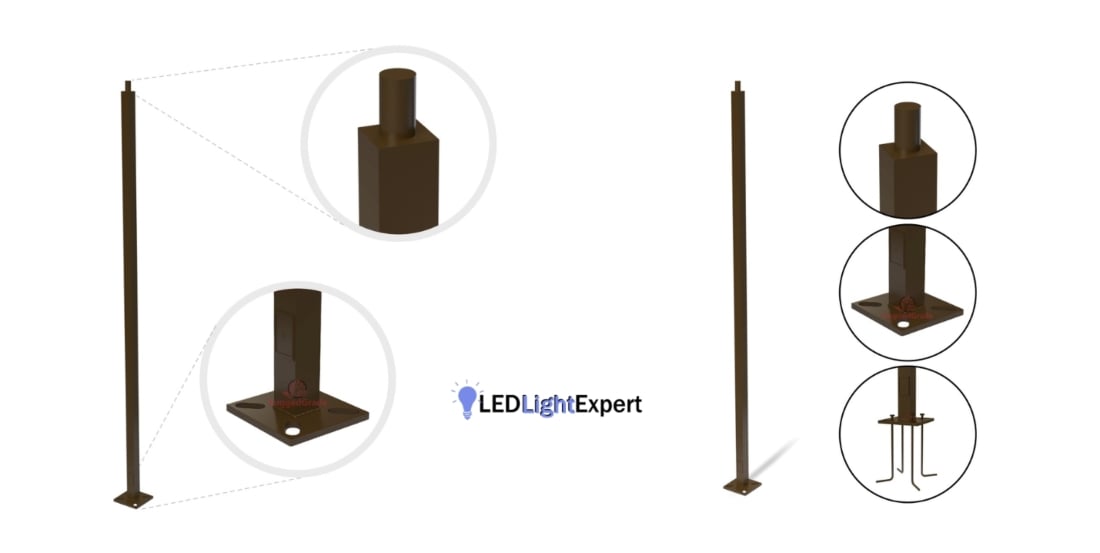
20 Foot Light Pole- 4 inch Square Tube light Pole - Premium Surface Mount Light Poles - Dark Brown/Bronze Housing
Section 7: How to Plan a 20 Foot LED Parking Lot Lighting System
1. Measure the Parking Lot
Begin with accurate site dimensions. Record the lot boundaries, building locations, curbs, islands, sidewalks, slopes, utility areas, overhead lines, landscaping, and neighboring properties. Existing drawings can help, but field conditions should be confirmed.
2. Identify Parking Rows, Drive Aisles, and Pedestrian Areas
Mark the places where vehicles park, turn, enter, exit, and load. Identify crosswalks, accessible routes, stairs, ramps, cart returns, and building entrances. These zones may have different visual needs even though they are part of the same property.
3. Determine Required Lighting Levels
Establish project criteria using current lighting guidance, local codes, owner requirements, and the site's use. Consider average and minimum illumination, uniformity, vertical visibility, hours of operation, spill-light limits, and any special security concerns. More light is not always better. Excessive brightness can cause glare and make adjacent darker areas harder to see.
4. Select the LED Parking Lot Fixture
Choose a luminaire with an appropriate lumen package, efficacy, optical options, environmental ratings, surge protection, controls, and mounting choices. Review the exact catalog number because performance can vary across versions within the same product family.
5. Choose the Optical Distribution
Match the distribution to the pole location and area shape. Perimeter poles often need forward projection with controlled backlight. Interior poles may need wider patterns that serve multiple directions. Narrow or irregular areas may call for a more specialized optic.
6. Establish Preliminary Pole Locations
Place proposed poles where they can support coverage without blocking accessible routes, conflicting with utilities, or creating vehicle hazards. Consider maintenance access and protection from impact. A 20 ft light pole may fit within an island, along a perimeter, or between parking rows, depending on the site.
7. Run a Photometric Analysis
Use the exact luminaire photometric files, mounting heights, orientations, and site geometry. Review calculated averages, minimums, maximums, uniformity, boundary light, and areas of unusual brightness. Revise the fixture output, optics, aiming, spacing, or pole locations until the plan meets the project criteria.
8. Verify Structural and Wind-Load Requirements
Confirm the pole material, base style, EPA capacity, fixture weight, brackets, anchor bolts, foundation, and local design conditions. Coordinate the lighting plan with structural requirements before ordering equipment. This final check helps prevent a fixture package from exceeding the pole rating or arriving with incompatible mounting hardware.
Conclusion
A 20 foot light pole is a practical choice for many medium-sized parking lots because it can deliver useful coverage without the scale and service demands of a much taller installation. It works across commercial properties, apartment communities, local businesses, churches, restaurants, offices, and neighborhood shopping centers. The height also supports many LED area lights and mounting configurations.
The strongest results come from treating the pole, fixture, optics, layout, controls, and foundation as parts of one system. Pole spacing should be verified with a photometric plan, while wind and structural requirements should be checked for the exact fixtures and accessories being installed.
With that planning in place, 20 ft light poles can provide balanced illumination, manageable maintenance, and a lighting system suited to the property over many years of service rather than a one-size-fits-all layout.
About the Author: Dara Greaney is founder and CEO of LED Light Expert® with deep expertise in LED fixtures and Light design. LinkedIn or X. Editing by David Peguero.
About us: See our About us page for more about LED Light Expert®.

Call us Toll Free at 800-674-9420 for the Best in Lighting Design & Assistance. Please use Ext 1 for sales or lighting design help. Para Espanol Extension 7. For Hours & More Click Here- Contact
Trusted by Thousands
Our customers love us — and we love them back.


-
 Free Shipping
On orders over $49.00
-
 Free Extended Warranty
Up to 7 Years Free Warranty On LED Lights
-
100% Satisfaction Guarantee
