


175 Watt Metal Halide LED Equivalent: Finding the Right Replacement
Posted by Dara Greaney on 1/29/2026 to
Industrial Lighting
Replacing 175 watt metal halide fixtures with LED equivalents isn't as simple as matching wattage numbers—it requires understanding lumen output, light distribution, color temperature, and application requirements to ensure your new LED fixtures actually deliver better performance than the outdated technology they're replacing. Many facility managers make costly mistakes by choosing underpowered LED replacements that seem adequate on paper but fail to provide sufficient illumination, or by over-spending on excessively bright fixtures that waste energy and create glare problems in their specific application. The key to successful metal halide replacement lies in comparing actual light output rather than wattage, accounting for improved LED efficiency that means lower wattage can deliver equal or superior brightness, and selecting fixtures designed for your mounting height and coverage needs. In this practical replacement guide from LED Light Expert, we'll show you exactly how to find the right LED equivalent for your 175 watt metal halide fixtures, covering lumen comparison charts, wattage recommendations for different applications, retrofit versus new fixture options, and energy savings calculations that help you choose LED replacements delivering better illumination while dramatically reducing operating costs.
(0) Comments
Humidity Control and Vapor Proof Lighting in Tropical Climates
Posted by Dara Greaney on 8/21/2025 to
Commercial Lighting
In tropical climates, humidity isn't just uncomfortable—it's a lighting system's worst enemy, capable of destroying fixtures, creating safety hazards, and driving up maintenance costs through constant corrosion and electrical failures. Standard lighting fixtures that work perfectly in dry climates can fail within months when exposed to the relentless moisture, salt air, and temperature fluctuations found in tropical environments. The combination of high humidity levels, frequent rain, and coastal salt exposure creates the perfect storm for lighting problems that can leave facilities dark and budgets drained. In this essential guide from LED Light Expert, we'll explore how humidity affects lighting performance and show you how to select and maintain vapor proof LED fixtures that can withstand even the most challenging tropical conditions while delivering reliable, long-lasting illumination.
How Hazardous Location Lighting Enhances Workplace Safety for Oil & Gas Facilities
Posted by Dara Greaney on 2/13/2025 to
Industrial Lighting
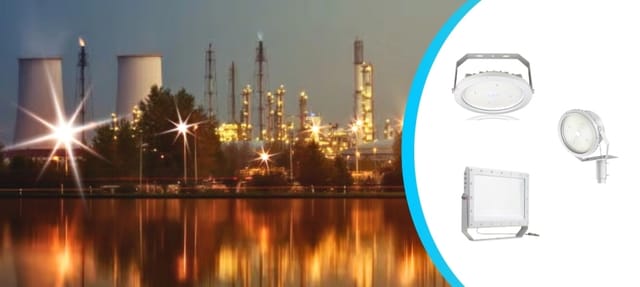
Safety is a top priority in oil and gas facilities, where hazardous conditions demand specialized lighting solutions. In this in-depth blog from LED Light Expert, we explore how Hazardous Location Lighting enhances workplace safety by reducing the risk of explosions, improving visibility, and ensuring compliance with strict industry regulations. Learn about the key features of explosion-proof and weather-resistant lighting, designed to withstand extreme conditions like high temperatures, corrosive environments, and flammable gases. Whether you're upgrading an existing site or designing a new facility, this guide will help you choose the right lighting to keep workers safe and operations running smoothly.

LED Explosion Lights - Why You Need Them
Posted by Dara Greaney on 12/14/2023 to
Industrial Lighting
LED technology has emerged as a transformative force, offering unmatched efficiency and adaptability. One particular application that has witnessed a remarkable evolution is the domain of explosion-proof lighting. As industries face safety challenges in dangerous settings, the adoption of LED explosion-proof lights has become a beacon of progress. This comprehensive guide aims to illuminate the applications and countless benefits of LED explosion-proof lighting, exploring how these advanced systems contribute to enhanced safety and operational efficiency.
Unveiling the Power of Construction Lights
Posted by Dara Greaney on 7/5/2023 to
Industrial Lighting
Construction sites are dynamic environments, requiring optimal visibility to ensure safety and productivity. The role of lighting in construction cannot be overstated. In recent years, LED construction lights have emerged as a game-changer, outshining traditional lighting options. This article delves into the significance of LED construction lights, exploring their characteristics and the invaluable role they play in enhancing safety on construction sites.
Are LED Shop Lights Explosion Proof? A Guide to LED Safety
Posted by Dara Greaney on 5/12/2023 to
Industrial Lighting
LED shop lights are lighting fixtures that illuminate and highlight the interiors of a shop or other similar places. When you are looking to light up a small work area, such as workbenches or tabletops of garages and workshops, these are the ideal lighting fixtures. They are suited to provide illumination required for performing detailed work. Typically, these fixtures are rectangular or round and suspended from the ceiling using chains. Comparatively, they are generally brighter than other lighting types to accommodate workplace demands.
Why You Should Choose Commercial Light Fixtures Over Residential
Posted by Dara Greaney on 3/28/2023 to
Industrial Lighting
Commercial lighting is a broad term that includes lighting various enterprises such as stores, offices, institutions, restaurants, hospitals, hotels, shopping malls, and warehouses. Note that lighting systems for industrial, manufacturing, and public spaces like streets, government buildings, and bridges are also considered to be part of commercial lighting. Generally speaking, commercial lights differ from their residential counterparts in cost, lifespan, durability, energy-saving options, service costs, and maintenance.
UV Lights – How Do They Kill, And Long Does It Take a UV-C Light to Kill?
Posted by Dara Greaney on 1/3/2023 to
LED Lighting
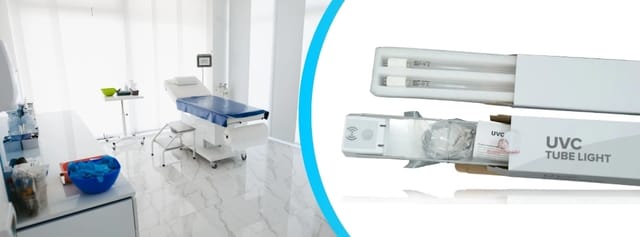
UVC lighting technology has continued to gain a lot of traction over the past few years. This trend is highly attributed to the fact that schools, healthcare facilities, and businesses worldwide are striving to implement safer solutions to provide a cleaner environment for their staff members. Residential use of UV-C lights is also pretty common nowadays. Before purchasing a UV-C lamp, it is crucial that you do some research. Get answers to questions like what is UV-C lighting technology? How does it work? and how can you make it more effective in your establishment.

Isolated vs Non Isolated LED Drivers and Why it Matters in LED Lights
Posted by Dara Greaney on 12/30/2022 to
LED Grow Lights
An isolated LED driver is an LED driver that is electrically isolated from the input power source and the output dc current to the LED board. There is no direct connection between the input (line from building) and output to the LED board. This is achieved through the use of an isolation transformer that separates input and output.
Best Hazardous Location Lights
Posted by Dara Greaney on 11/8/2022 to
Industrial Lighting
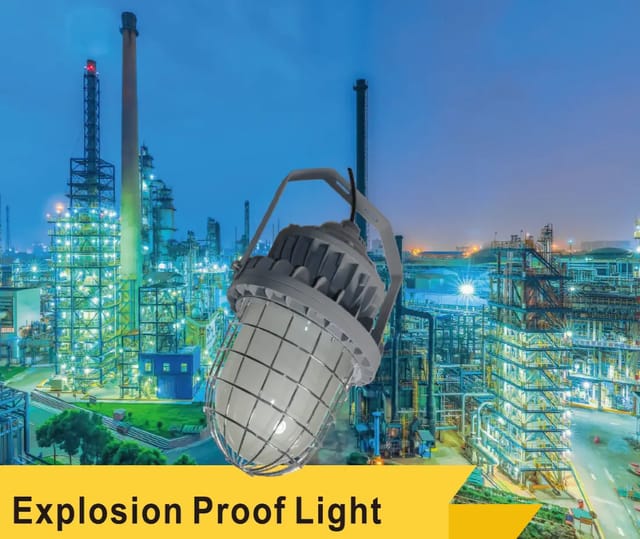
Hazardous location lighting is a fixture or light that can be safely used in a space where a fire is likely to start due to a hazardous material coming into
Lighting Design - Part 1 - Intro to Lighting Design
Posted by Dara Greaney on 10/25/2022 to
LED Lights
Lighting Design - Part 1 - Intro to Lighting Design (a) What Is Lighting Design? For an interior design and architectural project, there is always the need to achieve an entirely comfortable, functional, and practical space. Several
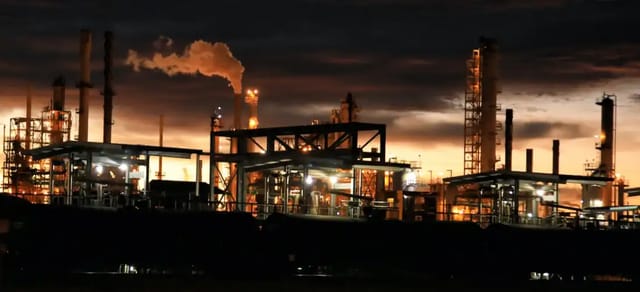
Explosion Proof Lights for Use in Manufacturing
Posted by Dara Greaney on 10/4/2022 to
LED Lighting
Explosion proof lights represent a vital investment in ensuring the safety and integrity of operations within hazardous industrial environments. Explosion proof lights robust design and strict regulatory compliance make them a reliable choice for manufacturing and we explain why
Installing LED Lights - We Rank Difficulty Levels
Posted by Dara Greaney on 8/12/2022 to
LED Lighting
LED is currently the most rapidly-developing lighting technology and understanding how hard they are to install is an important first step to using. We break down some common lights and how easy they are to install.
Federal Contract Lighting - How Does The USA Government Buy?
Posted by Dara Greaney on 6/14/2022 to
Industrial Lighting
Federal Contract Lighting How Does The USA Government Buy? The procurement process of the US government enables the federal, state, and local government agencies to obtain goods and services. Federal government procurement contracts are
Light Standard: What is TM-21? TM-21-19 or TM-21-21?
Posted by Dara Greaney on 5/12/2022 to
LED Lights
What is TM-21? Why should I care about this Light Standard? In 2011, the Illuminating Engineering Society (IES) published the TM-21 guidelines titled “Lumen degradation lifetime estimation method for LED light sources.” TM-21 is the Illuminating Engineering Society of North America (IESNA) approved method for taking LM-80 data and making useful LED lifetime projections from it.
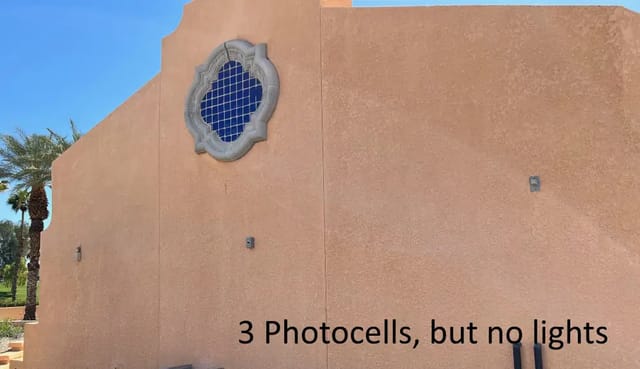
How NOT To Install a Dusk to Dawn Daylight Sensor Photocell
Posted by Dara Greaney on 3/29/2022 to
Commercial Lighting
Thinking of installing a Dusk to Dawn Daylight Sensor? Avoid these common mistakes with our essential guide! Learn the dos and don'ts to ensure a seamless setup. From wiring tips to positioning tricks, we've got you covered. Discover the right way to install your sensor today!

Saving Energy and Money with Commercial Motion Sensors on LED Lights
Posted by Dara Greaney on 3/22/2022 to
LED Parking Lot Lights
Saving Energy and Money with Commercial Motion Sensors on Light Fixtures What Are Commercial Motion Sensors? A motion sensor, or motion detector, is an electronic device that utilizes a sensor to detect nearby people or objects and can either be integrated into individual luminaires or mounted remotely.

UV-C Disinfectant Lights: How do you use UVC Lights?
Posted by Dara Greaney on 2/22/2022 to
LED Lights
UV-C Disinfectant Lighting Fixtures, UV-C defines the ultraviolet radiation within the wavelength range of 200-280 nanometers. While the UV-A (400-315 nm) and UV-B (315-280 nm) exposure from the sun or sunbeds have some associated dangers, UV-C, also produced by the sun is the shortest of the ultraviolet wavelengths and is almost entirely filtered out by the atmosphere before reaching the surface of the earth.
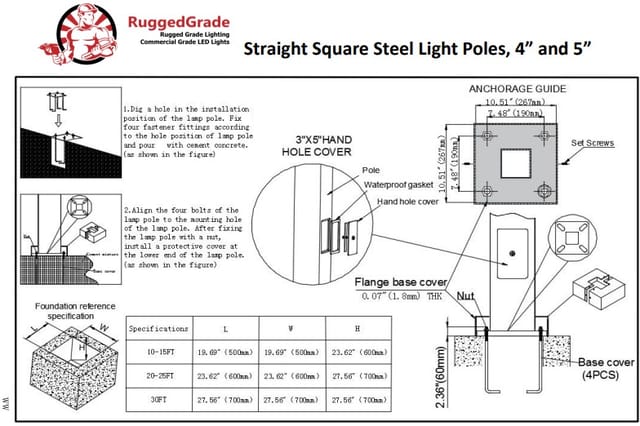
Light Poles: Direct Burial vs. Surface Mount Review
Posted by Dara Greaney on 2/14/2022 to
LED Parking Lot Lights
There are two major types of light poles; Anchor-based and Direct Burial. Direct burial or embedded poles are installed by inserting the shaft into the ground without a concrete base or anchor bolts, creating a cleaner look. Most metal poles include a hand-hole cover and a pole cap. The hand-hole cover makes it possible for electricians to make connections, maintain the internal wiring and for replacement in case of any damages. Here you will learn about both.
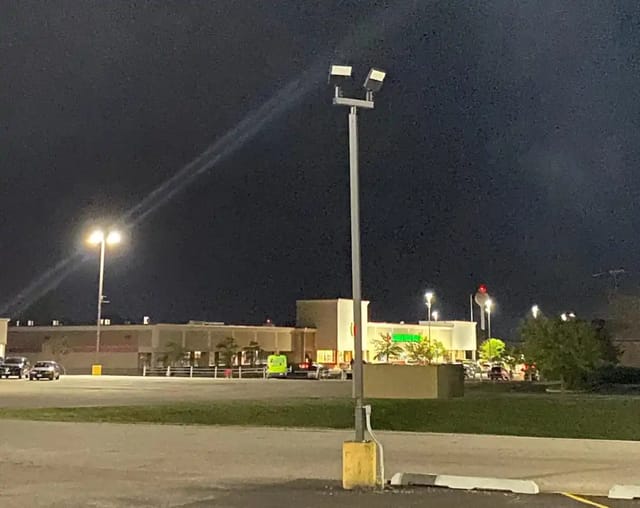
How Many Lights Do I Need For My Parking Lot?
Posted by Dara Greaney on 10/22/2021 to
Industrial Lighting
How Many Lights Do I Need For My Parking Lot? When creating a safe work environment, the first spot you need to consider is your parking lot. When the visitors and the employees come and go, they are at risk of any hazards or
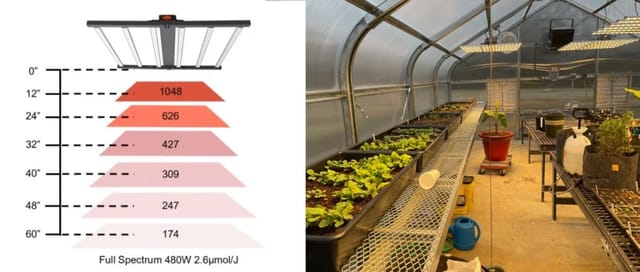
Understanding LED Grow Lights: Power Needs, Set Up and Spacing
Posted by Dara Greaney on 10/5/2021 to
LED Grow Lights
LED growing lights are diode groups that emit light of different wavelengths on the visible light spectrum necessary for several plants' growth. The invention of modern-day farming and greenhouse farms has made it inevitable to fix other lighting systems analogous to daylight sunlight. The process of mimicking the exact light spectrum and wavelength is not obvious. With a visible range between 380-740 nanometers, the LED lights manufacturers must employ the highest precision. LED lights are manufactured to produce colored lights within the visible spectrum based on the kelvin color or temperature scale which differs from grow lights. The combination of several colors by the coated phosphor material on the diodes results in the production of white light.
How to Calculate the Amp and Power Load of LED Lights
Posted by Dara Greaney on 9/28/2021 to
Commercial Lighting
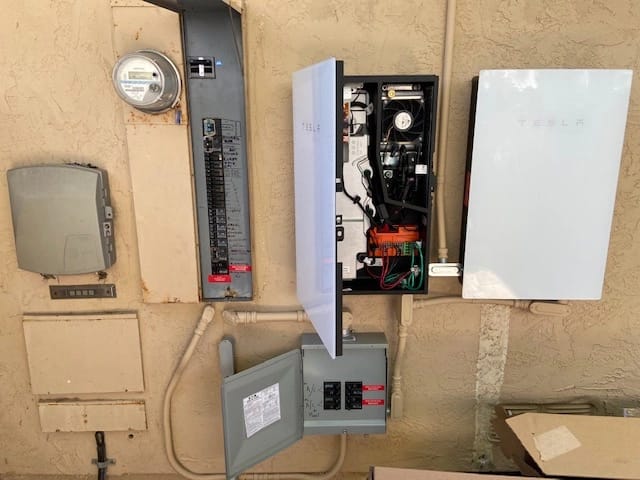
CALCULATING AMP LOAD AND UNDERSTANDING BREAKERS AND POWER LOAD Understanding the load and capacity of your electric transformer becomes vital for numerous reasons. If you are considering an upgrade or planning to shift to a new place, then the
Home Depot lights Vs. Our Lights - Why You should Choose Ours
Posted by Dara Greaney on 9/25/2021 to
LED Lighting
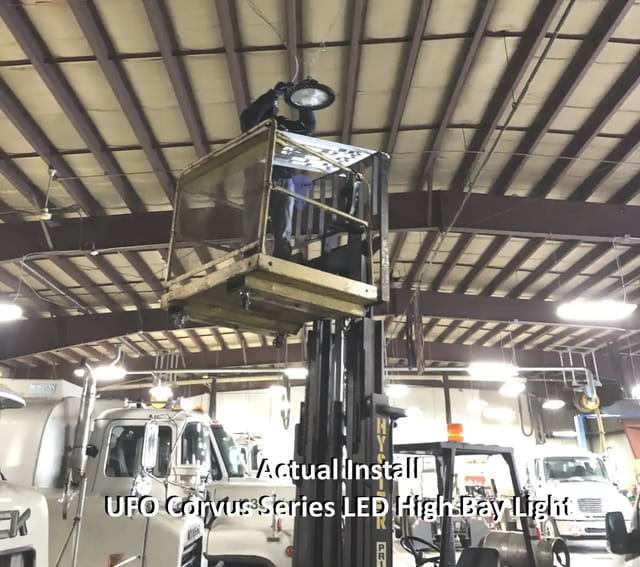
Home Depot lights Vs. Our Lights - Why You should Choose Ours What are Home Depot Lights? i. Lights sold by Home Depot under the Hampton Bay brand, pro electric, and others Home Depot lights are lighting products sold by the Home Depot Company
Why Battery Backup LED Lights are Hot Right Now
Posted by Dara Greaney on 7/31/2021 to
Industrial Lighting
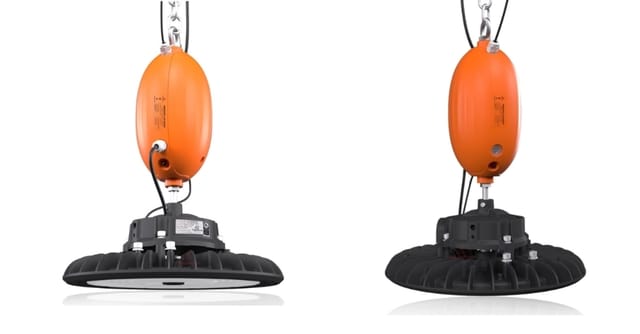
Why Battery Backup LED Lights are Hot Right Now The lighting system is at the heart of any successful enterprise. Even in the cover of darkness, providing sufficient lighting is a sure way of maintaining a competitive edge. Power cuts, outages,
150w LED - Why is this light size such a popular choice?
Posted by Dara Greaney on 5/25/2021 to
LED Lights
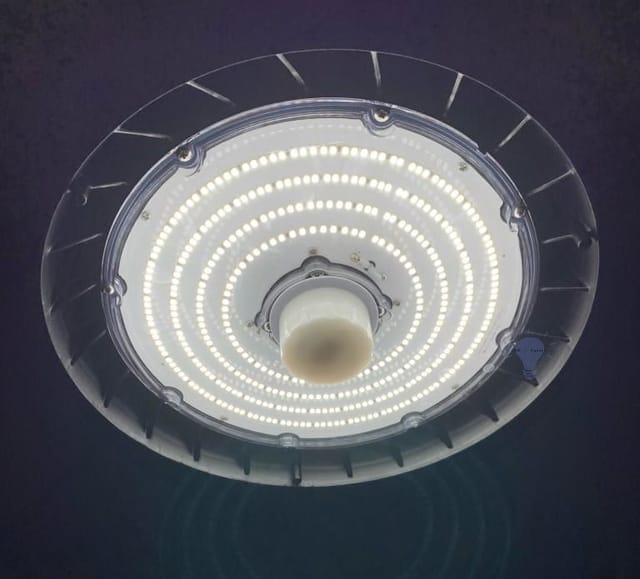
150W LED- Why is this so popular? Since 1961, the trend of invention and innovation of LED lights has increased across the globe. Several forms of LED lights have been manufactured with the initial LED light being infra-red. The complexity of the LED lights has taken numerous strides in terms of substrate materials, color complexion indexing, temperature grades, and watt ratings. Several LED watt ratings have granted LED lights a diversity of operation in various places. The utilization of LED lights has cut across several sectors like roads, domestic houses, and commercial businesses.

Call us Toll Free at 800-674-9420 for the Best in Lighting Design & Assistance. Please use Ext 1 for sales or lighting design help. Para Espanol Extension 7. For Hours & More Click Here- Contact
Trusted by Thousands
Our customers love us — and we love them back.


-
 Free Shipping
On orders over $49.00
-
 Free Extended Warranty
Up to 7 Years Free Warranty On LED Lights
-
100% Satisfaction Guarantee
