

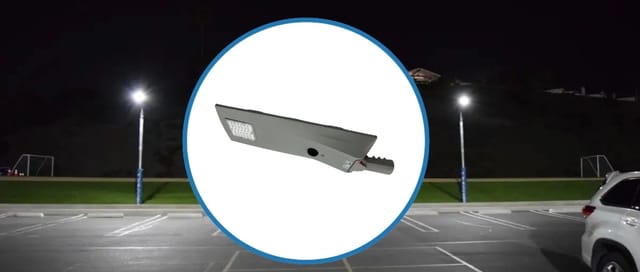
Solar light wattage is not directly comparable to grid-powered LED wattage. A solar fixture operates on a fixed daily energy budget set by the solar panel and battery. Higher wattage draws the battery down faster, potentially causing early shutoff. Match wattage to actual lumen requirements: 30-50W for pathways (3,000-7,500 lumens), 60-100W for parking lots (7,500-13,000 lumens), and 120-200W for roadways and large commercial zones (14,000-24,000+ lumens). Always verify the panel can fully recharge the battery in your location's worst-case month.
Selecting the right wattage is one of the most misunderstood parts of commercial solar lighting design. Many buyers assume higher wattage automatically means brighter light, better performance, or wider coverage. In reality, wattage is only one piece of a much larger system that includes LED efficiency, solar panel size, battery capacity, mounting height, and available sunlight.
Proper wattage selection helps commercial solar outdoor lighting perform consistently, meet safety requirements, and deliver long-term reliability. Whether lighting a parking lot, pathway, roadway, or perimeter area, understanding how wattage actually works in solar systems is critical.

Understanding Wattage in Commercial Solar Lights
What wattage means in solar-powered lighting
In solar lighting, wattage describes how much electrical power the LED fixture draws while operating at full output. A 60W solar light consumes 60 watts from its internal battery during each hour of runtime. That energy must first be generated by the solar panel and stored in the battery before the sun goes down.
This is where solar lighting differs sharply from grid-powered systems. Grid fixtures draw power continuously from the utility. Solar fixtures operate on a fixed energy budget that resets daily based on available sunlight. Every watt used at night must be earned during the day.
Because of this limitation, wattage selection becomes a balancing decision rather than a simple brightness upgrade. Higher wattage allows for greater light output, but it also places heavier demand on the battery and charging system. If the panel cannot recharge the battery fully, or if the battery capacity is too small, higher wattage lights may dim early, reduce output overnight, or shut off before morning.
Well-designed commercial solar lights balance wattage against expected runtime, seasonal daylight variation, and site-specific lighting needs. The goal is consistent performance, not just maximum brightness.
Difference between LED wattage, solar panel wattage, and battery capacity
Commercial solar lighting systems rely on three interconnected components, each serving a different role in energy management:
- LED wattage refers to how much power the fixture consumes while producing light. This number directly affects brightness, runtime, and battery drain.
- Solar panel wattage represents the maximum power the panel can generate under ideal test conditions. In real-world installations, actual output varies based on sun angle, weather, temperature, and geographic location.
- Battery capacity defines how much energy the system can store for nighttime use. Typically measured in watt-hours, it determines how long the light can operate without sunlight.
These elements must be sized to work together. A high-watt LED paired with a small panel may never fully recharge the battery. An undersized battery may not support full-night operation, even with a strong panel. On the other hand, pairing a low-watt LED with an oversized panel and battery can increase system cost without delivering meaningful performance gains.
Effective commercial solar lighting design matches LED wattage to realistic solar input and battery storage so the system performs reliably across different seasons and weather conditions.
Why solar wattage is not the same as grid-powered lighting
Grid-powered lights draw continuous power and do not rely on stored energy. A 100W grid-powered fixture can operate indefinitely as long as electricity is available. Solar lighting must collect enough energy during daylight hours to operate through the night and sometimes through multiple nights of low sun.
This is why wattage ratings in commercial solar lights should never be compared directly to grid fixtures. Solar lighting design is about energy balance, not just power draw.
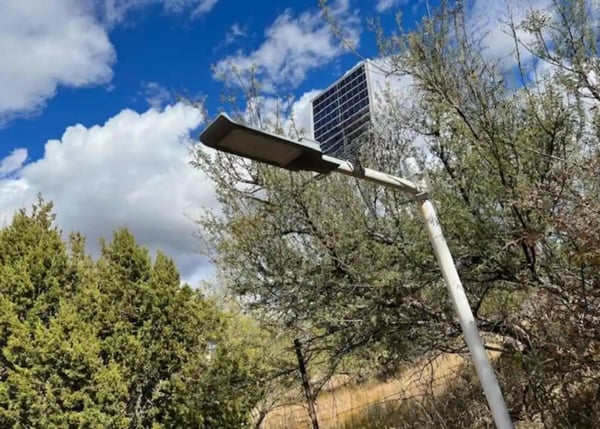
Wattage vs Lumens — What Really Determines Brightness
Why lumens matter more than watts
Lumens measure the amount of visible light a fixture produces. Watts measure how much electrical power the fixture consumes to produce that light. In modern LED-based systems, especially solar-powered ones, lumens are the more useful number when evaluating brightness.
Two commercial solar lights with the same wattage can perform very differently in the field. One fixture may use higher-quality LED chips and better drivers, allowing it to convert more electrical power into usable light. Another may waste energy through inefficiencies, producing fewer lumens while drawing the same wattage from the battery.
This difference matters more in solar lighting than in grid-powered systems. Because energy storage is limited, every watt pulled from the battery needs to deliver meaningful illumination. High lumens-per-watt output allows solar lights to stay brighter longer without increasing system size or cost.
Typical lumen output by solar LED wattage range
While lumen output varies by LED quality, optics, and thermal design, general ranges provide a useful starting point when comparing commercial solar lights. These values reflect typical performance for commercial-grade fixtures designed for outdoor use:
- 30W solar LED lights often produce between 3,000 and 4,500 lumens, making them suitable for walkways, sidewalks, and low-traffic areas.
- 50W solar LED lights typically fall in the 5,000 to 7,500 lumen range and are commonly used for small parking areas and perimeter lighting.
- 80W solar LED lights may deliver roughly 9,000 to 12,000 lumens, supporting broader coverage and higher mounting heights.
- 120W solar LED lights often reach 14,000 to 18,000 lumens and are frequently used in larger commercial spaces where uniform illumination is required.
- 200W solar LED lights can exceed 24,000 lumens and are generally reserved for roadways, wide-open yards, and large-scale commercial sites.
These ranges assume proper system design, quality components, and realistic expectations for solar performance. Inflated lumen claims without supporting data are common in low-quality products and should be viewed cautiously.
How LED efficiency impacts light output
LED efficiency is measured in lumens per watt. Higher efficiency LEDs convert more electrical energy into visible light rather than heat. This characteristic is especially valuable in commercial solar lighting systems.
Improved efficiency reduces battery drain, allowing fixtures to operate longer each night or maintain higher brightness levels without increasing battery size. It also reduces stress on system components, which supports consistent performance across seasonal changes.
Efficiency plays a role in long-term durability as well. Less wasted energy means lower operating temperatures. Excess heat accelerates LED degradation, leading to lumen loss and shorter service life. Solar lights with efficient LEDs tend to maintain their output more consistently over time, reducing the need for early replacement or system adjustments.
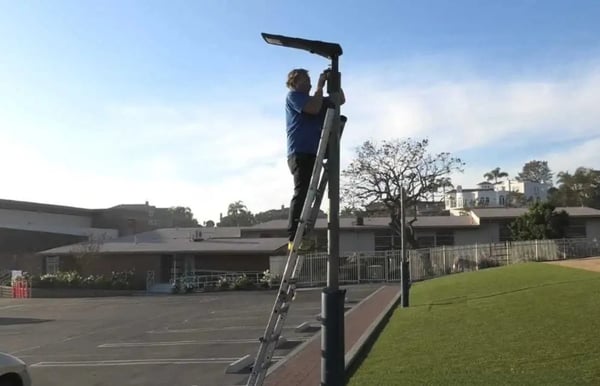
Key Factors That Affect Wattage Selection
Lighting application
Lighting application is one of the biggest drivers of wattage selection in commercial solar lighting projects. Different environments have different visibility needs, safety requirements, and coverage expectations. Selecting wattage without considering how and where the light will be used often leads to underlit areas or wasted system capacity. Commercial solar lights must be matched to real-world use cases, not just general brightness targets.
Roadways and parking lots
Roadways and parking lots require broad, evenly distributed illumination to support vehicle movement, pedestrian visibility, and general safety. These areas typically demand higher lumen output to avoid dark zones between fixtures, especially when poles are spaced farther apart.
Wattage must be sufficient to support wide beam distribution rather than concentrated light directly beneath the pole. Parking lots also benefit from consistent horizontal illumination across driving lanes and parking stalls. Inadequate wattage can result in patchy lighting that reduces visibility and increases liability concerns.
Mounting height plays a major role in these environments. Higher poles spread light over a larger area, which increases the wattage and lumen output needed to maintain usable light levels at ground level.
Walkways and pathways
Walkways and pathways have different lighting goals than vehicle-focused areas. The primary objective is safe pedestrian navigation rather than high brightness. Even, glare-free illumination helps define walking surfaces, curbs, and changes in elevation.
Lower wattage solar fixtures are often appropriate for these applications when paired with controlled optics and proper mounting height. Excessive wattage can create harsh lighting conditions, increase glare, and waste stored energy without improving safety.
Because pathways are often installed in landscaped or shaded areas, wattage selection should also account for reduced solar exposure and longer nightly runtime requirements.
Security and perimeter lighting
Security and perimeter lighting is designed to improve visibility and discourage unauthorized activity. Wattage selection in these areas depends on how much ground needs to be covered and how the light is intended to operate overnight.
Some security installations rely on constant illumination, which requires steady wattage and reliable battery capacity. Others use motion-based dimming or adaptive controls, allowing fixtures to operate at reduced output until activity is detected. In these cases, higher peak wattage may be acceptable because full output is used intermittently rather than continuously.
Mounting height and coverage area strongly influence wattage needs. Taller poles and wider perimeters generally require higher lumen output to maintain visibility across large zones.
Open commercial spaces
Open commercial spaces such as yards, loading areas, and storage zones often present the most demanding lighting challenges. These areas are typically wide, open, and lightly obstructed, which allows light to spread but also requires higher output to achieve usable coverage.
Higher wattage fixtures are commonly used to reduce the number of poles needed while maintaining consistent illumination. Wide beam angles and higher lumen output help cover large areas efficiently, especially in logistics, industrial, or utility environments.

Mounting height and pole spacing
Mounting height and pole spacing have a direct impact on how much wattage and lumen output a solar light needs to deliver effective illumination. These factors determine how light spreads across the ground and how much intensity remains at usable levels.
As mounting height increases, light disperses over a wider area before reaching the ground. While higher mounting can improve coverage and reduce glare, it also reduces illuminance at ground level if lumen output is not increased accordingly. A fixture mounted at 4 meters concentrates light more tightly and typically requires lower wattage to achieve safe light levels on walkways or small areas. In contrast, a fixture mounted at 9 meters must project light farther and over a broader footprint. Even if the coverage area appears similar, the higher-mounted fixture needs significantly more lumen output to compensate for increased distance and dispersion.
This relationship is especially important in commercial solar outdoor lighting applications such as parking lots, solar street lights, and roadways, where poles are often taller to reduce fixture count. Selecting wattage without accounting for mounting height can result in dim surfaces, poor visibility, and uneven lighting patterns.
Pole spacing works hand in hand with mounting height to determine wattage requirements. Wider spacing increases the distance light must travel between fixtures, which raises the risk of dark zones and uneven illumination if wattage is too low. In layouts with wide spacing, higher wattage fixtures or higher lumen output are often needed to maintain continuity of light across the site. Conversely, closer pole spacing allows lower wattage fixtures to achieve uniform coverage without sacrificing visibility.
Proper spacing also plays a role in visual comfort. Excessive wattage combined with tight spacing can cause overlap, glare, and harsh brightness contrasts. Balanced spacing reduces these issues while improving overall light quality and energy use.
Sunlight availability and geographic location
Sunlight availability is a defining factor in solar lighting performance and must be considered when selecting wattage. Regions with frequent cloud cover, shorter daylight hours, or low winter sun angles receive less usable solar energy throughout the year.
In these locations, higher wattage fixtures place greater strain on the charging system. To maintain reliable operation, systems may require larger solar panels, increased battery capacity, or reduced nightly output to compensate for lower daily energy input.
Seasonal variation is also critical. A system that performs well during long summer days may struggle in winter if wattage selection is too aggressive. Conservative wattage choices, combined with properly sized panels and batteries, help maintain consistent operation year-round.
Ignoring geographic and climate conditions is one of the most common reasons commercial solar lighting systems underperform. Proper wattage selection aligned with local sunlight patterns improves reliability and reduces the need for post-installation adjustments.
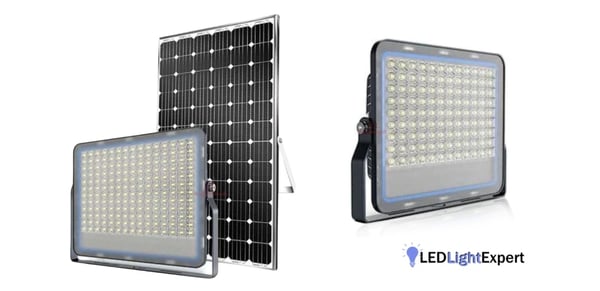
Recommended Wattage Ranges by Application
30W–50W solar lights for pathways and walkways
These wattages are well suited for pedestrian areas, sidewalks, parks, and campus walkways. When mounted at appropriate heights and spaced correctly, they provide sufficient illumination without excessive glare or energy demand. They are commonly used in commercial solar outdoor lighting designs where safety and visibility are required but high brightness is unnecessary.
60W–100W solar lights for parking areas
Parking lots require balanced illumination across wide areas. Wattages in this range provide strong lumen output while remaining energy efficient. Proper optics and mounting height are critical to achieving uniform coverage. This range is common for small to mid-sized commercial parking areas and mixed-use facilities.
120W–200W solar lights for roadways and large commercial zones
Higher wattage fixtures are used for major roadways, large yards, and expansive commercial spaces. These systems require larger solar panels and battery banks to support extended runtime. This category includes applications such as commercial solar street lights, industrial campuses, and logistics facilities where coverage and visibility are critical.
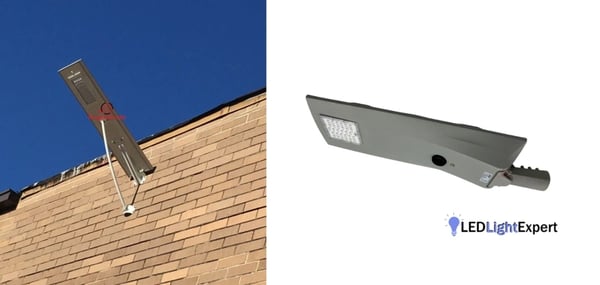
How to Evaluate Solar Light Specifications
Reading product spec sheets correctly
Spec sheets should clearly list LED wattage, lumen output, solar panel rating, battery capacity, mounting height recommendations, and runtime expectations. Vague specifications or missing data are red flags. Look for detailed photometric information rather than marketing descriptions.
Key numbers to check: lumens, battery size, panel efficiency
Focus on these core metrics:
- Total lumen output
- Battery capacity in watt-hours
- Solar panel wattage and efficiency
- Expected nightly runtime at full output
These numbers provide a clearer picture of real-world performance than wattage alone.
Comparing products fairly
When comparing commercial solar lights, ensure conditions are equivalent. Compare lumen output, not just wattage. Compare battery capacity, not just panel size. Avoid comparing residential-grade products to commercial systems. Fair comparison prevents underperformance and costly replacements later.
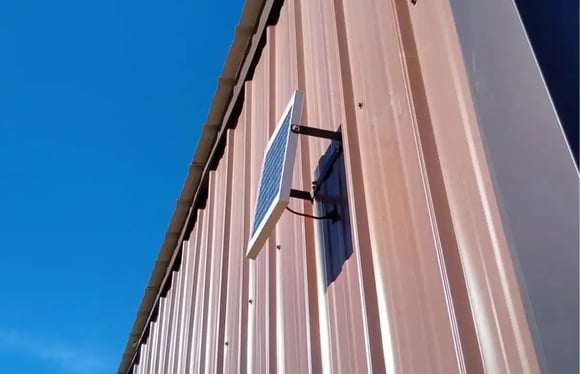
Common Mistakes to Avoid
Choosing wattage based only on fixture size
Larger fixtures do not always produce more light. Internal components matter more than housing size. Wattage and lumen output should guide decisions, not appearance.
Ignoring local sunlight conditions
A system that performs well in one region may struggle in another. Wattage selection must account for average daily sun hours and seasonal variation.
Overlooking lumen output and beam angle
Beam angle affects how light is distributed across the ground. A high-lumen fixture with poor optics can create bright spots and dark zones. Wattage selection must align with optical design. That is why it is important to look for high quality solar flood lights.
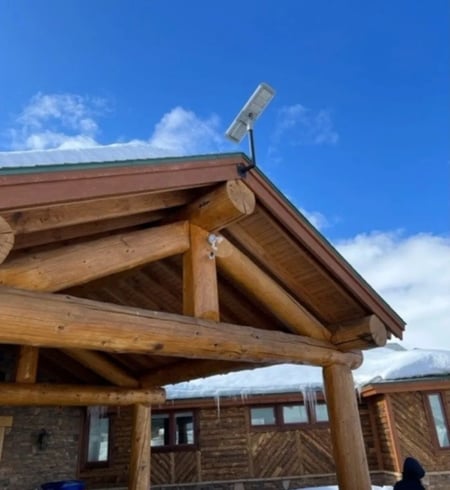
Conclusion
Choosing the right wattage for commercial solar lighting requires understanding how power consumption, light output, and energy storage work together. Wattage alone does not define performance. Lumens, efficiency, mounting height, spacing, and sunlight availability all play critical roles.
Well-designed commercial solar lights balance these factors to deliver consistent, reliable illumination across a wide range of applications. Thoughtful wattage selection improves safety, reduces maintenance issues, and ensures long-term value from commercial solar outdoor lighting investments. A careful evaluation of specifications and site conditions leads to better results and fewer surprises after installation.
How to Choose the Right Wattage for Commercial Solar Lights: Buyer and Maintenance Checks
A good decision on the right wattage for commercial solar lights starts with the real installation conditions, not just the product name. Check the application, mounting height, voltage, light level, glare, controls, wet or dust exposure, service access, and whether a photometric layout or qualified installer is needed before ordering.
| Check | Why it matters |
|---|---|
| Application | Confirms the fixture, lamp, control, or accessory fits the actual space and task. |
| Mounting and wiring | Prevents fit, voltage, access, and safety problems during installation. |
| Controls and maintenance | Protects energy savings, usability, troubleshooting, and long-term performance. |
Frequently Asked Questions
- Is higher wattage always brighter for solar lights?
- No. Two solar lights of the same wattage can produce very different lumen output depending on LED efficacy, optics, and thermal design. A high-efficacy 30W fixture at 160 lumens per watt delivers about 4,800 lumens, while a low-efficacy 50W fixture at 100 lumens per watt delivers only 5,000 lumens — using two-thirds more battery for less than 5% more light. Always compare lumens, not watts.
- Can I use the same solar wattage as my old grid-powered fixture?
- No. Grid fixtures draw continuous power from the utility, while solar fixtures operate on a fixed daily energy budget set by the panel and battery. Wattage ratings between solar and grid lights are not directly comparable. Solar lighting design is about energy balance — every watt used at night must be earned during the day.
- What wattage do I need for a commercial parking lot?
- Commercial parking lots typically use 60W to 100W solar fixtures, delivering 6,000 to 12,000 lumens at 15-25 foot mounting heights. Wider pole spacing or taller poles require higher wattage to maintain uniform illumination across driving lanes and parking stalls. Beam angle and optics matter as much as raw wattage for even coverage.
- How does cloudy weather affect solar light wattage selection?
- Higher-wattage fixtures place greater strain on the charging system in regions with frequent cloud cover or short winter days. To maintain reliable operation, size the system for the worst-case month — typically December or January in the Northern Hemisphere. This may require larger solar panels, increased battery capacity, or accepting reduced nightly output to compensate for lower daily energy input.
- What is the most important spec to compare when buying commercial solar lights?
- Look for total lumen output, battery capacity in watt-hours, solar panel wattage and efficiency, and expected nightly runtime at full output. Vague specifications or missing data are red flags. Detailed photometric information matters far more than marketing descriptions or fixture size.
Related Articles
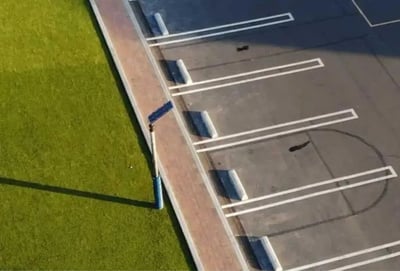
Ready to Upgrade Your Lighting?
Our solar lighting specialists can help you size the right wattage, panel, and battery for your project.
Call 800-674-9420 or email [email protected]
Monday–Friday, 8am–5pm PST

Dara Greaney is founder and CEO of LED Light Expert with deep expertise in LED fixtures and light design.
Editing by David Peguero, Content Director at LED Light Expert.

Trusted by Thousands
Our customers love us — and we love them back.


-
 Free Shipping
On orders over $49.00
-
 Free Extended Warranty
Up to 7 Years Free Warranty On LED Lights
-
100% Satisfaction Guarantee
