150W LED — Why Is This So Popular?
Since 1961 the trend of invention and innovation of LED lights has increased across the globe. Several forms of LED lights have been manufactured; from the initial LED light being infra-red and today primarily visible-spectrum lighting. The complexity of the LED has taken numerous strides in terms of substrate materials, color-rendering indexing, correlated color temperature grades, and wattage ratings. Several LED watt ratings have granted LED lights a diversity of operation in many places. The utilization of LED lights has cut across several sectors like roads, domestic houses, and commercial businesses — and within that broad catalog, the 150-watt fixture has become the most-specified wattage in industrial and commercial retrofit.
LED lights are a type of lighting that use light-emitting diodes (LEDs) as the source of light. LEDs are more efficient and durable than traditional bulbs, but they also have different power requirements. LEDs need a constant and precise amount of power to work effectively, as their properties change with temperature and age. An LED driver is a device that regulates and supplies the optimal current and voltage to an LED light. Quality drivers ship with 10kV surge protection, 0–10V dimming, and IEEE 519–compliant Total Harmonic Distortion under 20 percent — specs that matter on commercial circuits where THD has to stay within utility tariff limits.
One of the common types of LED lights is the 150 watt LED light, or shortened to 150W LED light. This type of LED light can produce up to 20,000 lumens, which is a measure of the brightness of the light. A 150 watt LED light can provide clear and bright lighting for large areas, such as warehouses, factories, gyms, or auditoriums. A 150W LED light can also save energy and money by using less power than traditional lighting. Measured per IES LM-79 photometric testing, DLC Standard fixtures at 110 lumens per watt deliver 16,500 lumens, DLC Premium fixtures at 130 LPW hit 19,500 lumens, and top-binned commercial fixtures reach 150 LPW — 22,500 lumens off a single 150-watt driver.
But why is the 150W LED light so popular? There are several reasons for this, spanning ceiling height, optical control, DLC certification, mercury-free safety, and the specific physics of the 400W metal halide it so efficiently replaces.
Commercial Lighting Tends to Be 14–20 Feet High
Most commercial spaces have high ceilings or poles that require powerful lighting to illuminate them adequately. A 150W LED light can provide enough light for spaces that are 14 to 20 feet high, without creating glare or shadows. This started before LED when 20,000 lumens were deemed to be a good number for 14 to 20 foot high and very common in commercial lighting. The more the number of lumens, the brighter the lamp despite the high distance from the ground. IES RP-7 industrial-lighting practice calls 30 footcandles for general warehouse aisle illumination and 50 footcandles for production areas — a 150W UFO high bay on a 20 foot centerline grid delivers both thresholds in most standard racking layouts.
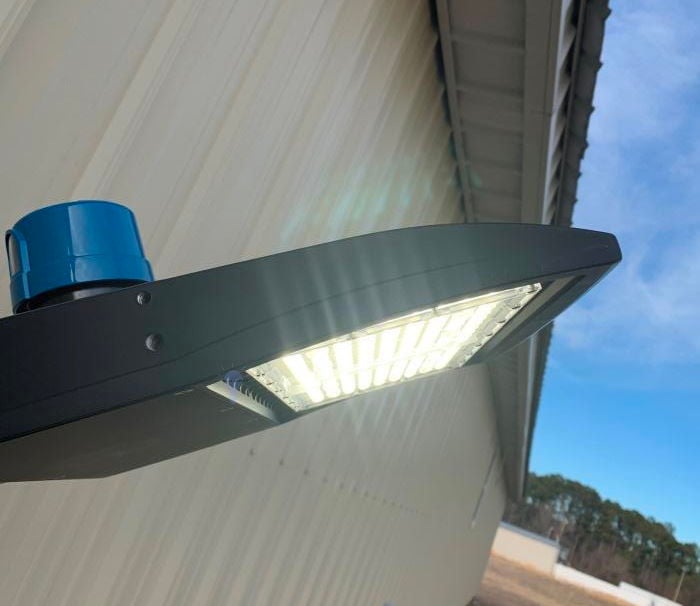
A 150W LED light for high bays can also be mounted on the ceiling or suspended by chains or cables, depending on the preference and layout of the space. A 150 watt LED Light for outdoor pole lighting can be direct arm mount or slip fit mount. Pole-mount shoeboxes use Type III or Type IV distributions per IES TM-15 to throw light forward without backspill over property lines — critical for parking lots, loading docks, and dealership display pads.
One of the aspects that affects lighting in any place is the presence of glare and color mixing. The 150W LED light comes in versions with low glare and low Total Harmonic Distortion. The outcome is the provision of clear lighting, symmetrical light distribution, and increased eye protection during the night hours. Unified Glare Rating (UGR) under 22 per EN 12464-1 is the ceiling for indoor workspace; quality commercial 150W fixtures use diffused lenses or frosted reflectors to hit UGR under 19 — the WELL Building Standard v2 target for general office and light-industrial spaces.
High Volume Has Made for Better Light Fixtures
The
shoebox area light of the 150W LED lamp is manufactured with augmented optical efficiency to the light concentration. One would think of this as analogous to a reflector in a car headlamp. The outcome is increased visibility in the different commercial places where the lights are installed. Also, during the purchase of the light, the customer does not have to worry about the weight of the light. The average weight of the 150W LED is ten pounds making it highly feasible for attachment to any material. Furthermore, the lamp's efficiency has been calculated at 130 lumens per watt thus producing adequate light even at low electric power. The 150W LED lamp is energy-saving thus reducing the expenses incurred. To the consumer or buyer of the light, this is cost-saving regarding electricity bills — measurable in the 310 watts saved versus a 400W metal halide, about $149 per fixture per year at 4,000 operating hours and $0.12/kWh.
Another factor that has been fundamental in promoting the popularity of the 150W light is the available quality-assurance certification. The light can obtain Electrical Testing Labs listings and the
Design Lights Consortium certifications. A certified 150W LED meets the performance standards of distribution, longevity, and color and is fit to be on the market. These certifications are promotions for the product creating trust among the customers. The lighting company of the 150W LED provides a minimum 5-year warranty for any product light purchased. Therefore, the customer can review the warranty, listing, and fixture data sheet before purchase. DLC qualification is what unlocks utility rebates — $30 to $150 per fixture is typical in most North American service territories, enough to cut payback periods in half on warehouse retrofits.
Quality LED fixtures can carry long L70 projections, but the useful life depends on driver quality, heat, surge protection, and operating environment. The energy-saving capacity is depicted at approximately 71 percent as compared with traditional metal halide and similar lamps. The LED light also has a power factor greater than 0.90 that is essential in energy saving. However, the conversion of electric energy to light energy is often accompanied by heat production. Overproduction of heat by any given lamp results in increased electricity consumption increasing the costs. The power consumption of the 150W LED is truly 150 watts unlike other lights that require ballasts. For the 150 watt
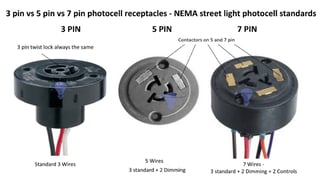
LED Light Fixtures the customer does not have to worry about power consumption. The inclusion of a photocell in the LED parking lot light has also been associated with power consumption reduction. Likewise a motion sensor can add further significant reductions — a bi-level occupancy control dimming to 30 percent during unoccupied periods saves an additional 20 to 40 percent on top of the LED baseline.
The 150W LED lamp has a sturdy shell and regulatory heat dissipation mechanism. The modules of the lamp casing are adequately spaced to provide excellent convection currents. These promote the reduction of heat production in the lighting compartment enabling the light to work under low operating temperature. Passive finned-heatsink designs keep junction temperature under 85°C — the threshold where LM-80 chip data shows phosphor aging accelerates and L70 life begins to drop. Premium fixtures add integrated heatpipes between the LED array and the outer fins, adding 10 to 20 percent headroom in elevated-ambient installations like unconditioned warehouses.
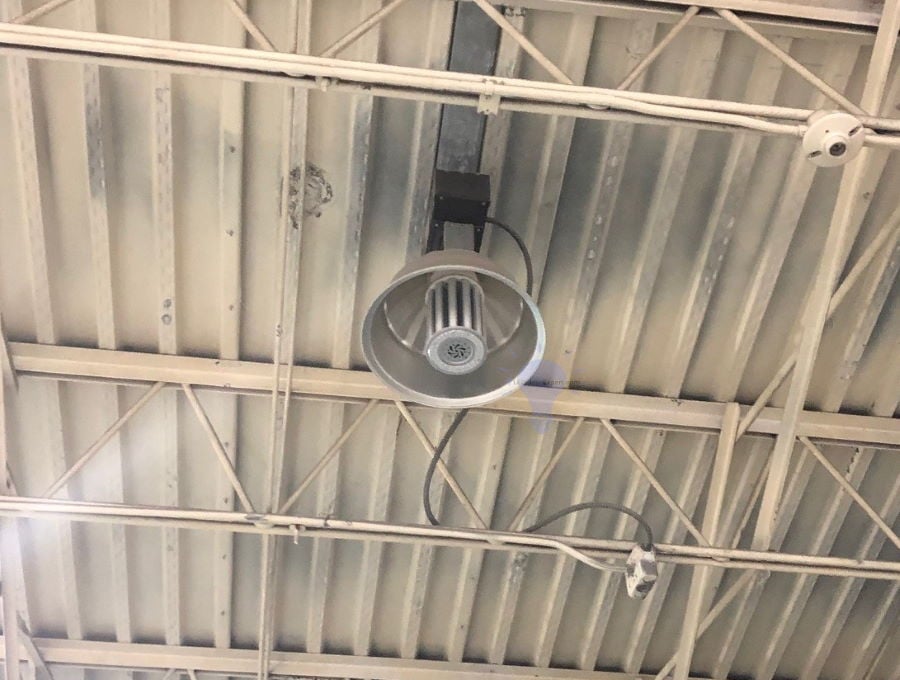
With the unpredictable change in the weather of the environment, a customer does not have to worry when they install the 150 watt LED light. The light casing is manufactured weatherproof from cast aluminum. The case is IP65-rated per IEC 60529 which indicates adequate ingress protection of the LED. Furthermore, the case is manufactured with water- and dust-proof qualities so the buyer does not have to worry about anything. Often, several lights are sealed completely during their manufacture. However, this is different for the 150W LED. The casing of the light is not permanently sealed and is removable allowing easy access to the light motherboard and driver. Therefore, in case of any faults, it is easier to have the lamp repaired. Field-serviceable drivers are the hallmark of commercial-grade fixtures — cheap consumer imports that require the entire housing to be scrapped on driver failure double lifetime total cost of ownership.
The lamp has a provision of multiple installation methods to firm structures like poles, walls, and roofs. They can also be fixed on several kinds of poles — for example the square and circular poles. The ability to fix the lamp to different categories of material eases the installation process as compared to other lamps. The light dissipation angles of the 150W LED are 90 by 140 degrees which increases the light coverage over the area supplied. Therefore, the customer can confidently purchase the LED light with the assurance of adequate lighting.
Commercial lighting presses more demands regarding different qualities of light produced — UGR, CRI, CCT uniformity across installed arrays, and flicker performance per IEEE 1789 all matter more in commercial than in residential.
The 400 Watt Metal Halide Replacement
Many commercial spaces use 400 watt metal halide lights, which are a type of high-intensity discharge (HID) lights. These lights produce a bright and white light that can cover large areas, such as warehouses, factories, gyms, or auditoriums. However, these lights also have some drawbacks, such as high energy consumption, short lifespan, and poor color quality. A 400 watt metal halide light can produce about 35,000 lumens at the start, but it can degrade to 20,000 lumens after one year and 13,000 lumens after five years. This means that the light output and quality can decrease significantly over time. Including the ballast, a 400W MH fixture actually pulls 455 to 465 system watts — a detail that matters when sizing the LED replacement, because the retrofit saves 310 to 320 actual watts per fixture, not 250.
The Halide Bulb — The lumen per watt quality of the halides creates a competitive advantage with the LED at day-one initial lumens, but metal halide peaks around 75 to 100 LPW and depreciates fast. Furthermore, the halide bulb offers exceptional efficacy in the different places of installation. There is also great color rendition with a high lux index. The relationship between lux and lumen quantity is key in the coverage of a vast area being illuminated. The color-rendering index on MH sits at 65 to 70 CRI on standard probe-start, 80 on pulse-start — well below the 80 to 90 CRI that DLC Standard LED fixtures deliver throughout their full 100,000-hour service life.
That bulb was the target of LED in the industrial space — replace that bulb. However, in early versions it was 200W–240W. As LED got more advanced, it became 150W. The features of the LED outcompeted those of the halide lights. Today the 150W is top-selling in
parking lot lights, warehouse high bay lights, and bulbs. The exceptional color rendering index in the LED lights has contributed to the popularity of the lights. The 150W light has the advantage of wide lighting coverage. One lumen can adequately cover a distance of one square meter. Therefore, 20,000 lumens are equivalent to 20,000 square meters of coverage at 1 lux — a very wide coverage compared to the halide lights with the same initial lumen rating because the LED maintains its output as the MH depreciates.
The LED Replacement — A better alternative to 400 watt metal halide lights is 150 watt LED lights, which are a type of light-emitting diode (LED) lights. These lights are more efficient and durable than HID lights, and they also have better brightness and quality. A 150 watt LED light can produce up to 20,000 lumens, which is comparable to a new 400 watt metal halide light. However, unlike HID lights, LED lights do not degrade over time and can maintain their light output and quality for up to 50,000 hours or more. This means that LED lights can last longer and provide more consistent lighting than HID lights. On a 40-fixture warehouse running 4,000 hours per year, the retrofit saves roughly 12,400 kWh per year per fixture — $5,960 in direct energy savings annually across the array, plus the avoided cost of a 3 to 5 year bulb-and-ballast replacement cycle ($80 to $200 per fixture).
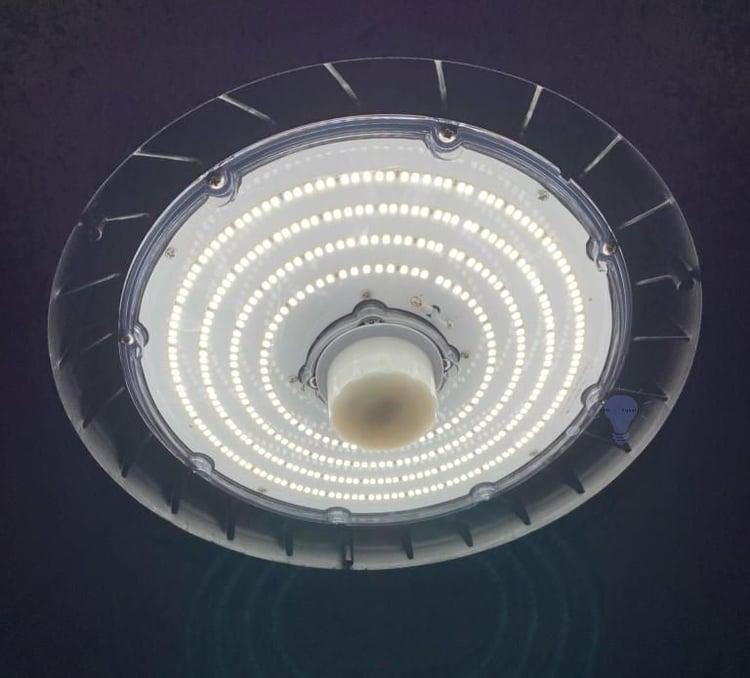
These are some of the reasons why 150 watt LED lights are so popular for commercial lighting. By using 150 watt LED lights for your project, you can achieve a quality lighting solution that is affordable, reliable, and eco-friendly. You can also improve the visibility and productivity of your workspace with 150 watt LED lights. Typical retrofit payback runs 18 to 30 months against metal halide — and under 18 months when utility rebates are included. That is why the 150W has become the single most-specified wattage in North American commercial LED.
A 150W LED is commonly used where older HID fixtures consumed much more power, but there is no single universal equivalent. Compare delivered lumens, beam angle, mounting height, voltage, fixture type, heat, and the area being lit before treating 150 watts as a direct replacement.
More Details to Consider
A 150W LED is popular because it often fits the middle of commercial lighting: enough output for many 400W metal halide replacements, but still efficient enough for high bays, parking lots, shops, and area lights. The exact replacement still depends on delivered lumens, optics, mounting height, and layout.
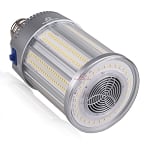
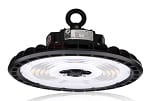
Compare fixture type before comparing wattage. A 150W UFO high bay, shoebox area light, flood light, and corn bulb do not put light in the same pattern. Beam angle, lens, heat management, voltage, controls, and serviceability change the result.
For retrofit projects, check the old fixture, ballast, pole or ceiling height, light level, and maintenance access. A photometric layout or at least a careful site review prevents overlighting, dark spots, and mismatched color temperature.






 Free Shipping
 Free Extended Warranty