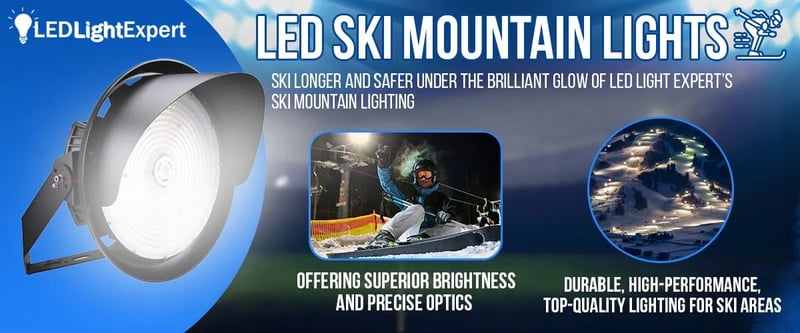
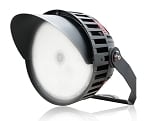
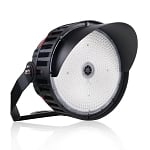
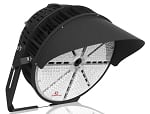
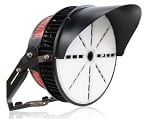
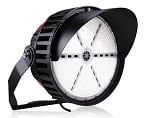
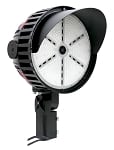
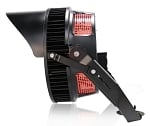
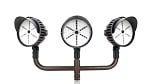
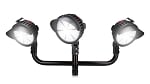
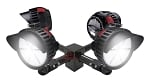
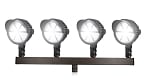
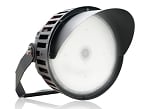
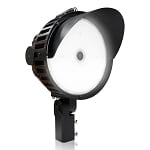
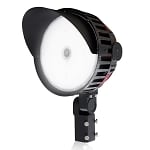
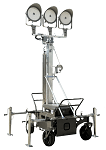
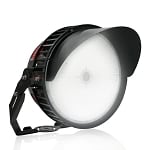
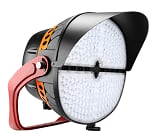
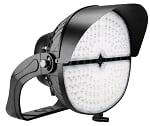
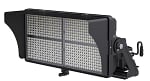
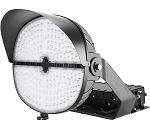
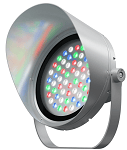
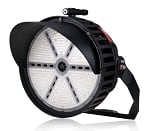
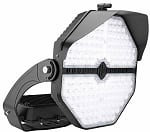
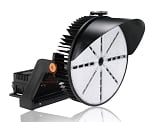
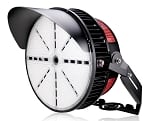
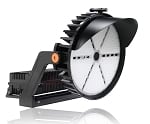
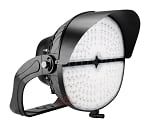
LED Ski Slope & Ski Mountain Lights

USA Based Experts in less than 60 seconds Call Now: 800-674-9420
On orders over $49.00
Up to 7 Years Free Warranty On LED Lights


Ski lighting has to make terrain, snow texture, people, and obstacles visible without creating glare for skiers looking downhill. The design should cover trails, lift areas, tubing lanes, terrain parks, grooming routes, base areas, walkways, and parking areas as separate lighting tasks.
Snow reflects a high percentage of light, so more output is not always better. Good optics, pole placement, and aiming reduce glare while keeping the slope evenly visible. Cold-weather ratings, wind exposure, ice, service access, and controls all matter in mountain environments.
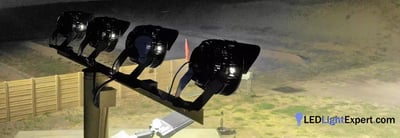
Trail lighting usually needs pole-mounted flood or sports lights aimed along the slope. Tubing lanes and terrain parks may need more targeted coverage because riders change direction quickly. Base areas, lift queues, walkways, and parking lots need comfortable area lighting and wayfinding.
Maintenance crews also rely on lighting for grooming and snowmaking work after public hours. Separate control zones can let the resort light only the areas in use.

4000K and 5000K are common choices for ski resort lighting, but glare, snow reflectance, and local rules should guide the final selection. Narrow and medium beam optics can throw light down the slope, while wider optics may fit base areas. Timers, contactors, dimming, and scene controls help manage trails, events, grooming, and closed areas.
Ski hill lights, resort-area lights, snow tubing lights, and ice skating lights serve different parts of a winter facility. Trail and mountain lights need long-throw optics and careful aiming along the slope. Base-area and walkway lighting need comfortable visibility for guests. Tubing lanes, terrain parks, rails, half-pipes, lift queues, grooming routes, buildings, and parking lots need their own zones.
Important buying factors include color temperature, lumen output, beam angle, uniformity, material, IP rating, wind exposure, snow, freezing temperatures, and service access. Snow reflectivity can make glare worse, so the fixture should be selected for optical control rather than raw output alone. Controls can separate public skiing, grooming, events, and closed areas.
Snow and ice have high albedo, meaning they reflect a large share of light. Dark ground absorbs more light, while snow-covered ground can reflect light back toward skiers and spectators. This is useful for visibility but can create glare if fixtures are too bright, too low, or aimed across the slope at a harsh angle.
Ski resorts also operate in wind, freezing temperatures, snow storms, fog, and long winter nights. Material, lens sealing, IP rating, mounting hardware, driver temperature rating, and service access affect fixture life. Brand, support, color temperature, lumens, beam angle, distribution, and uniformity should all be compared before selecting lights for slopes, resort areas, tubing, skating, and grooming routes.
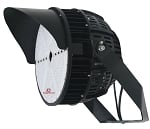
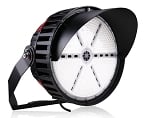
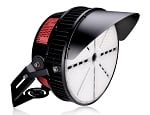
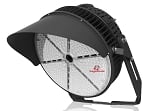
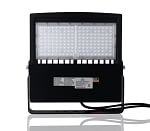
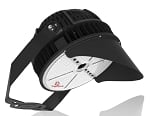
Ski lights are outdoor flood or sports lights designed to illuminate ski hills, tubing lanes, lift areas, and base areas. They are typically mounted on chairlift poles or dedicated light poles.
LED ski lights offer precise optics, lower energy use than many older HID systems, instant operation, and reduced maintenance. The layout still needs glare control, cold-weather ratings, and proper aiming.
4000K and 5000K are common for ski resort lights. The right choice depends on visibility goals, glare, snow reflectance, local rules, and whether the area is a trail, tubing lane, base area, or parking lot.
Lumens measure fixture output, but slope lighting also depends on beam angle, pole height, snow reflectance, aiming, and uniformity. A photometric plan is more useful than comparing lumens alone.
Snow can reflect a large amount of light. Shielded optics, careful aiming, and balanced pole spacing help reduce glare and harsh bright spots while keeping terrain visible.
Share trail length, slope width, pole locations, base-area needs, voltage, and control zones so fixture count, aiming, and glare can be checked.
Lighting a ski slope is not lighting a field with snow on it. Snow and ice have very high albedo, meaning they reflect rather than absorb light. Studies indicate snow-covered ground reflects more than 90% of the sunlight falling on it, and it behaves the same way toward artificial light. Every fixture on a slope is therefore working twice: once directly, and once through a bright, highly reflective surface underneath the skier.
That reflectance is useful and dangerous in equal measure. It means less fixture output is needed than the same area would require on grass or asphalt. It also means glare is the dominant design constraint, because a poorly aimed fixture bounces straight back into the eyes of someone travelling downhill at speed. The correction is even, wide distribution rather than raw intensity, which is where LED has a genuine advantage over the metal halide systems these slopes historically used.
Cold is the other factor. LED gains efficiency at low ambient temperature rather than losing it, which is the reverse of how HID behaves, and there is no warm-up period - a run can be lit on demand instead of left burning. Against the systems they replace, LED ski slope lights reduce energy cost by up to 75%.
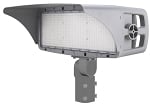
Mounting deserves specific attention in this environment. Fixtures and poles carry snow and ice load, and hardware selection has to account for it. Aiming should be checked after the first heavy season, since a fixture knocked a few degrees out of alignment on a slope produces a dark patch exactly where speed is highest.
Slope lighting quotes depend almost entirely on the run length, the width, and whether there is power along it. A short terrain park beside an existing lift line is a different project from a full run with no service, and the electrical infrastructure often dominates the budget.
What comes with every order:
Send the run length and width, the available mounting points or pole positions, and whether the area is used for skiing, snowboarding, tubing, or a terrain park. Aiming plans matter more here than on flat sites because the surface itself is inclined, and a photometric study run against the actual slope angle is the only way to predict what the surface will look like at night.
Request PricingCall Now: (800) 674-9420
Dara Greaney is the CEO and President of LEDLightExpert.com, a leading company in commercial lighting solutions. Since 2015, he has led the company to achieve remarkable growth and recognition, including being an Inc5000 winner three times: No. 3783 in 2022, No. 2428 in 2021, and No. 531 in 2020.
Editing by David Peguero.
On orders over $49.00
Up to 7 Years Free Warranty On LED Lights