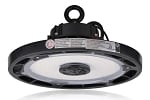
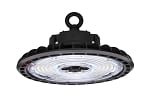
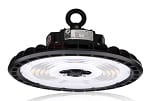
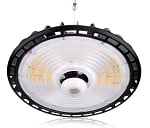
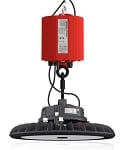
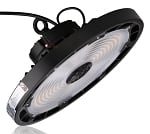
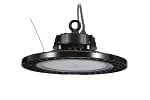
480-Volt LED High Bay Lights

USA Based Experts in less than 60 seconds Call Now: 800-674-9420
On orders over $49.00
Up to 7 Years Free Warranty On LED Lights


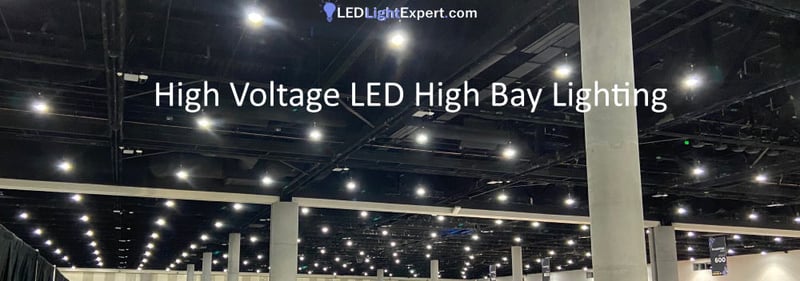
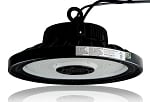
A 480 volt LED high bay light is a commercial or industrial high bay fixture with a driver rated for high-voltage electrical service, commonly 200-480V AC. These fixtures are used in buildings where the lighting circuits are above standard 120-277V service, including warehouses, manufacturing plants, gyms, distribution centers, and large open facilities.
The important buying step is voltage confirmation. Match the fixture input range to the building service, breaker, and installation requirements before ordering. If the spec sheet lists 200-480V, the fixture may support 277V, 347V, and 480V, but the listed input range is what matters.


High-voltage high bays are used where the electrical system is already designed around 347V or 480V service. They can reduce current on long runs and fit facilities with large electrical loads, but they also require qualified installation and the correct driver.
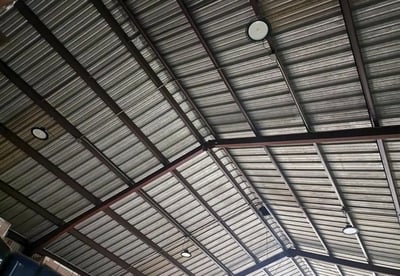
Use them for high ceilings, wide open work areas, production floors, gyms, warehouses, and other spaces where high lumen output must be delivered from tall mounting heights. For standard 120-277V buildings, a standard-voltage high bay is usually the simpler choice.
Legacy HID wattage can help estimate the starting point, but it should not be the final selection method. A fixture replacing a 400W, 750W, or 1000W metal halide must be compared by delivered lumens, optical distribution, mounting height, spacing, target foot-candles, and fixture condition. Some projects need fewer high-output fixtures; others need more lower-output fixtures for better uniformity.
For warehouses and production spaces, a photometric layout is the cleanest way to confirm quantity, spacing, and light levels. It also helps avoid over-lighting, glare, dark aisles, and fixture counts based only on old wattage.
High-voltage lighting can reduce amperage on a circuit. Amps are calculated by dividing watts by volts, so the same wattage draws less current on 480V than it would on 120V. That is one reason large facilities may use 347V or 480V lighting circuits, especially where long runs and large electrical loads are part of the building design.
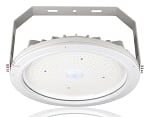
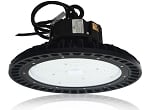
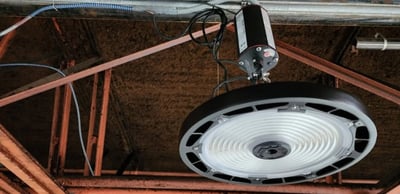
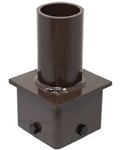
Mounting choices include hook mounts, pendant mounts, surface mounts, trunnion or U-bracket mounts, and suspended cable options for linear fixtures. The mount affects aiming, service access, vibration, and how well the fixture fits the ceiling structure. For high ceilings, beam angle and fixture spacing are just as important as the mount.
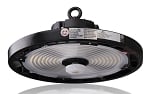
Emergency and control options should be reviewed early. Some projects require battery backup capable of supporting emergency illumination for a defined period, often 90 minutes. Motion sensors, dimming, daylight controls, and backup accessories must match the fixture voltage, driver, and listing.
High bay lights are used for higher ceilings, often above 20 feet, where concentrated output has to reach the floor or work surface. Low bay lights are used on lower ceilings and usually need a broader spread. Both can exist in high-voltage buildings, but ceiling height and layout determine the fixture type.
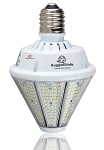
For high-ceiling 480V projects, compare the vertical and horizontal coverage together. The goal is enough light on shelves, equipment, walkways, and work areas without creating harsh bright spots directly under each fixture.
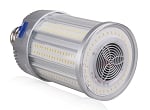
These answers cover the most common planning questions for 480 volt LED high bay lighting.
A 480 volt LED high bay light is a commercial or industrial high bay fixture with a driver rated for high-voltage electrical service, commonly 200-480V AC. Always confirm the fixture input range against the building voltage before installation.
Use a 480V high bay when the lighting circuit is above standard 120-277V service, such as 347V or 480V systems in warehouses, plants, gyms, and large facilities. The fixture must match the electrical service and local code requirements.
Many high-voltage LED high bays accept a 200-480V input range and can run on 277V, 347V, or 480V circuits, but this is not universal. Verify the listed input voltage on the product specification sheet before ordering.
Fixture count depends on ceiling height, lumen output, beam angle, aisle layout, reflectance, target foot-candles, and controls. A photometric layout is the most reliable way to confirm quantity and spacing for high-ceiling facilities.
Many 480V LED high bays support 0-10V dimming, sensors, or control systems. Confirm driver compatibility, control wiring, and voltage before selecting dimmers or occupancy sensors.
Match the fixture to the electrical service first. Then compare lumen output, mounting height, beam angle, controls, listing, and emergency requirements. LED Light Expert can help review voltage, layout, and fixture options before the project is ordered.
Contact LED Light ExpertMany industrial and commercial buildings are wired for 480 volt three-phase service, and where that is the case the lighting should run on it. The reason is current: at higher voltage the same power draws less current, which permits smaller conductors, longer runs without voltage drop, and more fixtures on a circuit. On a large warehouse with long runs from the panel to the far end of the building, that is a real reduction in installed cost.
The requirement is that the fixture accepts the voltage. Many commercial LED high bays are built for a 120-277V range and will not run on 480V; a 480V fixture, or one with a universal 120-480V driver, is a different order code. This is the single most common ordering error on this category, and it is discovered on site rather than on paper.
Beyond voltage, the advantages are the ones that apply to any quality LED high bay. Service life runs up to 100,000 hours, which on a 30-foot ceiling means the fixture will likely outlast the tenancy. High colour rendering with a strong R9 value renders reds and skin tones accurately, which matters in any facility where people are inspecting product or reading colour-coded markings. And output can be matched to the task rather than to whatever the previous fixture happened to be.
When you are converting metal halide or high-pressure sodium high bays, the interchange is settled by lumens rather than watts. The working conversions:
Mounting method is the other decision. A simple mounting hook is the fastest installation where the structure allows it and the fixture is being hung from existing steel or chain. Pendant, surface, and yoke mounts apply where the fixture must be fixed rather than hung, or where aiming is needed.
Confirm the ceiling height before selecting the lumen package, because it drives everything. The same square footage under a 20-foot ceiling and a 40-foot ceiling needs different wattages and different beam angles to land the same foot-candles on the floor, and no amount of extra output fixes a beam angle that is wrong for the height.
High bays go in by the dozen rather than singly, so quantity pricing matters more on this category than most. DLC listing is worth checking as well, since many utility programs pay a per-fixture rebate on DLC-listed high bays and the fixture count makes that material.
What comes with every order:
To quote, confirm the service voltage first - 480V, 277V, or 120-277V - then send the ceiling height, approximate square footage, the fixture count, and the wattage being replaced. Getting the voltage stated up front avoids the most expensive mistake on this category.
Request PricingCall Now: (800) 674-9420


Dara Greaney is the CEO and President of LEDLightExpert.com, a leading company in commercial lighting solutions. Since 2015, he has led the company to achieve remarkable growth and recognition, including being an Inc5000 winner three times: No. 3783 in 2022, No. 2428 in 2021, and No. 531 in 2020.
Editing by David Peguero.
On orders over $49.00
Up to 7 Years Free Warranty On LED Lights