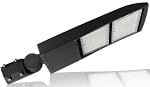
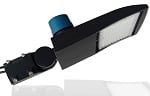
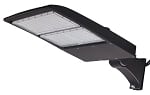
480-Volt LED Parking Lot Lights

USA Based Experts in less than 60 seconds Call Now: 800-674-9420
On orders over $49.00
Up to 7 Years Free Warranty On LED Lights


480V LED parking lot lights are for commercial and industrial sites that already use high-voltage service. Compare fixture input rating, optics, mount type, controls, and surge protection before ordering.
480-volt LED parking lot lights are used where commercial or industrial electrical service is already supplied at 480V. They can reduce fixture wattage, maintenance, and warm-up time compared with HID area lights when the replacement is specified correctly. Not every LED parking lot light is rated for high-voltage service. This page focuses on the checks that matter for 480V projects: fixture input rating, driver range, surge protection, controls, mount type, and electrician verification.


A 480-volt LED parking lot light is a high-voltage area fixture with a driver rated for service that includes 480V. That is different from the common 120-277V fixture range used on many residential and commercial projects. Large sites may use higher voltage because, for the same wattage, higher voltage draws lower current. That can support longer pole runs and large electrical loads, but the electrical design should be confirmed by the project electrician or engineer.
Use 480-volt LED parking lot lights when the site voltage and fixture driver are designed for that service. Common reasons include:
LED parking lot lights are commonly selected for lower wattage, instant-on operation, controlled optics, and long rated service life. Many commercial fixtures are rated around 50,000 hours or more, depending on the model and operating conditions.
Commercial outdoor fixtures should be selected for housing strength, IP rating, thermal design, surge protection, and pole exposure. LED fixtures avoid mercury lamps and reduce ultraviolet output compared with many legacy sources, but product listing and installation quality still matter.
Low maintenance: LED parking lot lights reduce lamp and ballast maintenance compared with many HID systems. Brighter is not always the goal; the replacement should deliver the right maintained lumens, distribution, and uniformity for the lot. When replacing high-pressure sodium or metal halide lights with LED parking lot lights, compare watts and lumens together.
Watts measure the power consumption of the light, and lumens measure the light output or brightness. Generally, LED lights consume less watts and produce more lumens than traditional lights. Here are some examples of how to replace traditional lights with LED lights:
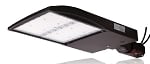
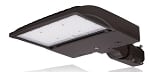
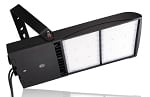
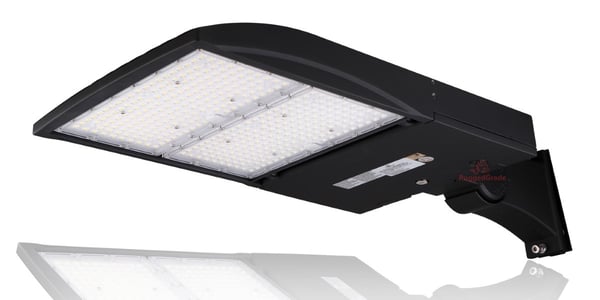
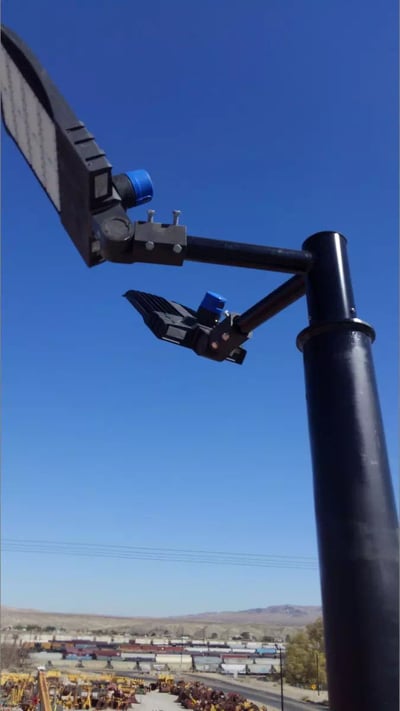
High-voltage service is only one part of a 480V parking lot project. The fixture also has to match the site geometry. Different mount types solve different problems: slip fitter mounts fit round tenons and allow aiming, direct arm mounts create a cleaner square-pole appearance, and yoke or flood-style mounts may be used for special applications. Beam distribution matters as much as wattage. Type III, IV, and V optics spread light in different patterns, so the right beam depends on pole location, lot width, and the areas that need coverage.
Parking lot applications also depend on mount type, beam angle, delivered lumens, wiring access, and pole layout. A direct arm mount can fit square poles, a slip fitter can fit round tenons, and different beam angles handle narrow drive lanes, wide parking rows, and larger open areas. Color and controls should also be reviewed before buying. 5000K bright white is common in the United States and Canada for large parking areas, but 4000K or warmer options may be preferred near neighborhoods. Photocells, motion sensors, and dimming controls can lower energy costs, but the sensor must be rated for the driver and voltage strategy. If the site already has existing poles and wiring, an electrician should confirm the standard voltage, square or round pole details, surge protection, and whether the new LED fixture can be installed without changing the branch circuit.
480V service is common on large commercial and industrial properties. Using fixtures rated for the site voltage can reduce current draw and avoid unnecessary step-down transformers, especially across long pole runs.
No. A 120-277V fixture is not rated for 480V and can fail immediately or create a safety hazard. Use a fixture or driver specifically marked for 480V or a voltage range that includes 480V.
Confirm supply voltage, phase, fixture input rating, mount type, pole condition, surge protection, optics, control method, and local electrical requirements. A licensed electrician should verify the circuit and installation.
Surge protection is strongly recommended for pole-mounted outdoor fixtures because long wire runs and exposed poles are vulnerable to lightning and utility transients. Match the SPD voltage and kA rating to the fixture and site.
Use the products above as a starting point, or contact LED Light Expert to confirm wattage, mounting, controls, and layout before ordering.
Shop NowFor replacement work the interchange is settled by lumens, not by matching wattage. To replace a 1000-watt metal halide or high-pressure sodium fixture, use a 300-watt LED at about 40,000 lumens. To replace a 1500-watt metal halide or HPS, use a 450-watt LED at roughly 60,000 lumens. The wattage drop looks dramatic because LED is directional - far more of what it produces reaches the pavement instead of the inside of a reflector.
For lighting levels, a practical planning figure is at least 2 lumens per square foot for normal parking lot lighting, or 3 lumens per square foot where a brighter, more actively secure appearance is wanted. That is a starting point for sizing rather than a substitute for a photometric layout, which is what resolves pole spacing and uniformity.
Colour temperature is measured in kelvins and ranges from 2700K warm white through to 6500K cool white. Commercial parking lots are most often specified at 5000K, which renders vehicles, markings and signage crisply; warmer options suit sites adjacent to residences or under dark-sky ordinances.
A note for Canadian sites: Canada commonly runs 347-volt single-phase service, and 347V fixtures are compatible with the 480V three-phase systems used in the United States. If you are specifying for a Canadian property, or for a US company operating Canadian sites, say so at the quote stage - the voltage question is the one that most often derails these orders.
480V fixtures are ordered for one of a few reasons: the lot is already wired for 480V, the fixture count is high enough that the lower current materially reduces conductor and installation cost, or the site is in Canada on 347V service.
What comes with every order:
Confirm the service voltage before anything else - 480V, 347V, or 120-277V - then send pole height, pole count, and the wattage being replaced. For the full range of optics, controls and mounting, see LED parking lot lights.
Request PricingCall Now: (800) 674-9420


Dara Greaney is the CEO and President of LEDLightExpert.com, a leading company in commercial lighting solutions. Since 2015, he has led the company to achieve remarkable growth and recognition, including being an Inc5000 winner three times: No. 3783 in 2022, No. 2428 in 2021, and No. 531 in 2020.
Editing by David Peguero.
On orders over $49.00
Up to 7 Years Free Warranty On LED Lights