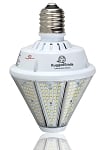
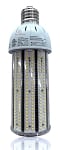
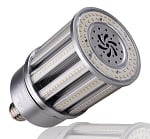
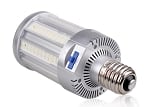
250W Metal Halide LED Replacement Bulbs
USA Based Experts in less than 60 seconds Call Now: 800-674-9420
On orders over $49.00
Up to 7 Years Free Warranty On LED Lights


The 250-watt metal halide lamp occupies a middle tier in the HID hierarchy — common in retail stores, smaller warehouses, parking garages, and commercial lobbies where mounting heights range from 10 to 25 feet. These lamps produce approximately 20,000 initial lumens, but the usable light reaching the working plane tells a different story. After omnidirectional losses (light radiating upward and sideways into the fixture reflector), ballast energy consumption (adding 40 to 50 watts to the system draw), and inevitable lumen depreciation (30 to 40 percent loss over the lamp's 10,000 to 15,000 hour life), the effective delivered illumination is substantially less than the catalog number suggests.
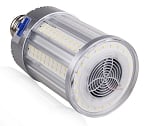
LED replacement bulbs address every weakness simultaneously. An 80W LED corn bulb produces 10,400 to 12,800 lumens of directional light, reaching full brightness within one second of power application. There is no ballast to consume additional energy, no warm-up period, no restrike delay, and no meaningful lumen depreciation for tens of thousands of operating hours. The energy reduction is immediate and measurable — a 250W metal halide system drawing 295 watts at the wall drops to 80 watts, a 73 percent reduction in energy consumption per fixture.
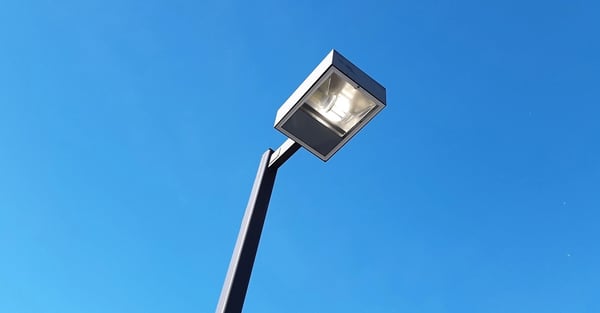
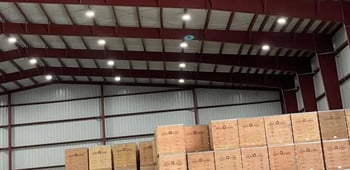
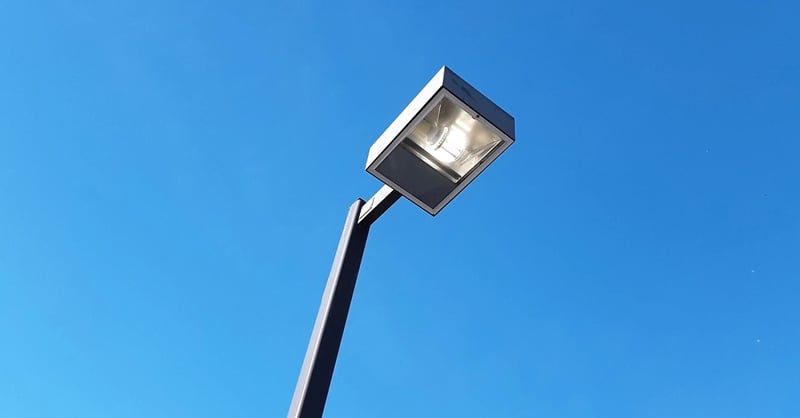
The most common applications include retail store ceiling fixtures (both open and recessed), parking garage canopy fixtures, commercial building lobby and atrium lighting, outdoor wall packs and shoe box fixtures in small to mid-sized parking lots, and low-bay industrial fixtures in facilities with 12 to 20 foot ceiling heights. Each application has slightly different requirements for beam angle, color temperature, and IP rating, but the E39 mogul-base LED corn bulb serves as the universal retrofit solution across all of them.


Facilities replacing 250W metal halide lamps have two primary options: drop-in LED corn bulbs and retrofit kits. The corn bulb approach is straightforward — remove the old lamp, optionally disconnect the ballast, install the LED bulb in the same E39 or E26 socket, and the fixture is upgraded. For high-volume replacements where dozens or hundreds of fixtures need conversion, the corn bulb path minimizes labor time and total project cost.
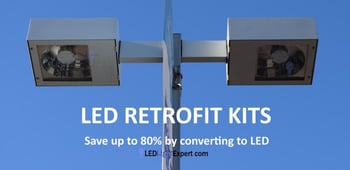
Retrofit kits replace the fixture internals with a purpose-built LED module and driver, offering tighter beam control, higher efficiency, and better thermal management than a corn bulb in the same housing. They cost more per unit ($80 to $200 versus $30 to $80 for a corn bulb) and take longer to install (20 to 30 minutes versus 5 to 10 minutes for a corn bulb), but they may be the better choice when the existing fixture housing is in good condition and the application demands precise optical control — for example, in retail spaces where beam angle and color rendering affect product presentation. See our LED retrofit kits collection for options designed to fit common 250W metal halide fixture housings.
The payback calculation for 250W metal halide to LED conversion is straightforward. Take the wattage reduction per fixture (295W system draw minus 80W LED = 215W saved), multiply by daily operating hours and the utility rate, and divide the total bulb-plus-labor cost by the daily savings. For a facility running 30 fixtures at 10 hours per day at $0.12/kWh, the per-fixture daily savings is about $0.26, creating an estimated payback that depends on bulb cost, labor, runtime, and utility rate. Five-year savings should be calculated from the actual fixture count and schedule.
An LED corn bulb in the 60 to 100 watt range replaces a 250W metal halide lamp. The actual replacement wattage depends on the fixture type and efficiency of the original installation. A 250W metal halide produces roughly 20,000 initial lumens but delivers only 12,000 to 14,000 usable lumens after accounting for omnidirectional light loss, fixture inefficiency, and lumen depreciation. An 80W LED corn bulb producing 10,400 to 12,800 directional lumens provides equivalent or better working-plane illumination at roughly one-third the energy draw.
Most 250W metal halide fixtures use either an E39 mogul base or an E26 medium base, depending on the fixture type. The majority of commercial 250W fixtures — high bays, wall packs, shoe boxes — use E39 sockets. Smaller decorative or architectural fixtures may use E26. Check your current lamp base before ordering. LED corn bulbs are available in both base types and are designed to fit within the existing fixture housing without modification.
A 250W metal halide system draws approximately 295 watts at the wall including ballast losses. Replacing it with an 80W LED corn bulb saves 215 watts per fixture per hour. For a facility with 30 fixtures operating 10 hours per day, the annual energy savings is approximately 23,500 kWh — about $2,820 per year at $0.12 per kWh. Payback depends on fixture count, runtime, utility rate, LED wattage, product cost, and installation labor. Maintenance savings may also apply when lamp changes and ballast failures are reduced.
Some LED corn bulbs are rated for enclosed fixtures and some are not — check the product specifications before purchasing. Enclosed fixtures trap heat, which is the primary enemy of LED longevity. An LED bulb not rated for enclosed use will overheat in a sealed fixture, causing accelerated lumen depreciation, color shift, and premature driver failure. Our product listings clearly indicate enclosed-fixture ratings where applicable.
A replacement bulb (corn bulb) drops into your existing fixture socket and uses the fixture's existing optics and housing. A retrofit kit replaces the internal components of the fixture — the lamp, ballast, socket, and often the reflector — with a new LED module and driver while keeping the original fixture housing. Retrofit kits typically deliver better optical performance because the LED module is designed specifically for the fixture geometry, but they cost more and require more installation labor. For 250W metal halide applications, corn bulbs are the most cost-effective option for simple, high-volume replacements.
Yes, provided the LED bulb has an appropriate IP (Ingress Protection) rating and the fixture itself is rated for outdoor use. Most LED corn bulbs carry IP64 or IP65 ratings, which protect against dust ingress and water splashing from any direction. The fixture housing provides additional protection. For outdoor wall packs, shoe box fixtures, and area lights originally using 250W metal halide lamps, an IP65-rated LED corn bulb is suitable for year-round outdoor operation in all climate conditions.
A 250W metal halide retrofit should start with the fixture, not just the wattage label. Our lighting team can match the right LED replacement to your specific fixture type, base size, and light level requirements — and calculate the exact ROI for your project. Call us at (800) 674-9420 or contact us online to get started.
Call Now: (800) 674-9420


Dara Greaney is the CEO and President of LEDLightExpert.com, a leading company in commercial lighting solutions. Since 2015, he has led the company to achieve remarkable growth and recognition, including being an Inc5000 winner three times: No. 3783 in 2022, No. 2428 in 2021, and No. 531 in 2020.
Editing by David Peguero.
On orders over $49.00
Up to 7 Years Free Warranty On LED Lights