


Quick Answer
UV-C disinfectant lighting uses short-wavelength ultraviolet energy to inactivate microorganisms when the dose, distance, exposure time, and line of sight are correct. It can be useful in HVAC ducts, upper-air systems, unoccupied rooms, equipment areas, and some water-treatment applications. Direct UV-C exposure can injure eyes and skin, so every installation should be designed around shielding, interlocks, occupancy controls, and manufacturer instructions.
UV-C disinfection can support a cleaning or air-treatment plan, but it does not automatically disinfect every surface in a room. Shadows, distance from the lamp, dirty lenses, air speed, fixture output, and exposure time all affect the dose that reaches the target.
What Is UV-C Disinfectant Lighting?
UV-C light is ultraviolet energy in the germicidal range, commonly discussed between 200 and 280 nanometers. It is invisible to the human eye and can damage the DNA or RNA of microorganisms when enough UV dose reaches the target. That damage can prevent replication and inactivate bacteria, viruses, or fungi, but results depend on dose, exposure time, distance, lamp output, line of sight, and surface or air conditions.
This process, known as germicidal irradiation, has been used for decades in hospitals, laboratories, and water treatment facilities. Recent advancements have made UV-C lighting more accessible for enclosed HVAC, water-treatment, equipment, and controlled unoccupied-space applications.
Ultraviolet output comes from wavelengths within the 100nm to 400nm range. It is divided into 3 main groups which help us to be more specific with the type of UV light, as the characteristics change depending on the wavelength:
- UV-A: 315-400nm
- UV-B: 280-315nm
- UV-C: 100-280nm
The UV-A are commonly referred to as 'blacklights'. They are the weakest form of ultraviolet light and are used for applications like UV curing and blacklight artwork. UV-B has a shorter wavelength and thus is a little stronger than UV-A. Both UV-A and UV-B are present in natural sunlight, but they are not normally chosen for germicidal applications. UV-C systems require the right wavelength, dose, exposure time, fixture placement, and safety controls before they can be used for disinfection.
UV-C is the portion of the spectrum used for germicidal ultraviolet applications. Wavelengths in the 200-280 nm range are often referred to as germicidal UV or GUV. Unlike UV-A and UV-B, most natural UV-C is absorbed by the atmosphere before reaching the earth's surface, so practical exposure usually comes from artificial lamps. UV-C is dangerous when misapplied; it should be used only with the right shielding, controls, instructions, and exposure limits.
Where UV-C Disinfectant Lighting Can Help
UV-C disinfectant lighting can support cleaning, ventilation, or water-treatment programs when it is engineered for the target. Here are the practical benefits and limits:
1. Dose-Dependent Microorganism Inactivation
UV-C can inactivate many microorganisms when the correct UV dose reaches the target. Results vary by organism, lamp output, distance, exposure time, surface condition, and whether the target is shaded.
2. Dry Treatment With No Cleaning Residue
UV-C is a dry treatment method and does not leave a cleaning residue on exposed surfaces. It also does not remove dirt, dust, or biofilm, so routine cleaning is still required before UV-C can be effective.
3. Versatility Across Applications
UV-C disinfectant lighting can support air, surface, and water treatment when the system is designed for the target application. Common applications include:
- Air treatment: HVAC or upper-room UV-C systems can help inactivate airborne microorganisms when dose, airflow, and maintenance are correct.
- Surface treatment: UV-C fixtures or mobile units can treat exposed surfaces, but shadows, dirt, distance, and exposure time limit results.
- Water treatment: UV-C is widely used in municipal, commercial, and point-of-use water-treatment systems.
4. Cost-Efficiency
The operating value of UV-C depends on the application. In HVAC, upper-room, water-treatment, or controlled equipment areas, it may reduce some manual treatment steps, but it does not remove the need for routine cleaning, lamp replacement, safety training, or maintenance.
5. Reduced Labor Costs
In spaces like hospitals, offices, and warehouses, manual cleaning can be time-consuming. UV-C can supplement documented procedures, but coverage is never automatic; shadows, distance, dose, and fixture placement still determine what is treated.
How Do These Lights Work?
The UV-C wavelengths are composed of photons (particles of light) which are the most energetic in the optical spectrum (comprising UV, visible, and infrared) and therefore, are the most photochemically active. Deoxyribonucleic acid (DNA) and ribonucleic acid (RNA) are the genetic material that makes up all living things, including microscopic organisms and pathogens such as bacteria, viruses and fungi.
In ultraviolet germicidal irradiation, DNA, RNA, and some proteins absorb UV energy. With enough dose, that exposure interrupts replication so the organism is no longer infectious. The required dose varies by organism and application. For a UV disinfection application, many designs focus near 265 nm because it is close to the DNA absorption peak, but fixture output, exposure time, distance, and target conditions are just as important as wavelength.
UV-C exposure can injure human eyes and skin, even when penetration depth is shallow. The FDA warns that direct exposure can cause skin burns and photokeratitis, so people should never look directly at a UV-C source or expose skin to it. UV-C LEDs and lamps are available at several peak wavelengths, including 265 nm, 273 nm, and 280 nm, and each product should be evaluated by its tested output, safety controls, and instructions.
Applications of UV-C Lighting Across Industries
UV-C disinfectant lighting can support hygiene protocols in several industries when the system is designed around dose, exposure time, line of sight, and occupancy safety. Common uses include:
Healthcare
Hospitals and clinics use UV-C lighting to disinfect operating rooms, patient wards, and medical equipment. In healthcare settings, UV-C is typically used as a supplemental disinfection method for unoccupied rooms, equipment, or air-handling systems. It should follow facility infection-control procedures and product safety instructions. See our industrial lighting guide for additional healthcare facility specifications.
Hospitality
Hotels and restaurants may use UV-C as a supplemental process for unoccupied rooms, HVAC systems, equipment areas, or other controlled spaces. It should not replace surface cleaning, staff procedures, or manufacturer exposure limits. See our ceiling light guide for standard lighting layout considerations.
Education
Schools and universities may consider UV-C for HVAC air treatment, equipment areas, or unoccupied-room protocols. The design should be reviewed for shielding, occupancy controls, dose, exposure time, and maintenance before use. Many educational facilities also review standard LED technology when updating general illumination.
Transportation
Public transport systems may use UV-C in air-handling equipment or controlled maintenance procedures for vehicles. Direct exposure to passengers or staff should be prevented.
Residential
Residential UV-C products should be treated with caution. Enclosed HVAC or water-treatment products are very different from open-room lamps or handheld wands. Avoid direct exposure to people, pets, and plants.
What Types of Fixtures Are in the Market?
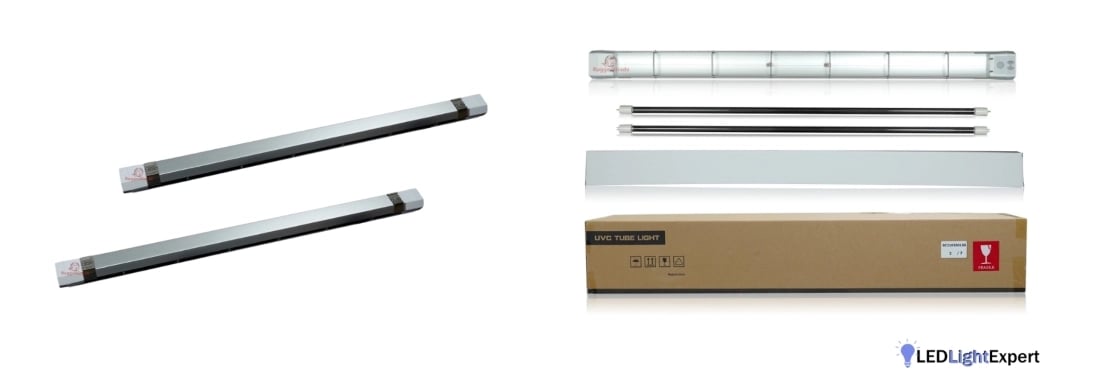
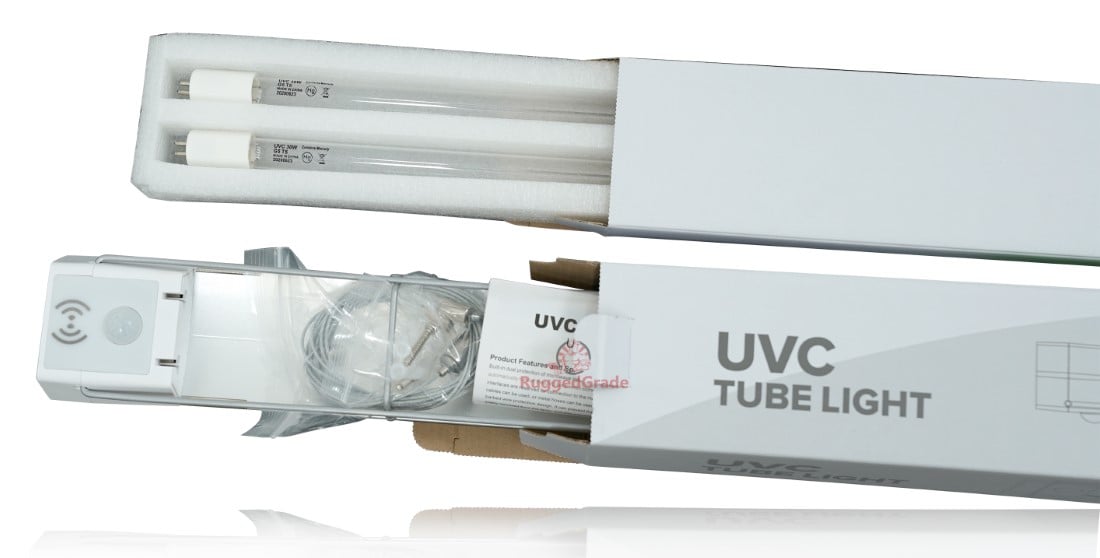
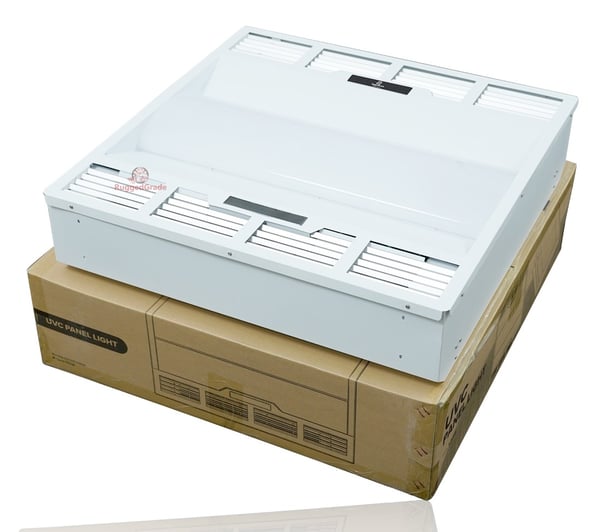
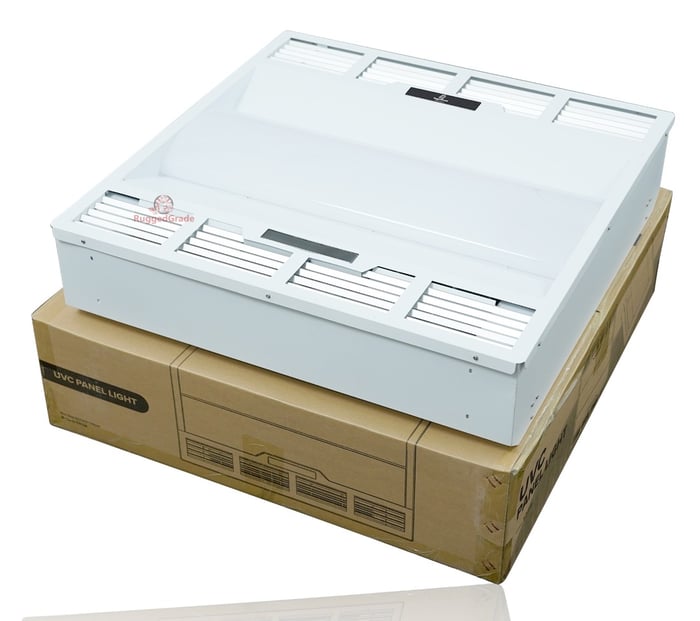
UV-C lighting is available in several fixture formats, but the right choice depends on whether the target is air, water, equipment, or an unoccupied surface area. The fixture also needs the correct dose data, shielding, exposure controls, and maintenance plan.
Mobile UV-C Disinfection Units
Germicidal UV-C light products and systems are available in portable forms as mobile UV-C disinfection units. These units can be moved from room to room to disinfect multiple spaces. These units are usually on wheels or tripods and are easy to operate and transport. They are commonly used in hospitals and other medical facilities, gyms, and other areas that require disinfection. Rather than purchasing multiple germicidal UV-C units, consider a cart that you can transport to the areas in need.
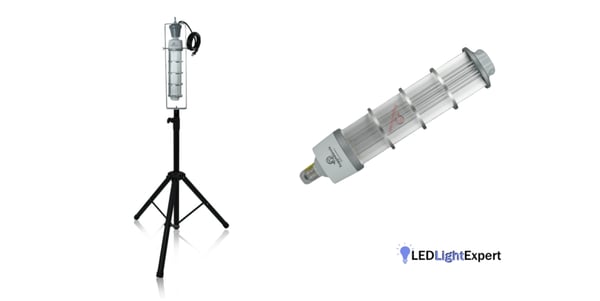
Tripod Design - UV-C Ultraviolet Lamp - Iridium X Series - 80 Watt
UV-C Ceiling and Wall Fixtures
These are permanently installed fixtures. Ceiling-installed UV-C fixtures hang from the ceiling of your facility. They can be effective because you can space them apart appropriately to disinfect your specific space based on size and level of disinfection required. Wall mounted UV-C units can be spaced and installed for appropriate disinfection levels based on the size and contours of your facility.
HVAC Fixtures
HVAC UV-C fixtures are installed in new or existing duct systems to treat air or keep coils cleaner. They can help inactivate airborne microorganisms as air passes the lamps, but performance depends on lamp output, air speed, dwell time, duct geometry, and maintenance.
Safety Considerations for UV-C Lighting
UV-C can be effective when dose and exposure are correct, but it must be used responsibly to avoid harm. Direct exposure to UV-C light can cause skin irritation and eye damage. To ensure safe use:
- Install UV-C lamps in enclosed systems, such as air ducts or water purifiers.
- Use motion sensors or timers to prevent accidental exposure.
- Follow manufacturer guidelines for operating and maintaining UV-C devices.
Additionally, verify that the UV-C product has the electrical safety listing, manufacturer dose data, installation instructions, and exposure controls the application requires. Effectiveness depends on dose, surface access, air movement, lamp maintenance, and safety controls such as shielding, interlocks, timers, warning labels, and occupancy shutoffs.
Tips for Choosing the Right UV-C Lighting
When selecting UV-C lighting for your needs, consider these factors:
- Purpose: Decide whether you need UV-C for air, surface, or water disinfection.
- Wavelength: Ensure the device operates within the germicidal range (200-280 nm).
- Coverage Area: Check the lamp's coverage capacity to match your space size.
- Safety Features: Look for products with built-in safety mechanisms, such as shields or automatic shut-off systems.
- Lifespan: Opt for lamps with longer lifespans to maximize cost-efficiency.
Where Can UV-C Disinfection Lights Be Used?
For air disinfection, UV light applications are used for odor control and microbial reduction. Germicidal UV can reduce airborne microorganisms and some contaminants when the fixture, airflow, lamp output, exposure time, and maintenance schedule are matched correctly. The use of UVC in odor control has many applications including waste water plants, farms, commercial kitchens, and food processing plants. UVC germicidal lamps are also crucial in purifying air in industries where harmful chemicals are produced.
Surface disinfection:
- UVC lamps disinfect surfaces without chemicals which is crucial in many industries. Such areas include:
- Clean rooms
- School labs
- Biotech industry (research labs, biotech labs)
- Medical testing, bioengineering, pharmaceutical processes
- Water Disinfection
UV light applications are used to create safe water in:
- Pools and Spas
- Aquaculture
- Life sciences
- Water Treatment (waste water, municipal and residential, drinking water, industrial and commercial process water and water reclamation)
- Ballast Water in ships
Equipment Disinfection
UV light is a popular disinfection solution for equipment. For instance, in hospitals and labs, it may be used as part of a documented disinfection process for equipment, goggles, glassware, or other instruments. As with other applications, the UV light has the benefit of being effective but also dry and simple, unlike washing and bleach.
Food and Beverage Disinfection
The use of UV light in food and beverage disinfection combines the effectiveness of UV light on surfaces as well as liquids. UV disinfection has been shown to be effective in food manufacturing facilities when used to disinfect things like conveyor belts that are otherwise difficult to clean thoroughly.
Pros and Cons of UV-C Disinfection
Pros
- Dry treatment: UV-C does not leave a liquid cleaning residue on exposed targets. It also does not remove dirt, dust, or biofilm, so cleaning still matters before disinfection.
- Dose-based inactivation: UVC can inactivate microorganisms when enough UV energy reaches the target. Effectiveness depends on distance, exposure time, lamp output, surface condition, and whether the target is shaded.
- Portable options: Some UVC products are mobile, but portable fixtures require especially careful procedures because open lamps can expose eyes and skin.
- Safety depends on controls: UVC can be used responsibly when the fixture is enclosed, shielded, interlocked, timed, or operated only in unoccupied spaces according to the manufacturer's instructions.
Cons
- UV sterilizers work only where the light reaches the target surface or air path. Light blocked by objects can leave untreated areas, so placement, spacing, and exposure time need to be planned carefully. To minimize the problem, more UV bulbs are used in UV sterilizers to cover a wide angle range.
- UV-C exposure can harm eyes and skin, including temporary painful eye injury and skin burns. UV-C devices should not be used on hands or skin unless the device is specifically designed, tested, and cleared for that use.
- Some UV-C lamps generate heat and may not fit small enclosed spaces without manufacturer guidance. Very low-cost products with weak instructions, no safety controls, or unrealistic claims should be treated cautiously.
Innovations in UV-C Technology
Recent advancements are making UV-C lighting even more effective and accessible:
- Far-UV-C (222 nm): A newer area of UV-C technology being studied for occupied spaces. Do not assume a 222 nm product is safe for continuous exposure unless the product, installation, and exposure limits are verified.
- Portable UV-C Devices: Handheld wands and compact lamps may support small-area disinfection, but only when the operator follows the dose, distance, exposure, and safety instructions.
- Controls integration: Some UV-C systems can integrate with timers, lockouts, warning indicators, and building controls so operation is limited to approved conditions.
Conclusion: Use UV-C Only With the Right Controls
UV-C can support a cleaner facility when it is designed for a specific target, installed with the right safety controls, and maintained so the lamp output stays within specification.
The safest buying decision starts with the application: air, surface, HVAC, water, or equipment. Confirm dose, exposure time, fixture placement, shielding, controls, and maintenance before choosing a product.
Frequently Asked Questions
UV-C light is ultraviolet energy in the germicidal range. With the right dose and exposure time, it can damage microorganism DNA or RNA so bacteria, viruses, and fungi can no longer replicate. Results depend on lamp output, distance, line of sight, exposure time, and the target organism.
Direct UV-C exposure can injure eyes and skin. Use enclosed fixtures, upper-air designs, interlocks, timers, occupancy shutoffs, warning labels, and written procedures. Open-room UV-C should generally operate only when the room is unoccupied unless the product and exposure limits are specifically engineered for occupied use.
UV-C fixtures come in several forms: mobile units on wheels or tripods for controlled unoccupied-room use, permanently installed ceiling and wall fixtures, upper-air systems, and HVAC-mounted lamps that help inactivate microorganisms as air moves through the duct or treatment zone.
Peak germicidal effectiveness is often discussed around 265 nm, near the DNA absorption curve, but real-world performance depends on the tested lamp output, dose, exposure time, and target organism. Current LED fixtures commonly use peak wavelengths around 265 nm, 273 nm, or 280 nm. Wavelengths from the 200-280 nm range are sometimes referred to as germicidal UV (GUV).
UV-C lights can be used for air disinfection (waste water plants, commercial kitchens, food processing), surface disinfection (clean rooms, biotech labs, medical testing), water disinfection (pools, aquaculture, municipal water treatment), equipment disinfection (hospital operating-room equipment, laboratory instruments), and food and beverage disinfection (conveyor belts, manufacturing facilities) when the system is engineered and maintained for the target dose.
UV-C by the Numbers: Wavelength, Dose, and Geometry
UV-C is the short-wavelength band of the ultraviolet spectrum, running from 100 to 280 nanometers; the germicidal range is roughly 200 to 280 nanometers. Most conventional germicidal fixtures use a low-pressure mercury lamp, which emits a narrow line at 253.7 nanometers, usually rounded to 254nm in product literature. Newer LED sources are available at other wavelengths within the band, and far-UVC equipment operating near 222nm is a separate and much newer category with its own equipment and its own regulatory position.
The specification that actually matters is dose, not wattage. Dose is irradiance multiplied by exposure time, and it is expressed in millijoules per square centimeter. The same lamp delivers a completely different dose to a surface two feet away than to one eight feet away, and delivers a different dose again to something that passes underneath it in three seconds versus something left there for an hour. Any meaningful comparison between two UV-C systems is a comparison of delivered dose at a stated distance and exposure time, not of lamp watts.
Two physical constraints govern every installation. Irradiance falls with the square of distance, so doubling the gap between the lamp and the target surface cuts irradiance to roughly a quarter. And UV-C does not bend around obstacles: any surface in shadow receives essentially nothing. Line of sight is a hard requirement, which is why in-duct and upper-air configurations are engineered around airflow and room geometry rather than simply mounted where there is space.
Materials matter as well. Ordinary glass blocks UV-C, so fixtures use quartz or specialized UV-transmitting material where transmission is required. Prolonged UV-C exposure also degrades many plastics, elastomers, and pigments, which is worth checking for anything that will sit in the beam permanently.
Specifying UV-C Equipment Safely
UV-C is hazardous to skin and eyes. Direct exposure can cause painful, though usually temporary, injury to the cornea and skin, and the onset is delayed by several hours, so people are routinely overexposed without realizing it at the time. This is the single most important fact about the technology and it drives every decision about how equipment is installed.
That is why the configuration matters more than the fixture. Systems are generally arranged so that people and the UV-C are never in the same space at the same time: enclosed in-duct units inside the air handling system, upper-air units with shielded optics that confine output above head height, and enclosed chambers for objects. Where a system does irradiate an occupied room directly, it is interlocked, so occupancy sensors, door switches, and timed lockouts are part of the specification rather than accessories to it.
Before specifying, confirm the intended geometry and exposure time, the interlock and shielding arrangement, the electrical and mounting requirements, the lamp replacement interval, and any disposal requirement, since mercury lamps have one. Also confirm what regulatory claims the manufacturer makes and what they are based on. Devices making disinfection claims in the United States fall under EPA and, depending on the claim and setting, FDA oversight, and a responsible manufacturer will be specific rather than general about what has been tested and how.
If you have settled the configuration and are ready to compare hardware, the fixtures are here: UV-C light fixtures.
Related Articles
 LED Light Fixtures Guide
Complete guide to LED light fixtures including types, mounting options, and what to look for before purchasing.
Commercial Lighting Guide
Design and specification guide for commercial LED lighting systems and applications.
Hazardous Location Lighting
LED lighting solutions for hazardous and explosive environments with proper certifications.
LED Light Fixtures Guide
Complete guide to LED light fixtures including types, mounting options, and what to look for before purchasing.
Commercial Lighting Guide
Design and specification guide for commercial LED lighting systems and applications.
Hazardous Location Lighting
LED lighting solutions for hazardous and explosive environments with proper certifications.


Need Help With UV-C Disinfection?
Our lighting experts can help you compare UV-C options with the shielding, exposure controls, installation notes, and maintenance requirements your facility needs.
SHOP UV-C LIGHTS


