Landscape Light Transformers

USA Based Experts in less than 60 seconds Call Now: 800-674-9420
On orders over $49.00
Up to 7 Years Free Warranty On LED Lights

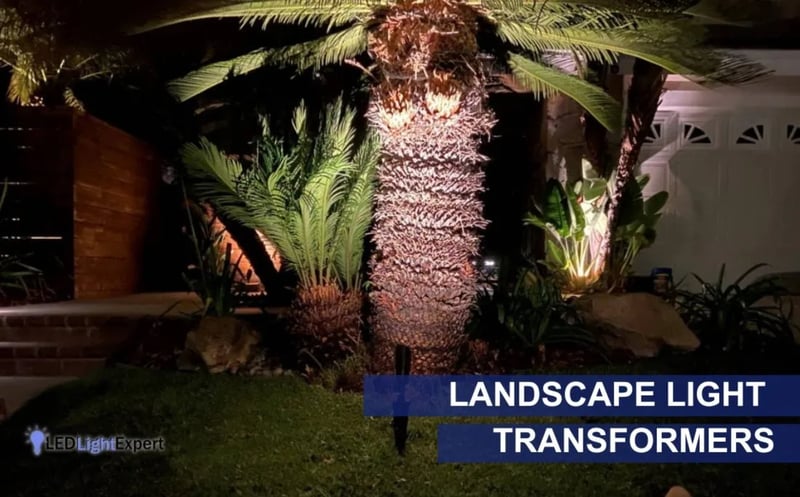
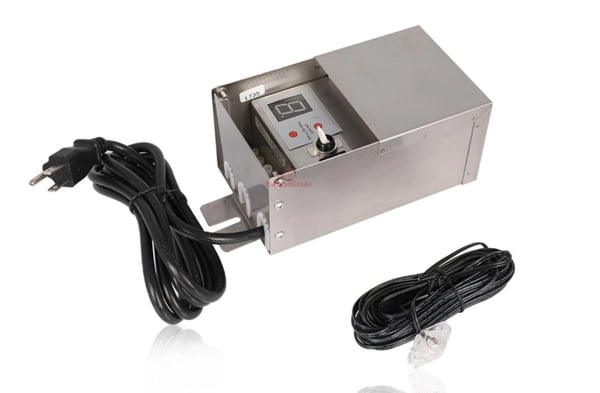
Every low voltage landscape lighting system depends on a transformer to convert standard 120V household current into the 12V or 24V output that LED path lights, spotlights, and accent fixtures require. The transformer is the central component that determines how many fixtures a system can support, how far wire runs can extend, and how reliably the entire installation performs over time. Selecting the right landscape light transformer — with adequate VA capacity, proper voltage taps, and weatherproof construction — is the foundation of a durable, efficient outdoor lighting design.
A landscape light transformer steps down 120V AC line voltage to 12V or 24V low voltage output through an electromagnetic or electronic conversion process. This lower voltage can simplify landscape installation when the transformer, cable, burial depth, connectors, and local electrical requirements are followed. All low voltage landscape lighting systems require a transformer; fixtures cannot be connected directly to household circuits.
Magnetic (toroidal) transformers are the traditional choice for landscape lighting. They handle inductive loads well, tolerate voltage fluctuations, and are compatible with virtually all LED and halogen fixtures. Electronic (solid-state) transformers are lighter and more compact, but compatibility with LED drivers varies by manufacturer. For commercial and large residential systems, magnetic transformers remain the standard due to their reliability and broad fixture compatibility.
The VA (volt-amp) rating of a transformer determines how many fixtures it can power. To calculate the required size, add up the wattage of every fixture on the system and multiply by 1.25 to provide a 25 percent capacity margin. A system with ten 10-watt LED spotlights draws 100 watts total, requiring a minimum 125VA transformer. Always round up to the next available size — a 150VA unit in this case — and consider future expansion. Adding two or three fixtures later is far easier when the transformer already has spare capacity.
For larger installations, transformers rated at 300VA, 600VA, or even 900VA accommodate extensive fixture layouts across multiple zones. Multi-tap transformers with 12V, 13V, 14V, and 15V output terminals allow installers to compensate for voltage drop on longer wire runs by sending slightly higher voltage from the transformer, so fixtures at the end of the run still receive the 12V they need for full brightness.
Voltage drop — the gradual loss of voltage over long wire runs — is the most common performance issue in landscape lighting. A fixture rated for 12V that receives only 10.5V at the end of a 200-foot run will appear noticeably dimmer than fixtures near the transformer. The primary strategies for managing voltage drop are using heavier gauge wire (12 AWG or 10 AWG instead of 16 AWG), keeping individual runs under 100 feet where possible, and using hub or loop wiring configurations that distribute voltage more evenly across fixtures.
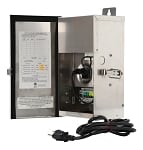
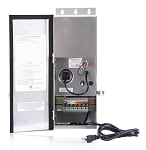
Outdoor transformers must withstand rain, snow, humidity, and temperature extremes throughout the year. Stainless steel housings outperform plastic enclosures in durability, heat dissipation, and corrosion resistance — particularly in coastal or humid climates. Look for units with weatherproof wiring terminals, gasketed access panels, and UL listing for wet locations. Quick-connect terminals speed up installation and provide secure, vibration-resistant connections that hold up over years of thermal cycling.
Many landscape light transformers include built-in astronomical timers or photocell inputs that automate on/off scheduling based on sunset and sunrise times. These controls eliminate the need for manual switching and ensure lights operate only when needed, reducing energy consumption and extending fixture life. Some models also support zone control, allowing different circuits to operate on independent schedules — accent lighting on one timer, pathway lighting on another.
Install the transformer on a dedicated GFCI-protected circuit, mounted at least 12 inches above ground on a wall, post, or stake near the center of the lighting layout. Position it close enough to fixtures to minimize wire run lengths, but away from sprinkler zones and areas subject to standing water. Use gel-filled wire connectors for all low voltage splices to prevent moisture intrusion at connection points — the most common failure point in landscape lighting systems.
Find answers to common questions about landscape light transformers including features, installation, and specifications:
Calculate the total wattage of all fixtures on the run and choose a transformer rated for at least 25% more. For example, if your total fixture wattage is 200W, choose a transformer rated for at least 250VA. This capacity margin accounts for startup load and provides room for future expansion.
Install transformers near a weatherproof GFCI outlet, preferably close to the lighting zone to minimize voltage drop. Mount the transformer at least 12 inches above ground and protect it from direct water exposure. Position it centrally relative to your fixture layout to keep wire runs as short and balanced as possible.
Voltage drop is the reduction in voltage that occurs over long wire runs. Excessive voltage drop causes dim lights at the end of the run. Use heavier gauge wire (12 AWG or 10 AWG), keep runs under 100 feet, and use hub or loop wiring configurations to minimize voltage drop across your system.
Yes, large landscape lighting systems can use multiple transformers to serve different zones. Each transformer should have its own dedicated GFCI circuit and wire runs. This approach provides better voltage management and allows independent timer control for different areas of the landscape.
Choose the right transformer for your landscape lighting system. Contact our specialists for help sizing transformers and planning wire runs.
Contact LED Light ExpertCall Now: (800) 674-9420
Dara Greaney is the CEO and President of LEDLightExpert.com, a leading company in commercial lighting solutions. Since 2015, he has led the company to achieve remarkable growth and recognition, including being an Inc5000 winner three times: No. 3783 in 2022, No. 2428 in 2021, and No. 531 in 2020.
Editing by David Peguero.
On orders over $49.00
Up to 7 Years Free Warranty On LED Lights