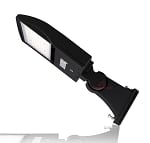
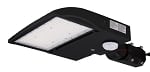
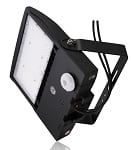
LED Motion Sensor Parking Lot Lights

USA Based Experts in less than 60 seconds Call Now: 800-674-9420
On orders over $49.00
Up to 7 Years Free Warranty On LED Lights

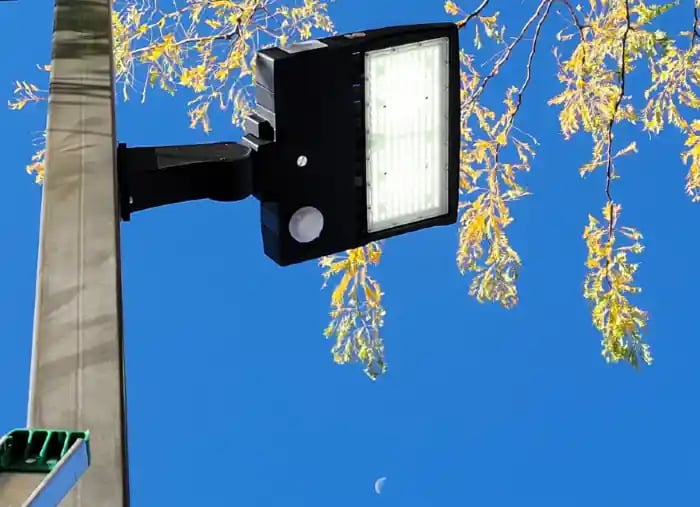
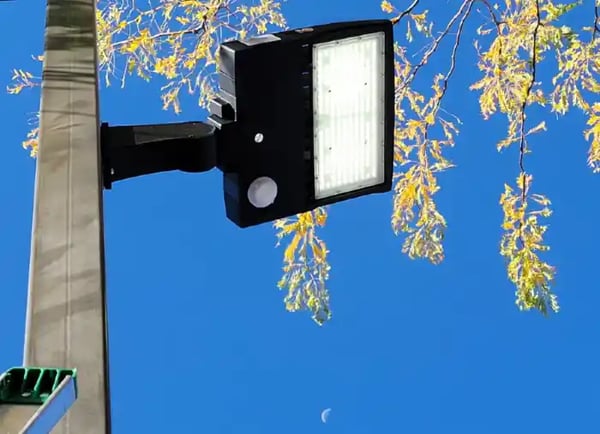
Motion sensor parking lot lights reduce energy use by dimming during low-traffic periods and returning to higher output when vehicles or pedestrians enter the area. They are most useful when the site needs baseline security lighting overnight but does not need full output at all times.
Check detection range, mounting height, sensor direction, standby dim level, hold time, daylight threshold, and whether the control can be adjusted from the ground. Parking lots often need zones so one sensor does not force the entire site to full output.
For retrofits, confirm whether sensors can be added to the existing fixture or whether an integrated motion-sensor model is cleaner. High mounting heights, trees, traffic direction, and poles near property lines all affect sensor performance.
Parking lot sensors should be planned by zone. Entrances, drive aisles, loading areas, pedestrian paths, and remote parking rows do not always need the same trigger behavior. A poorly planned sensor can miss cross-traffic, activate too much of the lot, or leave a camera view darker than expected.
For larger sites, combine motion sensing with photocells, time schedules, or network controls. That lets the property keep required baseline light while reducing output where activity is low.
Coordinate motion dimming with camera requirements. A lot that is comfortable for drivers may still be too dark for video at the standby level. Confirm camera views, pedestrian paths, and vehicle entries before setting the lowest output.
Parking lot lighting has to make a site feel usable at night while controlling energy and light pollution. Useful planning guidance focuses on a real buyer question: how can a parking lot stay visible for visitors without running every pole light at full output all night? LED fixtures with occupancy sensors answer that by using standby brightness during low activity and higher output when people, vehicles, or security events enter the detection zone.
Older high-pressure sodium systems often ran at fixed output and offered little control. Moving to LED can reduce energy use substantially, and adding sensors can increase savings when the lot has long low-traffic periods. The exact savings depend on traffic, fixture wattage, dimming level, hold time, and whether the system dims to a lower level or turns off. Most active parking areas avoid a completely dark standby state unless the security plan and local requirements allow it.
Bi-level controls usually run at full brightness when motion is detected and drop to a lower standby level, often around 30 to 60 percent, after the hold time expires. Tri-level controls add a third state: high, medium, and low or off. That can save more energy, but it must be commissioned carefully so visitors are not walking through dark zones before the sensor sees them. Many parking lot sensors also include dusk-to-dawn behavior so the fixture does not run during daylight or when ambient light is already sufficient.
Sensor layout is as important as fixture wattage. Pole spacing, mounting height, lens pattern, drive aisles, pedestrian paths, entrances, camera locations, and neighboring properties all affect results. Remote programming can help adjust sensitivity, hold time, standby level, and daylight threshold after installation. For security cameras, coordinate the dimming level with camera exposure so footage remains usable during both standby and full-output operation.
Motion sensor parking lot fixtures should be commissioned after dark, not just bench-tested during installation. Walk and drive through the lot to confirm the sensor sees real movement at entrances, pedestrian routes, drive aisles, and parked-car areas. Check that brightness rises quickly enough for users and that the medium or low setting still leaves enough illumination for cameras, patrols, and visitors.
Adaptive brightness can reduce consumption because fixtures operate at a lower setting during quiet hours and then increase output when activity appears. The best setting depends on the lot. A 24-hour business may use medium standby all night. A storage yard may use tri-level control with a lower after-hours level. Dusk-to-dawn detection should prevent daytime operation, and the lux threshold should be adjusted so the system does not fight nearby streetlights or full-moon conditions.
Field checks should confirm motion detection, brightness change, energy use, and user visibility together. Watch the parking lot in the absence of traffic, then walk through the sensor zones and drive through the aisles. The fixture should move from medium brightness to higher illumination upon detecting movement, then step down after the programmed hold period. This adaptive sequence is where the reduced consumption comes from.
For large lots, sensors may need different settings by pole row. Entrances, storefront spaces, and camera areas may need more illumination than back rows. Program the system so it supports visibility while still reducing energy use, maintenance, and light pollution during quiet hours.
They dim to a lower standby level during low activity and return to higher output when motion is detected. Savings depend on traffic patterns, standby level, hold time, and nightly operating hours.
Range depends on mounting height, pole spacing, traffic direction, and whether the sensor needs to detect pedestrians, vehicles, or both. Avoid assuming one sensor will cover the entire lot.
Sometimes. The fixture needs compatible wiring, driver dimming support, and a place to mount the sensor. In other cases, replacing the fixture with an integrated sensor model is cleaner.
Usually not in active parking areas. Many sites use dim-to-standby so there is still baseline visibility for security, cameras, pedestrians, and drivers.
Motion sensor parking lot lights can reduce runtime and energy use when standby level, hold time, sensor range, and traffic patterns are commissioned correctly. Use the products above as a starting point, then confirm warranty, mounting, voltage, optics, detection range, and controls before ordering.
Contact LED Light ExpertCall Now: (800) 674-9420
Dara Greaney is the CEO and President of LEDLightExpert.com, a leading company in commercial lighting solutions. Since 2015, he has led the company to achieve remarkable growth and recognition, including being an Inc5000 winner three times: No. 3783 in 2022, No. 2428 in 2021, and No. 531 in 2020.
Editing by David Peguero.
On orders over $49.00
Up to 7 Years Free Warranty On LED Lights