Stadium Light Poles

USA Based Experts in less than 60 seconds Call Now: 800-674-9420
On orders over $49.00
Up to 7 Years Free Warranty On LED Lights


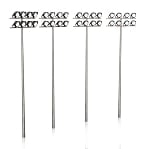
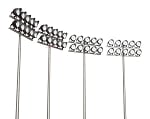
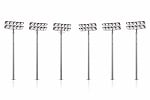
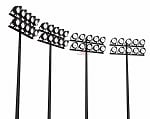
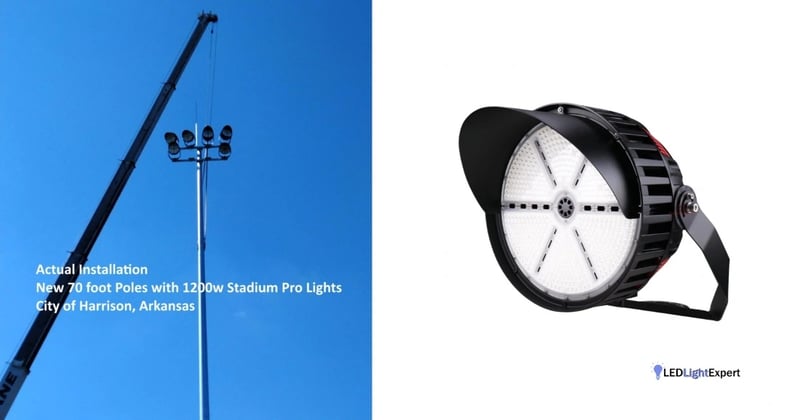
Stadium light poles are purpose-built structural columns engineered to support heavy LED fixture arrays at heights that standard utility or parking lot poles cannot serve. Where a typical parking lot pole stands 20 to 35 feet tall and carries one or two fixtures, a stadium light pole rises 60 to 100 feet and may carry 8 to 16 high-wattage LED sports lights on multi-arm cross-arm assemblies. That difference in scale drives fundamentally different engineering requirements — thicker wall sections, larger base plates, deeper foundations, and wind-load calculations that account for the combined effective projected area of every fixture, arm, and junction box mounted on the pole.
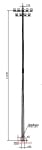
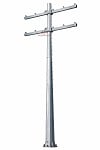
The steel itself is typically A572 Grade 65 or equivalent, formed into round tapered, square, or polygonal sections depending on the aesthetic and structural requirements of the venue. Round tapered poles are the most common for community sports fields because they offer good wind performance at lower cost. Square and polygonal sections provide greater bending resistance for very tall installations or heavy fixture loads, making them the standard for collegiate and professional venues. Many stadium poles are hot-dip galvanized after fabrication, often to ASTM A123 or a project-specific standard. Corrosion life depends on coating specification, environment, maintenance, and whether the site is coastal or exposed to corrosive conditions.
Pole height is not an arbitrary decision — it directly determines the beam spread, glare angle, and uniformity of light on the playing surface. A 500W LED fixture mounted at 40 feet produces a tighter, more intense hot spot on the field than the same fixture at 70 feet, which spreads its beam over a larger area with better uniformity. The Illuminating Engineering Society (IES RP-6) recommends specific mounting heights by sport: 60 to 80 feet for football and soccer, 70 to 100 feet for baseball outfield lighting, and 25 to 40 feet for tennis and recreational courts. These recommendations balance glare control, uniformity ratios, and the practical economics of pole installation and maintenance access.


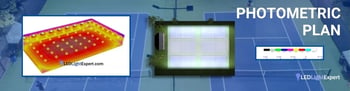
The selection process starts with a photometric study, not a catalog. The study models your specific field dimensions, target foot-candle levels, pole positions, and fixture aiming angles to determine the optimal pole height, quantity, and fixture count per pole. Without this step, you risk either over-building (wasting budget on unnecessary poles) or under-building (failing to meet minimum illumination standards for your sport and competition level).
Every stadium pole project requires a geotechnical soil report before foundation design can begin. The foundation — typically a reinforced concrete pier with a pre-set anchor bolt cage — must resist the overturning moment generated by wind acting on the pole and all its mounted fixtures. A 70-foot pole in a 120 mph wind zone may require a pier 5 feet in diameter and 14 feet deep, with 8 to 12 anchor bolts set in a precise bolt circle pattern. Soil bearing capacity, water table depth, and frost line all influence the final foundation design. In areas with poor soil conditions (soft clay, loose sand, high water table), the engineer may specify drilled shafts or helical piles instead of conventional piers.
Wind load is the dominant structural concern for stadium light poles. The ASCE 7 standard (Minimum Design Loads for Buildings and Other Structures) provides the baseline wind speed maps and exposure categories used to calculate design loads. Each fixture added to a pole increases the total effective projected area (EPA), which directly increases the bending moment at the base. A pole rated for 8 fixtures at 120 mph may not be adequate if you need to mount 12 fixtures — the structural calculations must be re-run for every change in fixture count, cross-arm configuration, or accessory mounting. Our LED sport and stadium lights are designed with published EPA values to simplify this calculation process.
Stadium light pole height depends on the sport and field size. Football and soccer fields typically use 60 to 80 foot poles, baseball outfield lighting requires 70 to 100 foot poles, and smaller venues like tennis courts or basketball courts use 25 to 40 foot poles. Higher poles reduce glare for players, increase light spread, and improve uniformity — but they also require deeper foundations and heavier-gauge steel to meet wind-load requirements. A photometric study determines the optimal height for your specific field layout and target illumination levels.
A typical rectangular field (football or soccer) uses 4 to 6 poles, while a baseball or softball diamond uses 6 to 8 poles positioned around the infield and outfield perimeter. Multi-sport complexes with adjacent fields may share poles placed along common boundaries to reduce total pole count. The number of poles is determined during the photometric design phase and depends on the field dimensions, target foot-candle levels, mounting height, and the number of fixtures per pole.
Stadium light poles must be engineered to withstand the wind speeds specified by local building codes, which are based on the ASCE 7 standard. Most regions in the continental U.S. require poles rated for 90 to 120 mph sustained wind speeds. Coastal and hurricane-prone areas — Florida, the Gulf Coast, the Carolinas — may require ratings of 150 mph or higher. The pole's effective projected area (EPA) increases with each fixture mounted on the cross-arm, so the structural engineer must account for the total wind load of the pole, cross-arms, and all mounted fixtures combined.
Stadium light poles require reinforced concrete pier foundations sized to the pole height, wind-load rating, and soil conditions at the site. A 70-foot pole typically requires a foundation 4 to 6 feet in diameter and 10 to 15 feet deep, reinforced with a steel anchor bolt cage cast into the concrete. Soil testing (geotechnical report) is required before foundation design — soft clay, sandy soil, and high water tables all affect the depth and diameter needed. The foundation must be poured and cured (typically 28 days for full strength) before the pole can be erected.
Many stadium light poles are specified with hot-dip galvanizing, often to ASTM A123 or a similar project requirement. The expected corrosion life depends on coating thickness, environment, maintenance, and exposure to salt or chemicals. Coastal projects may specify galvanized-and-painted poles or other upgraded finishes for added protection and color matching.
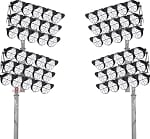
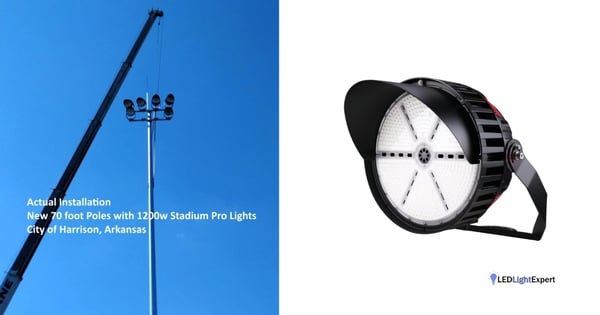
The number of fixtures per pole depends on the pole's structural rating and the weight and wind-load (EPA) of each fixture. A standard 70-foot round tapered steel pole can typically support 6 to 12 fixtures on a cross-arm assembly. Larger square or polygonal poles used in major venues can support 16 or more fixtures. Each fixture adds both dead weight (typically 30 to 80 pounds per fixture) and wind-load area, so the structural calculation must account for the total combined load of all fixtures, cross-arms, junction boxes, and wiring.
The pole is the structural foundation of every sports lighting system. Correct pole selection protects fixture performance, wind-load safety, and long-term serviceability. Our team provides complete support from photometric design through pole specification, helping you match the right pole height, structural rating, and foundation design to your field layout and fixture plan. Call us at (800) 674-9420 or contact us online for a free consultation.
Call Now: (800) 674-9420


Dara Greaney is the CEO and President of LEDLightExpert.com, a leading company in commercial lighting solutions. Since 2015, he has led the company to achieve remarkable growth and recognition, including being an Inc5000 winner three times: No. 3783 in 2022, No. 2428 in 2021, and No. 531 in 2020.
Editing by David Peguero.
On orders over $49.00
Up to 7 Years Free Warranty On LED Lights