LED Drivers

USA Based Experts in less than 60 seconds Call Now: 800-674-9420
On orders over $49.00
Up to 7 Years Free Warranty On LED Lights

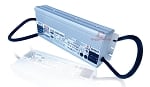
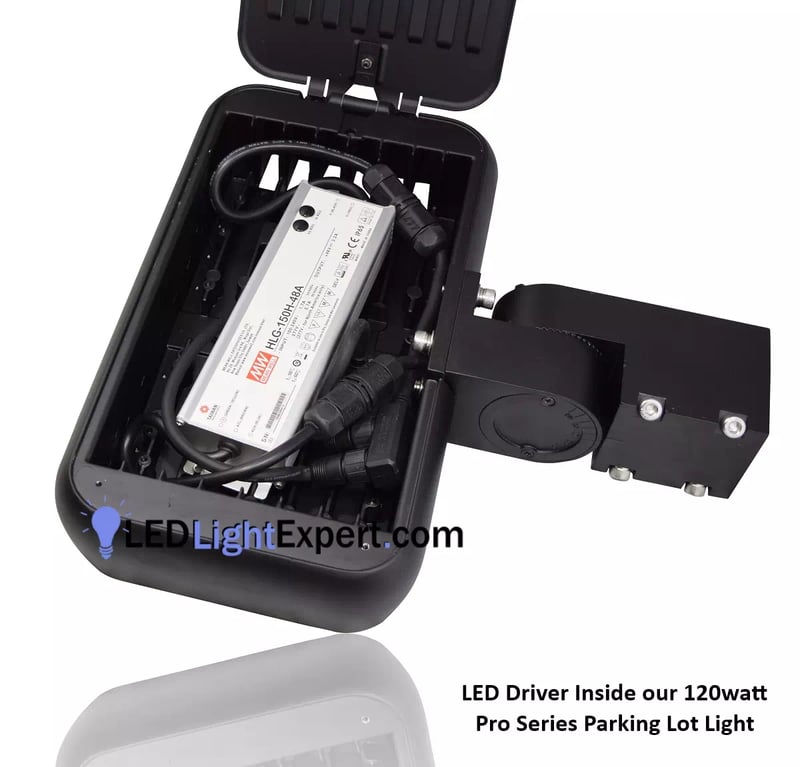
An LED driver converts incoming line voltage into the controlled power an LED board needs. The driver protects the LEDs from current spikes, keeps output stable, and determines whether the fixture can dim, accept controls, or operate in wet and hot locations. Replacing a driver is not the same as replacing a bulb; the electrical ratings must match the fixture and the work should be handled by a qualified person.
Start with the label on the failed driver or fixture. Confirm input voltage, output current, output voltage range, maximum wattage, dimming type, case size, wire leads, and environmental rating. Constant-current drivers are common in integrated LED fixtures. Constant-voltage drivers are common in strip lighting and some low-voltage systems. The forward voltage, or Vf, is the voltage the LED array needs at its operating current; the replacement driver must support that range.
Good LED drivers support steady light output, protect the LED array, and help the fixture meet its rated life. Look for thermal protection, surge protection, power factor correction, appropriate total harmonic distortion ratings, and an enclosure rating that matches the installation. Outdoor fixtures and washdown areas need weather-resistant or sealed drivers. High-bay, parking lot, and sports fixtures may also require higher surge protection because long wire runs and exposed poles can see electrical transients.
If the old driver failed early, check more than the part number. Heat, water intrusion, wrong dimmer type, unstable voltage, and overloaded circuits can all damage drivers. Replacing the driver without correcting the cause may lead to another failure.
An LED driver regulates power between the building supply and the LED load. In many fixtures, it converts 50 or 60 Hz AC line power at 120V, 220V, 240V, 277V, or 480V into stable DC output for the LED board. That matters because LEDs do not behave like simple resistive loads. Forward voltage changes with temperature, and if current is not controlled, the LED can draw more current as it heats. That cycle can lead to overheating and early failure, often described as thermal runaway.
The original guide separated LED drivers into constant voltage and constant current products. Constant voltage drivers supply a fixed voltage, commonly 12V DC or 24V DC. They are used with LED products that are designed to regulate current elsewhere in the system, such as many strips, sign modules, backlighting systems, landscape lights, and display products. Constant current drivers regulate output current, measured in milliamps or amps, across a defined voltage range. They are common in lamps, high bays, street lights, flood lights, and many integrated fixtures.
LED board configuration affects driver selection. Parallel LED strings receive the same voltage, while current is managed by the product design. Series strings pass current through one LED to the next and require enough output voltage to operate the full string. Replacing a driver without checking series or parallel design, output current, output voltage range, wattage, dimming method, and connector layout can damage the light or leave it underpowered.
AC and DC also matter. Alternating current changes direction periodically and is the normal building power source. Direct current flows in one direction and is what the LED load typically needs after conversion. When replacing a driver, confirm input voltage, maximum wattage headroom, output voltage, output current, constant current or constant voltage type, physical size, mounting holes, enclosure rating, operating temperature, and dimming protocol such as 0-10V, CCR, or PWM. A qualified electrician should verify the wiring before the fixture goes back into service.
When a driver fails, replacement is not just matching the box size. Match input voltage, output voltage range, output current, maximum wattage, constant current or constant voltage type, and dimming method. Constant-current reduction and pulse-width modulation are common dimming approaches. If the LED board needs fixed current, a constant voltage driver can overdrive or underdrive the load. If the product needs 12V or 24V DC, the wrong constant-current driver will not be a safe substitute.
LED configurations also matter. In a parallel configuration, LED strings sit side by side and receive the same voltage. In a series configuration, current flows through one LED after another, so the driver needs enough output voltage to support the complete string. The driver is the power regulator that keeps current stable as forward voltage changes with temperature.
An LED driver is the power supply that regulates current or voltage for an LED fixture. It converts incoming line voltage into the controlled output the LED board needs for stable, safe operation.
Match input voltage, output current, output voltage range, wattage, dimming type, case size, wiring, and environmental rating. When possible, use the fixture label and the original driver label to confirm compatibility.
Constant-current drivers regulate amperage and are common in integrated LED fixtures. Constant-voltage drivers regulate voltage, such as 12V or 24V, and are common in LED strip lighting and some low-voltage systems.
LED driver replacement involves line voltage and fixture wiring. A qualified electrician or lighting technician should handle the work, confirm the replacement rating, and check for heat, water, dimming, or voltage issues that caused the failure.
Match the right LED driver to your fixture by input voltage, output current, voltage range, wattage, dimming type, case size, wiring, and environmental rating.
Contact LED Light ExpertCall Now: (800) 674-9420
Dara Greaney is the CEO and President of LEDLightExpert.com, a leading company in commercial lighting solutions. Since 2015, he has led the company to achieve remarkable growth and recognition, including being an Inc5000 winner three times: No. 3783 in 2022, No. 2428 in 2021, and No. 531 in 2020.
Editing by David Peguero.
On orders over $49.00
Up to 7 Years Free Warranty On LED Lights