LED Commercial Indoor Lighting

USA Based Experts in less than 60 seconds Call Now: 800-674-9420
On orders over $49.00
Up to 7 Years Free Warranty On LED Lights

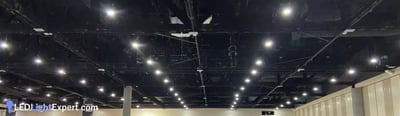
Indoor lighting covers many fixture types, but the first decision is the space. Offices, retail areas, warehouses, classrooms, kitchens, corridors, lobbies, and healthcare spaces all need different light levels, fixture styles, color temperatures, and control strategies.
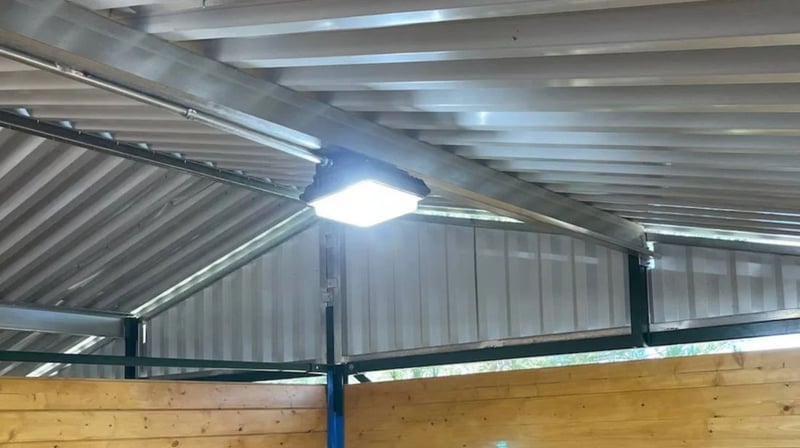
For drop ceilings, LED panels and troffers are common. For high ceilings, UFO or linear high bays may be better. For finished ceilings, recessed lights, disc lights, pendants, or surface fixtures may fit the space. Retrofit tubes can work when existing fluorescent fixtures are in good condition and the wiring method is clear.
4000K is a common neutral-white choice for offices and retail. 5000K is often used in warehouses and task-heavy industrial spaces. Warmer 3000K to 3500K light can fit hospitality, waiting areas, and residential-style spaces. CRI, glare, lens type, and fixture spacing matter as much as CCT.
Controls should match how the room is used. Occupancy sensors, daylight harvesting, dimming, and zone switching can reduce energy use and make the space more comfortable when they are commissioned correctly.

Confirm ceiling type, mounting method, voltage, fixture size, lumen output, color temperature, CRI, dimming protocol, emergency-lighting needs, and maintenance access. For large rooms, a photometric plan can prevent over-lighting, dark areas, and uncomfortable glare.
Indoor lights include lamps, panels, troffers, recessed cans, pendants, wraps, strip fixtures, track lights, high bays, tubes, and decorative fixtures. A living room, office, warehouse aisle, retail display, corridor, and commercial kitchen should not be planned with the same fixture or color temperature. The room use, ceiling height, wall color, furniture, and task level all affect how the light feels.
Installation difficulty varies widely. Pendant and surface fixtures can be straightforward when wiring is already in place. Recessed and canless fixtures may require ceiling access, fire or insulation checks, dimmer compatibility, and careful spacing. Smart and app-controlled lighting can be useful, but the owner should confirm wireless range, hub requirements, commissioning steps, and long-term support.
Indoor lighting design compares illuminance, lumens, square footage, color rendering, color temperature, brightness, beam spread, fixture appearance, and visual comfort. Ambient lighting fills the room, task lighting supports work, and accent lighting draws attention to objects, displays, art, counters, or architectural features. A space can need all three layers.
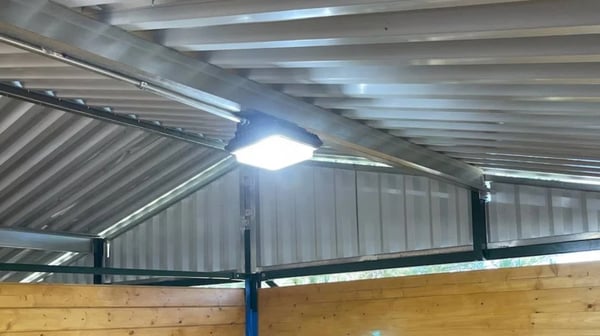
Different indoor spaces need different settings. A living room may use warm ambient light. A kitchen or work area may need brighter task light. Offices often need uniform light with low glare. Retail spaces may use accent light to show products. Warehouses and industrial spaces may need high bay fixtures, motion controls, and clear sight lines. The purpose of the room should guide fixture selection.
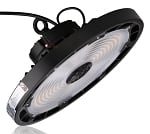
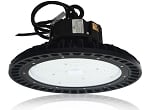
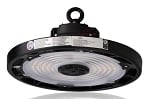
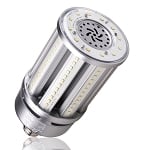
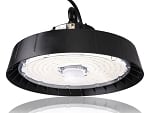
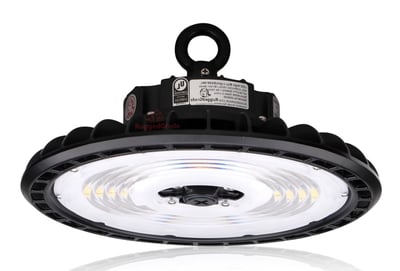
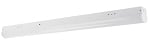
Our commercial indoor LED lighting selection includes troffers, panel lights, recessed can lights, high bay lights (UFO and linear), pendant lights, wraparound lights, vapor tight lights, strip lights, and retrofit kits. Each fixture type is designed for specific ceiling types, mounting heights, and application requirements.
For offices and retail, 4000K (neutral white) provides a clean, productive atmosphere. For warehouses and industrial spaces, 5000K (daylight) maximizes visibility. For hospitality and healthcare, 3000K-3500K (warm white) creates a comfortable environment. Many of our indoor fixtures offer tunable color temperature for maximum flexibility.
The number of fixtures depends on room size, ceiling height, fixture type, and target foot-candle levels. Offices typically need 30-50 foot-candles, retail 50-75 fc, and warehouses 20-50 fc. Our lighting team provides Photometric plans that calculate exact fixture count and placement for your space.
Most of our commercial indoor LED lights support 0-10V dimming, which is the standard dimming protocol for commercial buildings. Some fixtures also support DALI dimming for more advanced control. Dimmable fixtures allow you to adjust light levels for different tasks, save energy during low-occupancy hours, and comply with energy codes that require dimming capability.
Share room dimensions, ceiling height, task type, fixture preference, voltage, and control needs so the lighting can be matched to the space.
Call Now: (800) 674-9420
Dara Greaney is the CEO and President of LEDLightExpert.com, a leading company in commercial lighting solutions. Since 2015, he has led the company to achieve remarkable growth and recognition, including being an Inc5000 winner three times: No. 3783 in 2022, No. 2428 in 2021, and No. 531 in 2020.
Editing by David Peguero.
On orders over $49.00
Up to 7 Years Free Warranty On LED Lights