LED Ceiling Lights

USA Based Experts in less than 60 seconds Call Now: 800-674-9420
On orders over $49.00
Up to 7 Years Free Warranty On LED Lights


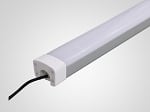
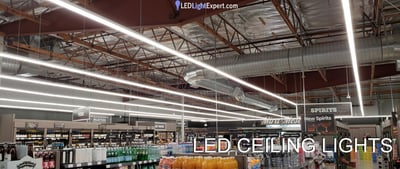
LED ceiling lights include panels, troffers, recessed downlights, flush mounts, canopy lights, and surface-mounted fixtures. They are used in offices, schools, healthcare spaces, retail stores, warehouses, homes, corridors, and other indoor areas where reliable overhead light is needed.
Choose ceiling lights by ceiling type, ceiling height, room use, target foot-candles, fixture size, color temperature, CRI, dimming compatibility, and maintenance access. A drop ceiling, drywall ceiling, concrete ceiling, and high-bay ceiling do not use the same fixture or mounting method.
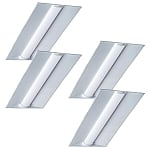
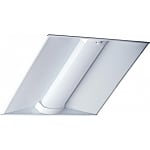
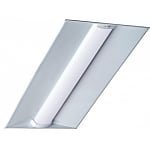
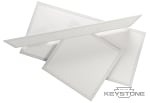
Panels and troffers are common in offices, schools, clinics, and retail spaces with suspended ceiling grids. They provide broad, even light and often replace fluorescent fixtures.
Downlights are used for task, accent, and general lighting where a focused beam or clean ceiling appearance is needed. Recessed fixtures require cavity space, while surface fixtures work when the ceiling is shallow or solid.
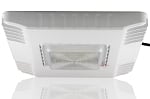
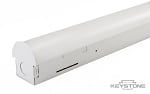
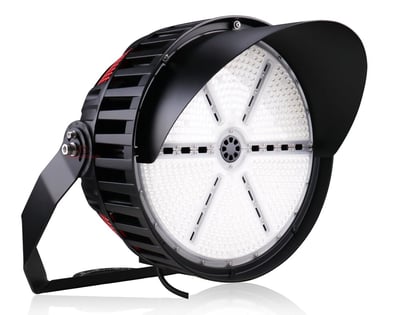
Canopy lights and some high-output ceiling fixtures are used in garages, covered entries, warehouses, and utility areas where durability, output, and mounting conditions matter more than decorative appearance.

Warm 2700K to 3000K light suits homes, hospitality spaces, churches, and relaxed interiors. Neutral 3500K to 4000K is common for offices, schools, healthcare, and general commercial use. 5000K is usually reserved for areas that need a sharper task-light appearance.
Dimming, occupancy sensors, and daylight controls can reduce energy use and improve flexibility, but the fixture driver and control system must be compatible. For color-sensitive spaces, compare CRI as well as wattage and lumens.
LED ceiling lights are used in home rooms, kitchens, living rooms, offices, schools, healthcare spaces, retail stores, and industrial support areas. The same category can include simple flush mounts, stylish residential fixtures, pendant-mounted options, panels, troffers, downlights, and brighter commercial ceiling fixtures.
Modern LED technology can lower energy costs compared with many traditional ceiling lights while improving brightness control and reducing lamp changes. Long operating life is especially valuable in rooms with high ceilings or fixtures that are difficult to access.
The right design should fit the room. A kitchen may need bright task light over counters, a living room may need warmer dimmable light, an office may need even neutral light, and a warehouse support room may need a tougher fixture with higher output.
Brightness should match the room instead of overwhelming it. Modern LED ceiling lights are available in many designs, including flush mounts for home rooms, pendant fixtures for architectural spaces, panels for commercial ceilings, and high-output options for industrial rooms. The fixture should make the room useful without glare or uneven spots.
Energy-efficient ceiling fixtures can lower costs compared with traditional lights, and long operating hours reduce the number of replacements over time. That matters in kitchens, living rooms, offices, schools, and commercial spaces where lights run daily.
Some rooms need adjustable brightness or dimming for mood and flexibility. Other rooms need simple, durable fixtures that last. In both cases, choose output, mounting, color temperature, and controls together.
LED ceiling lights include panels, troffers, recessed downlights, flush mounts, canopy lights, and surface-mounted fixtures. Choose by ceiling type, ceiling height, room use, target light level, fixture size, and control needs.
Start with the space, not the wattage. Ceiling height, room size, task type, fixture spacing, and target foot-candles determine the needed output. Lumens and distribution are more useful than watts when comparing LED fixtures.
Warm 2700K to 3000K light suits homes, hospitality, and relaxed interiors. Neutral 3500K to 4000K is common in offices, schools, and general commercial spaces. 5000K is used where sharper task visibility is needed.
Many LED ceiling lights are dimmable, but the driver and dimmer must be compatible. Commercial fixtures often use 0-10V dimming, while residential fixtures may use forward-phase, reverse-phase, or smart controls.
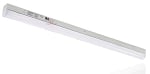
Both are common in drop ceilings. Troffers are recessed fixtures designed for grid ceilings and often replace fluorescent fixtures. Panels are thinner, low-profile fixtures that can be recessed, surface-mounted, or suspended depending on the kit.
80 CRI is common for general commercial use. Offices, healthcare, retail, studios, and spaces where color accuracy matters may benefit from 90+ CRI fixtures.
Use the products above as a starting point, then confirm ceiling type, output, color temperature, CRI, and controls.
Contact LED Light Expert for help confirming the right fixture, layout, and controls before ordering.
Contact UsCall Now: (800) 674-9420


Dara Greaney is the CEO and President of LEDLightExpert.com, a leading company in commercial lighting solutions. Since 2015, he has led the company to achieve remarkable growth and recognition, including being an Inc5000 winner three times: No. 3783 in 2022, No. 2428 in 2021, and No. 531 in 2020.
Editing by David Peguero.
On orders over $49.00
Up to 7 Years Free Warranty On LED Lights