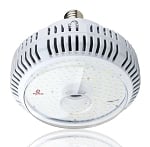
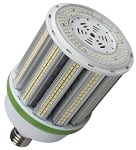
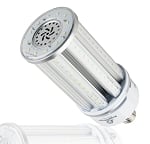
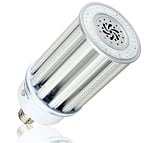
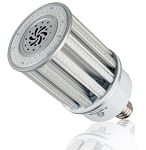
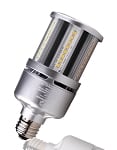
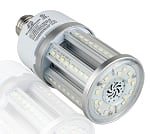
4000k Corn Light Bulbs

USA Based Experts in less than 60 seconds Call Now: 800-674-9420
On orders over $49.00
Up to 7 Years Free Warranty On LED Lights


LED lights have become common in the last decade. They come in a variety of colors, shapes, and watts with 4000K led bulb a popular choice. LED bulbs often use less energy than older lamps and can reduce maintenance when the fixture, driver, and heat conditions are correct. That is why many projects compare LED replacements for older lamps. When shopping for LED bulbs, you will come across plenty of different color options, like "warm white," or "soft white," "neutral white," and "daylight." What does it all mean? LED bulbs have a color temperature rating from warm white to cool white light, anywhere from 2700K to 6500K. Color temperature is easier to compare when the application is clear.
What are LED corn bulbs?
Corn cob lights are the energy-efficient replacement to high-intensity discharge (HID) lights and other lamps. They are commonly used to illuminate larger spaces when the socket, voltage, and fixture size are compatible. The lights resemble corn on the cob, hence the name. HID and other lamps require a lot of energy. LED corn bulbs can provide similar maintained light output with lower energy use in the right fixture. Choose a Kelvin from 3000K to 5700K light bulbs as well as E26 or E39 Light Bulbs.

You've probably come across corn lights in the past and didn't realize it. Many facilities compare LED corn lights when they want to reduce energy use or replace older HID lamps. They can be used inside or outside, but usually, you'll notice them outside.
4000K LED lights are unique in the sense that they fall in between "warm white" (2700K/3000K) and "daylight white" (5000K/6500K). These lights are most definitely on the cooler side and give off a whiter color than 2700K and 3000K. 4000K bulbs are often referred to as "natural white" or "cool white."
Have you ever wondered what the 'K' stands for? Kelvin describes the color appearance of a light source, not its brightness. Higher Kelvin values look cooler or bluer; brightness is measured in lumens. A 3000K bulb appears warmer and more amber than a 4000K bulb.
4000K is commonly used in offices, commercial interiors, waiting rooms, and retail stores because it sits between warm residential light and cooler task light. Where does 4000K land on the color spectrum when compared to other typical color temperatures in commercial lighting?
Most common uses: Living room, dining room, bedroom, and anywhere you want to have a more calm, quiet, and peaceful atmosphere.
Most common uses: Homes and restaurants where warm lighting adds a level of comfort.
Most common uses: Parking Lots, sports lighting, warehouse, and industrial lighting. If you're using a 5000K LED bulb in your home, it's useful for bathrooms, basement, study, and in the workspace in the kitchen.
Color temperature is partly preference, but it should also match the work being done, the surrounding finishes, the fixture type, and any site requirements. When it comes to choosing the right light for you, think about the atmosphere you wish to create by adding the LED light to the room. Are you designing a retail office space, a big pole light setup, or are you looking to improve the lighting at home? Do you want a bright light to help keep you awake and sharp during the day, or do you want a light that helps you wind down after a long day?
4000K can help give a store or an office a lively, bright, and clean look. These lights won't come off too sterile or blue looking, like a hospital or a doctor's office. 4000K bulbs are not too warm and yellow looking either, making them especially popular in office settings. A good layout can support a clean, neutral workspace when brightness, glare, and fixture spacing are controlled.
In homes, often, 4000K LED lamps are used in areas where additional color clarity is required. Many people use 4000K bulbs in their bathroom or vanity areas. Also, any food prep areas. Use 4000K lights in the kitchen to ensure you can see any food you may be cutting, dicing, frying, or baking. Be mindful that 4000K lights do give off more of a brighter color. If you're looking for a good reading lamp at night, or a new light to put in the TV room, 4000K may seem too bright.
While choosing LED bulbs is easier when color temperature, wattage, base type, and fixture fit are compared together, use this guide to help you decide which LED light will best suit you. If you're new to LED color temperature, 4000K is a balanced starting point, since it falls right in the middle of the spectrum. 4000K lights can be used indoors or outdoors to help brighten, liven, and illuminate any space. The practical advantage is choice: base type, wattage, CCT, beam pattern, and fixture rating can be matched to the application instead of forcing one bulb into every use.
4000K sits between warm 3000K and crisp 5000K. It is often used in offices, retail stores, waiting rooms, garages, and commercial interiors where a neutral white appearance is wanted. For corn bulbs, color temperature should be checked alongside wattage, base type, fixture space, ballast bypass, and enclosed-fixture rating.
Use 4000K when the space needs clear visibility without the cooler appearance of 5000K. Use warmer light when comfort or hospitality matters more, and use 5000K when maximum perceived brightness is the priority.
4000K refers to a neutral white light on the Kelvin scale. It falls between warm white (3000K) and daylight white (5000K), offering a natural appearance suitable for offices and commercial spaces.
4000K corn bulbs are well suited for retail stores, offices, commercial applications, waiting rooms, and workspaces. They provide clear visibility without the warmth of 3000K or the intensity of 5000K.
3000K is warm white (cozy/home), 4000K is neutral white (clear/offices), and 5000K is daylight white (bright/industrial). Choose based on desired atmosphere and application.
4000K LED corn bulbs are available in various wattages, typically from 40W to 150W, with corresponding lumen outputs. Higher wattages are used for larger areas and higher installations.
4000K LED corn bulbs often use less energy than comparable metal halide or high-pressure sodium lamps. Actual savings and service life depend on wattage, runtime, heat, driver quality, and fixture condition.
4000K LED corn bulbs are a practical option for commercial and industrial applications requiring neutral white light. They can deliver neutral-white light with lower energy use when matched to the fixture and application.
Contact us for expert guidance on selecting the right 4000K corn bulbs for your facility.
Contact UsCall Now: (800) 674-9420


Dara Greaney is the CEO and President of LEDLightExpert.com, a leading company in commercial lighting solutions. Since 2015, he has led the company to achieve remarkable growth and recognition, including being an Inc5000 winner three times: No. 3783 in 2022, No. 2428 in 2021, and No. 531 in 2020.
Editing by David Peguero.
On orders over $49.00
Up to 7 Years Free Warranty On LED Lights