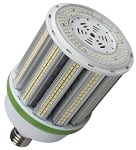
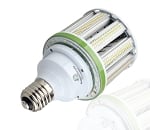
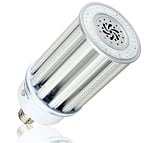
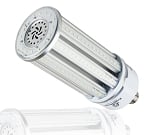
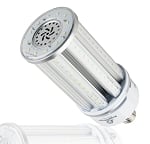
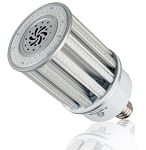
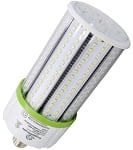
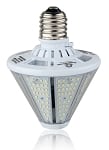
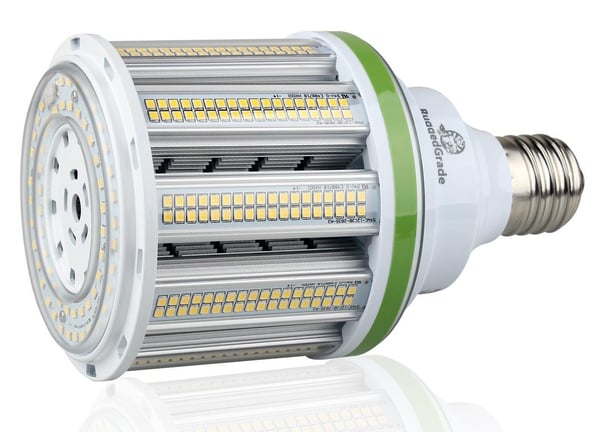
3000k Corn Light Bulbs

USA Based Experts in less than 60 seconds Call Now: 800-674-9420
On orders over $49.00
Up to 7 Years Free Warranty On LED Lights


The most common reason to buy a 3000K LED corn bulb is to replace an aging metal halide (MH), high-pressure sodium (HPS), or mercury vapor lamp. The table below shows the common starting comparison for each HID wattage. LED wattage, approximate lumen output, and the estimated wattage reduction.
| HID Lamp | LED Replacement | LED Lumens (approx) | Wattage Note | Base Type |
|---|---|---|---|---|
| 100W MH / HPS | 27W LED | 3,500–4,000 | Lower wattage example | E26 or E39 |
| 150W MH / HPS | 36W LED | 4,500–5,000 | Lower wattage example | E26 or E39 |
| 175W MH | 54W LED | 7,000–7,500 | Lower wattage example | E39 |
| 250W MH / HPS | 80W LED | 10,000–11,000 | Lower wattage example | E39 |
| 400W MH / HPS | 120W LED | 15,000–16,000 | Lower wattage example | E39 |
| 1000W MH | 150W LED | 20,000–21,000 | Lower wattage example | E39 |
Note: LED lumen output at 3000K is typically 5–8% lower than the same wattage at 5000K because warmer phosphors convert slightly less energy into visible light. The difference is small in practice, and the warm tone is preferred in settings where light quality and ambiance are priorities.
Matching the right corn bulb wattage to the application prevents both under-lighting and wasted energy. Use these guidelines based on fixture type and mounting height.
27W–36W (3,500–5,000 lumens): Residential and small commercial fixtures. post top lights, decorative bollards, porch fixtures, small wall packs. These replace 100W–150W HID lamps and work well at mounting heights of 8–12 feet. The E26 base fits standard medium-base sockets found in most residential and light-commercial fixtures.
54W–80W (7,000–11,000 lumens): Mid-range commercial. wall packs, parking lot post tops, church interiors, restaurant kitchens, retail backrooms. These replace 175W–250W MH/HPS and require E39 mogul base sockets. Mounting heights of 12–20 feet are typical.
120W–150W (15,000–21,000 lumens): Large commercial. parking lot shoeboxes, warehouse high bays, large retail, industrial corridors. These replace 400W–1000W HID lamps. At these wattages, heat management matters: choose corn bulbs with active cooling fans or large heat sinks, and confirm the fixture enclosure allows adequate airflow.
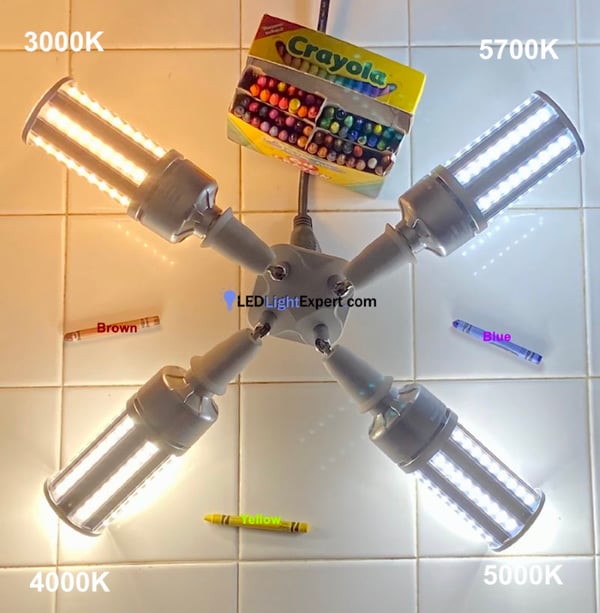
Color temperature is measured in Kelvin (K) and determines the visual tone of the light. Lower Kelvin values produce warmer, more yellow-toned light. higher values produce cooler, bluer light. Here is how the three most common options compare.
3000K (warm white): Closest to incandescent. Produces a yellowish-white tone that feels inviting and relaxed. Best for restaurants, hotels, residential streetscapes, retail storefronts, churches, and outdoor patios. Many dark-sky and health-focused lighting discussions favor warmer outdoor color temperatures such as 3000K or lower for outdoor nighttime use because it produces less blue light. Higher-blue light can increase glare and may be more disruptive in some nighttime environments.
4000K (neutral white): Clean, balanced tone without strong yellow or blue bias. Preferred for offices, schools, healthcare, and general commercial interiors where task visibility and comfort are both important.
5000K (daylight white): Bright, crisp light that maximizes visual acuity. Standard for warehouses, parking lots, industrial facilities, and security lighting where visibility is the primary goal and ambiance is not a concern.


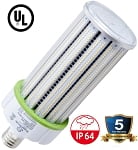
LED corn bulbs use either an E26 (medium) or E39 (mogul) screw base. E26 fits standard household and small commercial sockets. E39 mogul base is used in larger commercial and industrial fixtures. wall packs, shoeboxes, and high-bay retrofits.
Ballast bypass (direct wire): Most LED corn bulbs are designed for ballast-bypass installation. The existing HID ballast is disconnected and line voltage is wired directly to the socket. This is the preferred method because it eliminates the ballast as a point of failure, reduces energy draw from the ballast itself (which can waste 15–20W), and simplifies future maintenance.
Ballast compatible: Some corn bulbs can operate on an existing magnetic or electronic ballast without rewiring. This can make installation faster, but it leaves the ballast in the circuit; if the ballast fails later, the fixture may still need to be rewired. Ballast-compatible bulbs are a good option for large-scale retrofits where minimizing installation time is a priority.
Enclosed fixture rating: If the corn bulb will operate inside a fully enclosed globe or lens (common in post tops and bollards), confirm it carries an enclosed-fixture rating. Bulbs not rated for enclosed fixtures can overheat and suffer premature lumen depreciation or failure.
3000K refers to a warm white light on the Kelvin color temperature scale. It produces a yellowish-white tone similar to traditional incandescent bulbs. This color temperature creates a relaxed, inviting atmosphere and is the standard choice for restaurants, hotels, residential neighborhoods, churches, and retail storefronts where ambiance is a priority.
A 27W LED replaces a 100W metal halide or HPS. A 36W replaces 150W, a 54W replaces 175W, an 80W replaces 250W, a 120W replaces 400W, and a 150W replaces up to 1000W metal halide. LED corn bulbs can reduce wattage substantially when the replacement is matched by lumens, base type, voltage, and fixture fit.
E26 is the standard medium screw base found in residential and small commercial fixtures. E39 is the larger mogul screw base used in commercial and industrial fixtures like wall packs, shoeboxes, and high-bay retrofits. Corn bulbs under 36W are available in both bases. Bulbs at 54W and above typically require the E39 mogul base due to the larger physical size of the lamp.
Most LED corn bulbs are designed for ballast-bypass (direct wire) installation, where the existing HID ballast is disconnected and line voltage is wired directly to the socket. Some models are ballast-compatible and can run on an existing magnetic or electronic ballast. Ballast bypass is the preferred long-term option because it eliminates the ballast as a failure point and avoids the 15–20W of energy the ballast itself consumes.
Only if the bulb carries an enclosed-fixture rating. Many post top lights, bollards, and globe fixtures are fully enclosed. This traps heat and can shorten the life of a bulb not designed for that environment. Always check the product specification sheet for an enclosed-fixture rating before purchasing for use in a sealed housing.
Some models offer dimming capability, but compatibility depends on the driver design and the dimmer type. Dimmable 3000K corn bulbs are designed to keep the same warm color appearance across the supported dimming range. Confirm dimmer compatibility so the bulb does not flicker, drop out, or behave unpredictably at low output. Verify dimming compatibility in the product specification sheet and use a dimmer rated for LED loads.
AMA guidance has cautioned against excessive blue-rich outdoor lighting and discussed 3000K or lower color temperatures for some outdoor applications. Higher-Kelvin LEDs (5000K+) emit more blue-spectrum light. Higher-blue nighttime lighting has been associated in some research and guidance with greater glare and potential circadian concerns. Warmer 3000K light is often considered when outdoor glare, comfort, or wildlife impact is part of the project review.
Most LED corn bulbs accept a wide voltage range of 100–277V AC. This means they work on any standard residential (120V) or commercial (208V, 240V, 277V) electrical service without requiring a separate transformer or driver. Some specialty low-voltage models exist for 12V or 24V systems, but these are uncommon in the corn bulb form factor.
3000K LED corn bulbs are a practical option when a warmer appearance matters. Compare lumens, base type, fixture heat, enclosed-rating, voltage, and ballast-bypass requirements before ordering.
Contact us for expert guidance on selecting the right 3000K corn bulbs for your space.
Contact UsCall Now: (800) 674-9420


Dara Greaney is the CEO and President of LEDLightExpert.com, a leading company in commercial lighting solutions. Since 2015, he has led the company to achieve remarkable growth and recognition, including being an Inc5000 winner three times: No. 3783 in 2022, No. 2428 in 2021, and No. 531 in 2020.
Editing by David Peguero.
On orders over $49.00
Up to 7 Years Free Warranty On LED Lights