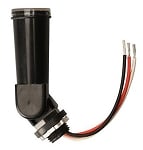
1000-Watt Metal Halide LED Replacement

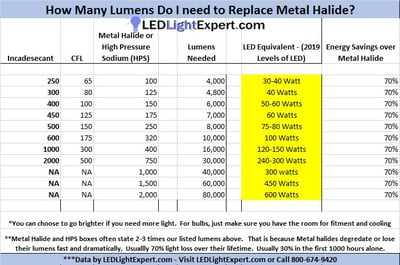
A 1000 watt metal halide fixture draws 1,050–1,100 watts at the wall once you account for the ballast. A 300 watt LED replacement delivers equal or better light output at roughly 300 watts total.


USA Based Experts in less than 60 seconds Call Now: 800-674-9420

On orders over $49.00

Up to 7 Years Free Warranty On LED Lights
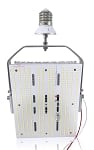
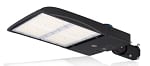
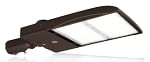

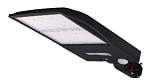
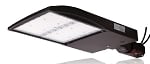

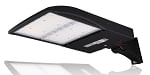

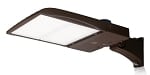
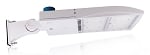
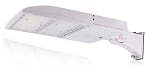
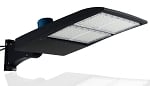
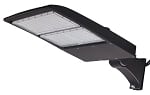
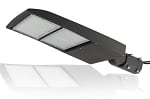
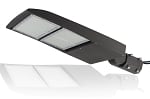
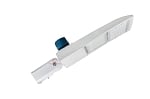
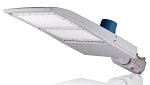
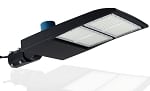
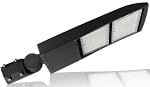
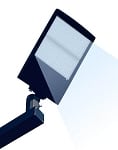
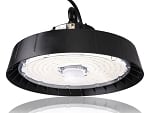


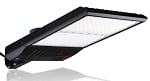
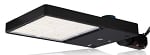

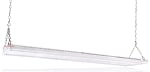
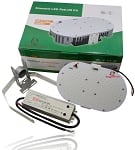

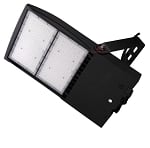

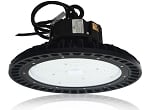
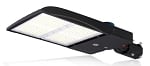
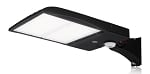
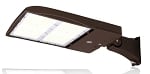
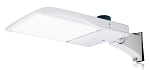
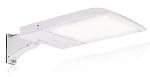
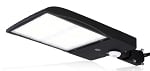
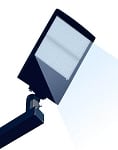
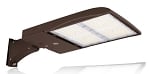
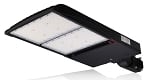
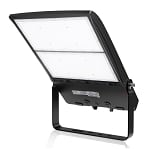
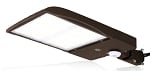
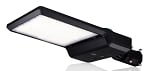
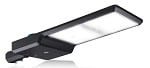
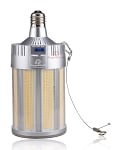
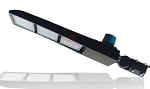


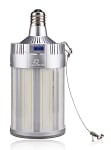
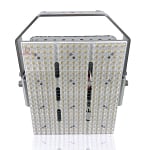


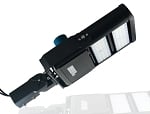
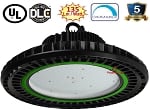
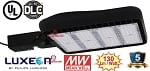
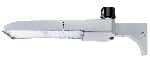


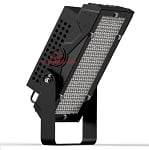

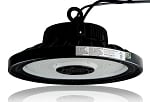
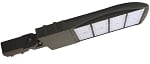

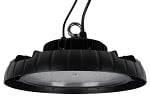
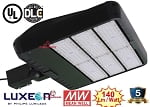
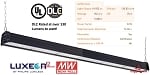
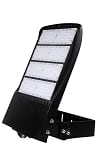







A 1000 watt metal halide system often draws more than lamp wattage once ballast load is included. Many LED replacements use far fewer watts, start instantly, and maintain output more consistently, but the right replacement still depends on delivered lumens, optics, mounting height, and target light levels.
For facilities operating 10 or more 1000W metal halide fixtures in parking lots, warehouses, sports venues, industrial yards. the annual energy savings alone payback depends on run hours, fixture cost, installation cost, energy rates, controls, and rebates. Factor in eliminated ballast replacements, reduced bulb inventory, and lower maintenance labor, and the total cost of ownership favors LED by a wide margin over any reasonable planning horizon.

The sections below cover the specific numbers: wattage equivalents, lumen comparisons, ROI calculations, and which LED fixture type fits which application. If you need help sizing a replacement for your specific installation, call us at 800-674-9420.
The table below puts the two technologies next to each other on the practical metrics for a purchasing decision. These are planning ranges; confirm the actual product data and field conditions.
| Specification | 1000W Metal Halide | 300W LED Replacement |
|---|---|---|
| System Wattage (with ballast/driver) | 1,050–1,100W | 300W |
| Initial Lumen Output | product-specific initial lumen range | 39,000–45,000 lm |
| Lumen Maintenance at 20,000 hrs | ~50% of initial (L50) | product-specific lumen maintenance |
| Efficacy (lumens/watt) | 55–90 lm/W | 130–150 lm/W |
| Rated Lifespan | 10,000–20,000 hrs | product-specific long rated life |
| Warm-Up Time | 5–15 minutes | Instant on |
| Restrike Time | 10–20 minutes | Instant restrike |
| CRI (Color Rendering Index) | 65–70 | 70–80+ |
| Dimmable | No | Yes (0–10V standard) |
| Mercury Content | Yes (EPA-regulated disposal) | None |
| Annual Energy Cost (12 hrs/day, $0.12/kWh) | ~$460/fixture | ~$158/fixture |
A note on the lumen numbers: metal halide fixtures lose output rapidly. A 1000W MH lamp may start with high initial output, but by the time it is due for replacement, actual delivered lumens can be far lower. LED fixtures often maintain output more consistently than metal halide lamps, but the exact lumen-maintenance curve depends on the product. This means the usable light over the life of the fixture is substantially higher than the initial spec sheet suggests.
Modern 300–400W LED fixtures are often considered for 1000W metal halide replacement projects, but output should be verified with product data and photometric analysis. LED high bay lights carry product-specific lumen-maintenance ratings maintain 90%+ brightness throughout their operating life, unlike metal halide which loses 50% brightness by the midpoint. These high-performance fixtures incorporate advanced thermal management (copper heat sinks, intelligent driver circuits) to ensure stability in extreme outdoor temperatures and harsh industrial environments. DLC-listed certifications verify independent testing of lumen output, efficiency, and color rendering—eliminating guesswork from retrofit decisions.
Wattage-to-lumens ratios in premium 300W LED fixtures (130–150 lumens/watt) far exceed metal halide performance (45–60 lumens/watt), can result in major wattage reduction while improving uniformity when the optics and layout are correct.


Replacing 1000W metal halide fixtures with 300W LED eliminates ballast replacement cycles, reduces electrical panel stress, and lowers HVAC cooling loads in indoor facilities—multiplying operational savings across utility categories. Fixture-level dimming and tunable controls add occupancy-based energy management without costly site rewiring. LED parking lot lights and stadium fixtures also reduce maintenance labor: no warm-up delays, no ballast replacement cycle, fewer lamp changes, and no mercury lamp disposal. Total cost of ownership often favors LED on long-run-hour sites, but the calculation should include electricity, labor, fixture cost, maintenance access, and control strategy.
Utility rebate programs may help when the exact fixture and project qualify, but amounts vary by utility and program rules.
A 1000 watt metal halide lamp is used across four distinct fixture types, and each has a different LED replacement path. The wattage range is similar (240W–400W LED), but the optics, mounting, and form factor differ by application.
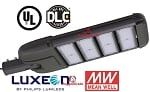
The most common 1000W MH application. A 300W LED shoebox fixture on a 25–35ft pole delivers equivalent or better ground-level illumination with Type III or Type V distribution optics. LED shoebox fixtures eliminate the warm-up delay that leaves parking lots dark for 15 minutes after a power interruption. a significant safety and liability concern with metal halide. Most LED parking lot lights in this class are DLC-listed and qualify for utility rebate programs.
Indoor 1000W MH high bays are typically mounted at 25–40ft. A 240W–300W LED high bay provides equivalent foot-candle levels with better uniformity and no upward light waste. The instant-on capability is particularly valuable in warehouses where metal halide fixtures left on continuously to avoid restrike delays waste thousands of dollars annually.
1000W MH fixtures on sports fields are typically replaced with 300W–400W LED stadium lights. LED sports lighting eliminates flicker (critical for broadcast), provides instant restrike for weather delays, and delivers higher CRI for better visibility. Multi-fixture pole arrays that previously drew 4,000–6,000 watts per pole can be reduced to 1,200–1,600 watts.
Standalone 1000W MH flood lights for loading docks, construction sites, and perimeter security are replaced with 240W–300W LED flood lights. Adjustable beam angles (from 25° spot to 120° wide flood) allow the same fixture to be configured for different applications, where metal halide floodlights required different reflector assemblies.
The economics of replacing 1000W metal halide with LED are straightforward. Here is what the math looks like for a single fixture operating 12 hours per day at the national average commercial electricity rate of $0.12/kWh:
| Cost Factor | 1000W MH (per fixture/year) | 300W LED (per fixture/year) |
|---|---|---|
| Electricity | $460 | $158 |
| Lamp Replacement (labor + parts) | $75–$150 | $0 |
| Ballast Replacement (amortized) | $30–$60 | $0 |
| Total Annual Cost | $565–$670 | $158 |
| Annual Savings per Fixture | $407–$512 | |
For a facility with 20 fixtures, that is $8,140–$10,240 in annual savings. Actual payback depends on fixture cost, labor, electricity rate, run hours, controls, and whether the exact DLC-listed fixture qualifies for a current utility rebate.
There are two paths to convert a 1000W metal halide installation to LED: install a retrofit kit inside the existing housing, or replace the entire fixture.
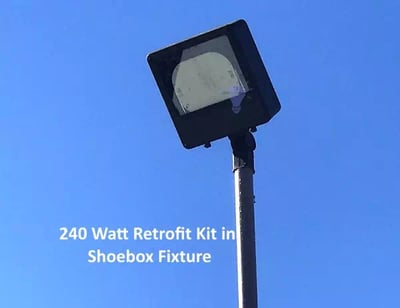
Retrofit kits reuse the existing fixture housing and wiring. This works well when the housing is in good structural condition, the mounting infrastructure (poles, brackets, j-boxes) is sound, and the goal is to minimize installation time and cost. A retrofit kit may cost less than a full fixture replacement, but it still depends on housing condition, labor, and serviceability. The kit bypasses or removes the ballast and installs an LED module and driver directly into the existing housing.
If the existing fixtures are corroded, have damaged lenses, or use outdated optics that cannot be improved with a retrofit module, full replacement is the better investment. New LED fixtures also offer advantages that retrofit kits cannot: integrated photocells, motion sensors, smart controls, and precision-engineered optics designed specifically for LED light distribution rather than adapted from HID reflector geometry.
For many 1000W metal halide parking lot conversions, new fixtures are worth comparing closely. The housings have typically been in service for 15–25 years and the incremental cost of a new fixture over a retrofit kit is modest relative to the labor cost of the installation itself.
A 300 watt LED fixture replaces a 1000 watt metal halide in most applications. The actual system draw of a 1000W MH fixture is 1,050–1,100 watts once the ballast is included, so the real energy reduction is approximately 750–800 watts per fixture. a substantial wattage reduction. In applications requiring higher output (large sports fields or high-mount industrial areas), a 400W LED fixture may be specified instead.
A 300W LED produces 39,000–45,000 initial lumens and has a product-specific lumen-maintenance rating. A 1000W metal halide lamp can start with high initial lumens but loses output as it ages, so field condition matters when comparing LED replacements. Because LED output remains stable while MH degrades, the two technologies deliver comparable usable light over any period longer than the first few months.
LED fixtures rated for 1000W MH replacement carry product-specific L70 ratings. Rated hours are planning data; heat, driver quality, surge protection, and environment affect actual service life. By comparison, a 1000W MH lamp typically lasts 10,000–20,000 hours and requires a ballast replacement every 2–3 lamp cycles.
Yes. Most commercial-grade LED fixtures that replace 1000W MH support 0–10V dimming as a standard feature, and many offer additional control protocols (DALI, DMX for sports lighting, or wireless smart controls). Metal halide cannot be dimmed. the lamps must operate at full power or be turned off entirely, and they require a 10–20 minute restrike period after any power interruption.
For retrofit kits, yes. the existing magnetic or electronic ballast must be bypassed or removed and the LED driver wired directly to line voltage. This is a straightforward procedure for a licensed electrician and typically adds 15–30 minutes per fixture. For full fixture replacements, the ballast is simply removed with the old fixture. Either way, eliminating the ballast removes a common failure point and reduces system wattage by 50–100 watts.
DLC (DesignLights Consortium) listing means the fixture has been independently tested and verified for lumen output, efficacy (lumens per watt), color quality, and reliability. DLC listing is required to qualify for utility rebate programs in most jurisdictions. Rebates for DLC-listed fixtures may qualify for utility incentives, but rebate amount and payback depend on the exact fixture, utility program, run hours, labor, and energy rate.
Often, but it must be verified with the local utility. The energy savings from a 1000W-to-300W conversion (approximately 3,066 kWh per fixture per year at 12 hrs/day) make these projects strong candidates for prescriptive and custom rebate programs. Rebate amounts vary by utility but vary widely by utility, fixture type, controls, and current program rules. Your utility may also offer enhanced rebates for DLC Premium-listed products. We can help you identify available rebates for your location.
For parking lots and outdoor area lighting, 5000K (cool white) is the standard. it provides clear visibility and closely matches the color appearance of metal halide. For sports lighting, 5000K–5700K is typical for broadcast-quality illumination. For warehouse and indoor applications, 4000K (neutral white) is increasingly popular as it reduces glare and improves worker comfort. Some facilities near residential areas choose 3000K–4000K to minimize light pollution, consistent with local ordinance and dark-sky guidance for outdoor lighting.
Make the switch from outdated 1000 watt metal halide fixtures to efficient 300 watt LED replacements and reduce wattage and maintenance when the replacement is correctly selected. Our lighting specialists can help you choose the right LED replacement for your application.
Contact us for expert guidance on your 1000 watt metal halide to LED upgrade project.
Contact UsCall Now: (800) 674-9420


Dara Greaney is the CEO and President of LEDLightExpert.com, a leading company in commercial lighting solutions. Since 2015, he has led the company to achieve remarkable growth and recognition, including being an Inc5000 winner three times: No. 3783 in 2022, No. 2428 in 2021, and No. 531 in 2020.


Editing by David Peguero.

On orders over $49.00
Up to 7 Years Free Warranty On LED Lights