10-39 Watt LED Light Bulbs

USA Based Experts in less than 60 seconds Call Now: 800-674-9420
On orders over $49.00
Up to 7 Years Free Warranty On LED Lights


10W to 39W LED bulbs replace smaller incandescent, CFL, metal halide, and HID lamps in garages, porches, yards, ceiling fixtures, signs, and light commercial spaces.
10W to 39W LED bulbs are used when a fixture needs more output than a standard household bulb but does not require a large HID replacement. They fit common applications such as garages, porches, small wall packs, post-top fixtures, ceiling fixtures, signs, and light commercial spaces.
Start with the socket and fixture. Many bulbs in this range use E26 medium bases, while some higher-output corn bulbs use E39 mogul bases. Confirm the base type, voltage, fixture depth, ventilation, enclosed-fixture rating, and whether the old ballast must be bypassed before ordering.
This wattage range can replace many smaller incandescent, CFL, halogen, and metal halide lamps, but the right replacement should be selected by lumens, not watts alone. Compare lumen output, beam direction, color temperature, CRI, and physical size so the bulb fits the fixture and produces the light level you expect.


LED bulbs use a driver to convert line voltage into power the LED chips can use. That driver and the heat sink need airflow. If the bulb is installed in a fully enclosed fixture, use only a bulb rated for enclosed operation. Heat buildup is one of the main reasons LED retrofit bulbs fail early.
E26 is the common medium screw base used in many residential and light commercial fixtures. E39 is the larger mogul base used in many HID fixtures. Some specialty fixtures may use GU24, GX24, or other bases, so the existing socket should always be checked before purchase.
Color temperature also matters. Warm 3000K is usually better for porches, hospitality, and residential areas. Neutral 4000K works well in garages and general work areas. Crisp 5000K is common where visibility is the priority.
Most line-voltage screw-base lamps use the Edison screw family. E12 candelabra bases are common in small decorative lamps, E17 intermediate bases appear in some specialty fixtures, E26 medium bases are common in residential and light commercial fixtures, and E39 mogul bases are used in many HID and larger commercial fixtures. The number refers to the base diameter in millimeters.
LED bulbs produce light with semiconductor chips and an LED driver rather than a heated filament or gas arc. That is why the replacement should be checked for voltage, driver type, heat sink size, and fixture ventilation. A 10W to 39W LED bulb can be a good replacement for many smaller halogen, incandescent, CFL, and HID lamps, but the fixture must have enough room around the bulb and the correct wiring for the product.
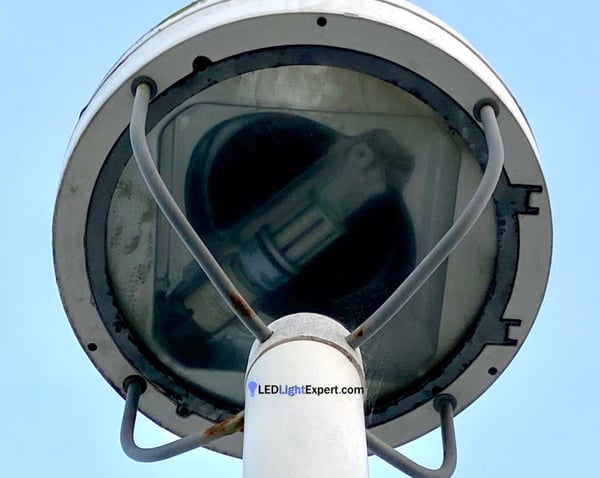
For corn bulbs in this range, check whether the old ballast must be removed or bypassed. Also compare the physical length and diameter, because corn bulbs are often larger than the lamp they replace. When the fixture is enclosed or exposed to high heat, use a bulb specifically rated for that condition.
In the 10W to 39W range, LED bulbs often land around 1,200 to 4,800 lumens depending on chip design, optic direction, color temperature, and driver efficiency. That is why lumens matter more than the old wattage printed on the lamp. A 20W LED corn bulb and a 35W LED corn bulb can both use an E26 base, but they may solve very different fixture problems.
Common comparisons include smaller metal halide, incandescent, CFL, and halogen lamps. Treat those ranges as a starting point. The correct retrofit depends on the fixture, socket, voltage, ballast status, lumen target, and whether light needs to spread in all directions or aim forward.
Common uses include household fixtures, garages, yards, sheds, porches, post-top fixtures, small wall packs, ceiling fixtures, pendant lights, and signs. E26 medium bases are common in residential and light commercial fixtures. E39 mogul bases appear in HID fixtures. E12 candelabra and E17 intermediate bases show up in smaller decorative or specialty fixtures.
Most LED retrofit bulbs use semiconductor LEDs, an internal LED driver, a heat sink, and an Edison screw or specialty base. Many are rated for long service life, often around 50,000 hours under proper temperature conditions, but heat is the deciding factor. Check enclosed-fixture approval, wet-location rating, and ballast-bypass requirements before installation.
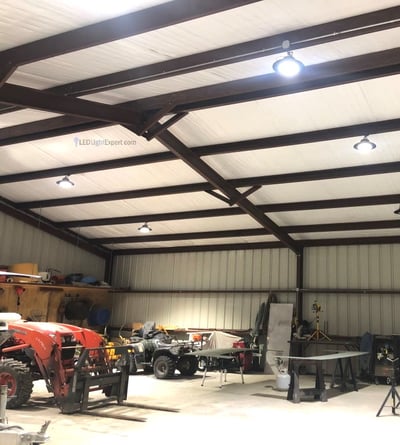
For smaller spaces, the goal is usually balanced brightness rather than the highest possible wattage. These bulbs can brighten a garage, yard, shed, porch, hallway, bathroom, bedroom, office, strip fixture, ceiling fixture, or post-top light when the fixture and socket are correct. They are also used by small businesses that need well-lit utility areas without moving to a larger HID replacement.
Energy-efficient LED bulbs can reduce electricity use compared with older incandescent, halogen, fluorescent, and small HID lamps. The actual savings depend on runtime, local electricity cost, fixture heat, and the bulb selected. A well-lit space still needs the right lumen output; simply choosing the lowest wattage can leave a room, garage, or yard under-lit.
The original category covered bright 10 watt, 20 watt, 30 watt, and 39 watt LED options for customers comparing home and light commercial bulbs. That remains the useful buying idea: match the replacement to the application, not just the label on the old lamp. Check whether you need omnidirectional corn-bulb illumination, a directional PAR flood, a decorative globe, or a standard A-shape bulb before ordering.
An LED bulb produces light when electric current moves through semiconductor material. Electrons release photons, and the driver circuit adapts mains voltage to the low-voltage current the LED chips require. That is different from an incandescent filament, a fluorescent tube, or a metal halide arc tube, so retrofit checks should include the driver, heat sink, fixture temperature, and wiring method.
The Edison screw base is named for Thomas Edison and remains the common threaded fitting for screw-in lamps. E12 is about 12mm, E17 is about 17mm, E26 is about 26mm, and E39 is about 39mm. Matching those dimensions matters because a bulb can have the right wattage and still be wrong for the socket.
Replacement ranges such as 50-100 watt metal halide, 60-100W incandescent, 100-watt incandescent, or small CFL are helpful comparisons, but they are not exact rules. A compact bulb for a bedroom or bathroom fixture may need softer output. A garage, yard, shed, or mid-sized business space may need more lumens, broader distribution, or a wet-location rating.
Use the 1,200 to 4,800 lumen range as a practical reference point for many bulbs in this class. Some products may be lower or higher, and older pages mentioned figures like 1,600 or 8,000 lumens across different bulb styles. The safe approach is to compare the product data sheet, fixture fit, base, voltage, color temperature, and beam direction before ordering.
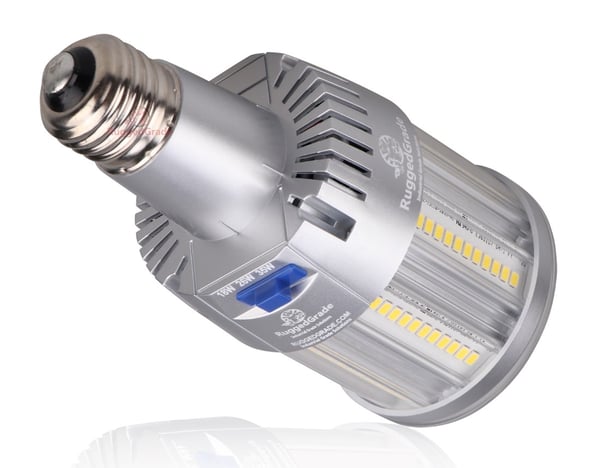
This wattage range covers a wide variety of LED bulb styles: corn bulbs (E26 and E39 base) for retrofitting HID fixtures, A-shape bulbs for standard lamp sockets, PAR30 and PAR38 spot and flood bulbs for recessed and track lighting, BR30 and BR40 bulbs for recessed downlights, and globe bulbs for decorative applications. The common thread is that all of these LEDs replace incandescent bulbs in the 75W to 250W range with lower wattage when the replacement is selected correctly.
Not all LED bulbs are rated for enclosed fixtures. Heat buildup inside enclosed globes or housings can shorten LED lifespan and void the warranty. Check the product specifications for an enclosed fixture rating before installation. Bulbs specifically rated for enclosed fixtures use enhanced heat sinks or thermal management designs that handle the reduced airflow. Using a non-rated bulb in an enclosed fixture may cause premature failure or flickering.
Most 10 to 39-watt LED bulbs use either an E26 (standard medium base) or E39 (mogul base). E26 is the standard household socket found in most residential and small commercial fixtures. E39 is the larger socket used in commercial and industrial fixtures designed for HID lamps. Some specialty bulbs in this range are also available in GU24 (twist-lock) or GX24 (pin base) for specific commercial fixture types. Match the base type to your existing fixture socket.
10 to 39 watt LED bulbs with E26 medium or E39 mogul bases fit into a wide range of fixtures including porch lights, small wall packs, enclosed post tops, and decorative sconces. These lower-wattage LED bulbs are ideal replacements for 50 to 150 watt metal halide or incandescent lamps in residential and light commercial applications.
Use the products above as a starting point, or contact LED Light Expert to confirm wattage, mounting, controls, and layout before ordering.
Shop NowCall Now: (800) 674-9420


Dara Greaney is the CEO and President of LEDLightExpert.com, a leading company in commercial lighting solutions. Since 2015, he has led the company to achieve remarkable growth and recognition, including being an Inc5000 winner three times: No. 3783 in 2022, No. 2428 in 2021, and No. 531 in 2020.
Editing by David Peguero.
On orders over $49.00
Up to 7 Years Free Warranty On LED Lights