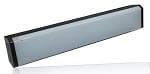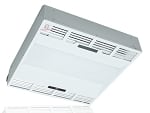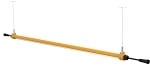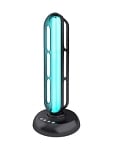
UV Lights

USA Based Experts in less than 60 seconds Call Now: 800-674-9420
On orders over $49.00
Up to 7 Years Free Warranty On LED Lights

UV lights are not one category with one use. UV-A is commonly used for blacklight effects, curing, inspection, and fluorescence. UV-B is used in more specialized applications. UV-C is used in controlled germicidal systems and requires strict exposure controls because direct exposure can injure eyes and skin.
Before ordering, confirm the wavelength range, fixture type, shielding, duty cycle, replacement lamp needs, and safety instructions. A UV-A fixture for inspection or effects is not a substitute for a UV-C germicidal product. A UV-C product should not be used like a normal room light.
For germicidal applications, performance depends on dose, distance, exposure time, airflow, surface shadowing, and maintenance. Use qualified guidance for occupied spaces, upper-air systems, HVAC systems, and unoccupied-room treatment.
UV products should be selected with safety documentation, not just wavelength and wattage. Ask whether the fixture needs shielding, interlocks, timers, warning labels, remote operation, or occupancy controls. Maintenance staff also need to know when lamps are energized and when replacement lamps are required.
For UV-C, do not rely on broad kill claims. The useful question is whether the system can deliver the required dose in the actual space, with its airflow, distance, shadowing, and maintenance schedule.
UV output can decline before a lamp visibly fails. For applications that depend on UV dose, replacement schedules and cleaning matter. Dust, fingerprints, old lamps, and dirty lenses reduce useful output, so maintenance should be part of the purchase decision.
If the project is for visual effects, inspection, curing, or fluorescence, start with UV-A. If the project is for germicidal use, review UV-C fixtures with safety controls and dosage guidance. The wrong UV category can look similar online but perform a completely different job.
Ultraviolet light is electromagnetic radiation just beyond the violet end of visible light and before the X-ray region. It is invisible to the human eye, but some materials fluoresce when UV radiation falls on them. That is why black-light posters glow and why certain inspection, curing, counterfeit detection, and glow-product applications use UV-A. The sun is a natural source of electromagnetic radiation, and the electromagnetic spectrum is commonly arranged by frequency, energy, and wavelength.
The original UV guide split ultraviolet radiation into four broad wavelength regions: near UV from 400 to 300 nm, middle UV from 300 to 200 nm, far UV from 200 to 100 nm, and extreme UV below 100 nm. It also separated the common biological ranges: UV-A from 400 to 315 nm, UV-B from 315 to 280 nm, and UV-C from 280 to 100 nm. UV-A is associated with black light and fluorescence. UV-B is associated with sunburn effects. UV-C is absorbed by the atmosphere before reaching the earth's surface, but artificial UV-C lamps are used in curing and germicidal systems.
The useful germicidal range is commonly discussed around 254 to 280 nm. UV-C can deactivate microorganisms by damaging nucleic acids such as DNA or RNA, which prevents replication. The planning notes discussed bacteria, viruses, airborne germs, upper-room air, medical industry use, food processing, industrial use, and unoccupied-room cycles. Those ideas are useful, but they must be stated carefully: germicidal performance depends on dose, wavelength, distance, exposure time, shadowing, airflow, lamp aging, and maintenance.
UV-C is not normal room lighting. Direct exposure can irritate or injure eyes and skin. Controlled systems may use shielding, timers, warning labels, remote operation, interlocks, and passive infrared motion sensors that shut the lamp off if someone enters the room. Some systems use timed cycles, but the correct exposure time comes from the fixture design, the target organism, the space, and the manufacturer guidance. For any UV-C disinfection claim, document the radiation wavelength, bacteria or viruses targeted, and the maintenance process.
UV planning often discusses airborne viruses, bacteria, disinfection, and 254-280 nm UV-C. A careful way to state that fact is this: UV-C radiation in the germicidal range can inactivate bacteria and viruses when the wavelength, dose, exposure time, distance, and maintenance are correct. It should not be treated as a simple bulb that automatically makes a room safe. Studies around SARS-CoV, MERS-CoV, influenza, and SARS-CoV-2 show why UV-C is important, but real-world systems still depend on engineering and exposure control.
UV radiation can also cause harm. UV-A reaches the earth's surface and is associated with tanning, sunspots, skin aging, and deeper skin exposure. UV-B reaches superficial layers and is associated with sunburn, redness, DNA changes, and skin cancer risk. UV-C is the strongest range, but natural UV-C does not reach the earth's surface because it is absorbed by the atmosphere. Artificial UV-C belongs in controlled germicidal applications, curing systems, and other specified uses with shielding and procedures.
UV-A is commonly used for blacklight effects, curing, inspection, and fluorescence. UV-B is used in specialized applications. UV-C is used in controlled germicidal systems and requires strict safety controls.
Safety depends on wavelength, shielding, exposure time, and application. UV-C should not shine directly on eyes or skin. Follow the product instructions and use appropriate interlocks, shielding, and procedures.
No. Germicidal use depends on UV-C wavelength, dose, fixture design, exposure time, distance, airflow, and maintenance. UV-A blacklights are not substitutes for UV-C germicidal fixtures.
Confirm wavelength, output, fixture type, safety controls, replacement lamp needs, mounting location, and whether the space will be occupied during operation.
Find the right UV lights for your application. Contact our lighting specialists for guidance on UV-A, UV-B, and UV-C solutions for commercial and industrial use.
Contact LED Light ExpertCall Now: (800) 674-9420
Dara Greaney is the CEO and President of LEDLightExpert.com, a leading company in commercial lighting solutions. Since 2015, he has led the company to achieve remarkable growth and recognition, including being an Inc5000 winner three times: No. 3783 in 2022, No. 2428 in 2021, and No. 531 in 2020.
Editing by David Peguero.
On orders over $49.00
Up to 7 Years Free Warranty On LED Lights