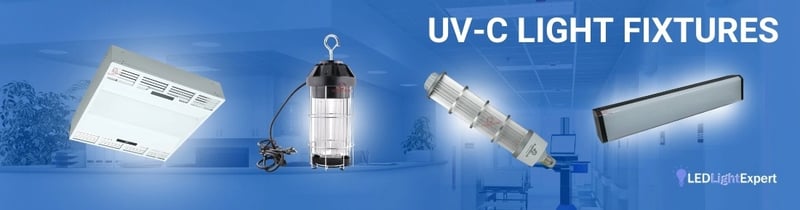
UV-C Lights

USA Based Experts in less than 60 seconds Call Now: 800-674-9420
On orders over $49.00
Up to 7 Years Free Warranty On LED Lights

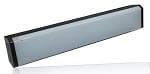
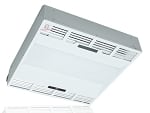
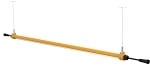
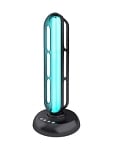
UV-C fixtures are used in carefully designed systems for air treatment, HVAC coil treatment, and unoccupied surface exposure. They should be specified by wavelength, dose, distance, exposure time, airflow, fixture shielding, safety controls, lamp aging, and maintenance plan.
UV-C is not general room lighting. Direct exposure can injure eyes and skin. Occupancy rules, interlocks, warning labels, timers, remote operation, and service procedures are part of the system, not optional accessories.
Many germicidal systems use 254 nm lamps or nearby UV-C LED wavelengths. Far-UVC around 222 nm is an emerging category with different penetration and exposure-limit discussions, but it still requires product-specific safety review and qualified design.
Some UV lamps can generate ozone when they emit shorter wavelengths, especially around 185 nm. Check the product specification and installation instructions before using UV-C in occupied or enclosed areas.

A UV-C fixture only works for a germicidal purpose when the target receives the required dose. Distance, shadowing, airflow, lamp output, surface reflectance, and replacement schedule all change the result. Avoid broad kill claims unless the system design, target organism, and exposure conditions are documented.
UV-C planning often references bacteria, viruses, flu strains, beta coronaviruses, MERS, SARS, and SARS-CoV-2. The careful version is that UV-C can inactivate microorganisms when wavelength, dose, exposure time, distance, airflow, shadowing, and maintenance are correct. It should not be described as a simple lamp that automatically disinfects a room.
Far-UVC around 222 nm is often discussed because it has different penetration characteristics than conventional 254 nm UV-C. That does not remove the need for exposure-limit review, product listings, qualified design, and maintenance documentation. UV-C fixtures should be specified with shielding, interlocks, occupancy rules, timers, warning labels, and replacement schedules.
UV-C radiation is part of the ultraviolet spectrum. Germicidal discussions often focus on 254-280 nm because radiation in that range can damage nucleic acids such as DNA and RNA. When dose is sufficient, that damage can inactivate bacteria and viruses by preventing replication. Researchers have studied UV-C for airborne germs, surface exposure, HVAC use, curing, and controlled room treatment.
Those studies do not remove the need for design. The useful question is whether the fixture delivers the necessary radiation to the target. Distance, shadow, air movement, lamp aging, dirty tubes, reflectance, and exposure time all change the dose. UV-C may be effective in a tested setup and ineffective in a poorly installed one.
UV-C lights are used in controlled germicidal systems for air treatment, HVAC coil treatment, and unoccupied surface exposure. The fixture type, dose, placement, and safety controls determine the proper application.
Direct UV-C exposure is not safe for eyes or skin. Some upper-room and enclosed HVAC systems are designed for use while a room is occupied because the UV-C is shielded or contained. The installation must follow the fixture instructions and applicable exposure limits.
Exposure time depends on UV dose, distance, lamp output, airflow, surface shadowing, and the organism being targeted. A proper design calculates dose instead of assuming one universal treatment time.
Many 254 nm germicidal lamps are designed to be ozone-free. Lamps that emit shorter wavelengths, especially around 185 nm or below roughly 240 nm, can generate ozone. Check the product specification before using UV-C in occupied or enclosed areas.
Review wavelength, fixture type, exposure method, shielding, controls, maintenance, and occupancy rules before ordering UV-C equipment.
UV-C is the shortest-wavelength band of the ultraviolet spectrum, running 200 to 280 nanometres. Conventional germicidal fixtures use a low-pressure mercury lamp emitting a narrow line at 253.7nm, usually written as 254nm on datasheets. The 254 to 280nm region is the part of the spectrum germicidal equipment is designed around.
The specification that matters is dose, not lamp wattage. Dose is irradiance multiplied by exposure time, expressed in millijoules per square centimetre, and it changes completely with distance and with how long the target is in the beam. Two systems can only be compared on delivered dose at a stated distance and exposure time.
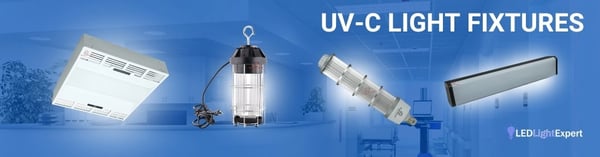
Fixture types divide by how they keep people and UV-C apart:
Two physical constraints govern every layout: irradiance falls with the square of distance, and UV-C does not bend around obstacles, so anything in shadow receives essentially nothing. Line of sight is a hard requirement. Note also that ordinary glass blocks UV-C - fixtures use quartz where transmission is needed - and that prolonged exposure degrades many plastics and elastomers.
UV-C is hazardous to skin and eyes. Direct exposure can cause painful injury to the cornea and skin, and because symptoms are delayed by several hours people are routinely overexposed without realising it at the time. That single fact drives every decision about how this equipment is installed.
Before specifying, confirm the intended geometry and exposure time, the interlock and shielding arrangement, occupancy sensing and door switches, electrical and mounting requirements, the lamp replacement interval, and disposal - mercury lamps carry a disposal requirement. Also confirm what regulatory claims the manufacturer makes and what testing supports them. In the United States, devices making disinfection claims fall under EPA and, depending on claim and setting, FDA oversight.
For the fuller background on how these systems are planned, see the UV-C disinfectant lighting buyer's guide.
UV-C pricing follows lamp count, output, and the control and interlock package rather than the housing. An in-duct unit sized for a specific air handler and an upper-air fixture for an occupied room are different products solving different problems, and the application has to be settled before the fixture is chosen.
What comes with every order:
Send the room or duct dimensions, the ceiling height, the air handling arrangement if it is an in-duct application, and whether the space is occupied during operation. That last answer determines the entire safety approach and therefore the fixture type.
Request PricingCall Now: (800) 674-9420
Dara Greaney is the CEO and President of LEDLightExpert.com, a leading company in commercial lighting solutions. Since 2015, he has led the company to achieve remarkable growth and recognition, including being an Inc5000 winner three times: No. 3783 in 2022, No. 2428 in 2021, and No. 531 in 2020.
Editing by David Peguero.
On orders over $49.00
Up to 7 Years Free Warranty On LED Lights