


$42.99
$55.99 Original price
Sale
Not for Sale.
Free Shipping.
(3)
$199.99
$298.99 Original price
Sale
In Stock, Limited Quantities
Free Shipping.
(3)
$359.99
$441.99 Original price
Sale
Please contact us for availability
Free Shipping.
(2)
$199.99
$389.99 Original price
Sale
In Stock, Ships in less than 24 hours
Free Shipping.
(2)
$249.99
$437.99 Original price
Sale
In Stock, Ships in less than 24 hours
Free Shipping.
(4)
$249.99
$337.99 Original price
Sale
In Stock, Ships in less than 24 hours
Free Shipping.
(2)
$129.99
$159.99 Original price
Sale
In Stock, ships in less than 24 hours
Free Shipping.

(2)
$22.99
$32.99 Original price
Sale
In Stock, Available in multiple locations, Arrives in 2-3 days, Quick shipping!
Free Shipping.
(2)
$129.99
$159.99 Original price
Sale
In Stock, Limited Quantities
Free Shipping.
(2)
$139.99
$159.99 Original price
Sale
In Stock, ships in less than 24 hours
Free Shipping.
(2)
$159.99
$189.99 Original price
Sale
In Stock, ships in less than 24 hours
Free Shipping.
$159.99
$189.99 Original price
Sale
Please contact us for availability
Free Shipping.
$159.99
$189.99 Original price
Sale
In Stock, ships in less than 24 hours
Free Shipping.

$59.99
$79.99 Original price
Sale
In Stock, ships in less than 24 hours
Free Shipping.
$149.99
$194.99 Original price
Sale
In Stock
Free Shipping.
$149.99
$159.99 Original price
Sale
In Stock, ships in less than 24 hours
Free Shipping.
$159.99
$181.99 Original price
Sale
Not for Sale.
Free Shipping.
(1)
$119.99
$139.99 Original price
Sale
In Stock, Ships in less than 24 hours
Free Shipping.
$114.99
$189.99 Original price
Sale
Please contact us for availability
Free Shipping.
$649.99
$699.99 Original price
Sale
In Stock, Limited Quantities
Free Shipping.
(1)
$89.99
$109.99 Original price
Sale
In Stock, Limited Quantities
Free Shipping.
$79.99
$109.99 Original price
Sale
Please contact us for availability
Free Shipping.
$44.99
$58.99 Original price
Sale
Not for Sale.
Free Shipping.
$79.99
$109.99 Original price
Sale
Please contact us for availability
Free Shipping.
(2)
$109.99
$129.99 Original price
Sale
In Stock, Limited Quantities
Free Shipping.

$69.99
$99.99 Original price
Sale
Please contact us for availability
Free Shipping.
$59.99
$79.99 Original price
Sale
In Stock, ships in less than 24 hours
Free Shipping.

(3)
$114.99
$149.99 Original price
Sale
Please contact us for availability
Free Shipping.

(2)
$22.99
$32.99 Original price
Sale
In Stock, Limited Quantities
Free Shipping.
(3)
$39.99
$51.99 Original price
Sale
In Stock, ships in less than 24 hours
Free Shipping.
(2)
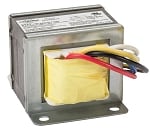
Step Down Transformer - up to 150 watts - Change 480vac to 277vac - High Voltage to Standard voltage
$52.99
$69.99 Original price
Sale
In Stock, ships in less than 24 hours
Free Shipping.

(2)
$128.99
In Stock, Limited Quantities
Free Shipping.
(2)
$129.99
$168.99 Original price
Sale
Please contact us for availability
Free Shipping.
$54.99
$71.99 Original price
Sale
Not for Sale.
Free Shipping.
(2)
$114.99
$149.99 Original price
Sale
Please contact us for availability
Free Shipping.

(2)
$79.99
$99.99 Original price
Sale
Please contact us for availability
Free Shipping.
(2)
$99.99
$129.99 Original price
Sale
Please contact us for availability
Free Shipping.
(3)
$109.99
$189.99 Original price
Sale
In Stock, Ships in less than 24 hours
Free Shipping.
(2)
$129.99
$199.99 Original price
Sale
In Stock, Available in multiple locations, Arrives in 2-3 days, Quick shipping!
Free Shipping.
(2)
$69.99
$99.99 Original price
Sale
In Stock, Limited Quantities
Free Shipping.
(1)
$79.99
$109.99 Original price
Sale
Please contact us for availability
Free Shipping.
(3)
$114.99
$149.99 Original price
Sale
In Stock, Limited Quantities
Free Shipping.
(2)
$94.99
$129.99 Original price
Sale
Please contact us for availability
Free Shipping.
(3)
$104.99
$179.99 Original price
Sale
In Stock, Available in multiple locations, Arrives in 2-3 days, Quick shipping!
Free Shipping.
(3)
$76.99
$119.99 Original price
Sale
In Stock, Ships in less than 24 hours
Free Shipping.

(2)
$105.99
$129.99 Original price
Sale
See 79-174
Free Shipping.
(2)
$119.99
$139.99 Original price
Sale
In Stock, Ships in less than 24 hours
Free Shipping.
Our Customers Trust Us & We Deliver







Surge Protection for LED Lighting Systems
LED fixtures are sensitive electronic devices that can be damaged by voltage spikes in a fraction of a second. Power surges from lightning strikes, utility grid switching, motor startups, and even nearby construction can send harmful voltage transients through your electrical system. A quality surge protection device (SPD) absorbs or diverts these excess voltages before they reach your fixtures, reducing the risk of costly driver or fixture replacement. For commercial and industrial installations, surge protection should be reviewed early because one transient can damage multiple LED drivers.
How LED Surge Protectors Work
Surge protection devices are installed between the power supply and the LED fixture (or at the electrical panel serving multiple fixtures). When voltage exceeds the SPD threshold, the device activates quickly, clamps the transient voltage, and shunts excess energy to ground according to its rating. Once the transient passes, the SPD resets and stands ready for the next event. SPDs are rated for specific surge levels and should be inspected or replaced when their status indicator shows failure.
Where Surge Protection Is Critical
Outdoor LED installations face the highest surge risk due to exposure to lightning and utility-side transients. Parking lot lights, wall packs, flood lights, and pole-mounted fixtures are especially vulnerable because their wiring runs long distances from the electrical panel, acting as antennas that collect induced voltage from nearby strikes. Indoor facilities in areas with unstable power grids or heavy industrial equipment may also benefit from dedicated surge protection on each lighting circuit.


Key Benefits of LED Surge Protectors
Adding surge protection to your LED lighting system provides critical advantages that protect both your investment and your operations:
- Reduce Premature Fixture Failure Risk: A single voltage spike can damage an LED driver. Surge protectors help absorb these transients, keeping your fixtures operational and avoiding unexpected replacement costs.
- Warranty Requirements: Many LED fixture warranties require surge protection. Installing SPDs helps the project meet those warranty conditions, but the exact warranty terms still control claim eligibility.
- Easy Installation: Most LED surge protectors connect with quick-clip or wire-nut connections directly at the fixture or junction box. Installation depends on the fixture, wiring method, and local code.
- Lower Replacement Risk: SPDs are low-cost compared with many commercial fixtures. Avoiding even one driver or fixture failure can make the protection worthwhile on many projects.
- Status Monitoring: SPDs are rated components and should be inspected during maintenance so failed devices are replaced before the next surge event.
- Code Compliance: Check the adopted electrical code, fixture warranty language, and project specifications to determine where SPDs are required or recommended.
Surge Protectors Selection Details
Surge protection devices are selected by voltage, wiring configuration, kA rating, mounting location, environmental rating, and whether protection is needed at the panel, fixture, or both. Outdoor pole lights, parking lot lights, wall packs, flood lights, and long wire runs usually carry more surge risk than short indoor circuits.
Common fixture-level ratings include 10kA and 20kA, but the right choice depends on exposure, utility service, lightning risk, and project requirements. A layered approach can place protection at the electrical panel and again near high-value fixtures.
Maintenance and Replacement
SPDs are protective components, not permanent shields. Some include an indicator light or status lead that shows when protection has failed. Inspect those indicators during routine maintenance and replace failed devices promptly.
Surge protection cannot correct poor grounding, water entry, overloaded circuits, or incompatible voltage. A qualified electrician should confirm grounding, conductor size, circuit voltage, and enclosure rating before installation.
Surge-Protection Planning Notes
Voltage spikes can come from lightning, utility switching, power outages, motor starts, high-powered appliances, damaged or frayed wires, overloaded outlets, and nearby electrical work. The surge may last only a short time, but it can affect LED drivers in seconds because LED fixtures contain sensitive electronic components.
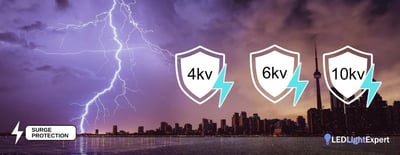
A surge protection device works by absorbing or diverting excess voltage and sending it toward ground when the transient exceeds the device threshold. The kilovolt and kiloamp ratings indicate the level and type of event the device is built to withstand. Common project discussions include 4kV for smaller transient overvoltages, 6kV as an ANSI industrial reference point for many high-bay spaces, and 10kV or higher fixture-level protection for outdoor or lightning-exposed locations.
Different applications need different protection. Indoor gyms, warehouses, factories, and high-ceilinged spaces may need SPDs because of large electrical loads or equipment. Outdoor parking lots, street lighting, sports courts, and pole-mounted fixtures often need stronger protection because long wire runs and harsh weather increase exposure.
SPDs eventually wear out. Some include indicators that show failure; others need scheduled inspection. Replacing a failed SPD is usually easier than replacing multiple LED fixtures, but surge protection does not replace proper grounding, correct voltage, weather-rated enclosures, or professional installation.
Frequently Asked Questions
What does a surge protector do for LED lights?
A surge protector, or SPD, diverts damaging voltage spikes away from LED drivers and fixture electronics. It helps reduce failures caused by lightning, utility switching, motors, and electrical transients.
Which LED lighting projects need surge protection most?
Outdoor pole lights, parking lot lights, wall packs, sports lights, flood lights, and long electrical runs benefit most because they are more exposed to lightning and utility transients.
What kA rating should I choose?
Many commercial fixture-level SPDs use ratings such as 10kA or 20kA. Higher-exposure sites may need stronger protection or layered protection at both the panel and fixture. Match voltage and wiring configuration first.
How do I know when an SPD has failed?
Many surge protectors include an indicator light or status lead. If the indicator shows failure, replace the SPD because it may no longer protect the fixture.
Can one surge protector protect multiple fixtures?
Panel-level surge protection can protect a circuit, but fixture-level SPDs are still useful on long outdoor runs. Layered protection is common for high-value lighting systems.
Plan LED Surge Protection Before Failures Happen
LED surge protectors from LED Light Expert help reduce lighting-system risk from voltage spikes caused by lightning, utility switching, and equipment transients. With 10kV-rated devices designed for quick installation at the fixture or panel, the right protection plan depends on fixture value, circuit length, exposure, panel protection, and fixture-level SPD status. Browse our surge protector selection and contact our team for help choosing the right SPD for your installation.
Contact LED Light ExpertChoosing a kV Rating: 4kV to 10kV
Surge protection devices carry a kilovolt (kV) rating that states the maximum transient voltage the device is built to withstand. The higher the kV rating, the more protection it offers - but the right rating is set by where the fixture sits, not by buying the largest number available.
Ratings for lighting surge protection run from 4kV to 10kV:
- 4kV is the minimum level of protection against transient overvoltages - the short, fast spikes that come from switching events on the supply. Appropriate for indoor fixtures on a protected circuit.
- 6kV suits most general outdoor commercial work: wall packs, canopy fixtures, and lower-mounted area lights.
- 10kV is for the exposed positions - pole-mounted parking lot and area lights, sports and high-mast fixtures, and any site with a history of lightning activity or an unstable utility feed.
Outdoor LED lights generally need higher kV ratings than indoor ones, because they are far more exposed to lightning strikes and to switching transients travelling down long outdoor runs. A pole-top fixture is the highest and most isolated point on many sites, which is precisely why it is the one that fails.
Worth being clear about what this protects. The LED driver is the component that transient voltage kills, and driver failure is the most common premature failure mode on outdoor LED. A surge protector is a consumable sacrificial device: it absorbs the event so the driver does not. Many include a status indicator, and a protector that has taken a hit needs replacing - it is not still protecting the fixture after it has done its job once.
For the background on why this matters and how kV ratings are chosen, see the importance of surge protection in LED lighting.
Buy LED Surge Protectors
Surge protectors are inexpensive relative to the fixtures they protect, and on a pole-mounted installation the economics are not close: the protector costs a fraction of a driver replacement, and far less than the lift and labour to reach the fixture.
What comes with every order:
- Free shipping on orders over $49.00.
- Up to a 7-year warranty on LED lights. The exact term varies by series, so confirm it on the product page.
- Wholesale and contractor pricing for electricians and contractors buying in volume: wholesale LED lights.
- Net-30 terms and purchase orders for qualifying commercial, school, and municipal accounts: net-30 and PO terms.
- A free photometric study before you order: free light study.
To specify, send the fixture type and wattage, the mounting height, the supply voltage, and whether the protector will be fitted inline at the fixture or at the panel. On a new install, add them to the fixture order rather than retrofitting later - fitting one during installation costs nothing extra in labour.
Request PricingRelated Articles

Contact Us Today
Call Now: (800) 674-9420

USA Based and Trained

Fast Answering

Highly Rated

Excellent Service
Author Bio
Dara Greaney

Dara Greaney is the CEO and President of LEDLightExpert.com, a leading company in commercial lighting solutions. Since 2015, he has led the company to achieve remarkable growth and recognition, including being an Inc5000 winner three times: No. 3783 in 2022, No. 2428 in 2021, and No. 531 in 2020.


Editing by David Peguero.


