


No. It reduces risk from transient voltage events, but other failure modes still exist.
Surge Protection for LED Lighting
LED fixtures depend on electronic drivers, and those drivers can be damaged by transient voltage events from lightning, switching, utility issues, and site wiring problems. Surge protective devices do not make a lighting system immune to damage, but they can reduce risk when selected, installed, grounded, and maintained correctly.
What to Check First
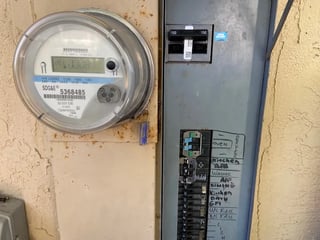
- Review service entrance, branch panels, fixture-level protection, grounding, and known power-quality issues.
- Use listed SPDs and match the type, voltage, short-circuit rating, surge current rating, and installation location.
- Plan inspection and replacement because SPDs can wear down after repeated events.
Application Decision Table
| Use Case | Practical Guidance |
|---|---|
| Service entrance or main panel | A Type 1 or Type 2 SPD may reduce building-level exposure, depending on design. |
| Lighting branch circuit | Panel or inline protection can help protect groups of exterior or high-value fixtures. |
| Fixture or photocell receptacle | Fixture-level protection can help where long exterior runs and exposed poles increase risk. |
What to Ask Before Choosing an SPD
- What voltage and phase is the circuit?
- Where will the SPD be installed?
- Is it listed for the application?
- How will status be checked after storms or outages?
- Does the lighting warranty require specific protection?
Common Mistakes to Avoid
- Saying surge protection removes every driver-failure risk.
- Ignoring grounding and bonding while focusing only on kA numbers.
- Leaving failed or expired SPDs in place after a known surge event.
What Surge Protection Does for LED Lighting
LED fixtures depend on electronic drivers. Those drivers can be damaged by transient voltage events from switching, utility issues, nearby lightning, or site wiring problems. A surge protective device does not make a system indestructible, but it can reduce failure risk when it is correctly selected and installed.
| Risk point | What to check |
|---|---|
| Outdoor poles and wall packs | Use fixtures and surge protection suited for exposed electrical environments. |
| Panel or branch circuit | Ask a qualified electrician whether upstream protection is needed. |
| Fixture-level protection | Confirm voltage, connection method, and replacement access. |
| Repeated failures | Investigate grounding, neutral problems, water intrusion, and dimming compatibility. |
If users describe repeated LED failures as "dirty electricity," treat that as a troubleshooting clue rather than a diagnosis. Check surge events, grounding, neutral issues, driver quality, dimmer compatibility, and water intrusion with qualified electrical help.
Surge protection work should follow local electrical code and manufacturer instructions. When in doubt, use a licensed electrician rather than guessing at wiring.
What a Power Surge Does to an LED Fixture
An electrical surge is a sudden spike in the voltage running through a circuit. Even a surge that lasts a fraction of a second can take a heavy toll on everything connected to that circuit, and LED lights are not exempt. Even rugged, high-power fixtures such as LED stadium and sport field lights and LED flood lights can be damaged when a surge drives wires and components to overheat, melt, and short. A quality LED fixture can last well past 50,000 hours, and some run beyond 100,000 hours, but a single surge can end that life in under a second. The time to protect an LED system is at installation, so the long service life you paid for is actually realized.
What You Need to Know About Dirty Power
Dirty power, sometimes called electrical pollution, is a set of abnormalities in the electrical signal that degrade its quality. It is a quiet killer of electronics because most owners never know it is present. Caused largely by electromagnetic interference, dirty power can affect even DLC-listed fixtures, from flood lights to LED high bay lights to wall packs, producing symptoms such as flashing or strobing and premature driver failure. Voltage regulators and filters are designed to control these fluctuations. Testing for dirty power and putting the right protection in place is part of protecting the life of an LED system.
Common Causes of Electrical Surges
- Switching on high-power appliances. Motors, air conditioners, and refrigerators draw a sharp inrush of current when they start.
- Lightning. By far the most unpredictable and destructive cause, a lightning-related surge can kill devices instantly, from a cell phone on the charger to commercial fixtures in the field.
- Power outages. Serious voltage fluctuations often occur right before an outage and can damage connected equipment within seconds.
- Overloaded outlets. Too many devices on a single outlet or circuit can force an overload that ends in a surge.
- Damaged wiring and circuits. Compromised wiring can produce surges, especially where it contacts incompatible or failing components.
A Six-Step Guide to Surge Protection
Protecting an LED system from surges is not as difficult as it may seem. These six steps cover the practical decisions.
- Enlist a professional. Licensed electricians are trained to test for dirty power and to put the right protection in place. Talk to yours and confirm the system is protected.
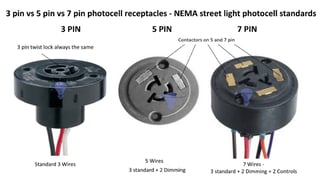
- Use surge protectors. Install protection on the lighting circuits. LED systems have two strong options: inline surge protectors and photocell receptacle surge protectors. Inline protectors are available for a wide range of fixtures, including flood lights, corn bulbs, and canopy lights; they install in the circuit ahead of the fixture, which makes them nearly universal. Photocell receptacle protectors are designed for shoebox area lights and use the twist-lock photocell receptacle: the protector twists into the receptacle and the photocell locks on top, which also makes replacement simple. Both are inexpensive.
- Do not overload circuits. Match devices to outlets and circuits rated for the load. A breaker may cut power to an overloaded circuit, but the spike that trips it can already have damaged the LEDs.
- Choose the right surge protector. Not every protector suits every load. The one used for LED flood lights may not be right for an air conditioner or refrigerator, and the reverse is true. Some protection also includes filters or regulators to help with dirty power.
- Replace protectors on schedule. Surge protectors do not last forever. Plan to replace your surge protectors for LED lights about every ten years. One strong surge can end a protector's usefulness, and many small surges wear it down, so replace after any known large event.
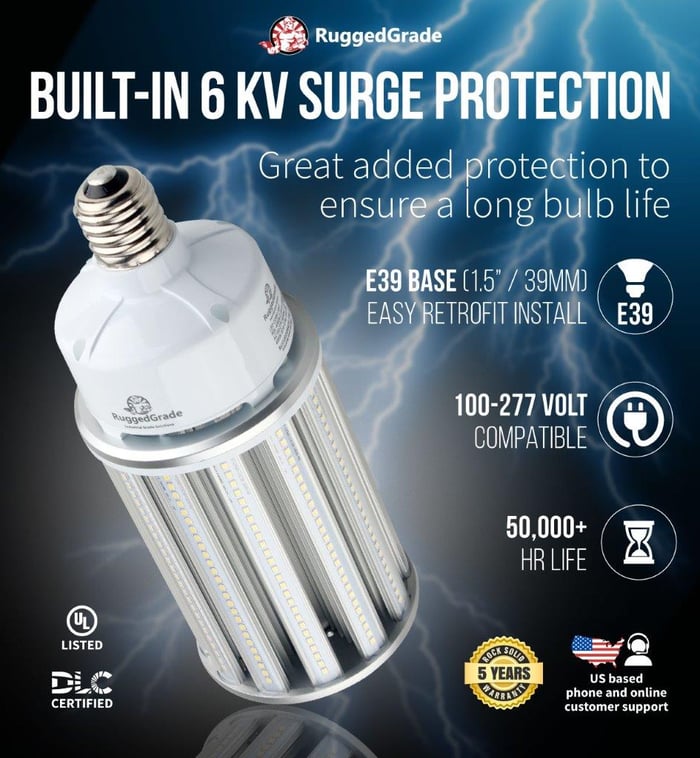
- Buy LEDs with built-in surge protection. Manufacturers such as Meanwell build surge protection into some of their LED drivers, and some corn bulbs include it as well. Buy from a source that keeps surge protection in mind, whether through built-in protection or easy-to-add options matched to the fixtures.
The long life of LED lighting only pays off if the fixtures are protected from the most common cause of their failure.
More Details to Consider
Surge protection matters because LED fixtures use electronic drivers. Those drivers can be damaged by lightning-related transients, utility switching, motor loads, poor grounding, neutral problems, water intrusion, or other power-quality issues.
A surge protective device does not make a lighting system indestructible. It reduces risk when the SPD is correctly selected for voltage, location, surge rating, short-circuit rating, listing, grounding, and installation method.
Many sites use layered protection: service entrance, panel or branch-circuit protection, and fixture-level protection for exposed poles, wall packs, flood lights, canopy lights, or other high-value exterior fixtures. Photocell receptacle surge protectors can be useful where the fixture supports them.
Surge protection also needs inspection. SPDs can wear down after repeated events, and many have indicator lights or replacement instructions. After a major storm, outage, or repeated LED failure, have a qualified electrician check grounding, bonding, water intrusion, dimming compatibility, and site wiring before simply replacing fixtures.
Frequently Asked Questions
- Will surge protection keep every LED light from failing?
- No. It reduces risk from transient voltage events, but other failure modes still exist.
- What damages LED drivers?
- Lightning-related surges, switching transients, poor grounding, overheating, water intrusion, and component defects can all contribute.
- Is fixture-level protection enough?
- Sometimes, but larger sites often use layered protection at service, panel, and fixture levels.
- When should SPDs be replaced?
- Follow manufacturer instructions and inspect after known surge events or when indicator lights show failure.

Ready to Upgrade Your LED Lighting?
Our lighting specialists can help compare fixtures, confirm light levels, and quote products that fit the site.
Call 800-674-9420 or email [email protected]
Monday-Friday, 8am-5pm PST

About the Author
Dara Greaney is founder and CEO of LED Light Expert with deep expertise in commercial LED lighting, retrofits, and photometric planning.
Editing by David Peguero
Tagged Products

12 Comments
Beth Mendoza
So static electricity discharged to my led reading lamp when I touched the switch to turn it off Now it doesn’t turn on. Is it permanently damaged? This is my second lamp. The first one did the same thing so they replaced it. I don’t think the bulbs are replaceable. I hate to think this one is ruined because if a small static shock. What do you think?
Rick
seems like a cheap reading light. Sorry, we do not sell anything that small
Lephallo
What surge you suggest i use for GY530-150 Led highbays? If you have to install 26 of them in a buliding
Rick
Those are not our high bays. All of our high bay UFO lights have a minimum 4kv surge built in. hard to add after the fact at the light. We also recommend a full breaker surge control.
Electrician Upper Hutt
Here we come to know about surge protection in LED lighting is critically important. This article attracts me a lot and other too. All the information regarding this article, you would get to know over here. I would surely recommend others to go through this link. This is a great addition tips blog, thank you for sharing this article. Great to find Csme.co.nz which has same kind of wonderful tips, if possible then visit.
Kimmy Kervel
Thanks for sharing precious information with us. this help me a lot in my project as well.
Kimmy Kervek
Thanks for sharing this precious information. this help me a lot
Tom
We have 277v lights in a commercial building (motel facility) that no longer work after a lightning strike or power outage. It has happened 3 times in about 6 months. They are made by Lightolier. Is it possible the low voltage control circuit or program might be causing it? Is such common? Any advice?
DG
lightolier is a signify brand, the old Philips lighting. Went downhill after they missed the LED change and Philips spun them off. Cooper and any of the signify brands are pretty poor quality now. I would guess that is your issue. I would call signify (good luck) and see what they say. All of our high bay fixtures have a 6kv surge in them and we would warranty them regardless. We can also help troubleshoot if they were ours. Cant fix other peoples junk though.
Energy Control Systems
Thanks for sharing this great information with us.
Anamika
Hi, Can you tell me that UPS protects against brownouts? And also UPS provides surge protection?
Juan
A UPS is a universal power supply, most come with surge protection as well as voltage drop protection for brownouts and full power loss protection or blackouts. To use with most of our lights it would have to be a full building backup generator.
George Moy
If LED light bulbs is unaffected by power supply reduction,that I couldn’t believe in. I had LED bulbs that I had purchased from Home Depot,chandelier,regular 60 watt clear LED light bulbs.when I installed them in the dining room they seemed to work fine, but after awhile,one of the bulbs started to flicker and then they lit dimly these bulbs weren’t cheap either,with tax,they cost $18.39. Then before Edison lowers the electricity the bulb lights very bright, and when the electricity is at low voltage they light dim and the life of the bulb doesn’t seem to last 13 years,more like two and a half years, when you switch them constantly (to save energy)that’s when the bulbs start to burn out,from too much on-off switching
George Moy
If LED light bulbs is unaffected by power supply reduction,that I couldn’t believe in. I had LED bulbs that I had purchased from Home Depot,chandelier,regular 60 watt clear LED light bulbs.when I installed them in the dining room they seemed to work fine, but after awhile,one of the bulbs started to flicker and then they lit dimly these bulbs weren’t cheap either,with tax,they cost $18.39. Then before Edison lowers the electricity the bulb lights very bright, and when the electricity is at low voltage they light dim and the life of the bulb doesn’t seem to last 13 years,more like two and a half years, when you switch them constantly (to save energy)that’s when the bulbs start to burn out,from too much on-off switching
Henry Rich
I have 8 550W LED lights on two tennis courts. Two have failed after only about 1,500 hours of use, in spite of being sold as good for 50,000 hours. They are proving very expensive to replace, as although under warranty, we have to pay the labor costs. Would installing surge protection reduce the chances of further lights failing?
Sales
Thanks for reaching out, Yes adding surge protection will limit the amount of defective lights. Please feel free to reach out to us directly at 800-674-9420 or [email protected] for pricing/quotes or product info at any time
Sam
Electrical systems are vital for safety and convenience in any home. Regular inspections and timely repairs can prevent hazards like shorts and fires. Always use a licensed electrician for complex issues to ensure compliance with codes and safety standards. Proper maintenance keeps your electrical system reliable and efficient. Stay safe and informed!


