


Quick Answer
An LED driver is an electrical device that regulates power to an LED, converting AC to DC and maintaining stable current to prevent flickering, overheating, and premature failure. The two main types are constant-current drivers (for high-power LEDs and arrays) and constant-voltage drivers (for LED strips). Key selection factors include wattage rating, IP rating for the environment, dimming capability (0-10V is the standard for commercial), and power factor efficiency.
LED lighting has become a popular choice for homes, businesses, and industrial settings. In fact, it accounts for over 50 percent of global lighting sales due to its energy efficiency, long lifespan, and versatility. But behind every LED light is a critical component that ensures it operates safely and effectively: the LED driver. So what is an LED driver, and why is it so important?
What Is an LED Driver?
An LED driver is an electrical device that regulates the power supplied to an LED light. It keeps the light within the current and voltage range it was designed to use. Unlike traditional light sources, LEDs require a specific amount of current and voltage to function correctly. The LED driver helps protect the LED from power fluctuations that could cause damage, flicker, or reduced lifespan. To learn more about the fundamentals of LED technology, see our guide on how LED lights work.

Why Is an LED Driver Important?
LEDs are highly sensitive to changes in electrical current. They are like delicate instruments that need precise tuning to perform well. Without an LED driver your lights may experience:
- Overheating and Damage: LEDs could overheat and fail if supplied with too much current.
- Flickering or Dimming: Inconsistent power can cause visible flickering or insufficient light output.
- Shortened Lifespan: LEDs designed to last tens of thousands of hours may fail prematurely without proper regulation.
By providing consistent and controlled power, an LED driver ensures your LEDs operate efficiently and reliably.
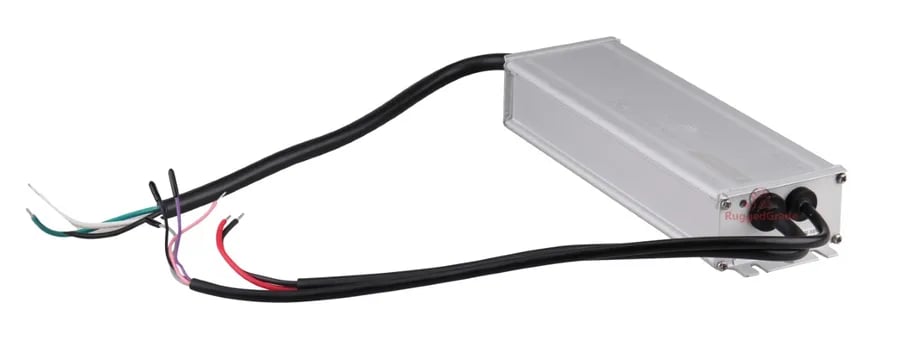
Example of a 150 Watt Sosen LED Driver:
What Shape Is an LED Driver?
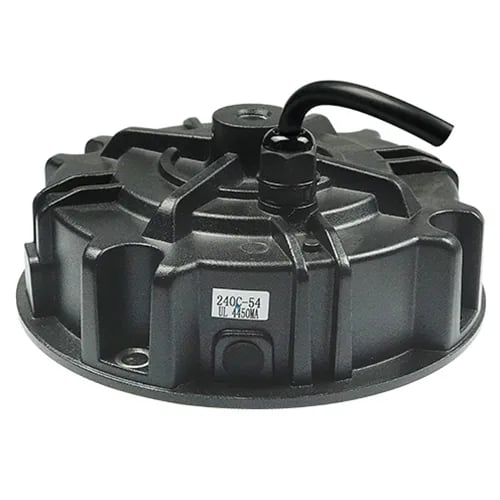
LED drivers can come in round, rectangular, or other shapes. Drivers can be designed in various shapes to fit the fixtures. The most common is a long rectangle box or a round box for UFO High Bay Lights.

Example of a 300W Rectangular LED Driver:

Example of a Round UFO LED Driver for High Bay Lights:
Example of a 150W LED Driver (Retrofit Kit):

How Does an LED Driver Work?
An LED driver converts the incoming power from a standard electrical source (such as a wall outlet) into a format that matches the LED's requirements. It controls the flow of electricity to prevent damage from voltage spikes or fluctuations. Let's explore this process:
Input Voltage and Conversion
An LED driver works between two types of power:
- AC (Alternating Current): The type of power supplied by your home or business electrical system.
- DC (Direct Current): The type of power LEDs require to function.
The LED driver converts AC to DC, ensuring the voltage and current remain within the LED's specifications. Without this conversion, LEDs would receive unstable or excessive power, leading to flickering, reduced efficiency, and potential damage. By regulating power, the driver helps LEDs perform consistently and supports longer service life. For more on how voltage affects your lighting setup, see our guide on commercial lighting fundamentals.
Current Regulation
LEDs require a precise amount of current to operate efficiently and maintain consistent light output. Unlike traditional bulbs, LEDs are highly sensitive to fluctuations in current, which can impact performance and longevity.
An LED driver ensures the current remains steady, even if the input voltage fluctuates due to power surges or varying electrical loads. This regulation prevents overheating, flickering, or premature failure, making LED lighting more reliable. By providing stable current, the driver also enhances energy efficiency, reduces wear on electrical components, and supports consistent illumination in various applications.
Types of LED Drivers
There are two main types of LED drivers, each suited to different applications and needs:
| Type | Purpose | Common Fit | Example Use |
|---|---|---|---|
| Constant Current | Provides a fixed current while allowing voltage to vary. | High-power LEDs or arrays. | Industrial lighting or multi-LED setups. |
| Constant Voltage | Provides a fixed voltage while allowing current to vary. | LED strips or fixed-voltage LEDs. | Decorative or single-color strips. |
1. Constant Current Drivers
These drivers provide a fixed current to the LED while allowing the voltage to vary within a specified range.
- Common Fit: LEDs that require a stable current, such as high-power LEDs or LED arrays used in high bay lighting.
- Example Use: Industrial and warehouse lighting or applications with multiple LEDs wired together.
2. Constant Voltage Drivers
These drivers provide a fixed voltage to the LED while allowing the current to vary as needed.
- Common Fit: LEDs that operate at a set voltage, such as LED strips.
- Example Use: Decorative lighting or single-color LED strips.
Key Takeaway: Use constant-current drivers for high-power LEDs and multi-LED arrays (warehouses, industrial). Use constant-voltage drivers for LED strips and fixed-voltage applications (decorative, signage).
Key Features of LED Drivers
When selecting an LED driver, understanding its key features can help you make the right choice.
1. Dimmable vs. Non-Dimmable
One key factor to consider is whether you need dimmable or non-dimmable LED drivers. What are the differences?
- Dimmable Drivers: Allow you to adjust the brightness of your LEDs. They are useful for adjusting ambience or reducing energy use. The most common dimming protocol for commercial and industrial LED lighting is 0-10V dimming, which uses a low-voltage DC signal (0 to 10 volts) sent over two control wires from a compatible dimmer to the driver. At 10V the light runs at full brightness; at 0V it dims to its minimum level (typically 1–10% output depending on the driver). 0-10V dimming is simple, reliable, and widely supported across LED high bays, parking lot lights, wall packs, and other commercial fixtures.
- Non-Dimmable Drivers: Provide consistent brightness and are often used in settings where dimming isn't required.
For a deeper dive into how 0-10V dimming works, including wiring diagrams and compatible products, see our comprehensive 0-10V Dimming Guide. If you're interested in fixtures with built-in color and wattage adjustability, check out our Tunable Lights Buyers Guide.
2. Ingress Protection (IP) Rating
The IP rating indicates the driver's resistance to dust and water:
- IP20: Suitable for indoor use where exposure to moisture is minimal.
- IP65/IP67: Designed for outdoor or damp environments.
3. Power Factor (PF)
Power factor measures how effectively the driver draws current from the supply. A higher power factor (closer to 1) reduces wasted reactive current on the building's wiring.
What Is an Emergency LED Driver?
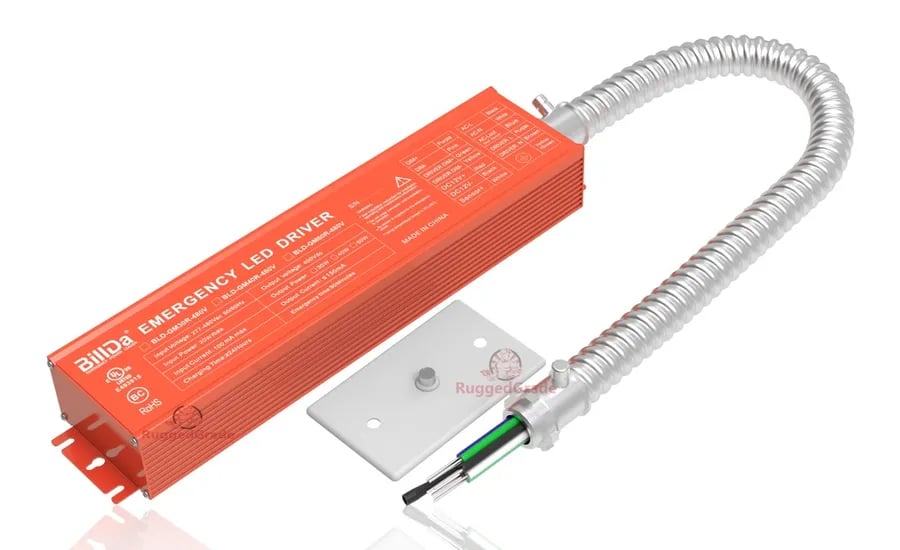
LED drivers can come with a battery backup system for emergency lighting during a power outage. They will typically have wiring that can distinguish a switch turned off from a full outage. The code usually requires 90 minutes of emergency lighting to help get people out and away from the building. For more on energy code compliance, see our article on Title 24 compliance.

Example of a 40W LED Emergency Backup Driver:
Common Applications of LED Drivers
LED drivers are essential in a wide range of lighting applications, including:
Residential Lighting
LED drivers power everything from recessed lighting to under-cabinet fixtures, ensuring consistent brightness and long-term reliability in homes. Many residential LED fixtures use LED corn light bulbs as retrofit replacements that rely on integrated drivers.
Commercial and Industrial Lighting
In settings like warehouses, offices, and retail spaces, LED drivers support high-output lighting while minimizing energy costs. High bay LED lights in industrial environments use constant-current drivers to maintain stable performance over long operating hours.
Outdoor and Decorative Lighting
LED drivers with high IP ratings are used in streetlights, signage, and landscape lighting to withstand environmental challenges.
How to Choose the Right LED Driver
Selecting the correct LED driver is critical to reliable LED lighting performance. Here are some actionable steps to ensure LED driver compatibility:
1. Check the LED's Specifications
Review the voltage and current requirements of your LED to determine whether you need a constant current or constant voltage driver. This information is typically found on product labels or in user manuals.
2. Consider the Environment
Choose an LED driver with the appropriate IP rating for the location. For outdoor or damp areas, select a driver with at least an IP65 rating.
3. Account for Dimming Needs
If you plan to adjust brightness, opt for a dimmable driver compatible with your lighting system. For commercial and industrial applications, 0-10V dimming is the most widely supported protocol. Make sure to match the dimmer to the driver — a 0-10V dimmer sends a low-voltage signal (0V = minimum brightness, 10V = full output) over dedicated control wires. This provides smooth, flicker-free dimming across the full range and delivers energy savings at a nearly 1:1 ratio with the dimming level.
4. Evaluate Efficiency
Look for drivers with a high power factor and low energy loss to maximize efficiency and minimize operating costs. For help calculating lighting needs and understanding footcandles and lux requirements, see our dedicated guide.

Troubleshooting Common Issues with LED Drivers
While LED drivers are reliable, issues can sometimes arise. Here are a few common problems and their solutions:
Flickering Lights
- Cause: Incompatible or faulty driver.
- Solution: Test the driver by replacing it with a compatible one. If the issue persists, check the wiring or consult a professional. Ensure the driver matches the LED's specifications and replace if necessary. Flickering can also occur when using a non-0-10V dimmer with a 0-10V driver — always verify dimmer-to-driver compatibility.
Overheating
- Cause: Poor ventilation or excessive power demand.
- Solution: Use a driver with adequate wattage and ensure proper airflow around the driver.
Reduced Lifespan
- Cause: Incorrect driver type or power fluctuations.
- Solution: Verify that the driver's specifications match the LED's requirements and replace as needed.
How to Test an LED Driver
If you suspect a driver issue, you can perform basic tests using a multimeter. Here's how to test an LED driver:
Step 1: Safety and Preparation
Safety first. Ensure you have a secure lift or ladder. Safety harness and clips should be used for higher installs. At the breaker, determine the breaker voltage — you'll need this for testing.

Step 2: Locate the Driver Compartment
Locate the driver compartment on the fixture. Some fixtures may have a sealed driver or use a Driver on Board (DOB). These fixtures are not serviceable and the whole fixture will need to be replaced. After locating the compartment, find the input and output wires. Many fixtures also have 0-10V dimming with 2 additional wires that need to be checked to ensure they are not touching for the test.

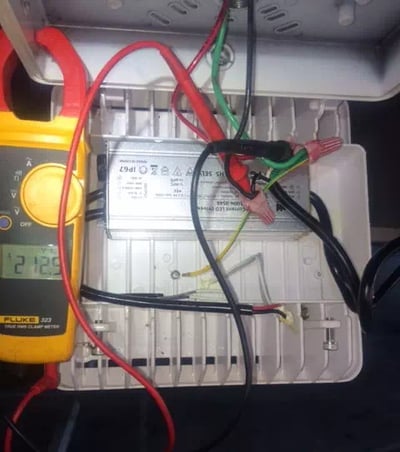
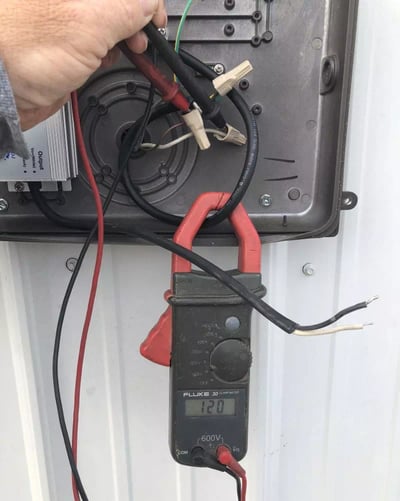
Step 3: Test the Input Side
The input side of the driver can be anywhere from 100 to 480 VAC depending on the building. From step 1 you will know the voltage and can set your meter accordingly. Most fixtures use quick clips but some are wire nuts. You should be able to test the power with either. Take a picture of the meter on the input side. If you have no power in, then we cannot test the driver — fix that issue first.
Step 4: Test the Output Side
LEDs run on constant current or DC power. The amount of DC can change by fixture and you'll need to locate this on the driver. Somewhere between 24 and 54 volts DC is most common. Change your meter over to DC and insert the multimeter probes. DC out has no ground, so just 2 wires. Again make sure the dimming wires and any others are capped off for the test. Get a reading on the DC Out and see if it matches your driver.
Step 5: Conclusion
Drivers typically fail to 0, so you typically get a 0 reading on the output side. If the driver has partial output, the fixture LEDs would have been dim or flashing. Knowing that we have good power in and no power out tells us it's a bad driver. If you have good power in and good DC power out, then you have a problem at the LED board.
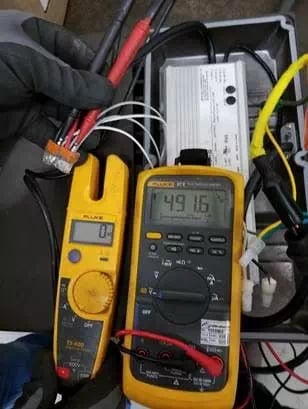
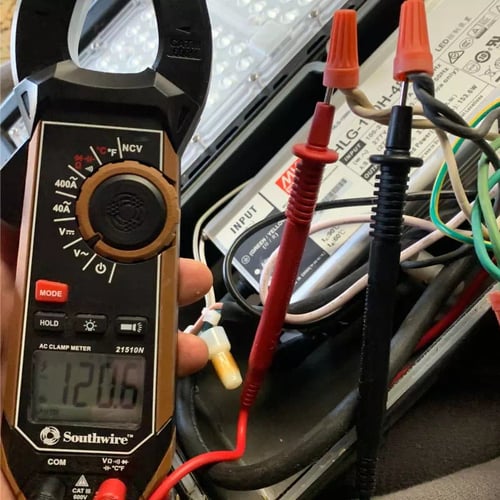
Additional Testing Images
Below are additional views of LED driver testing:


FAQs About LED Drivers
Still have questions about LED drivers? Below, we answer some of the most common inquiries to help you make an informed decision.
No, most LEDs require a driver to regulate power. Without one, LEDs may flicker, overheat, or fail prematurely. This applies to all commercial lighting fixtures including high bays, wall packs, and parking lot lights.
Check the LED specifications. If it lists a specific current (e.g., 700mA), use a constant current driver. If it states a fixed voltage (e.g., 12V), use a constant voltage driver. Most high bay fixtures and area lights use constant current drivers.
No, only LED drivers specifically designed for dimming functions will work with dimmable LEDs. The most common protocol for commercial LED dimming is 0-10V dimming, which uses a low-voltage signal (0 to 10 volts) over two control wires. At 10V the fixture runs at full output; as the signal drops toward 0V, brightness decreases proportionally. Always check that your driver supports 0-10V dimming before purchasing a compatible dimmer switch.
LED drivers typically last between 30,000 and 50,000 hours, depending on usage and environmental factors. In warehouse and industrial environments, heat management and electrical quality are the primary factors affecting driver lifespan.
0-10V dimming is the most common dimming protocol for commercial and industrial LED lighting. It uses a low-voltage DC control signal that ranges from 0 to 10 volts, sent over two dedicated control wires from a 0-10V dimmer switch to the LED driver. At 10V the light operates at full brightness, and as the signal decreases toward 0V the light dims — typically to around 1–10% minimum output depending on the driver. The key advantages of 0-10V dimming are its simplicity, reliability, and wide compatibility across LED fixtures including high bays, wall packs, and parking lot lights. Energy savings scale at nearly a 1:1 ratio — dimming to 50% output saves close to 50% energy. Learn more in our complete 0-10V dimming guide.
Find the Right LED Driver at LED Light Expert
Choosing the correct LED driver supports reliable lighting performance and service life. At LED Light Expert, we offer a wide range of high-quality LED drivers tailored to various applications. Browse our selection today and power your LEDs with confidence!
SHOP LED LIGHTSRelated Resources


Expert LED Driver Guidance from LED Light Expert!
Our LED Light Expert team can help match the driver to the fixture, input voltage, dimming method, wattage range, operating environment, and emergency-backup requirements. For replacements, have the driver label, fixture model, and a photo of the wiring ready so the recommendation is specific.
SHOP LED DRIVERS


