

It is a pole installed with part of the pole embedded below grade.
Direct Burial vs Surface Mount Light Poles
Direct burial and surface mount light poles solve different installation problems. Direct burial poles extend below grade into soil or concrete. Surface mount poles bolt to a foundation with anchor bolts. The right choice depends on soil, wind load, pole height, fixture EPA, corrosion exposure, service access, replacement plans, and local engineering requirements.
What to Check First
- Confirm pole height, fixture weight, EPA, wind zone, soil, and foundation requirements.
- Use engineering guidance for commercial poles and public sites.
- Plan wiring access, corrosion protection, and future replacement before installation.
Application Decision Table
| Use Case | Practical Guidance |
|---|---|
| Direct burial | Can be simple for some small poles but depends heavily on soil and embedment. |
| Surface mount | Uses a foundation and anchor bolts, often easier to replace later. |
| Commercial lot pole | Requires wind load, fixture EPA, foundation, and code review. |
Decision Factors
- Soil and frost conditions.
- Pole height and fixture load.
- Wind rating and EPA.
- Foundation and anchor requirements.
- Service and replacement plan.
Common Mistakes to Avoid
- Choosing a pole style without wind-load review.
- Ignoring soil and corrosion conditions.
- Forgetting future fixture service and replacement.
Direct Burial vs Surface Mount: The Real Difference
A direct burial light pole is embedded into the ground, while a surface mount pole bolts to a concrete foundation or pier. The right choice depends on soil, pole height, wind exposure, fixture load, service access, corrosion risk, and whether an engineer or local code requires a specific foundation detail.
| Pole type | Best fit | Planning check |
|---|---|---|
| Direct burial | Simple site lighting where soil and depth are suitable. | Burial depth, corrosion protection, backfill, and underground utilities. |
| Surface mount | Parking lots, commercial sites, and engineered foundations. | Anchor bolt pattern, concrete design, wind load, and base cover. |
| Existing pole replacement | Retrofit projects. | Match pole size, bolt circle, wiring access, and fixture EPA/wind load. |
Direct Burial Light Poles: Sizing and Installation
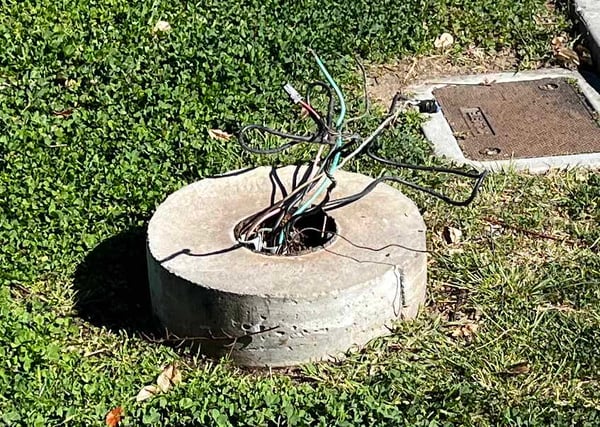
Direct burial (embedded) poles insert straight into the ground with no concrete base or anchor bolts, which gives a cleaner look. Most metal poles include a hand-hole cover so an electrician can reach the wiring for connections, maintenance, or replacement, plus a replaceable pole cap. The cap is only needed when fixtures mount on the side of the pole; a top-mounted bullhorn bracket makes it unnecessary.
An embedded pole needs a longer shaft to make up for the buried length. The general rule: bury 10% of your target mounting height plus 2 feet. A 20-foot mounting height buries 4 feet, so you order a 24-foot pole.
Backfill should match the soil condition:
- Solid rock: crushed rock 3/4 inch or less, or cemented sand.
- Poor soil (loose rock, gravel, highly organic material): consult a local soils expert to establish proper compaction.
- Average soil (silt, clay, moderately organic, or seasonal standing water): add crushed rock 3/4 inch or less to the excavated material before backfilling.
A basic install sequence runs like this:
- Dig a round hole with smooth vertical sides in undisturbed soil, roughly twice the pole's base diameter; auger or hand dig.
- Wire the pole using approved methods.
- Set the pole into the hole - composite poles can often be placed by hand.
- Plumb the pole with a plumb bob.
- Backfill and tamp every 6 to 8 inches; frequent tamping is what makes the base stable.
Because they skip the anchor base, embedded poles cost less and install faster, but they are not ideal for sandy areas. And if a direct burial pole rusts out or snaps, the only fix is to dig it out and start over, so choose a good pole up front. In wet areas we recommend aluminum; it is worth the extra money.
Surface Mount (Flange Mounted) Poles
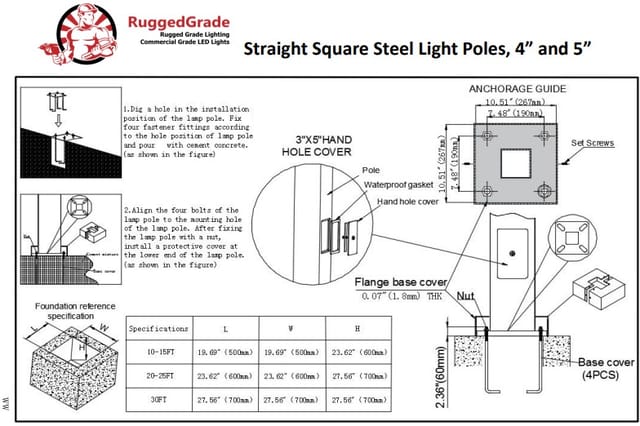
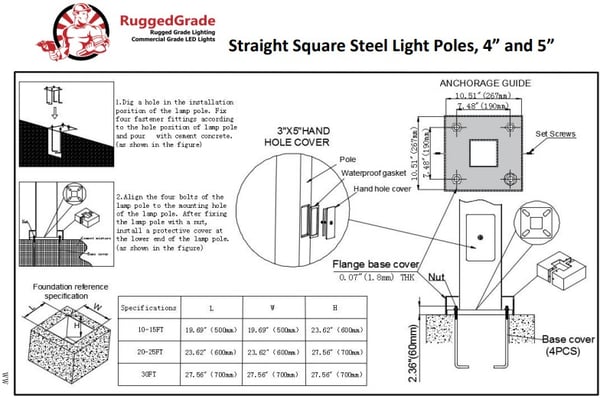
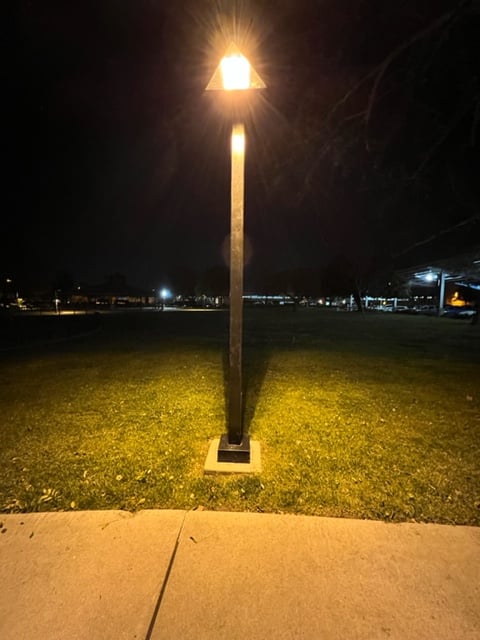
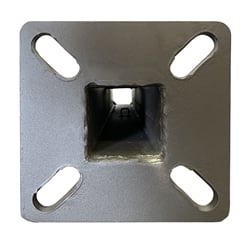
A surface mount, or flange mounted, pole has a metal base plate welded to the shaft. The plate carries roughly four bolt holes (sometimes three to six). When the concrete footing is poured, anchor bolts are cast into the mold and protrude above the surface, and the pole base bolts down onto them - hence the name.
What is the flange?
The flange is that welded base plate with anchor-bolt holes. Flanges come square, round, snap-on, and tapered to work with different installation components, and they are available in steel, aluminum, and stainless steel with various finishes.
Wood vs Metal vs Fiberglass Poles
Wood poles are always direct burial
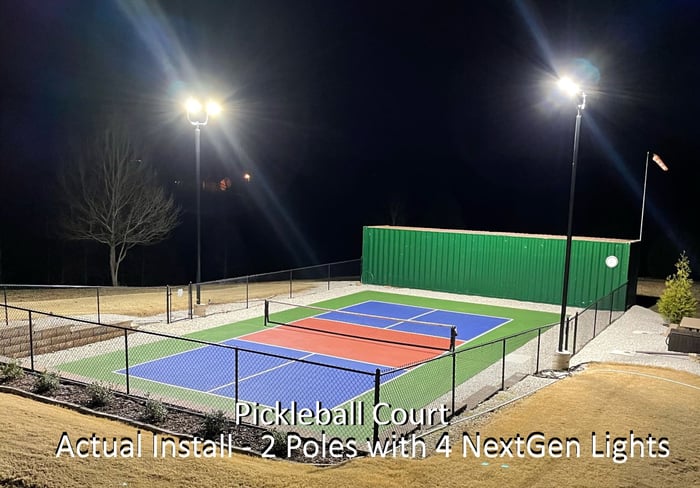
Wood is the low-cost way to mount backyard basketball court lights, bocce, pickleball, or volleyball court lights. The pole drops into an augured hole lined with gravel, then gets backfilled with stone dust, native soil, or cement. Use ground-contact-rated pressure-treated lumber, available at most lumber yards. Wood is economical (no expensive footing), fast to install, and clean-looking with no exposed base plate or anchor bolts. Two caveats: many fire-prone areas do not allow wood above about 12 feet, so check local code, and wood tops out around 35 feet - for 40 feet and up you need metal.
Metal can be either
Metal poles are low-cost, strong, available in multiple shapes, and last 15 to 30 years depending on environment. They install by direct burial or anchor base, and only metal supports surface mounting, which high-wind or hazard areas may require. Metal also offers the most fixture options - tenons and bullhorns on top, arm mounts on the side - for LED pole lights.
Fiberglass can be either
In Florida and other high-wind or hurricane zones, fiberglass poles may be required.
Will the Flange Fit My Bolts?
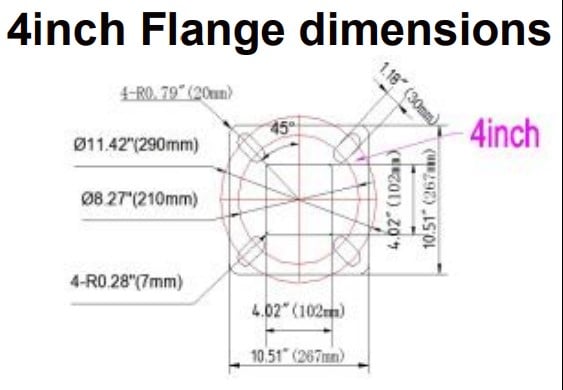
Anchor bolts are the most common way to secure a pole to a concrete foundation, and each pole needs bolts matched to its flange at the exact diameter. Before buying a flange, check the spec sheet and flange diagram against your existing or new bolts. That means consulting the manufacturer catalog or running a proper engineering analysis - it is not a guess.
How Much Concrete for a Surface Mount?
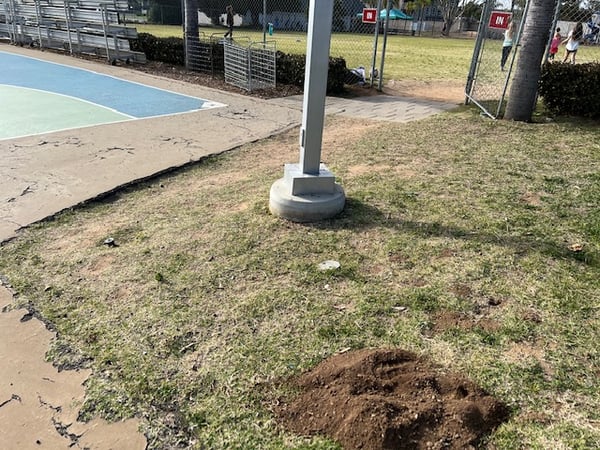
The footing exists to support the pole under wind load, and it carries steel reinforcing bar sized against cracking. Size the foundation so the surrounding soil can resist the loads; undersized footings can lean or rotate. Have it designed by an engineer who knows your local conditions: frost depth, wind speed, temperature extremes, water table, and city or town codes all factor in.
2 ft x 2 ft x 2 ft for a 15 ft pole
For a 15-foot pole the recommended footing is 2 ft by 2 ft by 2 ft. Add 1 foot of concrete for every additional 5 feet of pole height, and go bigger still if you are running more than two post-top light heads per pole. Parking-lot poles are tall and need more concrete; a short backyard pole needs far less. When in doubt, check local code and a local engineer for the right measurements.
More Details to Consider
Direct-burial poles and surface-mount poles solve different site problems. Direct burial places the pole below grade and relies on embedment, soil conditions, drainage, corrosion protection, and backfill. Surface mount uses a base plate, anchor bolts, and a concrete foundation designed for the pole and fixture load.
Do not choose the mount by convenience alone. Wind load, pole height, fixture weight, soil type, frost depth, vehicle exposure, underground utilities, corrosion, and future service access all affect the correct design.
For commercial lighting, the foundation and pole should be reviewed by qualified professionals where required. The visible fixture may get the attention, but the pole, base, bolts, grounding, and drainage decide whether the installation stays safe over time.
Frequently Asked Questions
- What is a direct burial light pole?
- It is a pole installed with part of the pole embedded below grade.
- What is a surface mount pole?
- It bolts to a concrete foundation or base with anchor bolts.
- Which is better?
- Neither is universally better. The project conditions decide.
- Do light poles need engineering?
- Commercial poles, tall poles, public sites, and wind-exposed areas should be reviewed by qualified professionals.

Ready to Upgrade Your LED Lighting?
Our lighting specialists can help compare fixtures, confirm light levels, and quote products that fit the site.
Call 800-674-9420 or email [email protected]
Monday-Friday, 8am-5pm PST

About the Author
Dara Greaney is founder and CEO of LED Light Expert with deep expertise in commercial LED lighting, retrofits, and photometric planning.
Editing by David Peguero

Trusted by Thousands
Our customers love us — and we love them back.


-
 Free Shipping
On orders over $49.00
-
 Free Extended Warranty
Up to 7 Years Free Warranty On LED Lights
-
100% Satisfaction Guarantee
