


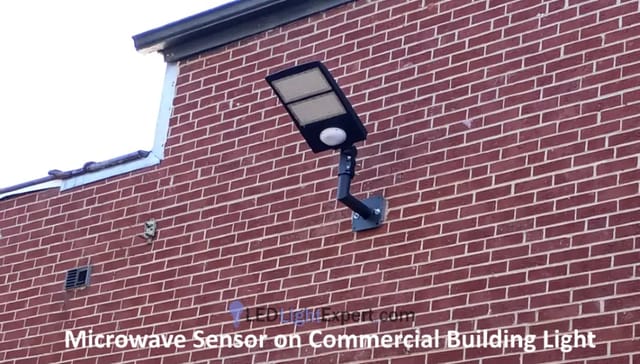
PIR detects heat movement; microwave sensors detect reflected microwave signal changes.
Microwave vs PIR Motion Sensors
A microwave motion sensor and a PIR motion sensor both detect motion, but they do it differently. PIR sensors detect changes in infrared heat. Microwave sensors emit and read reflected microwave signals. That difference affects mounting height, detection through obstructions, nuisance triggers, sensitivity, cost, and where each sensor works well.
What to Check First
- Identify mounting height, target movement, temperature swings, obstructions, and fixture grouping.
- Use PIR where heat movement and line-of-sight detection fit the space.
- Use microwave carefully where sensitivity through some materials could create nuisance triggers.
Application Decision Table
| Use Case | Practical Guidance |
|---|---|
| PIR sensor | Good for many rooms, wall packs, and fixtures with clear line-of-sight to people. |
| Microwave sensor | Useful for some high bay or enclosed fixture situations but requires careful sensitivity setup. |
| Dual technology | Can reduce nuisance switching where one sensing method is not enough. |
Settings That Matter
- Detection range.
- Sensitivity.
- Hold time.
- Standby dim level.
- Daylight or photocell behavior.
Common Mistakes to Avoid
- Assuming one sensor type is right for every space.
- Mounting sensors where racks, doors, or vehicles block the intended view.
- Leaving sensitivity and hold time at defaults without night testing.
Microwave vs PIR Sensors: The Practical Difference
PIR sensors detect changes in infrared heat from people, vehicles, or animals moving across the sensor view. Microwave sensors emit low-power microwave signals and detect motion from reflected signal changes. Microwave sensors can be more sensitive and can detect through some materials; PIR sensors are often simpler, less likely to see through partitions, and easier to aim for human occupancy.
| Sensor type | Strength | Watch-out |
|---|---|---|
| PIR | Good for rooms, aisles, and people moving across the field of view. | Line of sight, mounting height, and heat contrast affect detection. |
| Microwave | Good for broad or hidden detection zones and some high-mount applications. | Can false-trigger through thin walls, doors, or moving objects. |
| Dual technology | Useful when one sensor type alone creates nuisance trips. | Needs careful settings so it does not miss real occupancy. |
More Details to Consider
PIR and microwave sensors both detect motion, but they behave differently. PIR detects changes in infrared heat moving across the field of view. Microwave sensors emit low-power signals and detect changes in the reflected signal.
PIR is often a good fit for rooms, wall packs, pathways, and areas with clear line of sight. Microwave can be useful for high bays, broader detection zones, or certain enclosed fixtures, but it can also trigger through some materials if sensitivity is too high.
The best sensor is the one that matches mounting height, target movement, obstructions, temperature, fixture grouping, and desired dimming behavior. Set sensitivity, hold time, standby level, and daylight behavior after testing the actual space.
Frequently Asked Questions
- What is the difference between microwave and PIR sensors?
- PIR detects heat movement; microwave sensors detect reflected microwave signal changes.
- Which is better for high bays?
- It depends on height, aisles, obstructions, and sensitivity needs.
- Can microwave sensors trigger through walls?
- They can detect through some materials, which is useful in some cases and a nuisance in others.
- Do sensors save energy automatically?
- Only when detection, dimming, hold time, and occupancy patterns are set correctly.
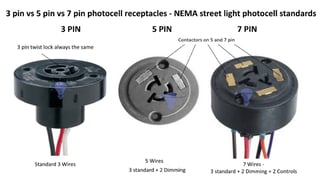
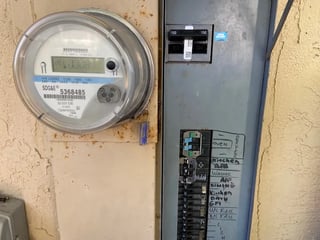

Ready to Upgrade Your LED Lighting?
Our lighting specialists can help compare fixtures, confirm light levels, and quote products that fit the site.
Call 800-674-9420 or email [email protected]
Monday-Friday, 8am-5pm PST

About the Author
Dara Greaney is founder and CEO of LED Light Expert with deep expertise in commercial LED lighting, retrofits, and photometric planning.
Editing by David Peguero
1 Comments
Roy Webster
Hi, do microwave motion sensors have a minimum wattage requirement.
Juan
They do require power to work, so yes there is a wattage requirement. The power load for the lights that it can control depends on each sensor, need to check the power it can handle.


