

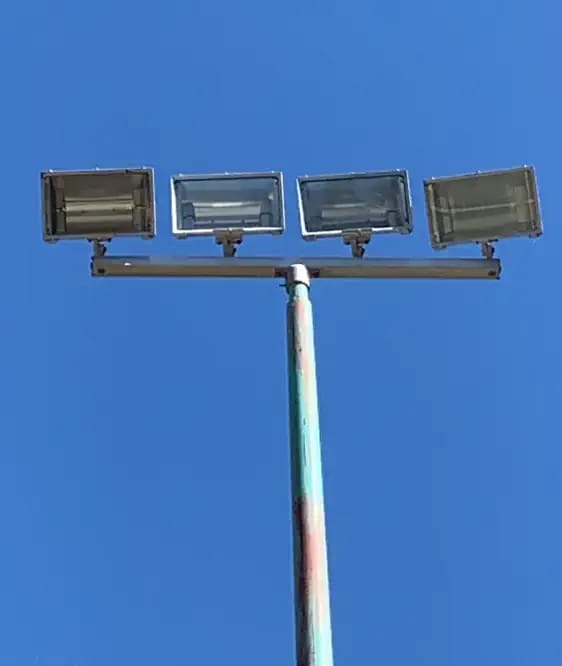
To replace a quartz halogen flood light with LED, match usable lumens first, then confirm voltage, mounting style, fixture weight, beam angle, and wet-location rating. A 1500W quartz halogen is often replaced by a 150W to 300W LED flood, a 1000W by roughly 120W to 180W LED, a 500W by roughly 75W to 90W LED, and a 250W by roughly 30W to 50W LED. Heavy LED replacements usually need a yoke or flood mount instead of a small knuckle mount.
Quartz Halogen Bulb LED Replacement Guide
What is quartz halogen bulb?
What is the difference in quartz halogen and halogen bulbs?
Mounting Mechanisms for Quartz Halogen Fixtures
LED Replacements for Quartz Halogen Bulbs
1500 watt Quartz Halogen LED Replacement:
1000 watt Quartz Halogen LED Replacement:
500 watt Quartz Halogen LED Replacement:
250 watt Quartz Halogen LED Replacement:

Check Fit, Heat, and Lumens Before Replacing
A quartz halogen bulb LED replacement should be chosen by delivered lumens, socket or mount type, fixture size, heat clearance, beam angle, voltage, and whether the old enclosure can safely accept a retrofit lamp. LEDs produce less waste heat, but they still need airflow around the driver and heat sink.
| Old lamp concern | LED replacement check |
|---|---|
| 500W or 1000W flood | Compare lumens and beam angle, not wattage alone. |
| Small enclosure | Verify physical fit and thermal clearance. |
| Outdoor fixture | Check wet rating, gasket condition, voltage, and surge protection. |
Frequently Asked Questions
- What is a quartz halogen bulb?
- A quartz halogen bulb is an incandescent lamp that uses a tungsten filament, halogen gas, and a quartz envelope that tolerates higher heat than ordinary glass.
- What is the difference between quartz halogen and standard halogen bulbs?
- Quartz Halogen bulbs use quartz glass for higher heat and pressure tolerance. Standard halogen bulbs usually use ordinary glass, which is less expensive but less durable in high-temperature applications.
- What should you check before replacing quartz halogen with LED?
- Match usable lumens first, then verify voltage, mounting style, fixture weight, beam angle, wet-location rating, and whether the old knuckle or bracket can safely support the LED replacement.
More Details to Consider
Quartz Halogen Bulb LED Replacement Guide. Understanding the nuances of lighting technology is essential for optimal illumination. One prominent technology that has historically been popular is the quartz halogen bulb. However, as technology progresses, LED replacements for these bulbs are becoming increasingly favored due to their energy efficiency and long lifespan. What is quartz halogen bulb? A quartz halogen bulb, a subset of incandescent bulbs, employs a tungsten filament combined with halogen gas, typically iodine or bromine, to generate light. This gas reacts with evaporated tungsten, redepositing it onto the filament. This process
not only extends the filament's life but also maintains bulb clarity. These bulbs have advantages over standard incandescent bulbs, such as a higher color temperature, luminous efficacy, and color rendering index. Their compact size makes them suitable for diverse applications like projectors, vehicle headlights, and outdoor lighting. What is the difference in quartz halogen and halogen bulbs? The difference between quartz halogen and halogen bulbs is mainly in the type of glass envelope that encloses the tungsten filament and the halogen gas. Quartz halogen bulbs use quartz glass, which can withstand higher temperatures and
pressures than ordinary glass. Halogen bulbs use ordinary glass, which is cheaper and easier to manufacture, but has lower durability and performance. Quartz halogen bulbs have some advantages over halogen bulbs, such as: • They have a higher color temperature, luminous efficacy (from 12-18 lumens per watt to 15-22 lm/watt), and color rendering index, which means they produce brighter, whiter, and more natural light. • They have a longer lifetime, because the quartz glass prevents the tungsten from depositing on the inner surface of the bulb, which causes blackening and dimming. The halogen gas
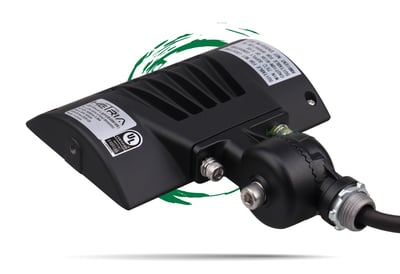
also helps to redeposit the tungsten back to the filament, extending its life. • They have a smaller size and can be used in compact optical systems for projectors and illumination. Mounting Mechanisms for Quartz Halogen Fixtures. Predominantly, quartz halogen fixtures utilize a knuckle mount, which is often referred to as a 3/4 inch conduit mount due to the pipe size it threads to. Alternatively, some fixtures might employ a U-shaped flood bracket. A knuckle mount is a bracket designed primarily for outdoor lighting applications. It facilitates the attachment of lights to walls,
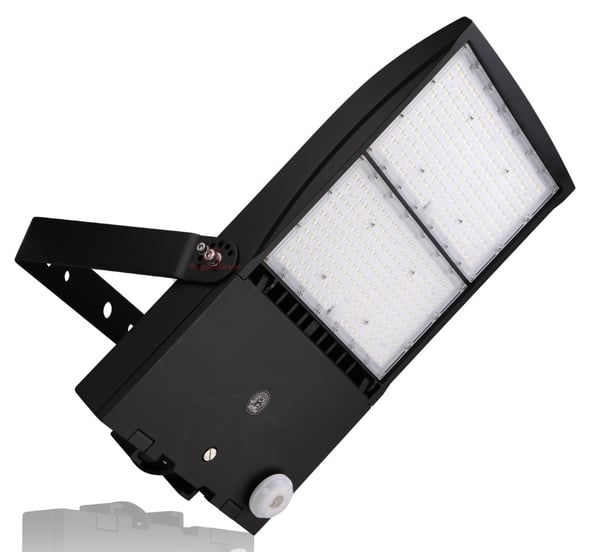
poles, or other surfaces while allowing angle adjustments. This mount typically features a threaded stem connecting to the light's rear and a tightening nut. Often used in flexible lighting scenarios like parking lots, driveways, or pathways illumination, knuckle mounts are compatible with various light types, including LED, halogen, or metal halide. LED Replacements for Quartz Halogen Bulbs. 1500 watt Quartz Halogen LED Replacement: A 1500 watt quartz halogen bulb typically emits 15-20 lumens per watt, (12-18 if regular halogen) translating to 22,500 to 30,000 lumens. An equivalent LED replacement would range between 150
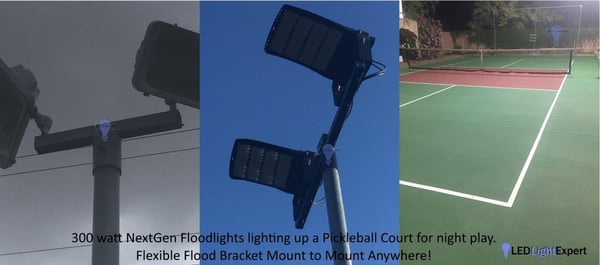
and 300 watts. Due to the weight of these LED fixtures, a flood mount is required instead of a knuckle mount. It's too heavy for the knuckle mount. Max weight is about 10lbs for those. Use a flood mount where the knuckle was on top of the T bar and silicone seal it for water intrusion. This picture is an actual before and after of using flood mounts in the halogen retrofit; 1000 watt Quartz Halogen LED Replacement: A 1000 watt variant emits 15-20 lumens per watt, (12-18 if regular halogen) about 15,000
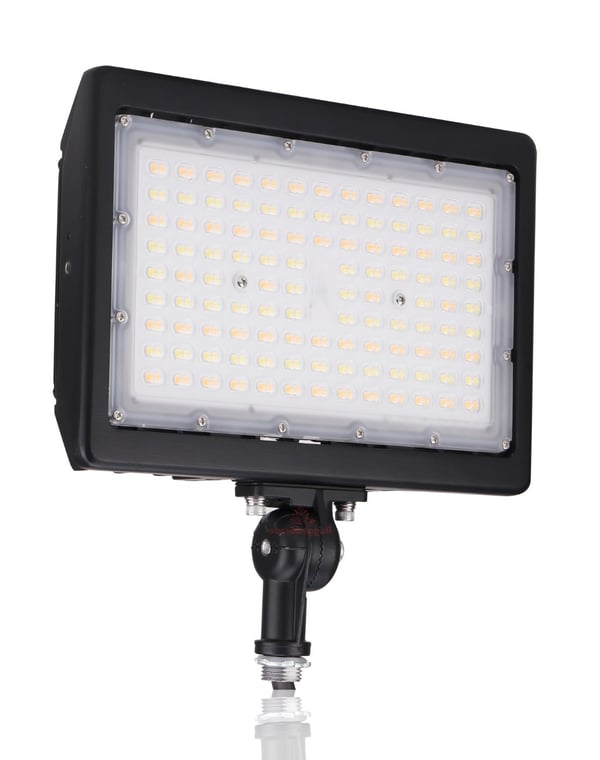
to 20,000 lumens, which corresponds to an LED replacement of 120-180 watts. For visualization, a 120-watt LED light fixture with the customary knuckle conduit mount often found on halogen fixtures can be examined. Here is an image of a 120 watt LED Light Fixture with the same knuckle conduit mount typically found on halogen fixtures. The 17,000 lumens aligns closely with the output of a 1000 watt halogen bulb. For brighter (many courts were underlit) use a 150-300 watt flood light like above. 500 watt Quartz Halogen LED Replacement: For a 500 watt quartz
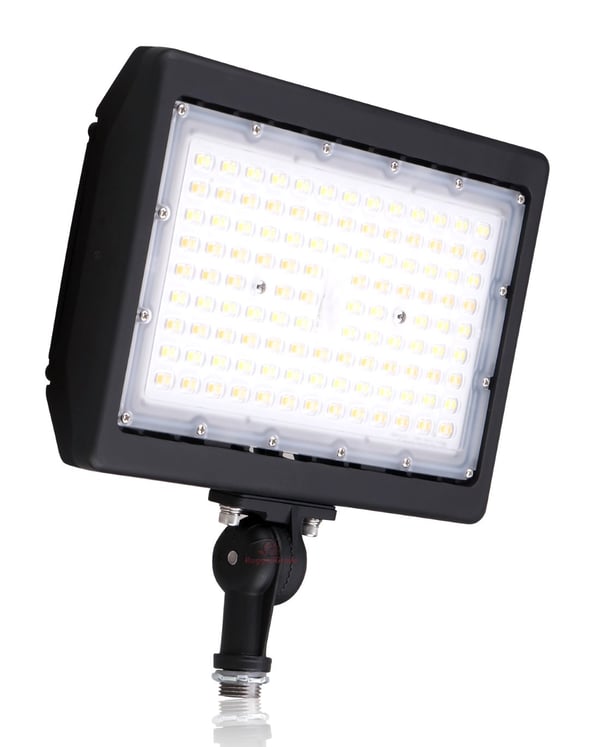
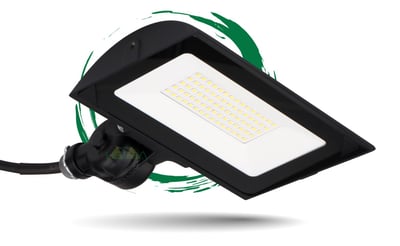
halogen bulb emits 15-20 lumens per watt, (12-18 if regular halogen) producing 7,500 to 10,000 lumens, an LED replacement would necessitate between 75 and 90 watts. As a reference, a 90-watt LED light yielding around 12,000 lumens surpasses the brightness of a standard halogen fixture. Here is a 90 watt LED flood light with knuckle mount that gets 12,000 lumens or just above the halogen fixture. 250 watt Quartz Halogen LED Replacement: For a 250 watt quartz halogen bulb producing 3500 to 5000 lumens, an LED replacement would necessitate between 30-50 watts. As a reference,
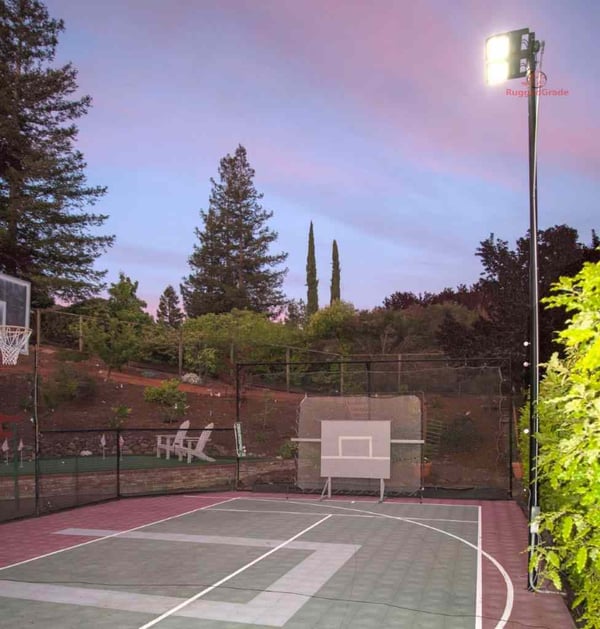
a 50-watt LED light yielding around 6000 lumens surpasses the brightness of a standard halogen fixture. Here is a 4 pack of 30 watt LED flood light with knuckle mount that gets 3,600 lumens each, just above the halogen fixture. Here is a 50 watt LED flood light; See our article on non-quartz halogen to LED replacements too. Here is a common tennis court with halogen. Here is another after shot of halogen retrofitted to LED flood lights;
400W Metal Halide Lumens: LED Equivalents and Energy Savings LED Lighting Guide Discover how many lumens a 400W metal halide produces, the LED equivalents,
300 Watt LED Bulb Lumens 300W LED Equivalent Explained LED Lighting Guide 300W LED lights are favored for their incredible brightness and energy efficiency.
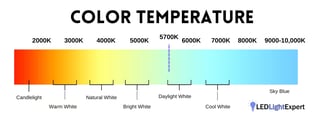
What is Kelvin in Lighting? What does Kelvin mean in lights? LED Lighting Guide What is Kelvin in Lighting? What does Kelvin mean in lights? Kelvin measures light color temperature,
Ready to Upgrade Your Lighting?
Our LED lighting experts can help you find the right fixtures for your project.
Call 800-674-9420 or email [email protected]
Monday–Friday, 8am–5pm PST


Trusted by Thousands
Our customers love us — and we love them back.


-
 Free Shipping
On orders over $49.00
-
 Free Extended Warranty
Up to 7 Years Free Warranty On LED Lights
-
100% Satisfaction Guarantee
